The Beam Energy Scan phase II (BES-II), performed in the Relativistic Heavy Ion Collider (RHIC) from 2019 to 2021, explored the phase transition between quark-gluon plasma and hadronic gas. BES-II exceeded the goal of a fourfold increase in the average luminosity over that achieved during Beam Energy Scan phase I (BES-I), at five gold beam energies: 9.8, 7.3, 5.75, 4.59, and 3.85 GeV/nucleon. This was accomplished by addressing several beam dynamics effects, including intrabeam scattering, beam-beam, space charge, beam instability, and field errors induced by superconducting magnet persistent currents. Some of these effects are especially detrimental at low energies. BES-II achievements are presented, and the measures taken to improve RHIC performance are described. These measures span the whole RHIC complex, including ion beam sources, injectors, beam lifetime improvements in RHIC, and operation with the world's first bunched beam Low Energy RHIC electron Cooler (LEReC).
In recent years, Relativistic Heavy Ion Collider (RHIC) physics program calls for gold beam collisions with energies at and lower than the nominal RHIC injection energy. To get shorter bunches at the three higher energies (9.8 GeV, 7.3 GeV and 5.75 GeV), RHIC 28MHz cavities were used. The longitudinal emittance out of injectors needs to fit in the 28 MHz cavities in RHIC. At two lower energies (4.59 GeV and 3.85 GeV), the 9 MHz RF cavities were used, which set different requirements from injectors. Extensive beam studies were carried out to establish needed beam parameters, such as bunch intensities and longitudinal emittances. In general, enough intensity can be provided for all energies within the longitudinal emittance constraint. This paper summarizes the recent injector operation experiences for various energies.
The design effort for the electron-ion collider eRHIC has concentrated on electron-proton collisions at the highest luminosities over the widest possible energy range. The present design also provides for electron-nucleon peak luminosities of up to 4.7·10³³ cm⁻²s^{−1} with strong hadron cooling, and up to 1.7·10³³ cm⁻²s^{−1} with stochastic cooling. Here we discuss the performance limitations and design choices for electron-ion collisions that are different from the electron-proton collisions. These include the ion bunch preparation in the injector chain, acceleration and intrabeam scattering in the hadron ring, path length adjustment and synchronization with the electron ring, stochastic cooling upgrades, machine protection upgrades, and operation with polarized electron beams colliding with either unpolarized ion beams or polarized He-3.
RHIC will provide Au-Au collisions at beam energies of 5.75, 4.59 GeV/nucleon for physics program in 2020, and at beam energy of 3.85 GeV/nucleon for physics program in 2021 as part of the BeamEnergy Scan II (BES-II). The oper- ational experience gained in the first year (2019) of BES-II operation will be applied toward operations in the coming years. This article will present some technical details and the outlook of the BES-II operations in the coming years.
A beam energy scan of deuteron-gold collision, with center-of-mass energy at 19.6, 39, 62.4 and 200.7 GeV/n, was performed at the Relativistic Heavy Ion Collider in 2016 to study the threshold for quark-gluon plasma (QGP) production. The lattice, RF, stochastic cooling and other subsystems were in different configurations for the various energies. The operational challenges changed with every new energy. The operational experience at each energy, the operation performance, highlights and lessons of the beam energy scan are reviewed in this report.
In order to achieve higher instantaneous and integrated luminosities, the average Au bunch intensity in RHIC has been increased by 28% compared to the preceding Au run. This increase was accomplished in part by merging bunches in the RHIC injector AGS. Luminosity levelling for one of the two interaction points (IP) with collisions was realized by continuous control of the vertical beam separation. Parallel to RHIC physics operation, the electron beam commissioning of a novel cooling technique with potential application in eRHIC, Coherent electron Cooling as a proof of principle (CeCPoP), was carried out. In addition, a 56 MHz superconducting RF cavity was commissioned and made operational. In this paper we will focus on the RHIC performance during the 2016 Au-Au run.
Localized losses of gold beam in the AGS during RHIC Run 8 produced vacuum leaks which required the replacement of several vacuum chambers. A review of what happened and why was given by Leif Ahrens at the Run 8 Retreat. The following notes trace the subsequent development of clean dumping of gold beam on the beam dump in the J10 straight. The novel idea of stripping Au77+ ions in order to put them directly into the upstream face of the dump was introduced by Leif Ahrens and developed by all three of us. George Mahler made the actual stripping device and Dave Gassner developed its control. Leif Ahrens successfully commissioned the device with gold beam during Run 10. The reader may find it helpful to first view the figures herein and then refer to the text for details.
As part of the efforts to increase polarization and luminosity in RHIC during polarized proton operations we have modified the injection optics and stripping foil geometry in the AGS Booster in order to reduce the emittance growth during H{sup -} injection. In this paper we describe the modifications, the injection process, and present results from beam experiments.
This year (2008) deuterons and gold ions were col- lided in the Relativistic Heavy Ion Collider (RHIC) at Brookhaven National Laboratory (BNL) for the first time since 2003. The setup and performance of the collider for the 2008 run is reviewed with a focus on improvements that have led to an order of magnitude increase in luminosity over that achieved in the 2003 run.
Errors in delivering a uniformly distributed radiation dose to biological and material samples exposed to charged particle beams are a significant problem for experimenters. In this paper, we discuss data collected on the uniform beam distributions produced for NASA's Space Radiation Laboratory (NSRL) at Brookhaven National Laboratory (BNL), using a method that was conceived theoretically and tested experimentally at BNL. This method [N. Tsoupas et al., Nucl. Sci. Eng. 126, 71 (1997)] of generating uniform beam distributions on a plane normal to the beam's direction relies only on magnetically focusing the transported beam; no collimation of the beam is required or any other type of interaction of the beam with materials other than the target material. The method compares favorably with alternative methods of producing such distributions, and it can be applied to the entire energy spectrum of charged particle beams that are delivered to the NSRL's experiments by the Booster for the Alternating Gradient Synchrotron at BNL.
Uniform irradiation of biological or material samples with charged particle beams is desired by experimenters because it reduces radiation dose errors. In this paper we present results of uniform beams produced in the NASA Space Radiation Laboratory (NSRL) at the Brookhaven National Laboratory (BNL) by a method which was developed theoretically and was proven experimentally [1,2,3] at BNL. A similar method which requires collimation of the beam, and also lacks the flexibility of the present method to produce beam various beam sizes at the target, was patented[4] in the year 1988. The present method of producing uniform beam distributions on a plane transverse to the direction of the beam, is based on purely magnetic focusing of the beam and requires no collimation of the beam or any other type of beam interaction with materials. It can also generate uniform beam distributions of various sizes. The method is favorably compared with alternative methods [5] of producing uniform beam distributions and can be applied to the whole energy spectrum of the charged particle beams that are delivered by the BNL Booster synchrotron.
Gold ions for the 2007 run [1] of the Relativistic Heavy Ion Collider (RHIC) at Brookhaven National Laboratory (BNL) are accelerated in the Tandem, Booster and AGS prior to injection into RHIC. The setup and performance of this chain of accelerators is reviewed with a focus on improvements in the quality of beam delivered to RHIC. In particular, more uniform stripping foils between Booster and AGS, and a new bunch merging scheme in AGS have provided beam bunches with reduced longitudinal emittance for RHIC.
Polarized protons are accelerated up to 24.3 GeV in the Alternating Gradient Synchrotron (AGS) at Brookhaven National Laboratory (BNL). To accelerate the beam with preserving the polarization, two different types of helical dipole partial Siberian snake have been installed to the AGS. One is a superconducting magnet (Cold Snake, CSNK), and the other is a normal conducting one (Warm Snake, WSNK). With these snake magnets, the polarization at the AGS extraction achieved 65%. However, the AGS has spin mismatches at the injection and extraction. This description shows calculated results to have better spin matching with using two or three snakes.
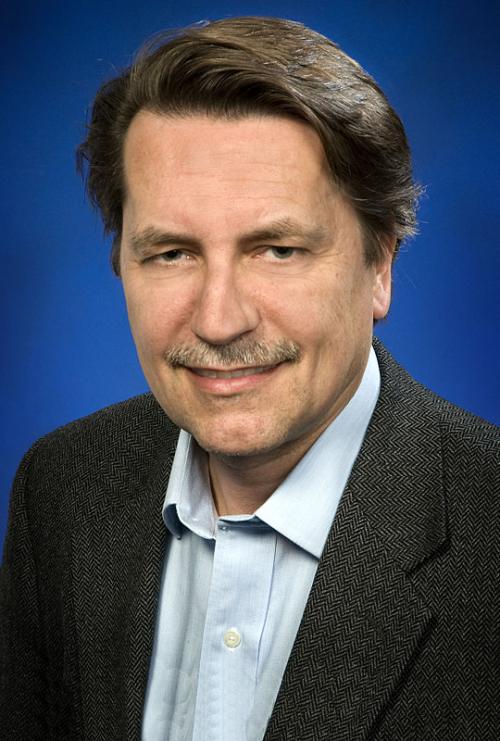 Thomas Roser合作论文数Brookhaven National Laboratory26
 Ahrens La合作论文数22k zeno合作论文数20Nick Tsoupas合作论文数19M. Blaskiewicz合作论文数17Jason Glenn合作论文数16S. Tepikian合作论文数15J. M. Brennan合作论文数14
 Peter Thieberger合作论文数Brookhaven National Laboratory14WW MacKay合作论文数13
 Axel Drees合作论文数Department of Physics and Astronomy, Stony Brook University;College of Arts and Sciences, Stony Brook University13Alex Zaltsman合作论文数12t hayes合作论文数12g marr合作论文数12M. Bai合作论文数12Ch Montag合作论文数11D. Bruno合作论文数11V. Schoefer合作论文数10
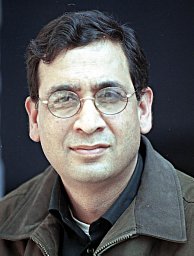 Deepak Raparia合作论文数Brookhaven National Laboratory10J. Sandberg合作论文数10
 Michiko Minty合作论文数Department of Collider Accelerator, Brookhaven National Laboratory10R. Michnoff合作论文数10F. Severino合作论文数10Alessi, J.G.合作论文数9
 K. Brown合作论文数9K. S. Smith合作论文数9
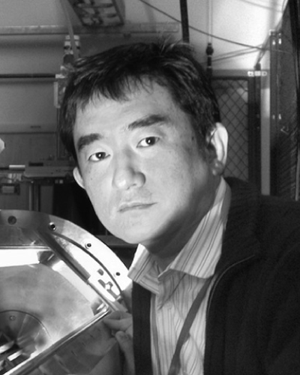 Masahiro Okamura合作论文数The Institute of Physical and Chemical Research (RIKEN), 2-1 Wako-shi, Saitama 351-0198, Japan9K. Mernick合作论文数8w fischer合作论文数8
 Alfredo U. Luccio合作论文数8D. B. Steski合作论文数8R. Connolly合作论文数7
 J.E. Tuozzolo合作论文数7Y. Y. Lee合作论文数7Y. Luo合作论文数7D. Gassner合作论文数7Ana Marusic合作论文数7Ken a Brown合作论文数7P. Ingrassia合作论文数6V. Ptitsyn合作论文数6S. Nemesure合作论文数6R. Hulsart合作论文数6m mapes合作论文数6Edward Beebe合作论文数6H. Huang合作论文数6J. Morris合作论文数6G. Robert-Demolaize合作论文数6
 Todd Satogata合作论文数Center for Accelerator Science, Old Dominion University;Department of Physics, College of Sciences, Old Dominion University;Center for Advanced Studies of Accelerators, Jefferson Lab6T. Shrey合作论文数5




