Health quality measures can be used to improve the effective use of Electronic Health Record systems (EHRs) in health care delivery. The Health Quality Measures Format (HQMF) is a standard for representing a health quality measure as an electronic document. This presentation will present the standard, review the development process of quality measures for EHR system using HL7 CDA R2, and reflect on the outlook for eMeasures implementation and adoption.
Standardization of information in healthcare is critical to the ability of a diverse community of caregivers to reliably exchange complex data without ambiguity. Perhaps more importantly, every member of the healthcare team must be able to re-use the data within increasingly diverse applications and environments. In order to improve quality and to constrain the escalating costs of delivering care and preventative medicine, the strategies for developing these standards have attempted to keep pace with the developments in information technology, human biology, healthcare policy, social science, and economics. For more than two decades, Health Level 7 has been at the forefront of those processes for an international community. New technologies, and new applications of existing ones, foster standards development against a complex backdrop of social and political demands. Healthcare IT Standards: An International Perspective ! e history of standards has made the creation of standards diffi cult. ! e global community of today did not exist when the healthcare IT community recognized the necessity for health data standards to reduce the costs of interfacing systems and to permit the exchange of data. ! e health-related community began to be interested in standards during the early 1980s, and several organizations were created during the late 1980s and early 1990s. For clinical systems, the needs were primarily within a hospital and included the domains of patient admission, transfer and discharge; lab test ordering and result reporting; prescriptions and dispensing; materials management; images; reimbursement; and other similar domains. New standards-developing organizations were created, mainly focusing on only one component of the many recognized needs. Standards developing organizations (SDOs) that were creating standards in communications, banking, manufacturing, and other non-health areas were quite mature by this time. In the United States, ASTM American Society for Testing and Materials created E31 for health data standards, focused initially on standards for the reporting of laboratory test data. Health Level Seven (HL7) was organized in 1987 to create standards to support the development of best-of-breed hospital information systems. “Health Level Seven (HL7) was organized in 1987 to create standards to support the development of best-ofbreed hospital information systems.” Charles Jaffe Health Level 7 W. Edward Hammond Duke University John Quinn Accenture Robert H. Dolin Health Level 7 Healthcare Information Standards Health Level 7 HEALTHCARE IT STANDARDS AND THE STANDARDS DEVELOPMENT PROCESS: LESSONS LEARNED FROM HEALTH LEVEL 7 Intel Technology Journal | Volume 13, Issue 3, 2009 Healthcare IT Standards and the Standards Development Process: Lessons Learned from Health Level 7 | 59 In Europe, the Comité Européen de Normalisation (CEN) formed Technical Committee 251 in the early 1990s to create health data standards. ! ere was little competition between CEN and HL7, simply because there was no apparent common market. In fact, the methodology that was used to create later HL7 standards was infl uenced by CEN. In 1995, Germany became the fi rst international affi liate of HL7, followed shortly thereafter by the Netherlands. From then on, the competition between HL7 and CEN began. ! e relationship between members of both organizations was cordial, but both HL7 and CEN were vying to have their standards used in Europe. All countries have a national standards body: the American National Standards Institute (ANSI) in the United States; the British Standards Institution (BSI) in the United Kingdom, the German Institute for Standardization (DIN), the French national organization for standardization, known as Association Française de Normalisation (AFNOR), and so on. ! e International Standards Organization (ISO) was founded just after the end of World War II in 1947 and is an international, standard-setting body composed of representatives from these various national standards’ organizations. ISO Technical Committee 215 was formed in 1998 through eff orts of the U.S. and the U.K. to create standards in Health Informatics. Since most countries, by law, require the use of an ISO standard if one exists, ISO became a key player in international standards. In 1991, recognizing that there were not suffi cient expert resources available for ISO and CEN to conduct their standardization activities independently, ISO and CEN signed the Vienna Agreement to work together to produce standards. ! e impact of this agreement, including the joint development of standards and the sharing of standards, was felt independently within each organization. In 2002, HL7, following the lead of IEEE, signed an agreement with ISO, through ANSI, that permitted HL7’s work and standards to be brought into ISO upon approval of ISO TC 215. Although both of these agreements resulted in a move toward the consolidation of work, standards continued to be duplicated. In the spirit of harmonization, eff orts were put into mapping one similar standard to another across organizations where multiple standards exist. An example of one such activity was the eff ort to create a single standard for defi ning data types, by combining similar work from ISO, CEN, and HL7. After over fi ve years of work, a single standard had still not been defi ned. Similarly, approaches to defi ne a single global Reference Information Model (RIM) failed, because of diff erences between the CEN standard EN 13606 and the HL7 RIM. ! is latter issue was further compounded when the HL7 RIM was approved as ISO/HL7 21731:2006-Health Informatics-HL7 version 3-Reference Information Model. “! e International Standards Organization (ISO) was founded just after the end of World War II in 1947 and is an international, standard-setting body composed of representatives from these various national standards’ organizations.” “After over fi ve years of work, a single standard had still not been defi ned.” Intel Technology Journal | Volume 13, Issue 3, 2009 60 | Healthcare IT Standards and the Standards Development Process: Lessons Learned from Health Level 7 Over the next few years, HL7 submitted several HL7 standards to the ISO to become joint HL7/ISO standards. ! ese included HL7 version 2.5 Messaging Standards; HL7 version 3.0 Clinical Document Architecture, R2; Common Terminology Server, R1; HL7 EHR–Functional Model; and Clinical Genomics-Pedigree. In late 2005, HL7 submitted four regulatory standards to ISO: Structured Product Labeling, Release 1; Individual Case Safety Report; Stability Study; and Annotated Electrocardiogram. None of these standards were accepted by TC 215 (most nations abstained). In addition, the International Committee on Harmonization (ICH) was very concerned, because they themselves had standards in some of these areas. In 2006, at the International Conference on Harmonization of Technical Requirements for Registration of Pharmaceuticals for Human Use ICH meeting in Yokohama, leaders from ISO TC 215, CEN TC 251, and HL7 made presentations to the group about their respective organizations. As a result, ICH became Class D Liaison with ISO and developed relationships with both CEN and HL7. ! ere was a real interest among the leaders of ISO, CEN, and HL7 to work together, largely driven by the limited resources available to produce standards, as well as by the confusion in the marketplace because of multiple standards. At the Global Health Information Technology Standards Summit in Geneva in 2006, presentations by Dr. Yun Sik Kwak, Chair, ISO/TC 215; Kees Molenaar, Chair, CEN TC 251; and Dr. Ed Hammond, Chair-elect, HL7 suggested the three SDOs might be able to work jointly to produce a single global standard for a single business purpose. After additional discussions, a charter was written and was subsequently ratifi ed by all three SDOs. ! e charter establishes a Joint Initiative Council (JIC) that includes the chairs of the three participating organizations plus two additional representatives from each SDO. Figure 1 shows the global healthcare landscape. ! e JIC serves as a collaborative forum for the international standards community. Within the US, the Federal Health Architecture coordinates 55 Federal agencies. Vocabulary standards are depicted in the oval boxes. “Over the next few years, HL7 submitted several HL7 standards to the ISO to become joint HL7/ISO standards.” “! ere was a real interest among the leaders of ISO, CEN, and HL7 to work together.” “! e charter establishes a Joint Initiative Council (JIC) that includes the chairs of the three participating organizations plus two additional representatives from each SDO.” Intel Technology Journal | Volume 13, Issue 3, 2009 Healthcare IT Standards and the Standards Development Process: Lessons Learned from Health Level 7 | 61 Joint Initiative Council (JIC)
The workshop is organized by HL7 and its affiliates to present and to discuss HL7's activities for providing international standards and specifications to enable advanced semantically interoperable eHealth and pHealth solutions, adaptable to national health systems through localization. The workshop especially focuses on the multi-disciplinary structure of HL7 and its liaisons with international and national standards developing organizations as well as important health informatics initiatives. Demonstrating existing and emerging solutions and strategies within HL7's broad scope and spectrum, the international scope of HL7 standards is highlighted.
We studied 505 successive contacts to an adolescent outpatient clinic to evaluate (a) how client, referral process, service process, and provider characteristics related to outcome indicators, return after the first visit, the distance in the clinic's process clients proceeded and (b) how many sessions clients were seen. Few client characteristics or referral process variables and none of the provider characteristics were related to status on any outcome measure. The primary association was between service process characteristics and adolescents' use of clinical services, with inclusion of other family members and the presence of a single-service provider throughout the contact being most crucial.
The growth and visibility of clinical research informatics has increased significantly over the last several years. National informatics research and development projects such as the NCI's caBIG initiative and the NIH's broad-ranging CTSA program have brought to light numerous challenges and opportunities specific to clinical research informatics. During the AMIA 2006 Annual Symposium, the Clinical Trials Working Group (CTWG) hosted a panel discussion including members representing academic, industry, and government perspectives, in order to initiate a process of eliciting and understanding these challenges and opportunities. This panel discussion is intended to continue that process by inviting several leaders in the area of clinical research informatics to share their perspective on four major topics that emerged during last years discussion: education, integration with other activities, data standards and models, and workflow.
 sigmund romberg合作论文数2Arthur Schwartz合作论文数2
 Catherine E. Chronaki合作论文数Institute of Computer Science, FORTH2
 Gregory Orville Stone合作论文数Coastal Studies;Institute and Department of Oceanography and Coastal Sciences;Louisiana State University;Institute and Department of Oceanography and Coastal Sciences, Louisiana State University2Victor Jacobi合作论文数2Paul Van Bodegraven合作论文数2
 Peter Embi合作论文数Department of Biomedical Informatics, Vanderbilt University Medical Center;Department of Medicine, Vanderbilt University Medical Center1vincent auteur ou responsable intellectuel youmans合作论文数1Stefan Sabutsch合作论文数1bob dolin合作论文数1
 Dipak Kalra合作论文数1
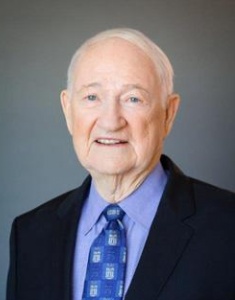 William Edward Hammond II合作论文数Department of Family Medicine and Community Health, School of Medicine, Duke University1
 Christopher G. Chute合作论文数Department of Medicine, School of Medicine, Johns Hopkins University;Institute for Clinical Translational Research, Johns Hopkins1
 Ida Sim合作论文数School of Medicine, University of California San Francisco1
 Francois Macary合作论文数1Jamie Ferguson合作论文数1
 Stefan Schulz合作论文数Friedrich-Schiller-Universität Jena;7TM Antibodies1Katherine Ryan合作论文数1Paul Rolland合作论文数1
 Philip R.O. Payne合作论文数Institute for Informatics, Data Science & Biostatistics, Washington University School of Medicine;Division of General Internal Medicine, Department of Medicine, Washington University School of Medicine1Bernd Blobel合作论文数Faculty of Medical, Universität Regensburg1
 Heather Grain合作论文数1Vincent Youmans合作论文数1Marc Koehn合作论文数1
 Robert A Stegwee合作论文数1
 Patrick H. Tolan合作论文数Curry School of Education and Human Development, University of Virginia;Department of Psychiatry and Neurobehavioral Sciences, University of Virginia;Youth-Nex Center to Promote Effective Youth Development, University of Virginia;Center for Health Policy, University of Virginia;University of Illinois at Chicago1




