While the notion of isometric deformations of surfaces is straightforward for surfaces with Euclidean metric, a corresponding notion in isotropic space has been missing. By making Gauss' Theorema Egregium a necessary condition we develop a sensible notion of isometric surfaces in isotropic space. The well-known examples in Euclidean space, like isometries within the associated family of minimal surfaces, Bour's theorem, and Minding isometries, find their natural analogues in isotropic space. We also include an extensive treatment of infinitesimal flexibility, or infinitesimal deformation, of surfaces. We prove results for the isotropic displacement diagrams in analogy to its well-known counterparts in Euclidean space culminating in the existence of an isotropic Darboux wreath consisting of six surfaces. We show several interesting relations for special parametrizations involving Koenigs and Voss nets of smooth and discrete surfaces within the Darboux wreath and we encounter surfaces of constant Gaussian and mean curvature. At several occasions, we point to connections to statics as the isotropic space is a natural language to describe the Airy stress function.
In this paper we study the stressability of semi-discrete frameworks in the plane which are generated by a discrete sequence of smooth curves. We characterize their stressability property by the existence of stresses fulfilling certain difference-differential equation. In particular, we define a semi-discrete height function which we use to generate liftings. Furthermore, we show a semi-discrete analogue of the Maxwell-Cremona lifting property which implies that the stressable semi-discrete frameworks in the plane are precisely the orthogonal projections of semi-discrete conjugate surfaces in 3-space. Finally, we discuss geometric implications for frameworks with vanishing boundary forces and characterize the liftability of frameworks which only consist of two neighboring curves forming one strip.
S-embeddings were introduced by Chelkak as a tool to study the conformal invariance of the thermodynamic limit of the Ising model. Moreover, Chelkak, Laslier and Russkikh introduced a lift of s-embeddings to Lorentz space, and showed that in the limit the lift converges to a maximal surface. They posed the question whether there are s-embeddings that lift to maximal surfaces already at the discrete level, before taking the limit. This paper is the first in a two paper series, in which we answer that question in the positive. In this paper we introduce a correspondence between s-embeddings (incircular nets) and congruences of touching Lorentz spheres. This geometric interpretation of s-embeddings enables us to apply the tools of discrete differential geometry. We identify a subclass of s-embeddings -- isothermic s-embeddings -- that lift to (discrete) S-isothermic surfaces, which were introduced by Bobenko and Pinkall. S-isothermic surfaces are the key component that will allow us to obtain discrete maximal surfaces in the follow-up paper. Moreover, we show here that the Ising weights of an isothermic s-embedding are in a subvariety.
S-embeddings were introduced by Chelkak as a tool to study the conformal invariance of the thermodynamic limit of the Ising model. Moreover, Chelkak, Laslier and Russkikh introduced a lift of s-embeddings to Lorentz space, and showed that in the limit the lift converges to a maximal surface. They posed the question whether there are s-embeddings that lift to maximal surfaces already at the discrete level, before taking the limit. We answer this question in the positive. In a previous paper we identified a subclass of s-embeddings–isothermic s-embeddings–that lift to (discrete) S-isothermic surfaces, which were introduced by Bobenko and Pinkall as a discretization of isothermic surfaces. In this paper we identify a special class of isothermic s-embeddings that correspond to discrete S-maximal surfaces, translating an approach of Bobenko, Hoffmann and Springborn introduced for discrete S-minimal surfaces in Euclidean space. Additionally, each S-maximal surface comes with a 1-parameter family of associated surfaces that are isometric. This enables us to obtain an associated family of s-embeddings for each maximal s-embedding. We show that the Ising weights are constant in the associated family.
Meshes with spherical faces and circular edges are an attractive alternative to polyhedral meshes for applications in architecture and design. Approximation of a given surface by such a mesh needs to consider the visual appearance, approximation quality, the position and orientation of circular intersections of neighboring faces and the existence of a torsion free support structure that is formed by the planes of circular edges. The latter requirement implies that the mesh simultaneously defines a second mesh whose faces lie on the same spheres as the faces of the first mesh. It is a discretization of the two envelopes of a sphere congruence, i.e., a two-parameter family of spheres. We relate such sphere congruences to torsal parameterizations of associated line congruences. Turning practical requirements into properties of such a line congruence, we optimize line and sphere congruence as a basis for computing a mesh with spherical triangular or quadrilateral faces that approximates a given reference surface.
Motivated by the emergence of rough surfaces in various areas of design, we address the computational design of triangle meshes with controlled roughness. Our focus lies on small levels of roughness. There, roughness or smoothness mainly arises through the local positioning of the mesh edges and faces with respect to the curvature behavior of the reference surface. The analysis of this interaction between curvature and roughness is simplified by a 2D dual diagram and its generation within so-called isotropic geometry, which may be seen as a structure-preserving simplification of Euclidean geometry. Isotropic dihedral angles of the mesh are close to the Euclidean angles and appear as Euclidean edge lengths in the dual diagram, which also serves as a tool for visualization and interactive local design. We present a computational framework that includes appearance-aware remeshing, optimization-based automatic roughening, and control of dihedral angles.
Discrete surfaces with spherical faces are interesting from a simplified manufacturing viewpoint when compared to other double curved face shapes. Furthermore, by the nature of their definition they are also appealing from the theoretical side leading to a Möbius invariant discrete surface theory. We therefore systematically describe so called sphere meshes with spherical faces and circular arcs as edges where the Möbius transformation group acts on all of its elements. Driven by aspects important for manufacturing, we provide the means to cluster spherical panels by their radii. We investigate the generation of sphere meshes which allow for a geometric support structure and characterize all such meshes with triangular combinatorics in terms of non-Euclidean geometries. We generate sphere meshes with hexagonal combinatorics by intersecting tangential spheres of a reference surface and let them evolve - guided by the surface curvature - to visually convex hexagons, even in negatively curved areas. Furthermore, we extend meshes with circular faces of all combinatorics to sphere meshes by filling its circles with suitable spherical caps and provide a remeshing scheme to obtain quadrilateral sphere meshes with support structure from given sphere congruences. By broadening polyhedral meshes to sphere meshes we exploit the additional degrees of freedom to minimize intersection angles of neighboring spheres enabling the use of spherical panels that provide a softer perception of the overall surface.
In 1864, J. C. Maxwell introduced a link between self-stressed frameworks in the plane and piecewise linear liftings to 3-space. This connection has found numerous applications in areas such as discrete geometry, control theory and structural engineering. While there are some generalisations of this theory to liftings of d-complexes in d-space, extensions for liftings of frameworks in d-space for d≥ 3 have been missing. In this paper, we introduce and study differential liftings on general graphs using differential forms associated with the elements of the homotopy groups of the complements to the frameworks. Such liftings play the role of integrands for the classical notion of liftings for planar frameworks. We show that these differential liftings have a natural extension to self-stressed frameworks in higher dimensions. As a result we generalise the notion of classical liftings to both graphs and multidimensional k-complexes in d-space (k=2,…, d). Finally we discuss a natural representation of generalised liftings as real-valued functions on Grassmannians.
The geometry of webs has been investigated over more than a century driven by still open problems. In our paper we contribute to extending the knowledge on webs from the perspective of the geometry of webs on surfaces in three dimensional space. Our study of AGAG-webs is motivated by architectural applications of gridshell structures where four families of manufactured curves on a curved surface are realizations of asymptotic lines and geodesic lines. We describe all discrete AGAG-webs in isotropic space and propose a method to construct them. Furthermore, we prove that some sub-nets of an AGAG-web are timelike minimal surfaces in Minkowski space and can be embedded into a one-parameter family of discrete isotropic Voss nets.
Cone-nets are conjugate nets on a surface such that along each individual curve of one family of parameter curves there is a cone in tangential contact with the surface. The corresponding conjugate curve network is projectively invariant and is characterized by the existence of particular transformations. We study properties of that transformation theory and illustrate how several known surface classes appear within our framework. We present cone-nets in the classical smooth setting of differential geometry as well as in the context of a consistent discretization with counterparts to all relevant statements and notions of the smooth setting. We direct special emphasis towards smooth and discrete tractrix surfaces which are characterized as principal cone-nets with constant geodesic curvature along one family of parameter curves.
Im SFB Advanced Computational Design werden Entwurfswerkzeuge und ‐prozesse durch multi‐ und interdisziplinäre Grundlagenforschung entwickelt. Das Ziel ist, durch eine neue Generation von Computational‐Design‐Methoden höhere Entwurfsqualität und effizientere Prozesse in Architektur und Bauwesen zu ermöglichen. Die Forschung wird in drei Bereichen durchgeführt: Entwurfsmethodik (A1), visuelle und haptische Entwurfsinteraktion (A2) und Formfindung (A3). Der Bereich A1 umfasst die konzeptionelle Grundlage für neuartige digitale Entwurfsmethoden basierend auf Lernmethoden. Zudem werden die in den Bereichen A2 und A3 entwickelten Computational‐Design‐Werkzeuge und ‐Methoden in einer Plattform verknüpft. Der Bereich A2 eröffnet Designern neuartige Feedback‐Kanäle in digitalen Werkzeugen durch Lichtsimulation und haptisches Feedback. Im Bereich A3 werden die Randbedingungen im Formfindungsprozess hinsichtlich Geometrie, Material, Mechanik und Statik untersucht. Die Schwerpunkte liegen in der Unterteilung von komplexen Flächen in Paneele, der Analyse von formaktiven Strukturen sowie der Modellierung und experimentellen Analyse von neuartigen Kompositmaterialien. Die Exploration von Entwürfen in Interaktion mit intelligenten Materialmodellen und Algorithmen zur Bewertung der Tragstruktur dient einerseits der Entwicklung eines methodischen Ansatzes für die Entdeckung von neuen Möglichkeiten in der Formfindung und ermöglicht andererseits die experimentelle Validierung.
The SFB Advanced Computational Design addresses the research question of how to advance design tools and processes through multi- and interdisciplinary basic research. We will develop advanced computational design tools in order to improve design quality and efficiency of processes in architecture and construction. The proposed research is structured in three areas: design methodology (A1), visual and haptic design interaction (A2) and form finding (A3). A1 focuses on the conceptual basis for new digital methods of design based on machine learning. A1 also acts as a platform for integrating and evaluating the computational tools and methods developed in A2 and A3. A2 investigates real-time global-illumination and optimization algorithms for lighting design, as well as a new method for large-scale haptic interactions in virtual reality. In A3, form finding will be explored regarding geometric, mechanical and material constraints, in particular: paneling of complex shapes by patches of certain surface classes while optimizing the number of molds; algorithms for finding new transformable quad-surfaces; mechanical models for an efficient simulation of bio-composite material systems. Furthermore, new ways of form finding will be explored through physical experiments, which will allow for reconsidering model assumptions and constraints, validating the developed algorithmic approaches, and finding new ones.
We prove an equilibrium stressability criterion for trivalent multidimensional frameworks. The criterion appears in different languages: (1) in terms of stress monodromies, (2) in terms of surgeries, (3) in terms of exact discrete 1-forms, and (4) in Cayley algebra terms.
Motivated by a Möbius invariant subdivision scheme for polygons, we study a curvature notion for discrete curves where the cross-ratio plays an important role in all our key definitions. Using a particular Möbius invariant point-insertion-rule, comparable to the classical four-point-scheme, we construct circles along discrete curves. Asymptotic analysis shows that these circles defined on a sampled curve converge to the smooth curvature circles as the sampling density increases. We express our discrete torsion for space curves, which is not a Möbius invariant notion, using the cross-ratio and show its asymptotic behavior in analogy to the curvature.
Background: Although breaks are essential to restoring cognitive and psychological conditions for learning, short breaks within school lessons are not established and the specificity of effects has not often been investigated. Therefore, the effects of a physical activity (Study 1) and a mindfulness intervention (Study 2) were investigated. Procedure: By an intervention-control group design, the effects of daily 10-min physical activity (Study 1: N = 162, 4th grade) and mindfulness breaks (Study 2: N = 79, 5th grade) were implemented within regular school lessons over a 2-week time period to research the impact on attention, reading comprehension, and self-esteem. Results: In the physical activity intervention children's attention improved (attention-processing speed: p < .004, eta(2)(p)= .05, attention-performance: p < .025, eta(2)(p) = .03), and in the mindfulness intervention reading comprehension improved (p < .012, eta(2)(p) = .08) compared to the controls. Results further indicated that self-esteem moderated the relationship between groups and attention improvement in study 1. Conclusion: Classroom-based short physical and mindfulness breaks could support attention and reading comprehension, which are known to support overall academic success.
Objectives The primary objective of this study was to examine the effects of one-session physical or mindfulness training on university students’ mood, attention and executive functions in two separate randomized studies. Methods Study 1 (physical activity intervention) was implemented in a seminar with 63 and Study 2 (mindfulness intervention) in another seminar with 28 university students. The physical intervention included stretching exercises, balancing tasks, and medium intensity cardiovascular activities. The mindfulness training included yoga exercises, guided attention, and a body scan. In the control conditions, students watched a 15-min fitness or yoga video, respectively. Several mood and attention scales, as well as executive functions were assessed before and after the intervention or control activity. A randomized within-subject cross-over design was applied in both studies. Results Repeated-measures analysis of variance revealed that participants in both intervention conditions reported mood to be more positive, more awake and calmer after the intervention compared to the control conditions. These effects were medium to large (Study 1: eta 2 = .08-.30, Study 2: eta 2 = .15-.30). Attention scores improved more relative to the control condition after the physical intervention (medium effect size, eta 2 = .11). Executive function scores improved more relative to the control condition after the mindfulness intervention (medium effect size, eta 2 = .17). Conclusions These results indicate that a short bout (15-min) of physical or mindfulness activity in a university learning setting positively affected dimensions of mood and cognition known to support academic learning.
In this paper we study a classical Maxwell question on the existence of self-stresses for frameworks, which are called tensegrities. We give a complete answer on geometric conditions of at most $(d+1)$-valent tensegrities in $\mathbb{R}^d$ both in terms of discrete multiplicative 1-forms and in terms of "meet" and "join" operations in the Grassmann-Cayley algebra.
This proposal is a work-in-progress report about analyzing existing online course data and drawing specific conclusions for designing online courses in general. The topic of the observed online course is media education in teacher education. The web-based course was held now for four years (two times a year) with an average of 284 participants each time. It is hosted in an open-source learning management system and consists of six learning modules, one test per module, and an online task related to one of the six existing learning modules. The course was designed and supervised according to a design-based research approach. The conception of the course will be analyzed with existing data. The data set consists of anonymized log files about using the online course and data gained in a questionnaire for each pass. The main idea of the data analysis is to gain information about designing online courses. The main results will be some guidelines for creating a newer version of the course, which might be applicable for online courses in general.
 jeanclaude heitzler合作论文数16strofer eckhard dr合作论文数11Matthias Rogg合作论文数8
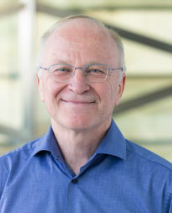 Helmut Pottmann合作论文数Institute of Discrete Mathematics and Geometry, TU Wien;Center for Geometric Modeling and Scientific Visualization, King Abdullah University of Science and Technology8Martin Kilian合作论文数Institute for Discrete Mathematics and Geometry, TU Wien7jeanlouis dupin合作论文数6
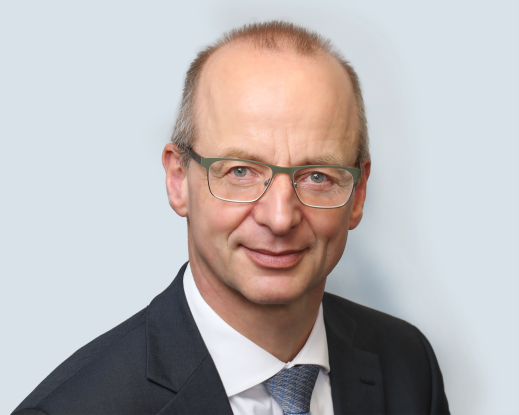 Peter Groche合作论文数Institute for Production Engineering and Forming Machines, Technische Universität Darmstadt6
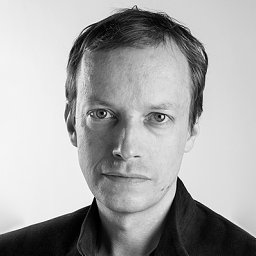 Florian Rist合作论文数KAUST5
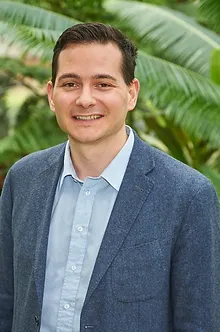 Andreas Walther合作论文数Professor for Macromolecular Materials and Systems at the Department of Chemistry at the Johannes Gutenberg University in Mainz (Germany), as well as a Max Planck Research Fellow at the MPI for Polymer Research.
4
Andreas Walther合作论文数Professor for Macromolecular Materials and Systems at the Department of Chemistry at the Johannes Gutenberg University in Mainz (Germany), as well as a Max Planck Research Fellow at the MPI for Polymer Research.
4 Oleg Karpenkov合作论文数4
 Amir Vaxman合作论文数School of Informatics, University of Edinburgh;Institute of Perception, Action and Behaviour, University of Edinburgh4vincenzo costa合作论文数3
 Hui Wang (王慧)合作论文数School of Mathematics and Statistics, Xi’an Jiaotong University3markus weber合作论文数3faderl jurgen dr合作论文数3andreas wolfert合作论文数3
 Ofir Weber合作论文数Faculty of Engineering, Bar-Ilan University3
 Davide Pellis合作论文数TU Wien3
 Cornelius Herstatt合作论文数Hamburg University of Technology;Institute of Technology;Institute of Technology, Hamburg University of Technology3Anthony s ramos Cisneros合作论文数2ake olofsson合作论文数2sonke kock合作论文数2Gerd-Jan Krol合作论文数2Stig Förster合作论文数2
 Andreas Brodhagen合作论文数2eidgenossischen technischen合作论文数2kai thiele合作论文数2Saliha Klai合作论文数2andreas roither合作论文数2David Hahn合作论文数2jose freudenreich合作论文数2wolfgang schutzendubel合作论文数2ilka bosse合作论文数2frank haneball合作论文数2kilian model合作论文数2Christa Holzenkamp合作论文数2Stefan Rutzinger合作论文数2kristina schinegger合作论文数2Nico Hartmann合作论文数2
 Milena Stavric合作论文数Inst Architecture & Media, Graz Univ Technol2
 Iva Kovacic合作论文数Institute of Building and Industrial Construction, TU Wien2Georg Suter合作论文数Corresponding author. Tel.: +43-1-58801-270-37; fax: +43-1-58801-270-932Edgar Schmitt合作论文数2
 Takao Fujiwara合作论文数2
 Michael Ulrich Hensel合作论文数2
 Helmut Jonuleit合作论文数2Bernd Wegner合作论文数2
 Hannes Kaufmann合作论文数Vienna University of Technology2
 Steffen Schmitt合作论文数2




