On October 19 and 20, 2023, the authors of this report convened in Cambridge, MA, to discuss the state of the database research field, its recent accomplishments and ongoing challenges, and future directions for research and community engagement. This gathering continues a long standing tradition in the database community, dating back to the late 1980s, in which researchers meet roughly every five years to produce a forward looking report. This report summarizes the key takeaways from our discussions. We begin with a retrospective on the academic, open source, and commercial successes of the community over the past five years. We then turn to future opportunities, with a focus on core data systems, particularly in the context of cloud computing and emerging hardware, as well as on the growing impact of data science, data governance, and generative AI. This document is not intended as an exhaustive survey of all technical challenges or industry innovations in the field. Rather, it reflects the perspectives of senior community members on the most pressing challenges and promising opportunities ahead.
It has been a decade since the concept of blockchain was invented as the underlying core data structure of the permissionless or public Bitcoin cryptocurrency network. Since then, several cryptocurrencies, tokens and ICOs have emerged. After much speculation and hype, significant number of them have become problematic or worthless! The public blockchain system Ethereum emerged by generalizing the use of blockchains to manage any kind of asset, be it physical or purely digital, with the introduction of Smart Contracts. Over the years, numerous myths have developed with respect to the purported utility and the need for public blockchains. The adoption and further adaptation of blockchains and smart contracts for use in the permissioned or private environments is what I consider to be useful and of practical consequence. Hence, the technical aspects of only private blockchain systems will be the focus of my SIGMOD 2019 keynote. Along the way, I will bust many myths associated with public blockchains. I will also compare traditional database technologies with blockchain systems' features and identify desirable future research topics.
In a classic transactional distributed database management system (DBMS), write transactions invariably synchronize with a coordinator before final commitment. While enforcing serializability, this model has long been criticized for not satisfying the applications' availability requirements. When entering the era of Internet of Things (IoT), this problem has become more severe, as an increasing number of applications call for the capability of hybrid transactional and analytical processing (HTAP), where aggregation constraints need to be enforced as part of transactions. Current systems work around this by creating escrows, allowing occasional overshoots of constraints, which are handled via compensating application logic. The WiSer DBMS targets consistency with availability, by splitting the database commit into two steps. First, a PROMISE step that corresponds to what humans are used to as commitment, and runs without talking to a coordinator. Second, a SERIALIZE step, that fixes transactions' positions in the serializable order, via a consensus procedure. We achieve this split via a novel data representation that embeds read-sets into transaction deltas, and serialization sequence numbers into table rows. WiSer does no sharding (all nodes can run transactions that modify the entire database), and yet enforces aggregation constraints. Both readwrite conflicts and aggregation constraint violations are resolved lazily in the serialized data. WiSer also covers node joins and departures as database tables, thus simplifying correctness and failure handling. We present the design of WiSer as well as experiments suggesting this approach has promise.
Provides an abstract of the keynote presentation and may include a brief professional biography of the presenter. The complete presentation was not made available for publication as part of the conference proceedings.
In this tutorial, I survey some of the private blockchain systems with respect to their architectures in general and their approaches to some specific technical areas. Specifically, I focus on how the functionality of traditional and modern data stores are being utilized or not utilized in the different blockchain systems.
In the last few years, blockchain (also known as distributed ledger), the underlying technology of the permissionless or public Bitcoin network, has become very popular for use in private or permissioned environments. Computer companies like IBM and Microsoft, and many key players in different vertical industry segments have recognized the utility of blockchains for securely managing assets (physical/digital) other than cryptocurrencies. IBM did some pioneering work by architecting and implementing a private blockchain system, and then open sourcing it. That system, which has since then been named Fabric, is being enhanced via the Hyperledger Consortium set up under the auspices of the Linux Foundation. Other efforts in the industry include Enterprise Ethereum, R3 Corda and BigchainDB.
AbstractIn the last few years, blockchain (also known as distributed ledger), the underlying technology of the permissionless or public Bitcoin network, has become very popular for use in private or permissioned environments. Computer companies like IBM and Microsoft, and many key players in different vertical industry segments have recognized the utility of blockchains for securely managing assets (physical/digital) other than cryptocurrencies. IBM did some pioneering work by architecting and implementing a private blockchain system, and then open sourcing it. That system, which has since then been named Fabric, is being enhanced via the Hyperledger Consortium set up under the auspices of the Linux Foundation. Other efforts in the industry include Enterprise Ethereum, R3 Corda and BigchainDB.
We demonstrate Hybrid Transactional and Analytics Processing (HTAP) on the Spark platform by the Wildfire prototype, which can ingest up to ~6 million inserts per second per node and simultaneously perform complex SQL analytics queries. Here, a simplified mobile application uses Wildfire to recommend advertising to mobile customers based upon their distance from stores and their interest in products sold by these stores, while continuously graphing analytics results as those customers move and respond to the ads with purchases.
Big Data has become a hot topic in the last few years in both industry and the research community. For the most part, these developments were initially triggered by the requirements of Web 2.0 companies. Both technical and non-technical issues have continued to fuel the rapid pace of developments in the Big Data space. Open source and non-traditional software entities have played key roles in the latter. As it always happens with any emerging technology, there is a fair amount of hype that accompanies the work being done in the name of Big Data. The set of clear-cut distinctions that were made initially between Big Data systems and traditional database management systems are being blurred as the needs of the broader set of (real world) users and developers have come into sharper focus in the last couple of years. In this talk, I will survey the developments in Big Data and try to distill reality from the hype!
This tutorial is targeted at a broad set of database systems and applications people. It is intended to let the attendees better appreciate what is really behind the covers of many of the modern database systems (e.g., NoSQL and NewSQL systems) going beyond the hype associated with these open source, commercial and research systems. The capabilities and limitations of such systems will be addressed. Modern extensions to decades old relational DBMSs will also be described. Some application case studies will also be presented.
Fatma Ozcan IBM Almaden Research Center San Jose, CA fozcan@us.ibm.com Nesime Tatbul Intel Labs and MIT Cambridge, MA tatbul@csail.mit.edu Daniel J. Abadi Yale University New Haven, CT dna@cs.yale.edu Marcel Kornacker Cloudera San Francisco, CA marcel@cloudera.com C Mohan IBM Almaden Research Center San Jose, CA cmohan@us.ibm.com Karthik Ramasamy Twitter, Inc. San Francisco, CA karthik@twitter.com Janet Wiener Facebook, Inc. Menlo Park, CA jlw@fb.com
In this paper, I describe some of the recent developments in the database management area, in particular the NoSQL phenomenon and the hoopla associated with it. The goal of the paper is not to do an exhaustive survey of NoSQL systems. The aim is to do a broad brush analysis of what these developments mean - the good and the bad aspects! Based on my more than three decades of database systems work in the research and product arenas, I will outline what are many of the pitfalls to avoid since there is currently a mad rush to develop and adopt a plethora of NoSQL systems in a segment of the IT population, including the research community. In rushing to develop these systems to overcome some of the shortcomings of the relational systems, many good principles of the latter, which go beyond the relational model and the SQL language, have been left by the wayside. Now many of the features that were initially discarded as unnecessary in the NoSQL systems are being brought in, but unfortunately in ad hoc ways. Hopefully, the lessons learnt over three decades with relational and other systems would not go to waste and we wouldn't let history repeat itself with respect to simple minded approaches leading to enormous pain later on for developers as well as users of the NoSQL systems! Caveat: What I express in this paper are my personal opinions and they do not necessarily reflect the opinions of my employer.
In this paper, I survey briefly some of the recent and emerging trends in hardware and software features which impact high performance transaction processing and data analytics applications. These features include multicore processor chips, ultra large main memories, flash storage, storage class memories, database appliances, field programmable gate arrays, transactional memory, key-value stores, and cloud computing. While some applications, e.g., Web 2.0 ones, were initially built without traditional transaction processing functionality in mind, slowly system architects and designers are beginning to address such previously ignored issues. The availability, analytics and response time requirements of these applications were initially given more importance than ACID transaction semantics and resource consumption characteristics. A project at IBM Almaden is studying the implications of phase change memory on transaction processing, in the context of a key-value store. Bitemporal data management has also become an important requirement, especially for financial applications. Power consumption and heat dissipation properties are also major considerations in the emergence of modern software and hardware architectural features. Considerations relating to ease of configuration, installation, maintenance and monitoring, and improvement of total cost of ownership have resulted in database appliances becoming very popular. The MapReduce paradigm is now quite popular for large scale data analysis, in spite of the major inefficiencies associated with it.
Storage class memory (SCM), a new generation of memory technology, offers non-volatility, high-speed, and byte-addressability, which combines the best properties of current hard disk drives (HDD) and main memory. With these extraordinary features, current systems and software stacks need to be redesigned to get significantly improved performance by eliminating disk input/output (I/O) barriers; and simpler system designs by avoiding complicated data format transformations. In current DBMSs, logging and recovery are the most important components to enforce the atomicity and durability of a database. Traditionally, database systems rely on disks for logging transaction actions and log records are forced to disks when a transaction commits. Because of the slow disk I/O speed, logging becomes one of the major bottlenecks for a DBMS. Exploiting SCM as a persistent memory for transaction logging can significantly reduce logging overhead. In this paper, we present the detailed design of an SCM-based approach for DBMSs logging, which achieves high performance by simplified system design and better concurrency support. We also discuss solutions to tackle several major issues arising during system recovery, including hole detection, partial write detection, and any-point failure recovery. This new logging approach is used to replace the traditional disk based logging approach in DBMSs. To analyze the performance characteristics of our SCM-based logging approach, we implement the prototype on IBM SolidDB. In common circumstances, our experimental results show that the new SCM-based logging approach provides as much as 7 times throughput improvement over disk-based logging in the Telecommunication Application Transaction Processing (TATP) benchmark.
 Hamid Pirahesh合作论文数Exploratory Database Department, Almaden Research Center, IBM24
 Gustavo Alonso合作论文数Systems Group, Department of Computer Science, ETH Zurich15
 Bruce Lindsay合作论文数Paradata10
 Divyakant Agrawal合作论文数Department of Computer Science, College of Engineering, University of California, Santa Barbara9
 Guy Lohman合作论文数9
 Berthold Reinwald合作论文数IBM Almaden Research Center8
 Laura Haas合作论文数Manning College of Information & Computer Sciences, University of Massachusetts Amherst8
 Amr El Abbadi合作论文数Department Computer Science, University of California, Santa Barbara;Dstributed Systems Laboratory, University of California, Santa Barbara8
 Mehmet Altinel合作论文数IBM Almaden Research Center7Roger Günthör合作论文数6
 Sailesh Krishnamurthy合作论文数Google6
 Inderpal Narang合作论文数Database Technology Institute;IBM Research;Almaden Research Center6Paul F. Wilms合作论文数6M. Kamath合作论文数5
 Rakesh Agrawal合作论文数Data Insights Laboratories4Christof Bornhövd合作论文数Technische Universitat Darmstadt4Robert A. Yost合作论文数3John McPherson合作论文数3
 Avi Silberschatz合作论文数Department of Computer Science, Yale University3
 Joseph M. Hellerstein合作论文数EECS Computer Science Division, University of California, Berkeley3
 Fatma Ozcan合作论文数Google3Dean S. Daniels合作论文数3
 Patricia G. Selinger合作论文数IBM3frank e levine合作论文数2P. Selinger合作论文数2I. Narang合作论文数2josephine m cheng合作论文数2Mahadevan Subramanian合作论文数2JD Spyker合作论文数2
 Rene Mueller合作论文数Almaden Research, IBM2Y Yao合作论文数2
 Adam Storm合作论文数IBM2
 Nesime Tatbul合作论文数Computer Science and Artificial Intelligence Laboratory, Massachusetts Institute of Technology;Data Systems and AI Lab, Massachusetts Institute of Technology;Parallel Computing Lab, Intel Labs2T. S. Liu合作论文数2Yun Wang合作论文数2
 Donald S. Fussell合作论文数Department of Computer Sciences, College of Natural Sciences, The University of Texas at Austin;Computer Engineering Research Center, The University of Texas at Austin;Institute for Computational Engineering and Sciences, The University of Texas at Austin2
 Sihem Amer-Yahia合作论文数Laboratoire d’Informatique de Grenoble;Centre National de Recherche Scientifique2
 Magdalena Balazinska合作论文数UW Reality Lab, Paul G. Allen School of Computer Science & Engineering, University of Washington2
 Surajit Chaudhuri合作论文数Microsoft Research2
 Yannis Ioannidis合作论文数Department of Informatics, National and Kapodistrian University of Athens;Athena Research and Innovation Center2
 Jennifer Widom合作论文数School of Engineering, Stanford University2
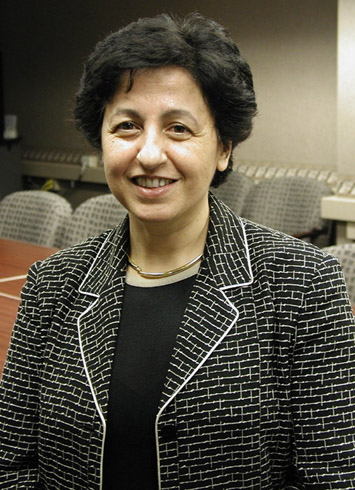 Elisa Bertino合作论文数Department of Computer Science, Purdue University;Cyber Space Security Lab, Purdue University2
 Peter M. Schwarz合作论文数Global Institute of Energy and Environmental Systems;Economics Department;University of North Carolina Charlotte;Global Institute of Energy and Environmental Systems, University of North Carolina Charlotte2
 Daniel Abadi合作论文数Department of Computer Science, Brendan Iribe Center for Computer Science and Engineering, University of Maryland2
 Alon Halevy合作论文数Amazon Web Services2Marcel Kornacker合作论文数2
 Pinar Tozun合作论文数IBM Almaden Research Center2George Lapis合作论文数2
 Yuanyuan Tian合作论文数Microsoft Gray Systems Lab2




