Previous studies demonstrated that the thrombin-induced permeability of endothelial cell monolayers is reduced by the elevation of cGMP. In the present study, the presence of cGMP-dependent protein kinase (cGMP-PK) immunoreactivity and activity in various types of human endothelial cells (ECs) and the role of cGMP-PK in the reduction of thrombin-induced endothelial permeability was investigated. cGMP-PK type I was demonstrated in freshly isolated ECs from human aorta and iliac artery as well as in cultured ECs from human aorta, iliac vein, and foreskin microvessels. Addition of the selective cGMP-PK activator 8-(4-chlorophenylthio)-cGMP (8-pCPT-cGMP) to these ECs caused phosphorylation of the vasodilator-stimulated phosphoprotein (VASP), an established cGMP-PK substrate, which is localized at cell-cell contact sites of confluent ECs. cGMP-PK type I expression decreased during serial passage of ECs, which correlated with a diminished ability of 8-pCPT-cGMP to induce VASP phosphorylation. Preincubation of aorta and microvascular EC monolayers with 8-pCPT-cGMP caused a 50% reduction of the thrombin-stimulated permeability, as determined by measuring the peroxidase passage through EC monolayers on porous filters. Furthermore, the thrombin-induced rise in cytoplasmic [Ca2+](i) was strongly attenuated by the cGMP-PK activator in fura 2-loaded aorta ECs. In contrast, cGMP-PK could not be demonstrated in freshly isolated and cultured human umbilical vein ECs. Incubation of umbilical vein ECs with 8-pCPT-cGMP did not cause VASP phosphorylation and had no effect on the thrombin-induced increases in cytoplasmic Ca2+ and endothelial permeability. These data indicate that cGMP-PK type I is expressed in various types of human macrovascular and microvascular ECs but is absent or expressed in very low amounts in umbilical vein ECs. cGMP-PK type I expression in ECs may be important in the regulation of endothelial permeability and the release of factors involved in vasoregulation and hemostasis.
Compounds that elevate intraplatelet guanosine 3',5'-cyclic monophosphate (cGMP) or adenosine 3',5'-cyclic monophosphate (cAMP) stimulate the phosphorylation of a 46- to 56-kDa thrombocyte protein designated "vasodilator-stimulated protein" (VASP), which is most likely involved in the regulation of adhesion/aggregation. We investigated whether endothelium-derived relaxing factor (EDRF)/nitric oxide (NO) and prostaglandin I2 (PGI2) affected VASP phosphorylation in washed human platelets that were injected into the coronaries of saline-perfused rabbit hearts (n = 22) and collected immediately after passage. The endothelial stimulator acetylcholine (ACh; 1 microM) significantly increased the concentration of cGMP (indicating release of EDRF) and PGI2 in the coronary venous effluent, as well as the concentration of cGMP and cAMP in platelets. Phosphorylation state of VASP increased from 32.1 +/- 2.9 to 64.8 +/- 2.7%. Inhibition of EDRF/NO synthesis by NG-nitro-L-arginine (30 microM) completely abolished the ACh-induced cGMP increase, attenuated the cAMP-elevation without affecting PGI2, and caused a 20.5 +/- 5.8% decrease of the phosphorylation state of VASP. Indomethacin (30 microM) virtually abolished ACh-induced increases of PGI2, cAMP (but not cGMP), and phosphorylated VASP. These results indicate that both EDRF/NO and PGI2 contribute to the regulation of VASP phosphorylation in platelets collected after a single coronary passage. Their synergistic inhibitory effects on platelet function may thus be mediated by a common effect on target proteins like VASP as well as by a secondary increase in cAMP in response to cGMP-elevating compounds such as EDRF.
The mechanism underlying the synergistic inhibition of platelet activation by cGMP- and cAMP-elevating vasodilators was investigated using washed human platelets and platelet-rich plasma. With both types of human platelet preparations, low concentrations of sodium nitroprusside increased the cAMP-elevating potency of low concentrations of prostaglandin E1 (PG-E1). Using threshold concentrations of both sodium nitroprusside and PG-E1, the NO-donor potentiated the effect of PG-E1 with respect to the phosphorylation of the focal adhesion-associated vasodilator-stimulated phosphoprotein (VASP) at serine157. In contrast, threshold concentrations of cell-membrane permeant selective activators of the platelet cGMP-dependent protein kinase or the cAMP-dependent protein kinase had only additive effects on VASP serine157 phosphorylation in washed human platelets. The data demonstrate that low intracellular levels of cGMP effectively inhibit type III cGMP-inhibited phosphodiesterase in human platelets despite the high levels of cGMP-dependent protein kinase present in this cell type. This study provides the first evidence that the simultaneous activation of both cGMP- and cAMP-dependent protein kinase results in additive effects on VASP serine157 phosphorylation, whereas the supra-additive effects observed with the combination of sodium nitroprusside and PG-E1 are due to cGMP-mediated inhibition of type III phosphodiesterase. VASP phosphorylation at serine157 may be an important component underlying the synergistic inhibition of human platelets by cGMP-and cAMP-elevating agents.
Stimulation of Ca2+ mobilization and entry by agonists such as ADP, thrombin, and thromboxane is an early step of platelet activation. Here, we compared the effects of adenosine 3',5'-cyclic monophosphate (cAMP)-elevating prostaglandins, guanosine 3',5'-cyclic monophosphate (cGMP)-elevating nitrovasodilators, membrane-permeant selective activators of cAMP- or cGMP-dependent protein kinases, and physiological endothelium-derived factors on the agonist-evoked Ca2+ mobilization and entry in human platelets. Prostaglandin E(1), the prostacyclin analogue Iloprost, the nitric oxide (NO) donor 3-morpholinosydnonimine hydrochloride, and selective activators of cGMP- or cAMP-dependent protein kinase strongly inhibited the agonist-evoked Ca2+ mobilization from intracellular stores and associated late Ca2+ entry but had little effects on the rapid (1st) phase of ADP-evoked Ca2+ entry. During coincubation of platelets with endothelial cells, endothelium-derived factors that were released strongly inhibited platelet agonist-evoked Ca2+ mobilization and only moderately affected the rapid phase of ADP-evoked Ca2+ entry. These effects were partially prevented when endothelial cells were preincubated with cyclooxygenase and/or NO synthase inhibitors. Endothelial cells therefore produce sufficient quantities of labile platelet inhibitors whose effects on the platelet Ca2+ response resemble those observed with selective cAMP- and cGMP-dependent protein kinase activators.
Vasodilators capable of elevating cAMP or cGMP inhibit the activation of human platelets and stimulate the phosphorylation of a 46-kDa protein (vasodilator-stimulated phosphoprotein, VASP) mediated by cAMP-dependent protein kinase (PKA) and cGMP-dependent protein kinase (PKG). The availability of purified proteins and specific antisera against VASP, PKG and the catalytic subunit of PKA enabled us to measure and estimate the concentration of these regulatory proteins in intact human platelets. In addition, the rate of PKA- and PKG-mediated VASP phosphorylation in intact human platelets was estimated. For these calculations, a homogeneous population of human platelets and a homogeneous intracellular distribution of proteins and second messengers was assumed. Unstimulated washed human platelets contain 4.4 microM cAMP and 3.1 microM catalytic subunit of PKA, which is equivalent to 6.2 microM cAMP-binding sites due to PKA. Unstimulated washed human platelets also contain 0.4 microM cGMP and 7.3 microM PKG monomer, equivalent to 14.6 microM cGMP-binding sites due to the PKG. The intracellular concentration of VASP in platelets was estimated to be 25 microM. Treatment of washed human platelets with 10 microM (or 10 mM) prostaglandin E1 (PGE1) elevated the intracellular cAMP concentration to 27 microM (10 microM with 10 nM PGE1) within 30 s, accompanied by a rapid, up to 55% (35%), conversion of VASP from the dephosphorylated form (46-kDa protein) to the phosphorylated form (50-kDa protein). Treatment of washed human platelets with 100 microM (or 1 microM) sodium nitroprusside elevated the platelet cGMP level to 4 microM (0.9 microM with 1 microM sodium nitroprusside) within 2 min, accompanied by a less-rapid VASP phosphorylation of 45% (27% with 1 microM sodium nitroprusside). PGE1 and sodium nitroprusside had no significant effect on human platelet cGMP or cAMP levels, respectively. The results suggest for human platelets that relatively small increase in cAMP levels are required for activation of most of PKA, whereas even several-fold increases in platelet cGMP levels are capable of stimulating only a small fraction of total PKG. This interpretation was also supported by phosphorylation experiments with purified VASP, PKG and catalytic subunit of PKA. The results also support the hypothesis that in human platelets both cAMP/PKA- and cGMP/PKG-regulated VASP phosphorylation are components of an efficient and sensitive signal-transduction pathway, most likely involved in the inhibition of platelet activation.(ABSTRACT TRUNCATED AT 400 WORDS)
8-(p-Chlorophenylthio)-cGMP (8-pCPT-cGMP) and 8-bromo-cGMP were compared with respect to their chemical and biological properties in order to evaluate their potential as selective activators of cGMP-dependent protein kinase (cGMP-PK; EC 2.7.1.37) in intact human platelets. 8-pCPT-cGMP, 8-Br-cGMP and cGMP were shown to be potent and selective activators of purified bovine lung cGMP-PK and of cGMP-PK present in human platelet membranes when compared with the activation of cAMP-dependent protein kinase (cAMP-PK; EC 2.7.1.37). 8-pCPT-cGMP was not hydrolysed by the purified cGMP-stimulated phosphodiesterase (cGS-PDE), cGMP-inhibited phospho-diesterase (cGI-PDE) and Ca2+-calmodulin-dependent phosphodiesterase (CaM-PDE), whereas cGMP and, to a lesser extent, 8-Br-cGMP were hydrolysed by all three types of 3',5' cyclic nucleotide phosphodiesterases (EC 3.1.4.17) examined. Also, 8-pCPT-cGMP was not hydrolysed by a human platelet homogenate which contains a high level of the cGMP-specific cGMP-binding phosphodiesterase (cGB-PDE). Additionally, 8-pCPT-cGMP did not activate the cGS-PDE or inhibit the cGI-PDE, whereas half-maximal inhibition of cGI-PDE occurred at 8 μM 8-Br-cGMP. The apparent lipophilicity of 8-pCPT-cGMP was higher than that of 8-Br-cGMP. Extracellular application of 8-pCPT-cGMP to intact human platelets reproduced the pattern of protein phosphorylation induced by sodium nitroprusside (SNP), a cGMP-elevating inhibitor of platelet activation. Quantitatively, 8-pCPT-cGMP was more effective than 8-Br-cGMP in inducing phosphorylation of the 46/50 kDa vasodilator-stimulated phosphoprotein, a major substrate of cGMP-PK in intact platelets. As observed with SNP, pretreatment of human platelets with 8-pCPT-cGMP prevented the aggregation induced by thrombin. the results suggest that 8-pCPT-cGMP is a very potent and selective activator of cGMP-PK in cell extracts and in intact human platelets and, in this respect, is superior to 8-Br-cGMP and other cGMP analogs used for intact cell studies. the data also suggest that inhibition of platelet activation in intact human platelets by nitrovasodilators is mediated by cGMP-PK.
Most platelet agonists activate and elevate the cytosolic free calcium concentration in human platelets through receptor-dependent mechanisms that are antagonized by cAMP- and cGMP-elevating agents. Nitrovasodilators such as nitroprusside and endothelium-derived relaxing factor are potent cGMP-elevating platelet inhibitors. In the present study, the role of cGMP and cGMP-dependent protein kinase in nitrovasodilator inhibition of ADP- and thrombin-evoked calcium elevation and activation of human platelets was investigated. Preincubation of platelets with 8-(4-chlorophenylthio)guanosine 3',5'-cyclic monophosphate (8-pCPT-cGMP; a membrane-permeant selective activator of the cGMP-dependent protein kinase that does not significantly affect cGMP-regulated phosphodiesterases) inhibited the thrombin-induced phosphorylation mediated by myosin light chain kinase and protein kinase C. Nitrovasodilator-induced protein phosphorylation in human platelets was distinct from that induced by cAMP-elevating prostaglandins and could be mimicked by 8-pCPT-cGMP. Preincubation of human platelets with nitrovasodilators or 8-pCPT-cGMP inhibited the ADP- and thrombin-evoked calcium elevation in the presence and absence of external calcium. Nitrovasodilators and 8-pCPT-cGMP also inhibited the agonist-induced Mn2+ influx, but stopped-flow experiments indicated that the ADP receptor-operated cation channel was not significantly inhibited. These results suggest that in human platelets nitrovasodilators inhibit the agonist-induced calcium mobilization from intracellular stores and the secondary store-related calcium influx but not the ADP receptor-operated cation channel. The results also suggest that these nitrovasodilator effects are mediated by cGMP and the cGMP-dependent protein kinase.
We reported previously that a 46/50-kDa membrane-associated vasodilator-stimulated phosphoprotein (VASP) is phosphorylated in intact human platelets in response to both cGMP- and cAMP-elevating vasodilator drugs and presented evidence that this is mediated by cGMP- and cAMP-dependent protein kinases, respectively. VASP was recently purified and an antibody against it was developed which detects a phosphorylation-induced mobility change of VASP in sodium dodecyl sulfate-polyacrylamide gel electrophoresis (Halbrugge, M., Friedrich, C., Eigenthaler, M., Schanzenbacher, P., and Walter, U. (1990) J. Biol. Chem. 265, 3088-3093). We have now used these methods for the quantitative analysis of VASP phosphorylation during coincubations of human endothelial cells and human platelets. Endothelial cell-derived factors caused the rapid, stoichiometric, and reversible phosphorylation of platelet VASP during these coincubations. Other experiments indicated that the endothelium-derived factors which stimulate VASP phosphorylation are prostacyclin and endothelium-derived relaxing factor whose effects are mediated by cAMP/cAMP-dependent protein kinase and cGMP/cGMP-dependent protein kinase, respectively. The results suggest that VASP phosphorylation is an important component of the inhibitory effects of prostacyclin and endothelium-derived relaxing factor on platelet activation and that VASP phosphorylation is a useful biochemical marker for the interaction of endothelial cells and platelets.
Platelets and their interaction with the vessel wall are very important for the regulation of vascular tone and hemostasis. The vessel wall-platelet interaction and the activation state of platelets appear to be altered in vascular diseases such as atherosclerosis, hypertension and thrombosis. In these diseases, it is often desirable to inhibit the activation of platelets and the associated adhesion, aggregation and release of platelet-derived vasoactive factors. Therefore, it is of considerable interest to understand the nature and mechanism of action of platelet inhibitors. Two very important physiological platelet inhibitors are produced by endothelial cells, prostacyclin (PG-I2) and the endothelium-derived relaxing factor (EDRF). PG-I2 and nitric oxide-generating agents such as EDRF and other nitrovasodilators stimulate in human platelets the stoichiometric and reversible phosphorylation of several proteins mediated by either cAMP/cAMPdependent protein kinase or cGMP/cGMP-dependent protein kinase, respectively. The platelet pathways affected by both cGMP/cGMP-dependent protein kinase and cAMP/cAMP-dependent protein kinase result in the inhibition of platelet activation, most likely due to the inhibition of agonist-induced calcium mobilization. Some current concepts concerning the mechanisms of action of cyclic nucleotide-elevating platelet inhibitors will be discussed.
A newly designed cyclic AMP (cAMP) analogue, Sp-5,6-dichloro-1-beta-D-ribofuranosylbenzimidazole-3',5'-monophosphorothioate (Sp-5,6-DCl-cBiMPS), and 8-(p-chlorophenylthio)-cAMP (8-pCPT-cAMP) were compared with respect to their chemical and biological properties in order to assess their potential as activators of the cAMP-dependent protein kinases (cAMP-PK) in intact cells. Sp-5,6-DCl-cBiMPS was shown to be both a potent and specific activator of purified cAMP-PK and of cAMP-PK in platelet membranes, whereas 8-pCPT-cAMP proved to be a potent activator of cAMP-PK and cyclic-GMP-dependent protein kinase (cGMP-PK) both as purified enzymes and in platelet membranes. Sp-5,6-DCl-cBiMPS was not significantly hydrolysed by three types of cyclic nucleotide phosphodiesterases, whereas 8-pCPT-cAMP (and 8-bromo-cAMP) was hydrolysed to a significant extent by the Ca2+/calmodulin-dependent phosphodiesterase and by the cGMP-inhibited phosphodiesterase. The apparent lipophilicity, a measure of potential cell-membrane permeability, of Sp-5,6-DCl-cBiMPS was higher than that of 8-pCPT-cAMP. Extracellular application of Sp-5,6-DCl-cBiMPS to intact human platelets reproduced the pattern of protein phosphorylation induced by prostaglandin E1, a cAMP-increasing inhibitor of platelet activation. In intact platelets, Sp-5,6-DCl-cBiMPS was also more effective than 8-pCPT-cAMP in inducing quantitative phosphorylation of the 46/50 kDa vasodilator-stimulated phosphoprotein (VASP), a major substrate of cAMP-PK in platelets. As observed with prostaglandin E1, pretreatment of human platelets with Sp-5,6-DCl-cBiMPS prevented the aggregation induced by thrombin. The results suggest that Sp-5,6-DCl-cBiMPS is a very potent and specific activator of cAMP-PK in cell extracts and intact cells and, in this respect, is superior to any other cAMP analogue used for intact-cell studies. In contrast with 8-pCPT-cAMP, Sp-5,6-DCl-cBiMPS can be used to distinguish the signal-transduction pathways mediated by cAMP-PK and cGMP-PK.
Ist die Endothelfunktion intakt, so kommen diese Agonisten nicht unmittelbar mit der glatten GefäßmuskuIatur in Kontakt, sondern stimulieren zunächst einmal, meist über einen rezeptorgekoppelten Mechanismus, das Endothel, wodurch es zur nachfolgenden Freisetzung von verschiedenen Lokalhormonen (sog. Autakoiden) kommt Diese Autakoide, wie der „endothelium-derived relaxant factor“ (EDRF; wahrscheinlich mit dem Stickoxid-(NO-)Radikal identisch) und verschiedene Prostaglandine (z. B. Prostazyklin, PGI2) bewirken bei abluminal gerichteter Freisetzung Vasodilatation und bei luminal gerichteter Freisetzung in erster Linie eine Hemmung der Thrombozytenadhäsion und -aggregation.
 Ulrich Walter合作论文数Centrum für Thrombose und Hämostase, Unversität Mainz16
 Martin Eigenthaler合作论文数Institut für Klinische Biochemie und Pathobiochemie der, Julius-Maximilians-Universität10maria halbrugge合作论文数5
 Elke Butt合作论文数5P Schanzenbacher合作论文数4
 Jorg Geiger合作论文数Institute of Clinical Biochemistry;University of Würzburg;Institute of Clinical Biochemistry, University of Würzburg4K Horstrup合作论文数2So Sage合作论文数2J Beltman合作论文数2
 Bernd Jastorff合作论文数2Hr Dejonge合作论文数1U Walter合作论文数1L Fischer合作论文数1Vwm Vanhinsbergh合作论文数1PC DARTSCH合作论文数1Draijer R合作论文数1
 Ulrich Pohl合作论文数Walter-Brendel-Centre of Experimental Medicine, Ludwig-Maximilians-University1Wolfgang Schaper合作论文数1Kurt Kochsiek合作论文数1Eberhard Bassenge合作论文数1
 Hans-Gottfried Genieser合作论文数1
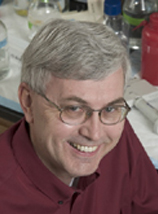 Joseph Beavo合作论文数Department of Pharmacology, University of Washington1
 Marten Sandberg合作论文数Air Ambulance Department, Oslo University Hospital – Ullevål1Tore Jahnsen合作论文数1
 Arie B. Vaandrager合作论文数Faculty of Veterinary Medicine, and Institute of Biomembranes, Utrecht University1




