Over 40 soil gas samples were collected both in post-industrial areas as well as in undisturbed areas in the region of Kvarntorp, Sweden. Radioxenon (133Xe) was detected in 15 samples and radioargon was detected in 7 from 10 samples analysed. The concentration of radioxenon and radioargon in soil gas ranged up to 109 mBq/m3 and 19 mBq/m3, respectively. During sample collection other soil gases such as radon, CO2 and O2 were also measured and soil samples were taken along with dose rate measurements. The field experiment presented here shows that it is possible to detect naturally occurring radioxenon and radioargon in soil gas simultaneously.
In October 2017, most European countries reported unique atmospheric detections of aerosol-bound radioruthenium (106Ru). The range of concentrations varied from some tenths of µBq·m-3 to more than 150 mBq·m-3 The widespread detection at such considerable (yet innocuous) levels suggested a considerable release. To compare activity reports of airborne 106Ru with different sampling periods, concentrations were reconstructed based on the most probable plume presence duration at each location. Based on airborne concentration spreading and chemical considerations, it is possible to assume that the release occurred in the Southern Urals region (Russian Federation). The 106Ru age was estimated to be about 2 years. It exhibited highly soluble and less soluble fractions in aqueous media, high radiopurity (lack of concomitant radionuclides), and volatility between 700 and 1,000 °C, thus suggesting a release at an advanced stage in the reprocessing of nuclear fuel. The amount and isotopic characteristics of the radioruthenium release may indicate a context with the production of a large 144Ce source for a neutrino experiment.
During the last days of September to the first days of October in 2017, a unique detection of 106Ru was observed in air filters sampled at different locations in Sweden via the national air monitoring network. Furthermore, measurements of precipitation also showed the presence of 106Ru. This initiated soil sampling and in situ gamma-ray spectrometry at one of the locations.
An early warning system for detection of increased levels of radioactivity in outdoor air was operative between 2004 and 2011 at the Swedish air sampling stations. The system consisted of a low resolution detector (NaI), positioned directly behind the filter and measurement of the accumulated radioactivity were performed continuously. An evaluation of the data collected during the period is presented with emphasis on natural occurring radionuclides and their influence on the detectability of anthropogenic radionuclides.
Radioactive emissions into the atmosphere from the damaged reactors of the Fukushima Dai-ichi nuclear power plant (NPP) started on March 12th, 2011. Among the various radionuclides released, iodine-131 ((131)I) and cesium isotopes ((137)Cs and (134)Cs) were transported across the Pacific toward the North American continent and reached Europe despite dispersion and washout along the route of the contaminated air masses. In Europe, the first signs of the releases were detected 7 days later while the first peak of activity level was observed between March 28th and March 30th. Time variations over a 20-day period and spatial variations across more than 150 sampling locations in Europe made it possible to characterize the contaminated air masses. After the Chernobyl accident, only a few measurements of the gaseous (131)I fraction were conducted compared to the number of measurements for the particulate fraction. Several studies had already pointed out the importance of the gaseous (131)I and the large underestimation of the total (131)I airborne activity level, and subsequent calculations of inhalation dose, if neglected. The measurements made across Europe following the releases from the Fukushima NPP reactors have provided a significant amount of new data on the ratio of the gaseous (131)I fraction to total (131)I, both on a spatial scale and its temporal variation. It can be pointed out that during the Fukushima event, the (134)Cs to (137)Cs ratio proved to be different from that observed after the Chernobyl accident. The data set provided in this paper is the most comprehensive survey of the main relevant airborne radionuclides from the Fukushima reactors, measured across Europe. A rough estimate of the total (131)I inventory that has passed over Europe during this period was <1% of the released amount. According to the measurements, airborne activity levels remain of no concern for public health in Europe.
Huge amount of 129I has been emitted to the environment during the last decades from a variety of anthropogenic nuclear activities. Aerosols represent a carrier of iodine in the atmosphere in addition to gaseous forms for which data are lacking in Sweden. In this study the first time series of iodine isotopes (129I and 127I) in aerosols covering the period of 1983 to 2008 from two sites in Sweden are presented. The results show that both 129I and 127I concentrations are considerably higher in southern compared to northern Sweden. Furthermore there is a significant difference in the relative concentrations between the sites being ∼6 times higher for 129I compared to ∼3 times for 127I. The portion of the 129I related to dry deposition, based on aerosol data, represents only a minor amount of the total fallout which is dominated by wet deposition.
Reconstructing solar activity variability beyond the time scale of actual measurements provides invaluable data for modeling of past and future climate change. The 10Be isotope has been a primary proxy archive of past solar activity and cosmic ray intensity, particularly for the last millennium. There is, however, a lack of direct high‐resolution atmospheric time series on 10Be that enable estimating atmospheric modulation on the production signal. Here we report quasi‐weekly data on 10Be and 7Be isotopes covering the periods 1983–2000 and 1975–2006 respectively, that show, for the first time, coherent variations reflecting both atmospheric and production effects. Our data indicate intrusion of stratosphere/upper troposphere air masses that can modulate the isotopes production signal, and may induce relative peaks in the natural 10Be archives (i.e., ice and sediment). The atmospheric impact on the Be‐isotopes can disturb the production signals and consequently the estimate of past solar activity magnitude.
 J Kastlander合作论文数4
 Ala Aldahan合作论文数Department of Geoscience, United Arab Emirates University3A. Dalheimer合作论文数2L-E De Geer合作论文数2
 Thomas Steinkopff合作论文数2k isajenko合作论文数2B Møller合作论文数2
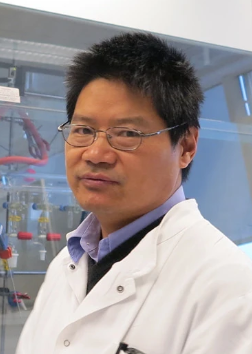 Xiaolin Hou (侯小琳)合作论文数School of Nuclear Science and Technology, Lanzhou University2
 Olivier Masson合作论文数2
 Pavel Povinec合作论文数Department of Nuclear Physics and Biophysics, Faculty of Mathematics, Physics and Informatics, Comenius University2Steinmann P合作论文数2Samsonov V合作论文数2Penev I合作论文数2Lecomte M合作论文数2Hainz D合作论文数2
 Jelena Krneta Nikolić合作论文数Department of Radiation and Environmental Protection, Vinča Institute of Nuclear Sciences2H. Wershofen合作论文数2Sven Poul Nielsen合作论文数2Henrik Ramebäck合作论文数2
 Jacqueline Bieringer合作论文数2J. Tschiersch合作论文数2Renata Kierepko合作论文数2
 Paul R.J. Saey合作论文数2
 Georg Steinhauser合作论文数Institut für Radioökologie und Strahlenschutz, Fakultät für Mathematik und Physik, Leibniz Universität Hannover2Dragana Todorovic合作论文数Laboratory for Radiation and Environmental Protection, Institute for Nuclear Sciences Vinča, University of Blegrade;Department of Physics and Mathematics, Faculty of Pharmacy, University of Beograd2
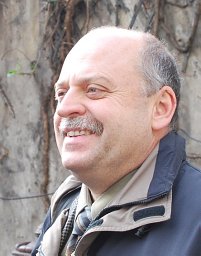 Jerzy W. Mietelski合作论文数The Henryk Niewodniczanski Institute of Nuclear Physics2Christian Katzlberger合作论文数CC Radiation Protection and Radiochemistry, Austrian Agency for Health and Food Safety2
 Wolfgang Ringer合作论文数Bundesanstalt für Lebensmitteluntersuchung2Ivan Sýkora合作论文数Faculty of Mathematics, Physics and Informatics, Comenius University Bratislava;Katedra Jadrovej Fyziky A Biofyziky, Comenius University Bratislava;Oddelenie Radiačnej Fyziky, Comenius University Bratislava2Elisabet Englund合作论文数2Goran Possnert合作论文数Institutionen For fysik Och Astronomi, Uppsala Universitet2t karhunen合作论文数1H Malá合作论文数1M. Bruggeman合作论文数1
 Beata Vilimaite Silobritiene合作论文数1M. Hýža合作论文数1S. Manenti合作论文数1O. Zhukova合作论文数1O Hanley合作论文数1T. Fritioff合作论文数1V. Bečková合作论文数1
 Mai Khanh Pham合作论文数1
 Fernando Carvalho合作论文数1D. Zapata Garcíauu合作论文数1J. Kövendiné Kónyiz合作论文数1Anica Weller合作论文数Inst Radioecol & Radiat Protect, Leibniz Univ Hannover1l gini合作论文数1O Saunier合作论文数1C Gascó合作论文数1




