The N+ beam-mediated distant molecular hybridization between Ginkgo biloba L and watermelon was studied. The results showed that the ester gene of Ginkgo biloba L was successfully expressed in two varieties of watermelon, 3-16 and SR2-l4-2, in both of which the ester quantities were measured as 17.0756 μg/g and 45.9998 μg/ g respectively. Meanwhile, superoxide dismutase (SOD) activity in leaves of the watermelon expressing ester gene was increased twofold as compared to that of the control, showing that ion beam could mediate distant and/or super-distant donor gene expression in the cells of a receptor. Furthermore, the molecular mechanism of distant hybridization was analyzed.
研究了离子束介导的植物分子超远缘杂交.结果表明,离子束介导实现了银杏供体DNA与西瓜受体DNA的超远缘分子杂交,杂交后银杏内酯在西瓜品种3-16和SR2-14-2中的最高表达量分别为17.0756和45.9998 μg/g,其杂交的亲和率为25%.测定了有银杏内酯表达的2个月龄西瓜叶片超氧化物歧化酶活性,它们分别比对照提高了近一倍,说明离子束介导能实现超远缘的植物供体多基因在受体中的表达.还分析了其超远缘杂交的分子作用机理.
以不同基因型材料的西瓜品种为试材,用MS、Miller、N6与不同激素配比的培养基,初步建立了西瓜离体组培再生体系.结果表明,不同浓度的MS培养基均可长出无菌苗,但随着MS培养基营养元素浓度的增大,无菌苗生长发育受到延迟和抑制作用加强,其中以1/2MS+0.5~2mg/LBA+0.1 mg/LNAA长出的无菌苗作外植体诱导愈伤组织最快,改良的MS(MS1+2 mg/LBA +0.1 mg/L NAA)是西瓜愈伤组织诱导的最适培养基,改良的MS(MS1+2mg/LBA+0.1 mg/L NAA +5mg/LAgNO3)是外植体诱导分化不定芽的最适培养基,离子束等物理因子处理愈伤组织发现对诱导分化不定芽具有刺激和促进作用.
 Ruolei Chen合作论文数3Daojun SONG (宋道军)合作论文数3
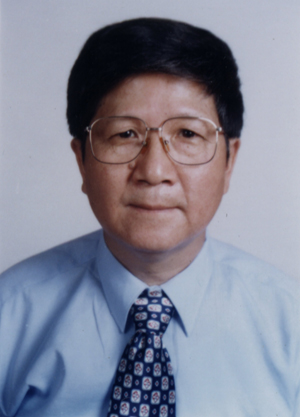 Zengliang Yu (余增亮)合作论文数Key Laboratory of Ion Beam Bioengineering, Chinese Academy of Sciences3
 Ruochun Yin (尹若春)合作论文数2
 Lifang Wu (吴丽芳)合作论文数Hefei Institutes of Physical Science, Chinese Academy of Sciences;University of Chinese Academy of Sciences;Anhui University2chunsheng wang (王春生)合作论文数1haobo wang (王浩波)合作论文数1ZuYun Dai (戴祖云)合作论文数1
 Jian Zhang (张鉴)合作论文数School of Microelectronics, Hefei University of Technology;School of Electronic Science and Applied Physics, Hefei University of Technology1
 Lijun Wu (吴李君)合作论文数Institutes of Physical Science and Information Technology, Anhui University;Institute of Technical Biology and Agriculture Engineering, Hefei Institutes of Physical Science, Chinese Academy of Sciences1




