For centuries, human mathematicians have written proofs to substantiate their mathematical arguments; yet, the ability to automatically verify the validity of proofs has long been a challenge. Advances in AI systems' ability to generate code and engage in increasingly high-level mathematical reasoning promise to transform people's ability to formalize and thereby verify proofs. While many works focus on benchmarking the current frontier, we instead study how people use these tools and apply agency in doing so. We conduct a mixed-methods analysis into the initial impact of AI on people's formalization workflows: what people claim they want, what they see as the barriers to those visions, and how they actually use and adapt AI in practice. A qualitative survey reveals that people's preferences are diverse, but with a general desire for AI assistance in formalization that preserves high-level human control and agency over the proof discovery process. To assess how people actually engage with AI for formalization, we conduct a controlled user study in which participants formalize informal math problems and their proofs, with and without AI, across a range of mathematical problems at varying levels of difficulty and domains. Despite limitations of the tools at the time for autoformalization, participants tended to attain higher formalization accuracy when allowed access to AI tools than when formalizing on their own, with most participants flexibly choosing to use multiple different AI tools. Taken together, our work sheds light on the early stages of AI integration into formalization workflows, involving an intimate interplay of human agency and AI engagement.
This article presents GenSQL, a probabilistic programming system for querying probabilistic generative models of database tables. By augmenting SQL with only a few key primitives for querying probabilistic models, GenSQL enables complex Bayesian inference workflows to be concisely implemented. GenSQL’s query planner rests on a unified programmatic interface for interacting with probabilistic models of tabular data, which makes it possible to use models written in a variety of probabilistic programming languages that are tailored to specific workflows. Probabilistic models may be automatically learned via probabilistic program synthesis, hand-designed, or a combination of both. GenSQL is formalized using a novel type system and denotational semantics, which together enable us to establish proofs that precisely characterize its soundness guarantees. We evaluate our system on two case real-world studies—an anomaly detection in clinical trials and conditional synthetic data generation for a virtual wet lab—and show that GenSQL more accurately captures the complexity of the data as compared to common baselines. We also show that the declarative syntax in GenSQL is more concise and less error-prone as compared to several alternatives. Finally, GenSQL delivers a 1.7-6.8x speedup compared to its closest competitor on a representative benchmark set and runs in comparable time to hand-written code, in part due to its reusable optimizations and code specialization.
We study semantic models of probabilistic programming languages over graphs, and establish a connection to graphons from graph theory and combinatorics. We show that every well-behaved equational theory for our graph probabilistic programming language corresponds to a graphon, and conversely, every graphon arises in this way. We provide three constructions for showing that every graphon arises from an equational theory. The first is an abstract construction, using Markov categories and monoidal indeterminates. The second and third are more concrete. The second is in terms of traditional measure theoretic probability, which covers 'black-and-white' graphons. The third is in terms of probability monads on the nominal sets of Gabbay and Pitts. Specifically, we use a variation of nominal sets induced by the theory of graphs, which covers Erdős-Rényi graphons. In this way, we build new models of graph probabilistic programming from graphons.
InferenceQL is a probabilistic programming system for scalable Bayesian AutoML from database tables. InferenceQL is designed to help make Bayesian approaches to data analysis more accessible to broad audiences and to assist experts in auditing and improving the quality of data, models, and inferences. Unlike traditional probabilistic programming systems, InferenceQL provides automation for learning models online using nonparametric Bayesian structure learning of probabilistic programs. Experts can override these models with custom probabilistic programs for specific subsets of variables and conditional distributions. For a broad class of models, InferenceQL can generate realistic synthetic data subject to constraints and can automatically compute exact probabilities and mutual information values. Finally, InferenceQL aims to enable scalable Bayesian model criticism via posterior predictive checks, data quality screening via conditional probability calculation, fairness auditing via conditional probability ratios, and synthetic data generation to enhance privacy. These capabilities are accomplished using constructs that interleave standard database queries with Bayesian inference.
allows to transfer results between certain henselian fields of mixed characteristic and their positive characteristic coun-terparts and vice versa. We present a model-theoretic approach to tilting via ultra-products, which allows to transfer many first-order properties between a perfectoid field and its tilt (and conversely). In particular, our method yields a simple proof of the Fontaine-Wintenberger Theorem which states that the absolute Galois group of a perfectoid field and its tilt are canonically isomorphic. This is joint work with A distributive lattice can be embedded into a ring of sets, and a De Morgan lattice can be embedded into a Boolean algebra ( BA ). The Lindenbaum algebra of the relevance logic R t is a De Morgan monoid ( DM ). A DM can be embedded into a (complete) BA via a ternary relation (defined from the DM ), the existential image of which defines the semi-group operation ( ◦ ). The properties of ◦ are retained in the BA , but the identity element might not function as an identity for all elements. I will explain (in terms of closure properties of the elements of the BA ) that the ternary relation encodes too much information about the DM and I will show how to amend the construction. We discuss effective versions of classical results on the existence of certain nonrepetitive sequences first proven using the Lov´asz local lemma, a non-constructive existence result from the probabilistic method. We outline the path to these constructions. First, a probabilistic resample algorithm by Moser and Tardos [1] converges to a wit-ness to the local lemma in polynomial expected time. Then, Rumyantsev and Shen [2] show that the bound on the expectation is used to build a deterministic algorithm with computable convergence time. However, the resulting effective computation has constraints that make it unsuitable for constructing non-repetitive sequences. Sourcing from Pegden’s lefthanded local lemma [3], we modify the resample algorithm to relax these constraints.
We introduce definitions of computable PAC learning for binary classification over computable metric spaces. We provide sufficient conditions on a hypothesis class to ensure than an empirical risk minimizer (ERM) is computable, and bound the strong Weihrauch degree of an ERM under more general conditions. We also give a presentation of a hypothesis class that does not admit any proper computable PAC learner with computable sample function, despite the underlying class being PAC learnable.
The workshop "Homogeneous Structures, A Workshop in Honour of Norbert Sauer's 70th Birthday" took place at the Banff International Research Station from November 8th to November 13th, 2015. The purpose of the following note is to gather the list of open problems that were posed during the problem sessions. Contributions appear in alphabetical order, according to the name of their author.
We introduce definitions of computable PAC learning for binary classification over computable metric spaces. We provide sufficient conditions for learners that are empirical risk minimizers (ERM) to be computable, and bound the strong Weihrauch degree of an ERM learner under more general conditions. We also give a presentation of a hypothesis class that does not admit any proper computable PAC learner with computable sample function, despite the underlying class being PAC learnable.
We introduce deep involutive generative models, a new architecture for deep generative modeling, and use them to define Involutive Neural MCMC, a new approach to fast neural MCMC. An involutive generative model represents a probability kernel G(ϕ↦ϕ') as an involutive (i.e., self-inverting) deterministic function f(ϕ, π) on an enlarged state space containing auxiliary variables π. We show how to make these models volume preserving, and how to use deep volume-preserving involutive generative models to make valid Metropolis-Hastings updates based on an auxiliary variable scheme with an easy-to-calculate acceptance ratio. We prove that deep involutive generative models and their volume-preserving special case are universal approximators for probability kernels. This result implies that with enough network capacity and training time, they can be used to learn arbitrarily complex MCMC updates. We define a loss function and optimization algorithm for training parameters given simulated data. We also provide initial experiments showing that Involutive Neural MCMC can efficiently explore multi-modal distributions that are intractable for Hybrid Monte Carlo, and can converge faster than A-NICE-MC, a recently introduced neural MCMC technique.
This paper addresses a fundamental problem in random variate generation: given access to a random source that emits a stream of independent fair bits, what is the most accurate and entropy-efficient algorithm for sampling from a discrete probability distribution ( p 1 , …, p n ), where the probabilities of the output distribution ( p̂ 1 , …, p̂ n ) of the sampling algorithm must be specified using at most k bits of precision? We present a theoretical framework for formulating this problem and provide new techniques for finding sampling algorithms that are optimal both statistically (in the sense of sampling accuracy) and information-theoretically (in the sense of entropy consumption). We leverage these results to build a system that, for a broad family of measures of statistical accuracy, delivers a sampling algorithm whose expected entropy usage is minimal among those that induce the same distribution (i.e., is “entropy-optimal”) and whose output distribution ( p̂ 1 , …, p̂ n ) is a closest approximation to the target distribution ( p 1 , …, p n ) among all entropy-optimal sampling algorithms that operate within the specified k -bit precision. This optimal approximate sampler is also a closer approximation than any (possibly entropy-suboptimal) sampler that consumes a bounded amount of entropy with the specified precision, a class which includes floating-point implementations of inversion sampling and related methods found in many software libraries. We evaluate the accuracy, entropy consumption, precision requirements, and wall-clock runtime of our optimal approximate sampling algorithms on a broad set of distributions, demonstrating the ways that they are superior to existing approximate samplers and establishing that they often consume significantly fewer resources than are needed by exact samplers.
This paper introduces a new algorithm for the fundamental problem of generating a random integer from a discrete probability distribution using a source of independent and unbiased random coin flips. We prove that this algorithm, which we call the Fast Loaded Dice Roller (FLDR), is highly efficient in both space and time: (i) the size of the sampler is guaranteed to be linear in the number of bits needed to encode the input distribution; and (ii) the expected number of bits of entropy it consumes per sample is at most 6 bits more than the information-theoretically optimal rate. We present fast implementations of the linear-time preprocessing and near-optimal sampling algorithms using unsigned integer arithmetic. Empirical evaluations on a broad set of probability distributions establish that FLDR is 2x-10x faster in both preprocessing and sampling than multiple baseline algorithms, including the widely-used alias and interval samplers. It also uses up to 10000x less space than the information-theoretically optimal sampler, at the expense of less than 1.5x runtime overhead.
We introduce the notion of feedback computable functions from $2^\omega$ to $2^\omega$, extending feedback Turing computation in analogy with the standard notion of computability for functions from $2^\omega$ to $2^\omega$. We then show that the feedback computable functions are precisely the effectively Borel functions. With this as motivation we define the notion of a feedback computable function on a structure, independent of any coding of the structure as a real. We show that this notion is absolute, and as an example characterize those functions that are computable from a Gandy ordinal with some finite subset distinguished.
The objective of goodness-of-fit testing is to assess whether a dataset of observations is likely to have been drawn from a candidate probability distribution. This paper presents a rank-based family of goodness-of-fit tests that is specialized to discrete distributions on high-dimensional domains. The test is readily implemented using a simulation-based, linear-time procedure. The testing procedure can be customized by the practitioner using knowledge of the underlying data domain. Unlike most existing test statistics, the proposed test statistic is distribution-free and its exact (non-asymptotic) sampling distribution is known in closed form. We establish consistency of the test against all alternatives by showing that the test statistic is distributed as a discrete uniform if and only if the samples were drawn from the candidate distribution. We illustrate its efficacy for assessing the sample quality of approximate sampling algorithms over combinatorially large spaces with intractable probabilities, including random partitions in Dirichlet process mixture models and random lattices in Ising models.
As inductive inference and machine-learning methods in computer science see continued success, researchers are aiming to describe ever more complex probabilistic models and inference algorithms. It is natural to ask whether there is a universal computational procedure for probabilistic inference. We investigate the computability of conditional probability, a fundamental notion in probability theory, and a cornerstone of Bayesian statistics. We show that there are computable joint distributions with noncomputable conditional distributions, ruling out the prospect of general inference algorithms, even inefficient ones. Specifically, we construct a pair of computable random variables in the unit interval such that the conditional distribution of the first variable given the second encodes the halting problem. Nevertheless, probabilistic inference is possible in many common modeling settings, and we prove several results giving broadly applicable conditions under which conditional distributions are computable. In particular, conditional distributions become computable when measurements are corrupted by independent computable noise with a sufficiently smooth bounded density.
Given a countable relational language L, we consider probability measures on the space of L-structures with underlying set ℕ that are invariant under the logic action. We study the growth rate of the entropy function of such a measure, defined to be the function sending n ∈ℕ to the entropy of the measure induced by restrictions to L-structures on {0, …, n-1}. When L has finitely many relation symbols, all of arity k≥ 1, and the measure has a property called non-redundance, we show that the entropy function is of the form Cn^k+o(n^k), generalizing a result of Aldous and Janson. When k≥ 2, we show that there are invariant measures whose entropy functions grow arbitrarily fast in o(n^k), extending a result of Hatami-Norine. For possibly infinite languages L, we give an explicit upper bound on the entropy functions of non-redundant invariant measures in terms of the number of relation symbols in L of each arity; this implies that finite-valued entropy functions can grow arbitrarily fast.
We define a represention of conditional independence in terms of products of probability kernels, and ask when such representations are computable. We pursue this question in the context of exchangeable sequences and arrays of random variables, which arise in statistical contexts. Exchangeable sequences are conditionally i.i.d. by de Finetti's theorem. Known results about the computability of de Finetti's theorem imply that these conditional independences are computable. The conditional independences underlying exchangeable arrays are characterized by the Aldous-Hoover theorem. In the special case of adjacency matrices of undirected graphs, i.e., symmetric binary arrays, this representation theorem expresses the conditional independences in terms of graphons. We prove that there exist exchangeable random graphs that can be computably sampled but whose corresponding graphons are not computable as functions or even as $L^{1}$ equivalence classes. We also give results on the approximability of graphons in certain special cases.
We investigate the relative computability of exchangeable binary relational data when presented in terms of the distribution of an invariant measure on graphs, or as a graphon in either $L^1$ or the cut distance. We establish basic computable equivalences, and show that $L^1$ representations contain fundamentally more computable information than the other representations, but that $0'$ suffices to move between computable such representations. We show that $0'$ is necessary in general, but that in the case of random-free graphons, no oracle is necessary. We also provide an example of an $L^1$-computable random-free graphon that is not weakly isomorphic to any graphon with an a.e. continuous version.
 Nathanael Ackerman合作论文数25
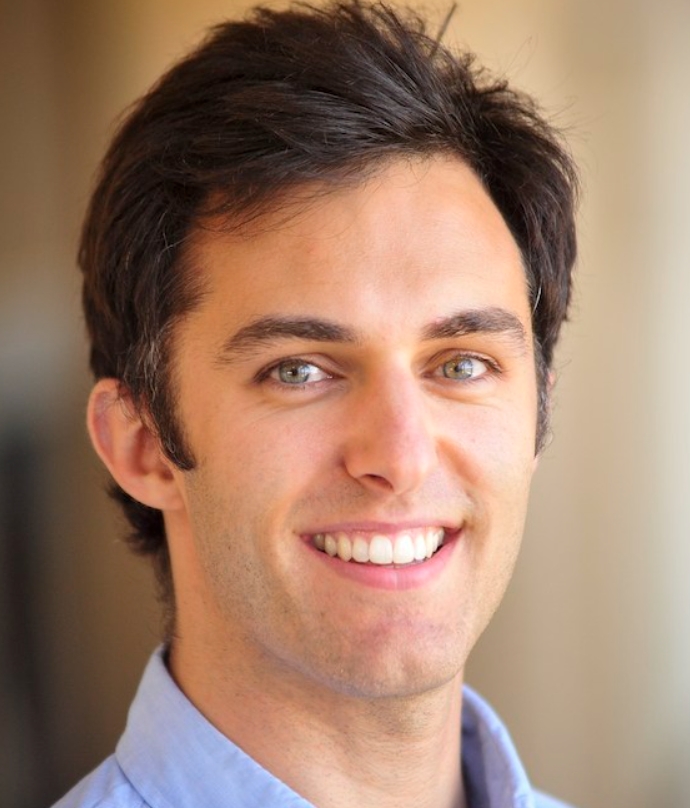 Dan Roy合作论文数Department of Statistical Sciences, Faculty of Arts and Science, University of Toronto;Department of Computer Science, University of Toronto;Department of Computer and Mathematical Sciences, University of Toronto Scarborough;Department of Electrical and Computer Engineering, University of Toronto;Vector Institute14Rehana Patel合作论文数Franklin W. Olin College of Engineering, Needham, MA 02492, USA9
 Vikash Mansinghka合作论文数Department of Brain and Cognitive Sciences, Massachusetts Institute of Technology8
 Feras Saad合作论文数Computer Science Department, Carnegie Mellon University7
 Martin C. Rinard合作论文数Department of Electrical Engineering and Computer Science, School of Engineering, Massachusetts Institute of Technology4
 Jason M. Rute合作论文数3
 Jeremy Avigad合作论文数Department of Philosophy, Dietrich College of Humanities and Social Sciences, Carnegie Mellon University;Mathematical Sciences, Mellon College of Science, Carnegie Mellon University3
 Sam Staton合作论文数Department of Computer Science, University of Oxford3
 Hongseok Yang合作论文数Department of Computer Science, University of Oxford3
 Alexander D. Wissner-Gross合作论文数Department of Physics;Harvard University;Department of Physics, Harvard University3
 Diana Cai合作论文数Center for Computational Mathematics, Flatiron Institute, Simons Foundation2
 Julian Asilis合作论文数Department of Computer Science, University of Southern California2
 Ulrich Schaechtle合作论文数2
 Jean-Baptiste Tristan合作论文数Amazon Web Services2
 Josh Tenenbaum合作论文数Department of Brain and Cognitive Sciences, Massachusetts Institute of Technology;Computer Science & Artificial Intelligence Laboratory, Schwarzman College of Computing, Massachusetts Institute of Technology2
 Bjørn Kjos-Hanssen合作论文数Dept Math, Univ Hawaii Manoa2Zane Shelby合作论文数1
 Shanda Li (黎善达)合作论文数Machine Learning Department, School of Computer Science, Carnegie Mellon University1Jacek Karwowski合作论文数1Ilia Sucholutsky合作论文数1Jieqi Di合作论文数1Younesse Kaddar合作论文数1
 Span Spanbauer合作论文数1
 Lexin Zhou合作论文数Inst Univ Tecnol Informac & Comunicac, Univ Politecn Valencia1
 Matin Ghavamizadeh合作论文数1
 Katherine M. Collins合作论文数Dept Brain & Cognit Sci, MIT1Dario Stein合作论文数University of Oxford1Sean Moss合作论文数1
 Mathieu Huot合作论文数Univ Oxford1
 Dana Bartošová合作论文数Department of Mathematics, University of Florida1Aleksandra Kwiatkowska合作论文数Univ Munster, Inst Math Log & Grundlagenforsch, Einsteinstr 62, D-48149 Munster, Germany1
 Martino Lupini合作论文数School of Mathematics and Statistics, Victoria University of Wellington1Micheal Pawliuk合作论文数Department of Mathematical & Computational Sciences, University of Toronto Mississauga1
 Alexander K Lew合作论文数Massachusetts Institute of Technology1
 Umang Bhatt合作论文数The Alan Turing Institute;Center for Data Science, New York University;Leverhulme Centre for the Future of Intelligence1Norbert Sauer合作论文数1
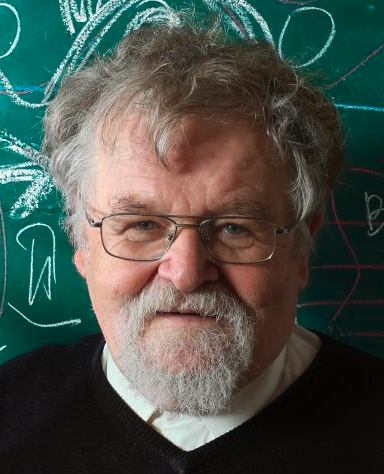 Jaroslav Nesetril合作论文数Computer Science Institute, Faculty of Mathematics and Physics, Charles University;Center of Excellence, Institute of Theoretical Computer Science, Charles University1
 José Hernández-Orallo合作论文数Valencian Research Institute for Artificial Intelligence, Universitat Politecnica de Valencia;Department of Computer Systems and Computation, School of Informatics, Universitat Politècnica de València;Leverhulme Centre for the Future of Intelligence, University of Cambridge;Centre for the Study of Existential Risk, University of Cambridge1
 Andre Otfrid Nies合作论文数School of Computer Science, Faculty of Science, University of Auckland1Frank Stephan合作论文数Departments of Mathematics and Computer Science of the National University of Singapore1
 Valerie Chen合作论文数Machine Learning Department, School of Computer Science, Carnegie Mellon University1John K. Truss合作论文数1Itaï Ben Yaacov合作论文数1Robert S. Lubarsky合作论文数1
 Alex Kruckman合作论文数1
 Michael Pinsker合作论文数Algebra, TU Wien1Robert Gray合作论文数1M. Pouzet合作论文数 Claude-Bernard University Lyon 1 1




