Este artigo apresenta a avaliação do LSBot, um agente conversacional concebido para apoiar equipes de desenvolvimento na aplicação de princípios de Linguagem Simples (LS). O estudo utilizou a técnica do Mágico de Oz para simular o funcionamento do chatbot em sessões de interação colaborativas, permitindo analisar sua utilidade, facilidade de uso e percepção de apoio. Os resultados apresentam evidências empíricas que demonstram boa aceitação da ferramenta e potencial de apoio à reflexão e novas ideias sobre a técnica de LS às equipes de software.
A verdadeira transformação digital exige que as pessoas compreendam o que lhes é comunicado. Sem clareza, não há inclusão, não há confiança, não há cidadania ativa. Governança digital não se constrói apenas com infraestrutura e dados abertos, mas com linguagem acessível, transparência real e escuta atenta às necessidades de quem está na ponta: os cidadãos. Isso exige uma transformação cultural orientada à cidadania. Este artigo defende que a Linguagem Simples e a transparência ativa são elementos fundamentais para tornar a transformação digital efetiva e democrática. Argumenta-se, ainda, que a sustentabilidade informacional pode ser o grande veículo para isso, pois defende práticas que colocam o cidadão no centro da comunicação pública.
The rapid evolution of digital governance necessitates strategic planning to ensure efficiency, transparency, and adaptability in public service delivery. This paper presents the development of the Strategic and Master Plan for Information and Communication Technology (PEDTIC) at the Tocantins State Information Technology Agency (ATI/TO), a pivotal initiative aimed at strengthening digital transformation efforts in Tocantins, Brazil. The PEDTIC was built upon three foundational diagnostic assessments: the Governance of ICT, the Strategic IT Plan (PDTI), and the ABEP-TIC Index evaluation. These diagnostics provided a comprehensive analysis of ATI/TO’s digital service capabilities, governance structures, and alignment with state objectives. The methodological approach combined situational assessments, regulatory reviews, management interviews, and benchmarking against national best practices. The findings highlighted gaps in IT governance, data integration, and digital service effectiveness. By aligning ATI/TO’s strategic vision with the broader objectives of the Tocantins government, the PEDTIC establishes a framework that prioritizes structured governance, risk management, and the enhancement of public digital services. This study discusses the lessons learned from the diagnostic phase, emphasizing the importance of clear communication, cross-department collaboration, and proactive risk management in digital transformation. The PEDTIC provides a structured action plan with clearly defined objectives, performance indicators, and accountability mechanisms to ensure continuous improvement and adaptation. The results of this initiative have already led to a significant improvement in ATI/TO’s ranking in the ABEP-TIC Index, demonstrating tangible progress in digital governance. Additionally, this paper explores the implications of ATI/TO’s transformation towards a more strategic operational model, shifting from purely technical functions to a leadership role in state digital governance. The conclusions drawn highlight the critical need for structured digital strategies, ongoing capacity-building initiatives, and stakeholder engagement to sustain long-term advancements in public digital services. The PEDTIC serves as a case study for other government institutions aiming to implement structured and scalable digital transformation initiatives.
Plain Language is a technique that aims to improve the understanding of textual and visual elements in interfaces, visualizations, and other interactive products so that people can locate, understand, and use information effectively. In recent years, its use has been driven by laws in Brazil and worldwide. This paper presents a systematic mapping carried out for the first time, identifying application domains, evaluation methods, and more, in order to contribute to the investigation of how the HCI area incorporates PL practices in the design of interactive systems.
Em um mundo sobrecarregado de dados, uma comunicação eficaz da informação é essencial, sobretudo para usuários com baixo letramento. Este trabalho une práticas da Linguagem Simples, que lida com o entendimento, com as de Visualização da Informação, que trata de representações gráficas para contribuir no consumo da informação pela população. A pesquisa gerou um Guia com práticas para construção de gráficos de fácil entendimento, o sistema Chart Lab (baseado no Guia), que verifica violações a essas práticas e uma avaliação das visualizações brasileiras sobre a pandemia de COVID-19. Experimentos com usuários demonstram que os artefatos da pesquisa contribuem para tornar a informação mais clara a todos.
Conecte SUS é um aplicativo brasileiro de informações integradas da rede pública de saúde. Ele passou a ser mais utilizado na pandemia de COVID-19. Porém, muitos usuários relatam dificuldades de acesso no sistema, falta de intuitividade na interface, excesso de informações, etc. Nesta pesquisa avaliamos o aplicativo do ponto de vista da comunicabilidade, com foco em usuários idosos e com pouca experiência em tecnologia. A pesquisa utiliza o método de inspeção semiótica científico sob a perspectiva distinta de dois avaliadores. O estudo também compara os resultados com práticas da técnica de Linguagem Simples, combinando essas abordagens para identificar problemas potenciais no aplicativo.
Este artigo destaca a dificuldade enfrentada por não especialistas na área de design ao traduzir documentos para Linguagem Simples, evidenciando a falta de ferramentas que auxiliem na adição de elementos de direito visual, como ícones, imagens, tabelas etc. Em resposta a isso, apresenta um manual para aplicação de elementos de design em documentos do Google, em um grupo de simplificação colaborativo do Linguagem Simples Lab, desenvolvido a partir da experiência de tradução de um edital universitário, que oferece orientações para tornar a estrutura de documentos mais compreensível, abordando tópicos como paleta de cores, títulos e quadros. Sua utilização em uma oficina no Tribunal de Justiça do Tocantins foi bem recebida pelos participantes, destacando sua utilidade, na prática.
Digital transformation movements are rapidly changing how governments around the world provide services to Society and have increased challenges on how citizens of different profiles and backgrounds can gain greater independence in accessing these services, through friendlier and better understandable digital interfaces. The presentation of government services in a legible and intelligible way is the first step towards a complete understanding of what the service is about, who can request it, what documentation is needed, what are the requirements, what is the step-by-step, and how the service is governed by regulations. Government agencies that have been implementing plain language in the presentation of digital services are developing plain language guides seeking to improve this greater citizen understandability to improve user experience, accessibility, and inclusion. The motto is to share information that people can find, understand, and use. In this regard, ABEPTIC (Brazilian Association of State Entities of Information and Communication Technology), responsible for implementing the public service portals of all the states in Brazil, led the development of the Plain Language Guide that presents practices that can help in the construction, organization, and presentation of information, whether represented by texts, figures, graphs, models, or other forms. This paper presents a method for the evaluation of Plain Language practices from the Plain Language Guide, based on theories about evaluation methods from the Human-Computer Interface (HCI) domain of research that served as a pilot for the first national evaluation which will be used as a basis for creating the Brazilian Plain Language Index. The results showed the need for all 27 Brazilian Federative Units and its more than 5,000 municipalities to invest in actions to clarify the understanding of the services offered in their respective citizen service Portals.
Citizens are gaining broad access to public data sources, made available in Open Government Data Portals (OGDPs). While the number of OGDPs grows over the years, researchers identify recurrent problems in these portals regarding data delivery. We conducted preliminary studies for identifying recurrent issues in OGDPs and we identified that data governance frameworks may be applied for tackling these issues. However, data governance may be difficult to be applied for improving an entire data portal considering all issues at once. So, in this work, we propose a preliminary conceptual framework for analyzing and evolving an OGDP considering (i) the prioritization of items to be evolved in OGDPs; (ii) recurrent issues in OGDPs extracted from literature; (iii) good practices for constructing other similar OGDPs and the analysis of situation; (iv) identification of gaps and (v) improvement proposal based on data governance. We applied our framework for proposing new activities for managing bidding data in an OGDP of the city of Niterói, Brazil. Our findings show how the framework can be used to evaluating and continually evolving OGDPs.
The research proposes a Plain Language Guide for graphic design, aiming to make information more understandable for end users during their interactions in open government data systems, dashboards and reports. The Guide was developed based on practices collected in a literature review and presents 55 guidelines for the design of the most common graphs such as bars, pies, lines, etc. In a preliminary study, adapting the Technology Acceptance Model (TAM), professionals from public organizations positively evaluated the Guide, considering it useful. However, they did not fully follow the Guide’s guidelines when creating the graphics. Despite this, the Guide has potential to improve the comprehensibility of data visualizations.
A digitalização dos serviços aproxima os entes públicos do cidadão e facilita e otimiza seu acesso às políticas públicas por meio da tecnologia. A Linguagem Simples entra como condutora nesse caminho e é necessária uma preocupação com o entendimento pleno do cidadão. Neste artigo propomos os primeiros resultados de automação de práticas de linguagem simples definidas dentro do Guia Nacional de Linguagem Simples. O objetivo está em avaliar a explicação de serviços públicos digitais e servir como mecanismo de apoio a inclusão de linguagem simples pelos municípios brasileiros.
Transparency is an essential principle in governments, organizations and institutions that seek to promote citizen trust and participation. However, the complexity and obscurity of the information presented can often make it difficult to understand and limit public access to this vital information. In this context, the adoption of plain language emerges as a key approach to promoting effective transparency. This article aims to present the role of plain language as an essential pillar of transparency, showing its breadth, adoption in Brazil and in the world and the path to automation.
As iniciativas de fomento à adoção da linguagem simples no governo digital vem acelerando com as legislações e cultura de transparência. Porém, ainda faltam métodos, diretrizes, avaliações e ferramental para o seu uso concreto. Sobretudo, há carência de meios de integração dessa perspectiva com áreas relacionadas como a interação humano-dados e sistemas colaborativos. Essa proposta de pesquisa visa estender a linguagem simples com foco na experiência do usuário, desenvolver metodologia para sua aplicação em portais de e-gov e automatizar aspectos da linguagem, agregando diferentes áreas que possam potencializar os seus benefícios.
Understanding is an essential quality in the presentation of information, mainly to promote democracy, transparency, and citizen participation in open government data (OGD). Data visualizations are common in open data portals and public services, but there is still a lack of consolidated practices for their publication and evaluations aimed at understanding users. Above all, add the Plain Language technique, which helps to make information more understandable for everyone and reduce barriers to the inclusion of a poorly literate public. This research evaluated the impact of the practices of this language gathered in a usage Guide for creating graphics understandable to the public in relation to other visualizations. The study was carried out with users of public health visualization in the context of the COVID-19 pandemic. The results showed that the use of the Guide improved understanding in tasks with fewer variables and data involved. An important insight for the development of dashboards and public portals with visualizations accessible to all. However, with challenges to be overcome mainly in the size and complexity of the various practices to be followed, making it difficult for users to fully use the Guide. Investing in researching a user support system can ensure higher quality graphics.
A governança é um fator importante na gestão dos municípios. É importante garantir que os compromissos assumidos nos planos de governo sejam realizados. A Governança Brasil é uma empresa que trabalha com uma solução completa de Government Resource Planning para apoiar a gestão e governança administrativa dos municípios e gerar informações e resultados de interesse para o governo e para o cidadão. Porém, esta solução enfrenta desafios como as diferentes legislações e formas de execução dos processos por cada município, assim como as necessidades locais de cada população. Neste sentido foi realizada uma iniciativa na intenção de melhor organizar estes desafios e estas diferenças, visando aprimorar a gestão e continuidade desta solução para melhor atender a todos os municípios considerando suas especificidades. Esta solução lançou mão das práticas de Arquitetura Corporativa e através destas conseguiu gerar os primeiros resultados na direção desejada. Aqui apresentamos estes primeiros passos e os resultados já alcançados. Governance is a very important factor in the management of municipalities. It is important to ensure that commitments made in government plans are carried out. Governança Brasil is a company that works with a complete Government Resource Planning solution to support the management and administrative governance of municipalities and generate information and results of interest by government and citizens. However, this solution faces challenges such as the different legislation and ways of executing processes by each municipality, and the local needs of each population. In this sense, an initiative was carried out to better organize these challenges and these differences, aiming to improve the management and continuity of this solution to better serve all municipalities considering their specificities. This solution used Enterprise Architecture practices and through these managed to generate the first results in the desired direction. Here we present these first steps and the results already achieved.
Purpose This research work aims to expose the detailed construction of a framework for translation between Business Process Modeling and Notation (BPMN) and a citizen process language, named GERAL, so that BPMN and modeling non-experts can publicize their procedural information in an understandable and quality manner. The artifact is built in detail through epistemological rigor derived from empirical evidence and best practices related to the topic of understanding business processes, both based on well-established literature on the subject. Design/methodology/approach In the case of research involving the construction of an artifact, the design science research (DSR) methodology was used to conduct engineering with an emphasis on the scientific method; for evaluation, the authors used the case study methodology. Data collection is based on documentation analysis, questionnaire, interview and observation. The authors also use references associating DSR with case studies, for greater contextual rigor of the research. Findings This work presents findings and contributions, both new and also reinforcing others already present (1) use of the principles of Citizen/Plain Language improve instructional communication related to process modeling; (2) the citizen process language GERAL itself; (3) the BPMN pra GERAL guide for process translation; (4) qualitative findings from the observation of the use of the artifact in a real case, with non-experts and (5) a well-founded instance of building a notation with an emphasis on understanding, which can be replicated in other cases. Research limitations/implications Future perspectives for conducting the research are presented. As a qualitative research instantiated involving a subjective construct, such as understanding, generalization is partially limited and should be interpreted as a transferability criterion. The evaluation involved participants with complete higher education and graduates, even though from areas not dedicated to process modeling or BPMN, being non-experts. The main indicator was understood with limitations in other aspects, such as formal semantics and precise executability. Practical implications The formative research showed improvements to the base artifact, the framework first version, which will consequently be reflected in the guide. The GERAL and the guide were very well received, and all participants were able to translate the proposed model effectively, despite small slips in second notation. The guide improved the participants' perception of transparency and understanding of business processes, making them aware of the benefits of this topic. Social implications The output of the built and researched artifact are understandable models by non-experts in technical languages of business processes. It is an alternative for BPMN models and dubious/long texts. Almost unexpectedly, the guide and its principles awaken an appreciation of understandable procedural communication, that is, it builds an intrinsic motivation in the user of the importance of publicizing his processes and assists in compliance with current data disclosure laws. It also builds informational democratic values of better participation and data absorption, from translators to the target audience. Originality/value It presents a qualitative approach to deal with business process modeling and understanding; substantiates in detail, using well-established bases in the literature, the construction of a solution aimed at understanding business processes; offers a translation guide for non-experts and experts interested in disclosing and instructing their procedural information modeled in BPMN.
Apresentamos uma análise pictórica de visualizações de dados divulgadas pelos governos estaduais brasileiros durante a pandemia de COVID-19. Durante uma avaliação preliminar identificamos gráficos com potencial de serem mal interpretados ou pouco compreendidos por não seguirem diretrizes básicas da área de visualização de dados. Neste trabalho analisamos as falhas mais recorrentes, os principais tipos de gráficos problemáticos identificados e alertamos à necessidade de um maior cuidado com o uso de visualizações, assim contribuindo que gráficos ineficientes sejam evitados futuramente em outros contextos.
 Flávia Maria Santoro合作论文数Fed Univ State Rio de Janeiro51
 Fernanda Baiao合作论文数Department of Industrial Engineering, Pontifical Catholic University of Rio de Janeiro;Department of Informatics, Pontifical Catholic University of Rio de Janeiro42
 Vanessa Tavares Nunes合作论文数36
 Leonardo Guerreiro Azevedo合作论文数IBM Research Brazil31
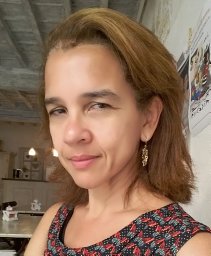 Renata Araujo合作论文数Information Systems Department;Federal University of the Rio de Janeiro State / UNIRIO;Rio de Janeiro;Information Systems Department, Federal University of the Rio de Janeiro State / UNIRIO23
 Julio Cesar Sampaio do Prado Leite合作论文数University of Toronto20
 Cristiano Maciel合作论文数UFMT20
 Rodrigo Oliveira合作论文数14
 Simone Bacellar Leal Ferreira合作论文数Universidade Federal do Rio de Janeiro14
 Bruna Diirr合作论文数Department of Information Systems, UNIRIO14
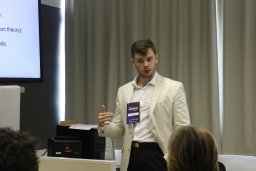 Luiz Paulo Carvalho合作论文数Federal University of Rio de Janeiro12
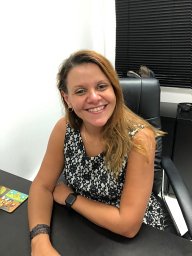 Flavia Bernardini合作论文数ICMC / LABIC, Sao Carlos, SP, Brazil11
 Thais Batista合作论文数10
 Alexandre Pinheiro合作论文数Univ Fed Estado Rio de Janeiro UNIRIO10Jonice Oliveira合作论文数UERJ - State of Rio de Janeiro University - Institute of Mathematics and Statistics (IME) - Informatics and Computer Science Department(DICC), Brazil10
 Priscila Engiel合作论文数9
 Jairo F. De Souza合作论文数DCC/ICE/UFJF, Juiz de Fora, MG, Brazil9
 Felipe Leão合作论文数9Mauro Lopes合作论文数9
 Andrea Magalhaes Magdaleno合作论文数Research and Practice Group in Information Technology, UNIRIO9sergio puntar合作论文数8
 Luiz Reis合作论文数8
 Fabiana Jack Nogueira Santos合作论文数7
 Sean Wolfgand Matsui Siqueira合作论文数Department of Applied Informatics (DIA),, Federal University of the State of Rio de Janeiro (UNIRIO),6Clarissa S. C. Romeiro合作论文数6
 Luciana Cardoso de Castro Salgado合作论文数Departamento de Informática, PUC-Rio - Rua Marquês de São Vicente6bruno pinho合作论文数5
 Rafael Paim C.合作论文数5Maria Teresa A. Gouvêa合作论文数Programa de Informática, NCE-IM / UFRJ5
 Mariano Pimentel合作论文数Catholic University of Rio de Janeiro5Daniel Braghirolli Serrano合作论文数4
 Joao Marcelo dos Santos Marques合作论文数4
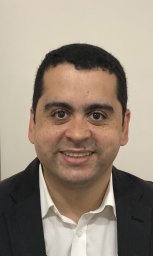 Gustavo de Oliveira Almeida合作论文数fundacao getulio vargas4
 Márcio De Oliveira Barros合作论文数COPPE;Science Department, Computer;COPPE|Computer Science Department4
 Cleyton Slaviero合作论文数Universidade Federal Fluminense4
 Kate Revoredo合作论文数Department of Computer Science, Faculty of Mathematics and Natural Sciences, Humboldt-Universität zu Berlin4Douglas Machado Silva合作论文数4
 Hermano Moura合作论文数Federal University of Pernambuco4Edviges Mariza Campos de Magalhães合作论文数3
 Rodrigo Pereira dos Santos合作论文数3
 Hercules Jose合作论文数3Raphael Melo Thiago合作论文数IBM Res, Rio De Janeiro, RJ, Brazil3
 Jose Gilson de Almeida Teixeira Filho合作论文数3Thiago Andrade合作论文数Information Systems Department;Federal University of the Rio de Janeiro State / UNIRIO;Rio de Janeiro3
 Célia Ghedini Ralha合作论文数Computer Science Department, University of Brasilia3
 Asterio K. Tanaka合作论文数3
 Renata Guizzardi合作论文数Science Department, Computer;University of Twente;Computer Science Department, University of Twente3Ana Luisa Medeiros合作论文数3




