Worldwide water quality has declined progressively due to continuous pollution of aquatic resources by agrochemicals in particular heavy metals. Fish genotoxicity biomarkers are vital to identify and complement chemical parameters for determining environmental risk of adverse effects. Therefore, it was of interest to examine the eco-genotoxicity attributed to water pollution over different stream sections of Brazilian rivers by using Cichlasoma paranaense (Teleostei: Cichlidae), a neotropical freshwater cichlid ?sh, as a biological model. Chemical analysis of water and sediments collected from different Brazilian rivers sites demonstrated contamination by metals. Cichlasoma paranaense were collected at a reference location (a permanent water preservation area), maintained in the lab under standard conditions (controlled temperature, lighting, daily feeding, and constant aeration) and exposed to environmental samples of water and sediments. Subsequently, micronucleus (MN) and nuclear abnormalities (NA) frequencies were assessed in erythrocytes obtained from the caudal and gill regions. The highest concentrations of Cu were found in samples from river sites with forest fragmentation attributed to intensive agriculture practices. Similarly, exposure of fish to samples from agricultural areas induced significantly higher number of genotoxic effects. There was no marked difference between the tissues (tail and gill) regarding the observed frequencies of MN and NA. Thus C. paranaense fish served as a reliable model for detecting genotoxic effects, especially when water samples were collected near the discharge of agrochemicals. Evidence indicates that this method be considered for other global river sites which are also exposed to agrochemicals discharges containing Cu.
ABSTRACT Water quality has declined globally due to increased contamination of aquatic ecosystems. The use of fish genotoxicity biomarkers may improve and complement parameters for environmental risk assessment. The aim of this study was to assess the genotoxicity of samples collected from streams of the Jordão River, a tributary of the Paranaíba River, Brazil with different levels of metal contamination, utilizing a native fish species to determine the sensitivity and viability of implementing a useful, reliable technique for routine biomonitoring programs. Chemical analysis of water and sediments collected from different sites indicated that a gradient of contamination existed as evidenced by different concentrations of metals detected. After chronic exposure to contaminated samples, micronucleus (MN) frequencies in fish erythrocytes were measured and correlation with environmental parameters determined. Sites where the water concentrations of the metals aluminum (Al), iron (Fe), manganese (Mn), zinc (Zn) and copper (Cu) were high indicating a greater genotoxic potential of these elements. At the samples collected from the urban zone, a gradual increase was found for chromium (Cr), cadmium (Cd) and nickel (Ni) indicative of adverse impacts of discharge of urban effluents. Data demonstrated that Astyanax altiparanae, used in the test, exhibited a reliable sensitivity for detection of genotoxic consequences attributed to exposure to water samples collected near the discharge of industrial and domestic waste.
The organisms known as bioindicators are used to assess changes in the aquatic environment. Incorporated chemical substances in natural environment interfere in the development of these organisms. The research had as objective to avaluate the water quality of the Cocais dam, in Patrocinio, Minas Gerais, using physical-chemical parameters of water and micronucleus test in fish. In this study were used fish of the species Oreochromis niloticus L. (Tilapia-do-nilo) introduced in the dam after its construction. Genetic material from twenty-eight individuals was collected at two points, P1 at the dam and P2 at the source. The cytological analysis was performed using an optical microscope and 4000 erythrocytes were examined per fish. For the physico-chemical characterization of the water samples were performed two collections during the rainy and dry periods, both in the dam and in the source. The parameters analyzed (turbidity, pH, Dissolved oxygen - OD, total dissolved solids - SDT), nitrate ammoniacal Nitrogen values were lower than those established in the legislation. The conductivity was higher than value indicated by CETESB, characterizing an indirect measure of the concentration of pollutants. Whit the results obtained in the micronucleus test a higher frequency of micronucleus can be observed in the cells of the fish captured in the dam, suggesting that the water is contaminated by genotoxics, that altered the genetic material of these bioindicators.
Os bioindicadores são usados para avaliar mudanças no ambiente aquático. Substâncias químicas incorporadas em ambientes naturais interferem no desenvolvimento desses organismos. A pesquisa teve como objetivo avaliar a qualidade da água da represa Cocais, em Patrocínio, Minas Gerais, utilizando parâmetros físico-químico da água e teste de micronúcleo em peixes. Nesse estudo, foram utilizados peixes da espécie Oreochromis niloticus L. (Tilápia-do-nilo) introduzidos na represa após a sua construção. Material genético de vinte e oito indivíduos foi coletado em dois pontos, P1 na nascente e P2 na represa. A análise citológica foi realizada utilizando-se microscópio óptico, sendo examinados 4000 eritrócitos por peixe. Para a caracterização físico-química das amostras de água foram realizadas duas coletas no período de chuva e de seca, tanto na nascente como na represa. Os parâmetros analisados (turbiez, pH, oxigênio dissolvido - OD, sólidos totais dissolvidos - SDT), nitrato e nitrogênio amoniacal foram inferiores aos limites estabelecidos na legislação. A condutividade apresentou valores superiores ao indicado pela CETESB, caracterizando uma medida indireta da concentração de poluentes. Com os resultados obtidos no teste de micronúcleos pode-se observar uma maior frequência de micronúcleos nas células dos peixes capturados na represa, sugerindo que a água está contaminada por genotóxicos, que alteraram o material genético desses bioindicadores.
Accessing the taxonomy of fish is a basic condition for the conservation of species, and the understanding of their evolutionary relationships. Many Neotropical species of fishes of the order Characiformes are considered incertae sedis because of a lack of consistent evidence of monophyly, with the genus Astyanax among them. With a cytotaxonomic and evolutionary purpose, we compared the karyotype of two species of Astyanax: Astyanax paranae and Astyanax elachylepis. Conventional cytogenetic analyses revealed 2n=50 chromosomes for the two species, with interspecific and interpopulation karyotype variations. Heterochromatin was primarily localized in the pericentromeric regions, and it was associated with organized regions of the nucleolus (NORs) and/or telomeric regions in some acrocentric chromosomes. The in situ localization of 18S ribosomal DNA (rDNA) and 5S probes varied among A. paranae populations. In A. elachylepis, only one chromosome pair was stained by the 18S probe and another by the 5S probe, confirming a simple NORs pattern. These results support the utility of chromosome markers in Astyanax taxonomy and reveal the conserved characteristics of the karyotype of A. elachylepis, consisting exclusively of two chromosome arms, and the occurrence of simple homologous and non-syntenic sites for 18S and 5S rDNA in this species.
A Citogenetica e a area da biologia que estuda os cromossomos e suas implicacoes na genetica. Estudos citogeneticos proveem informacoes que contribuem para o conhecimento da estrutura, organizacao molecular e comportamento dos cromossomos, a analise do complemento cromossomico ou do cariotipo pode caracterizar as especies de forma mais completa, fornecendo melhor compreensao e possibilitando entender a ocorrencia de casos de polimorfismos e rearranjos como fusoes e fissoes cromossomicas. Nos ultimos anos a citogenetica se expandiu sobretudo a partir da aplicacao de tecnicas de bandamento dos cromossomos. Os peixes representam o grupo mais diversificado e um dos mais interessantes para estudos da variabilidade genetica e evolucao entre os vertebrados, sendo por isso escolhidos como modelo de estudo em diversos trabalhos citogeneticos. O presente artigo apresenta uma revisao das contribuicoes que os estudos citogeneticos tem oferecido ao entendimento da origem, funcao e biologia dos cromossomos supranumerarios, tambem conhecidos como cromossomos Bs, extras ou adicionais ao complemento padrao.
BACKGROUND:B chromosomes, also known as supernumerary or accessory chromosomes, are additional chromosomes over the standard complement found in various groups of plants and animals. We investigated the presence of, and characterized, supernumerary microchromosomes in Astyanax goyacensis using classical and molecular cytogenetic methods.FINDINGS:Three specimens possessed 2n = 50 chromosomes (8m + 26sm + 8st + 8a), and two specimens contained 1 to 9 additional B microchromosomes varying intra- and inter-individually. Chromosome painting with a B chromosome-specific probe yielded signals for several B microchromosomes, with one exhibiting no markings. Acrocentric chromosomes of the standard complement were also painted. Fluorescence in situ hybridization (FISH) using ribosomal probes located two chromosome pairs carrying 18S rDNA marked on the short arm, and one pair carrying 5S rDNA with pericentromeric markings. One chromosome was observed in synteny with 18S cistrons.CONCLUSION:These data contribute to knowledge of the karyotype evolution, the origin of B chromosomes, and to an understanding of the functionality of rDNA.
 Sandra Morelli合作论文数6Luiz Alfredo Pavanin合作论文数4
 Boscolli Barbosa Pereira合作论文数Departamento de Saúde Ambiental, Universidade Federal de Uberlândia3
 Luana Pereira Dos Santos合作论文数3Ana Paula Mendes Bueno合作论文数2
 Jonathan Pena Castro合作论文数2
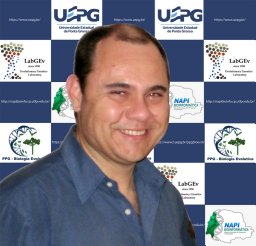 Roberto Ferreira Artoni合作论文数Departamento de Biologia Estrutural, Molecular e Genética, Universidade Estadual de Ponta Grossa2Maria da Graça Vasconcelos合作论文数1Luiz Antonio de Oliveira合作论文数1
 Robson Jose de Oliveira Junior合作论文数1João Vitor Meza Bravo合作论文数1Barbosa Patrícia合作论文数1
 Leonardo Gusso Goll合作论文数1Bertolino Sueli M合作论文数1
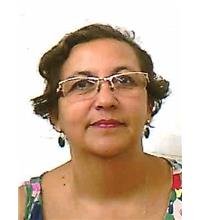 Mara Cristina Almeida合作论文数Departamento de Biologia Estrutural, Molecular e Genética, Universidade Estadual de Ponta Grossa1
 Marcelo Ricardo Vicari合作论文数Departamento de Genética e Evolução, Universidade Federal de São Carlos1




