Paul Crutzen received his doctorate in meteorology from the University of Stockholm in 1968 and was awarded the Nobel Prize in Chemistry in 1995. In addition to chemistry and atmospheric science, however, the breadth of his accomplishments has also been recognized by biologists, Earth system scientists, and geologists. This tribute provides some insight into Crutzen's career and how it contributed to so many scientific disciplines. In addition, we offer a road map showing how these diverse contributions were woven together over the course of more than five decades of research. The citation for the 1995 Nobel Prize reads that it was given for "work in atmospheric chemistry, particularly concerning the formation and decomposition of ozone." The inclusion of the wording "formation horizontal ellipsis of ozone" applies only to him among the three laureates (Crutzen, Mario Molina, and F. Sherwood Rowland). His research on tropospheric chemistry led to seminal studies of tropical biomass burning, which eventually evolved into the concept later known as "nuclear winter," a topic in the forefront of far-ranging popular discussions in the 1980s. Last, Crutzen's proposal for the emergence of the "Anthropocene" as a new geological epoch that would terminate the 11,700-yr-old Holocene is considered by the Earth system science community to be the most pronounced trademark of his remarkable career. Crutzen also received American Meteorological Society's Battan Award for his coauthorship of Atmosphere, Climate, and Change, recognized by the organization as the best book for general audiences. In the later years of his career, as a member of the Pontifical Academy of Sciences, Crutzen was a key player in the formulation of Laudato Si', Pope Francis's encyclical on climate change, which was released in advance of the Conference of Parties (COP 21) meeting that announced the formulation of the Paris Climate Accords in 2015.
Arthur Louis Schmeltekopf Jr. died of mesothelioma, a lung cancer associated with exposure to asbestos, at his home in Marshall, N.C., on 20 August 2007. He was born on 24 February 1932, in Kyle, Tex., to Arthur L. and Meta (Engelbrecht) Schmeltekopf and grew up nearby on the family farm. Art had an early interest in science. A dispute over the reactivity of alkali metals toward water led to an experiment at Kyle High School involving a chunk of sodium metal and a toilet in the boys' room. The resulting explosion shattered the toilet, creating a flood, multiple geysers and panic in the nearby girls' room, a displaced lid on the school's septic tank, and an enduring school legend.
The gas-phase reactions of protonated hydrazine (hydrazinium) with organic compounds were studied in a selected ion flow tube-chemical ionization mass spectrometer (SIFT-CIMS) at 0.5 Torr pressure and approximately 300 K and with hybrid density functional calculations. Carbonyl and other polar organic compounds react to form adducts, e.g., N(2)H(5)(+)(CH(3)CH(2)CHO). In the presence of neutral hydrazine, aldehyde adducts react further to form protonated hydrazones, e.g., CH(3)CH(2)CH[double bond]HNNH(2)(+) from propanal. Using deuterated hydrazine (N(2)D(4)) and butanal, we demonstrate that the gas-phase ion chemistry of hydrazinium and carbonyls operates by the same mechanisms postulated for the reactions in solution. Calculations provide insight into specific steps and transition states in the reaction mechanism and aid in understanding the likely reaction process upon chemical or translational activation. For most carbonyls, rate coefficients for adduct formation approach the predicted maximum collisional rate coefficients, k approximately 10(-9) cm(3) molecule(-1) s(-1). Formaldehyde is an exception (k approximately 2 x 10(-11) cm(3) molecule(-1) s(-1)) due to the shorter lifetime of its collision complex. Following adduct formation, the process of hydrazone formation may be rate limiting at thermal energies. The combination of fast reaction rates and unique chemistry shows that protonated hydrazine can serve as a useful chemical-ionization reagent for quantifying atmospheric carbonyl compounds via CIMS. Mechanistic studies provide information that will aid in optimizing reaction conditions for this application.
sessions covering biological systems, nanomanipulation/ nanolithography, materials characterization and new tools and techniques.
Absolute rate constants for the deactivation of O('D) atoms by some atmospheric gases have been determined by observing the time resolved emission of O('D) at 630 nm. O('D) atoms were produced by the dissociation of ozone via repetitive laser pulses at 266 nm. Absolute rate constants for the relaxation of O('D) (X IO-'' cm3 molecule-'. s I ) by N,(0.30?0.01), 0,(0.41?0.05), C0,(1.2?0.09) , 0,(2.4+0.1),
This article reports the results of the gas phase studies of protonated hydrazine, N2H5+, reactions with different classes of organic compounds in a chemical ionization mass spectrometer (CIMS). We found that saturated aldehydes react with N2H5+, in the presence of a drift field and neutral hydrazine, to form primarily a protonated hydrazone, e.g. formaldehyde reacts to form CH2N2H3+. Unsaturated aldehydes, saturated ketones, and hydroxyl substituted carbonyl compounds react to form protonated hydrazones and association complexes, e.g. N2H5+ · acetone. In the absence of a drift field, methanol, ethanol, and toluene react to form association complexes; otherwise, no reaction occurs. We propose a method of detecting gas-phase aldehydes and ketones using protonated hydrazine, N2H5+, as a reagent ion in a CIMS. The method was demonstrated by measuring three C6 aldehydes released by grass that had been frozen, crushed and thawed. Qualitatively and quantitatively, the results compare favorably with the results of aldehyde emission experiments reported by others.
The wounding and drying of plant material during crop harvest could be a significant source of volatile organic compounds (VOCs) that enter the atmosphere. Here, we show that these primarily oxygenated VOCs can be measured using proton-transfer chemical-ionization mass spectrometry (PT-CIMS), a method that allows online and simultaneous monitoring of oxygenated VOC levels. For clover, alfalfa, and corn, leaf wounding and in particular drying were shown to lead to strongly enhanced emissions of a series of Cs aldehydes, alcohols, and esters derived from (Z)-3-hexenal. Additionally, for the forage crops clover and alfalfa, enhanced emissions of methanol, acetaldehyde, acetone, and butanone were observed. The identities of the measured carbonyl compounds were confirmed using high-pressure liquid chromatography. For clover, initial cutting led to a VOC release of about 175 mu g of C (g dry wt)(-1), while during drying the cut clover released >1000 mu g of C (g dry wt)(-1); qualitatively, similar amounts of VOCs were released from alfalfa, the major hay crop in the United States. The atmospheric implications of these findings may include effects on the local air quality in agricultural areas, contributions to long-range transport of pollutants, and effects on the formation of HOx (=OH + HO2) radicals in the upper troposphere.
The release of volatile organic compounds (VOCs) by drying grass and clover leaves and stems was studied in the laboratory using proton‐transfer chemical‐ionization mass spectrometry, which enables the simultaneous, on‐line monitoring of VOC concentrations. A burst of VOC emissions due to cutting the leaves and stems was followed by a second, more intense emission lasting for several hours when the vegetation was starting to dry out. In addition to (Z)‐3‐hexenal, (Z)‐3‐hexenol, and hexenyl acetate, that were emitted by the plant tissue in response to the wounding, enhanced emissions of methanol, acetaldehyde, acetone, butanone, and possibly formaldehyde were observed. These findings may have important implications for regional air quality in agricultural and urban areas.
A chemical ionization mass spectrometer has been developed for fast time response measurements of HNO3 in ambient air. The apparatus was characterized in an informal intercomparison campaign at Green Mountain Mesa in Boulder, Colorado. Nitric acid was measured over a wide range of meteorological conditions. Detection limits of less than 15 pptv for a 1 s integration period were routinely obtained. The apparatus was sufficiently sensitive to measure ambient levels of HNO3 for all conditions except for periods of fog or heavy precipitation when HNO3 mixing ratios were less than 10 pptv.
The rate coefficients for the gas-phase reactions of allyl-, tert-butyl-, cyclopentyl-, and 2-pentylperoxy radicals with NO have been measured at 297 +/- 2 K in a flow tube reactor using chemical ionization mass spectrometric (CIMS) detection of the peroxy radical. The hydrocarbon radicals were produced through the dissociation of the parent alkyl iodide in a low-power radio frequency (rf) discharge. The unimolecular decomposition of the c-pentyl radicals in the rf discharge yielded allyl radicals, The peroxy radicals were generated by reacting the hydrocarbon radicals with O-2. The rate coefficients were found to be, in units of 10(-12) cm(3) molecule(-1) s(-1), 10.5 +/- 1.8, 7.9 +/- 1.3, 10.9 +/- 1.9, and 8.0 +/- 1.4 for the reactions of NO with CH2=CHCH2O2, t-C4H9O2, C-C5H9O2, and 2-C5H11O2 radicals, respectively. The results of this study together with our previous results for nonsubstituted C-1-C-3 alkyl peroxy radicals suggest no significant trend in the rate coefficients with size and branching of the radicals, This is in contradiction to some previous studies, which found that the rate coefficients decrease with increasing radical size and complexity. Some implications of this finding for atmospheric chemistry are briefly discussed.
In the troposphere, the CH2=C(CH3)C(O)O-2, or peroxymethacryl, radical is formed as an intermediate in the photooxidation of isoprene, one of the most important biogenic hydrocarbons in the atmosphere. The reaction between CH2=C(CH3)C(O)O-2 and NO produces NO2 and subsequently ozone. The rate coefficient for the CH2=C(CH3)C(O)O-2 + NO reaction is measured directly over the temperature range 240-360 K and I pressures of 1.3-3.9 Torr using a flow tube reactor and chemical ionization mass spectrometry detection. The results are given by k(T) = 8.7 x 10(-12) exp(290/T) cm(3) molecule(-1) s(-1), accurate within +/-20% over the 240-360 K range, with a value at 298 K of(2.3 +/- 0.3) x 10(-11) cm(3) molecule(-1) s(-1). These results agree within the experimental uncertainties with the measured results for the analogous CH3(O)O-2 + NO reaction, suggesting that the rate coefficient for RC(O)O-2 + NO reactions may not be sensitive to the structure of the R group. Only NO2 could be positively identified as a reaction product.
The rate coefficients and product yields for the reactions of CF3O- with ClONO2, HNO3, HCl, N2O5, So(2), HI, and H2O were measured at 295 K and similar to 0.4 Torr using the flowing afterglow technique. The reactions of CF3O- with HO(2)NO2 and H2SO4 were also studied qualitatively. CF3O- reacts rapidly with ClONO2, HO2NO2, SO2, and HCl by only fluoride transfer and with HNO3, HI, and H2SO4 by both fluoride and proton transfer. CF3O- also reacts with HI to form IF2- and with N2O5 to produce NO3-. CF3O- undergoes a slow clustering reaction with H2O and is transformed within water clusters into F-. HF and F-.(HF)(2). CF3O- is unreactive with CH3NO3, CH3C(O)O2NO2, O-3, NO2, CO2, and O-2. These results demonstrate that CF3O- is an excellent candidate as a reagent ion for the selective detection of ClONO2, HCl, and HNO3 in the upper troposphere and stratosphere with a chemical ionization mass spectrometer. The observed reaction of CF3O- with H(2)0 within water clusters indicates that CF3O- will hydrolyze in aqueous solution to form F-, HF, and CO2. This provides insight into the mechanism for the heterogeneous loss of CF3OH in the atmosphere.
A direct measurement of the CH3C(O)O-2 + NO gas-phase reaction rate coefficient over the temperature range 200-402 K was made using chemical ionization mass spectrometric detection of the CH3C(O)O-2 reactant. A significant temperature dependence was observed, and a temperature dependent expression of k(T) = (8.1 +/- 1.3) x 10(-12) exp{(270 +/- 60)/T} cm(3) molecule(-1) s(-1) was determined. The 298 K rate coefficient, k = (2.0 +/- 0.3) x 10(-11) cm(3) molecule(-1) s(-1), agrees well with results from previous indirect measurements. NO2, CH3, and CO2 were positively identified as products originating from the reaction. The question of whether CH3 and CO2 are direct products of the reaction or result from the thermal decomposition of CH3C(O)O could not be answered, The 298 K rate coefficients for the reactions of SF6-, I-, and O-3(-) with CH3C(O)O-2 were measured to be (7(-2)(+4)) x 10(-10), (9(-5)(+7)) x 10(-10), and greater than or equal to 2 x 10(-10) cm(3) molecule(-1) s(-1), respectively.
Ion-molecule reactions of CF3O-, CF3O, and CF3OH were studied using the flowing afterglow technique to evaluate the thermochemistry of CF3OH and related compounds. The gas-phase acidity of CF3OH was measured to be Delta(r)H(acid)(o) = 329.8 +/- 2.0 kcal mol(-1) by ion-molecule reaction bracketing. A limit on the electron affinity of the CF3O radical of greater than or equal to 89.2 kcal mol(-1) was also determined. The CF3O-H bond strength derived from these results is 124.7 +/- 3.6 kcal mol(-1), which is consistent with recent ab initio calculations of the heats of formation of CF3O and CF3OH.
The rate coefficients for the gas-phase reactions of C2H5O2 and n-C3H7O2 radicals with NO have been measured over the temperature range of (201-403) K using chemical ionization mass spectrometric detection of the peroxy radical, The alkyl peroxy radicals were generated by reacting alkyl radicals with O-2, where the alkyl radicals were produced through the pyrolysis of a larger alkyl nitrite. In some cases C2H5 radicals were generated through the dissociation of iodoethane in a low-power radio Frequency discharge. The discharge source was also tested for the i-C3H7O2 + NO reaction, yielding k(298 K) = (9.1 +/- 1.5) x 10(-12) cm(3) molecule(-1) s(-1), in excellent agreement with our previous determination. The temperature dependent rate s coefficients were found to be k(T) = (2.6 +/- 0.4) x 10(-12) exp{(380 +/- 70)/T} cm(3) molecule(-1) s(-1) and = 12.9 +/- 0.5) x 10(-12) exp{(350 +/- 60)T} cm(3) molecule(-1) s(-1) for the reactions of C2H5O2 and n-C3H7O2 radicals with NO, respectively. The rate coefficients at 298 K derived from these Arrhenius expressions are k = (9.3 +/- 1.6) x 10(-12) cm(3) molecule(-1) s(-1) for C2H5O2 radicals and k = (9.4 +/- 1.6) x 10(-12) cm(3) molecule(-1) s(-1) for n-C2H5O2 radicals. (C) 1996 John Wiley & Sons, Inc.
The rate constant for the gas-phase reaction of isopropyl peroxy radicals with NO has been measured over the temperature range of 201−401 K using chemical ionization mass spectrometric detection of the peroxy radical. The temperature dependent expression for the rate constant was found to be k(T) = (2.7 ± 0.5) × 10-12 exp{(360 ± 60)/T} cm3 molecule-1 s-1 which gives a rate constant of k = (9.0 ± 1.5) × 10-12 cm3 molecule-1 s-1 at 298 K. This value is a factor 1.8−2.6 higher than previous measurements.
The techniques of pulsed laser photolysis/pulsed laser-induced fluorescence and discharge flow/chemical ionization mass spectroscopy have been employed to study the reactions CF3O + H2O --> CF3OH + OH and CF3O + CO (+M) --> products (+M). No reaction could be observed between CF3O and H2O at both 298 and 381 K, yielding upper limits of k(3)(298 K) less than or equal to 1 x 10(-16) and k(3)(381 K) less than or equal to 2 x 10(-16) cm(3) molecule(-1) s(-1). The rate coefficient, k(4), for the reaction of CF3O with CO was observed to be dependent upon pressure, analogous to the OH + CO reaction. The high-pressure limiting rate coefficient was found to exhibit a weak positive temperature dependence with k(4 infinity)(298 K) (6.8 +/- 1.2) x 10(-14) cm(3) molecule(-1) s(-1). A limit of less than or equal to 2 x 10(-15) cm(3) molecule(-1) s(-1) for the pressure independent pathway was also obtained and a limit of less than or equal to 4 x 10(-16) cm(3) molecule(-1) s(-1) was determined for the bimolecular path yielding CF3 and CO2 as products, both at 298 K. Information on the OH + CF3OOCF3, OH + CF3O, and CF3OO + CO reactions and on the products of the 248 nm photolysis of CF3OOCF3 was also obtained. The atmospheric implications of the results are discussed.
 James Burkholder合作论文数Chemical Sciences Laboratory, National Oceanic and Atmospheric Administration41
 Edward R. Lovejoy合作论文数16
 A. R. (Ravi) Ravishankara合作论文数Department of Chemistry, Colorado State University;Department of Atmospheric Science, Colorado State University15PD HAMMER合作论文数14
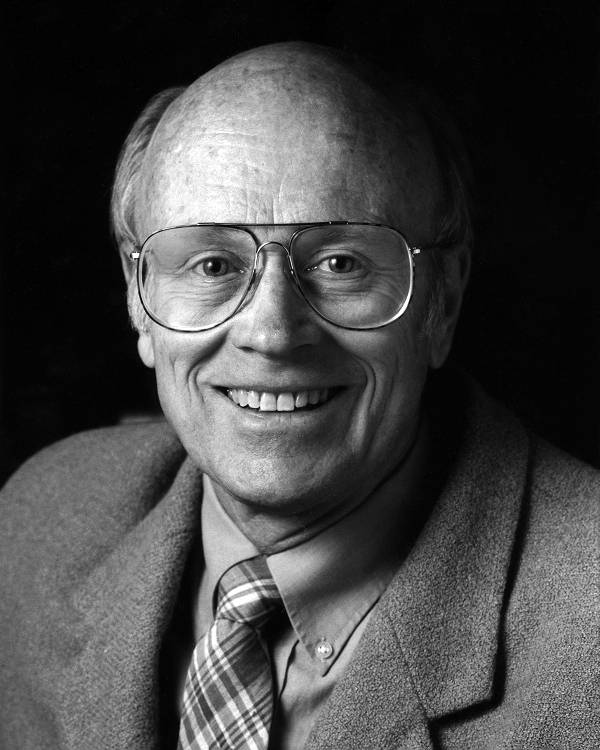 Kenneth M. Evenson合作论文数National Institute of Standards and Technology13
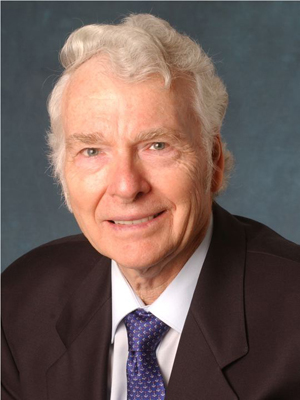 Fred C. Fehsenfeld (Fred Fehsenfeld)合作论文数David Skaggs Research Center, Cooperative Institute for Research in Environmental Sciences, University of Colorado Boulder12J. A. Davidson合作论文数11Daniel L. Albritton合作论文数11
 Joel W. Ager合作论文数Materials Sciences Division, Lawrence Berkeley National Laboratory9
 David R. Hanson合作论文数Princeton Univ.9A. L. Schmeltekopf合作论文数9Ee Ferguson合作论文数8GE STREIT合作论文数8Fred C. Fehsenfeld合作论文数8
 A. Sinha合作论文数West Bengal University of Technology8
 L. Gregory Huey合作论文数Atmospheric Sciences, Georgia Institute of Technology;School of Earth &7Hi Schiff合作论文数6Edward J. Dlugokencky合作论文数6Eliza Earle Ferguson合作论文数6
 John Orlando合作论文数Atmospheric Chemistry Observations and Modeling Laboratory, National Center for Atmospheric Research5
 Michael J. Kurylo合作论文数5Niann S. Wang合作论文数5William B. Demore合作论文数5R. F. Hampson合作论文数5Rafael Escribano合作论文数5
 Philip D. Hammer合作论文数5Timothy P. Murrells合作论文数5GA TAKACS合作论文数4e j dunlea合作论文数4Pw Villalta合作论文数4N. r. Jensen合作论文数4
 Veronica M. Bierbaum合作论文数Department of Chemistry and Biochemistry, University of Colorado Boulder4Howard W. Rundle合作论文数4F. Kaufman合作论文数4
 Juan Ortigoso合作论文数4A. R. W. Mckellar合作论文数Steacie Institute for Molecular Sciences;National Research Council of Canada;Steacie Institute for Molecular Sciences, National Research Council of Canada4carol l talcott合作论文数3Jj Margitan合作论文数3Thomas Custer合作论文数3Lindinger W合作论文数3
 Mario Molina合作论文数Department of Chemistry and Biochemistry, University of California, San Diego3R. T. Watson合作论文数3W.J. Lafferty合作论文数3Yardley Beers合作论文数3Jürg Eberhard合作论文数3D. A. Jennings合作论文数3David M. Golden合作论文数3H.I. Schiff合作论文数3A.G. Maki合作论文数3




