Existing coding benchmarks evaluate language models (LMs) on concrete, well-specified tasks such as fixing bugs or writing tests. However, human programmers do not spend all day addressing isolated GitHub issues. Instead, real-world software development is grounded in the pursuit of high-level goals. Evaluating whether LMs can iteratively develop code to accomplish open-ended objectives without explicit guidance remains an open challenge. We introduce CodeClash, a benchmark where LMs compete in multi-round tournaments to build the best codebase for achieving a competitive objective. Each round proceeds in two parts: agents edit their code, then their codebases compete head-to-head in a code arena that determines winners based on objectives like score maximization, resource acquisition, or survival. Models must decide for themselves how to improve their code both absolutely and against their opponents. We run 1680 tournaments to evaluate 8 LMs across 6 arenas, revealing how models exhibit diverse development styles and share fundamental limitations in strategic reasoning. Models also struggle with long-term codebase maintenance; repositories become progressively messy and redundant. Top models lose every round against expert human programmers. We open-source CodeClash to advance the study of autonomous, goal-oriented code development.
Although language model (LM) agents have demonstrated increased performance in multiple domains, including coding and web-browsing, their success in cybersecurity has been limited. We present , an LM agent for autonomously solving Capture The Flag (CTF) challenges. We introduce new tools and interfaces to improve the agent's ability to find and exploit security vulnerabilities, focusing on interactive terminal programs. These novel enable LM agents, for the first time, to run interactive utilities, such as a debugger and a server connection tool, which are essential for solving these challenges.Empirical analysis on 390 CTF challenges across four benchmarks demonstrate that these new tools and interfaces substantially improve our agent's performance, achieving state-of-the-art results on NYU CTF, Intercode-CTF, and CyBench. Finally, we analyze data leakage, developing new methods to quantify it and identifying a new phenomenon we term , where the model self-generates hallucinated observations without interacting with the environment.
As large language models (LLMs) increasingly serve as close collaborators for humans, it is crucial that they express their reasoning in ways that humans can understand and learn from. However, this capability remains relatively less understood and under-evaluated. To address this, we introduce a conceptual framework for such Human-AI knowledge transfer capabilities and conduct the first large-scale user study (N=118) explicitly designed to measure it. In our two-phase setup, humans first ideate with an LLM on problem-solving strategies, then independently implement solutions, isolating the influence of model reasoning on human understanding. Our findings reveal that while model benchmark performance correlates with collaborative outcomes, this relationship is notably inconsistent with significant outliers, highlighting that knowledge transfer is a distinct capability requiring dedicated optimization. Our analysis uncovers behavioral and strategic factors that mediate successful knowledge transfer, and we release our code, dataset, and evaluation framework to support future work on communicatively aligned models.
Despite recent progress in Language Models (LMs) for software engineering, collecting training data remains a significant pain point. Existing datasets are small, with at most 1,000s of training instances from 11 or fewer GitHub repositories. The procedures to curate such datasets are often complex, necessitating hundreds of hours of human labor; companion execution environments also take up several terabytes of storage, severely limiting their scalability and usability. To address this pain point, we introduce SWE-smith, a novel pipeline for generating software engineering training data at scale. Given any Python codebase, SWE-smith constructs a corresponding execution environment, then automatically synthesizes 100s to 1,000s of task instances that break existing test(s) in the codebase. Using SWE-smith, we create a dataset of 50k instances sourced from 128 GitHub repositories, an order of magnitude larger than all previous works. We train SWE-agent-LM-32B, achieving 40.2
Recent advancements in AI reasoning have driven substantial improvements across diverse tasks. A critical open question is whether these improvements also yields better knowledge transfer: the ability of models to communicate reasoning in ways humans can understand, apply, and learn from. To investigate this, we introduce Knowledge Integration and Transfer Evaluation (KITE), a conceptual and experimental framework for Human-AI knowledge transfer capabilities and conduct the first large-scale human study (N=118) explicitly designed to measure it. In our two-phase setup, humans first ideate with an AI on problem-solving strategies, then independently implement solutions, isolating model explanations' influence on human understanding. Our findings reveal that although model benchmark performance correlates with collaborative outcomes, this relationship is notably inconsistent, featuring significant outliers, indicating that knowledge transfer requires dedicated optimization. Our analysis identifies behavioral and strategic factors mediating successful knowledge transfer. We release our code, dataset, and evaluation framework to support future work on communicatively aligned models.
Autonomous systems for software engineering are now capable of fixing bugs and developing features. These systems are commonly evaluated on SWE-bench (Jimenez et al., 2024a), which assesses their ability to solve software issues from GitHub repositories. However, SWE-bench uses only Python repositories, with problem statements presented predominantly as text and lacking visual elements such as images. This limited coverage motivates our inquiry into how existing systems might perform on unrepresented software engineering domains(e.g., front-end, game development, DevOps), which use different programming languages and paradigms. Therefore, we propose SWE-bench Multimodal (SWE-bench M), to evaluate systems on their ability to fix bugs in visual, user-facing JavaScript software. SWE-bench M features 617 task instances collected from 17 JavaScript libraries used for web interface design, diagramming, data visualization, syntax highlighting, and interactive mapping. Each SWE-bench M task instance contains at least one image in its problem statement or unit tests. Our analysis finds that top-performing SWE-bench systems struggle with SWE-bench M, revealing limitations in visual problem-solving and cross-language generalization. Lastly, we show that SWE-agent’s flexible language-agnostic features enable it to substantially outperform alternatives on SWE-bench M, resolving 12% of taskinstances compared to 6% for the next best system.
Language models have outpaced our ability to evaluate them effectively, but for their future development it is essential to study the frontier of their capabilities. We find real-world software engineering to be a rich, sustainable, and challenging testbed for evaluating the next generation of language models. To this end, we introduce SWE-bench, an evaluation framework consisting of $2,294$ software engineering problems drawn from real GitHub issues and corresponding pull requests across $12$ popular Python repositories. Given a codebase along with a description of an issue to be resolved, a language model is tasked with editing the codebase to address the issue. Resolving issues in SWE-bench frequently requires understanding and coordinating changes across multiple functions, classes, and even files simultaneously, calling for models to interact with execution environments, process extremely long contexts and perform complex reasoning that goes far beyond traditional code generation tasks. Our evaluations show that both state-of-the-art proprietary models and our fine-tuned model SWE-Llama can resolve only the simplest issues. The best-performing model, Claude 2, is able to solve a mere $1.96$% of the issues. Advances on SWE-bench represent steps towards LMs that are more practical, intelligent, and autonomous.
Language model agents are increasingly being used to automate complicated tasks in digital environments. Just as humans benefit from powerful software applications, such as integrated development environments, for complex tasks like software engineering, we posit that language model agents represent a new category of end users with their own needs and abilities, and would benefit from specially built interfaces to the software they use. We investigate how the role of interface design affects the performance of language model agents. As a result of this exploration, we introduce SWE-agent: a system that facilitates language model agents to autonomously use computers to solve software engineering tasks. SWE-agent's custom agent-computer interface significantly enhances an agent's ability to create and edit code files, navigate entire repositories, and execute tests and other programs. We evaluate SWE-agent on SWE-bench and HumanEvalFix, achieving state-of-the-art performance on both with a pass@1 rate of 12.5% and 87.7%, respectively, far exceeding the previous state-of-the-art achieved with non-interactive language models. Finally, we provide insight on how the design of the agent-computer interface can impact agents' behavior and performance.
Semantic textual similarity (STS) has been a cornerstone task in NLP that measures the degree of similarity between a pair of sentences, with applications in information retrieval, question answering, and embedding methods. However, it is an inherently ambiguous task, with the sentence similarity depending on the specific aspect of interest. We resolve this ambiguity by proposing a novel task called conditional STS (C-STS) which measures similarity conditioned on an aspect elucidated in natural language (hereon, condition). As an example, the similarity between the sentences "The NBA player shoots a three-pointer." and "A man throws a tennis ball into the air to serve." is higher for the condition "The motion of the ball." (both upward) and lower for "The size of the ball." (one large and one small). C-STS's advantages are two-fold: (1) it reduces the subjectivity and ambiguity of STS, and (2) enables fine-grained similarity evaluation using diverse conditions. C-STS contains almost 20,000 instances from diverse domains and we evaluate several state-of-the-art models to demonstrate that even the most performant fine-tuning and in-context learning models (GPT-4, Flan, SimCSE) find it challenging, with Spearman correlation scores of <50. We encourage the community to evaluate their models on C-STS to provide a more holistic view of semantic similarity and natural language understanding.
The widespread adoption of large language models such as ChatGPT and Bard has led to unprecedented demand for these technologies. The burgeoning cost of inference for ever-increasing model sizes coupled with hardware shortages has limited affordable access and poses a pressing need for efficiency approaches geared towards high throughput and performance. Multi-input multi-output (MIMO) algorithms such as data multiplexing, offer a promising solution with a many-fold increase in throughput by performing inference for multiple inputs at the cost of a single input. Yet these approaches are not currently performant enough to be deployed in modern systems. We change that by developing MUX-PLMs, a class of high throughput pre-trained language models (PLMs) trained with data multiplexing, that can be fine-tuned for any downstream task to yield high-throughput high-performance. Our novel multiplexing and demultiplexing modules proficiently entangle and disentangle inputs, and enable high-performance high throughput MUX-PLMs that are competitive with vanilla PLMs while achieving 2x/5x inference speedup with only a 1-4 % drop on a broad suite of tasks.
In this paper, we introduce data multiplexing (DataMUX), a technique that enables deep neural networks to process multiple inputs simultaneously using a single compact representation. DataMUX demonstrates that neural networks are capable of generating accurate predictions over mixtures of inputs, resulting in increased throughput with minimal extra memory requirements. Our approach uses two key components -- 1) a multiplexing layer that performs a fixed linear transformation to each input before combining them to create a mixed representation of the same size as a single input, which is then processed by the base network, and 2) a demultiplexing layer that converts the base network's output back into independent representations before producing predictions for each input. We show the viability of DataMUX for different architectures (Transformers, and to a lesser extent MLPs and CNNs) across six different tasks spanning sentence classification, named entity recognition and image classification. For instance, DataMUX for Transformers can multiplex up to $20$x/$40$x inputs, achieving $11$x/$18$x increase in throughput with minimal absolute performance drops of $<2\%$ and $<4\%$ respectively on MNLI, a natural language inference task. We also provide a theoretical construction for multiplexing in self-attention networks and analyze the effect of various design elements in DataMUX.
We introduce CARETS, a systematic test suite to measure consistency and robustness of modern VQA models through a series of six fine-grained capability tests. In contrast to existing VQA test sets, CARETS features balanced question generation to create pairs of instances to test models, with each pair focusing on a specific capability such as rephrasing, logical symmetry or image obfuscation. We evaluate six modern VQA systems on CARETS and identify several actionable weaknesses in model comprehension, especially with concepts such as negation, disjunction, or hypernym invariance. Interestingly, even the most sophisticated models are sensitive to aspects such as swapping the order of terms in a conjunction or varying the number of answer choices mentioned in the question. We release CARETS to be used as an extensible tool for evaluating multi-modal model robustness.
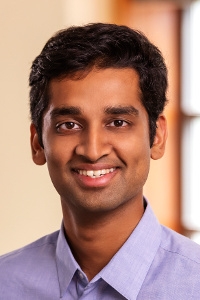 Karthik Narasimhan合作论文数Department of Computer Science, School of Engineering and Applled Sclence, Princeton University;Sierra10
 Ofir Press合作论文数Princeton University6
 Kilian Lieret合作论文数5
 Diyi Yang (杨笛一)合作论文数Computer Science Department, Stanford University5
 Shunyu Yao (姚顺雨)合作论文数4
 John Yang合作论文数Center for Environmental Sciences, Lincoln University of Missouri4
 Alexander Wettig合作论文数Department of Computer Science, Princeton University;Allen Institute for Artificial Intelligence3
 Vishvak Murahari合作论文数Department of Computer Science, Princeton University3
 Ameet Deshpande合作论文数Princeton University2
 Ludwig Schmidt合作论文数Anthropic;Department of Computer Science, Stanford University2
 Nicholas Haber合作论文数Graduate School of Education, Stanford University2
 John Y合作论文数Department of Computer Science, Stanford University2Joyce Yang合作论文数1Alex Zhang合作论文数1
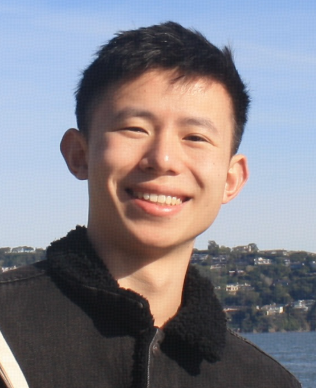 Quan Shi (石泉)合作论文数Sierra1
 Talor Abramovich合作论文数Tel Aviv University;NVIDIA Israel1Kimberly Milner合作论文数1Haoran Xi合作论文数1
 Minghao Shao合作论文数Division of Engineering, New York University1Meet Udeshi合作论文数1Victoria Graf合作论文数1
 Mingqiu Wang合作论文数Google1
 Ori Press合作论文数Max Planck Institute for Intelligent Systems;Eberhard-Karls-Universität Tübingen1Sofija Jancheska合作论文数1
 Kexin Pei合作论文数Department of Computer Science, The University of Chicago1
 Xindi (Cindy) Wu (吴馨迪)合作论文数Computer Science Department, Princeton University;NVIDIA1
 Niklas Muennighoff合作论文数Meta;Stanford University;Ai21
 Ashwin Kalyan合作论文数Allen Institute for AI (AI2)1
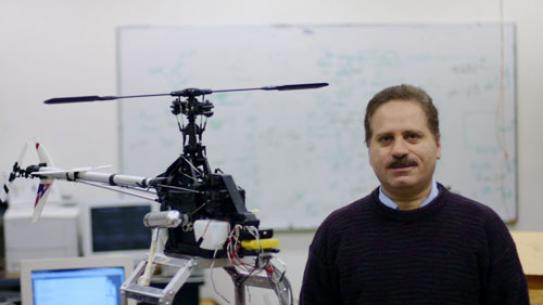 Prashanth Krishnamurthy合作论文数Department of Electrical and Computer Engineering, Tandon School of Engineering, New York University1
 Olga Russakovsky合作论文数Department of Computer Science, School of Engineering and Applied Science, Princeton University1
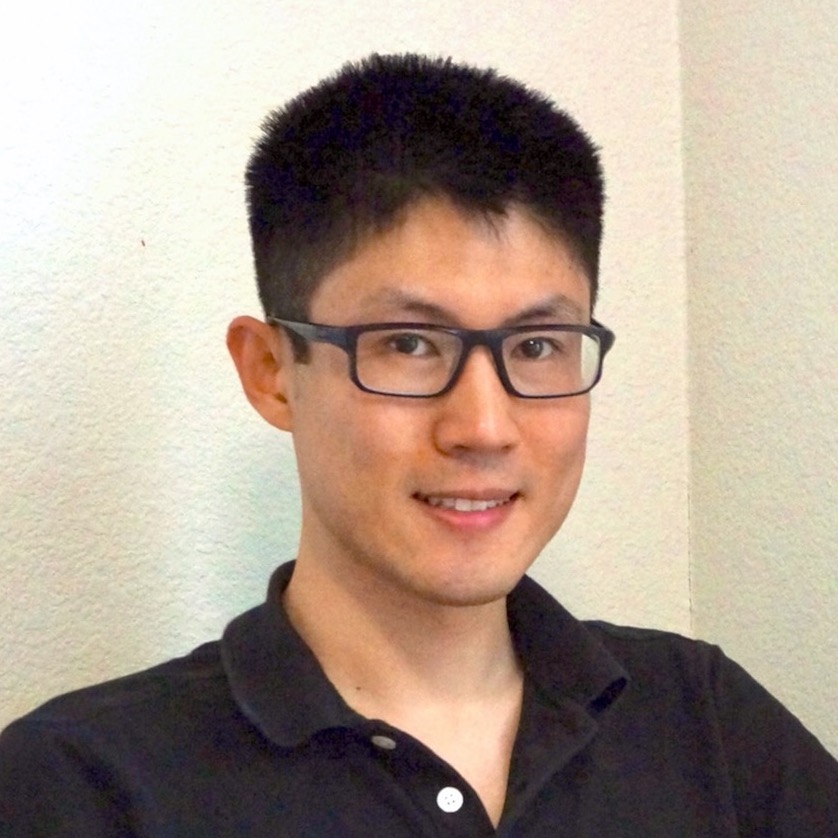 Sida I. Wang合作论文数Facebook AI Research1
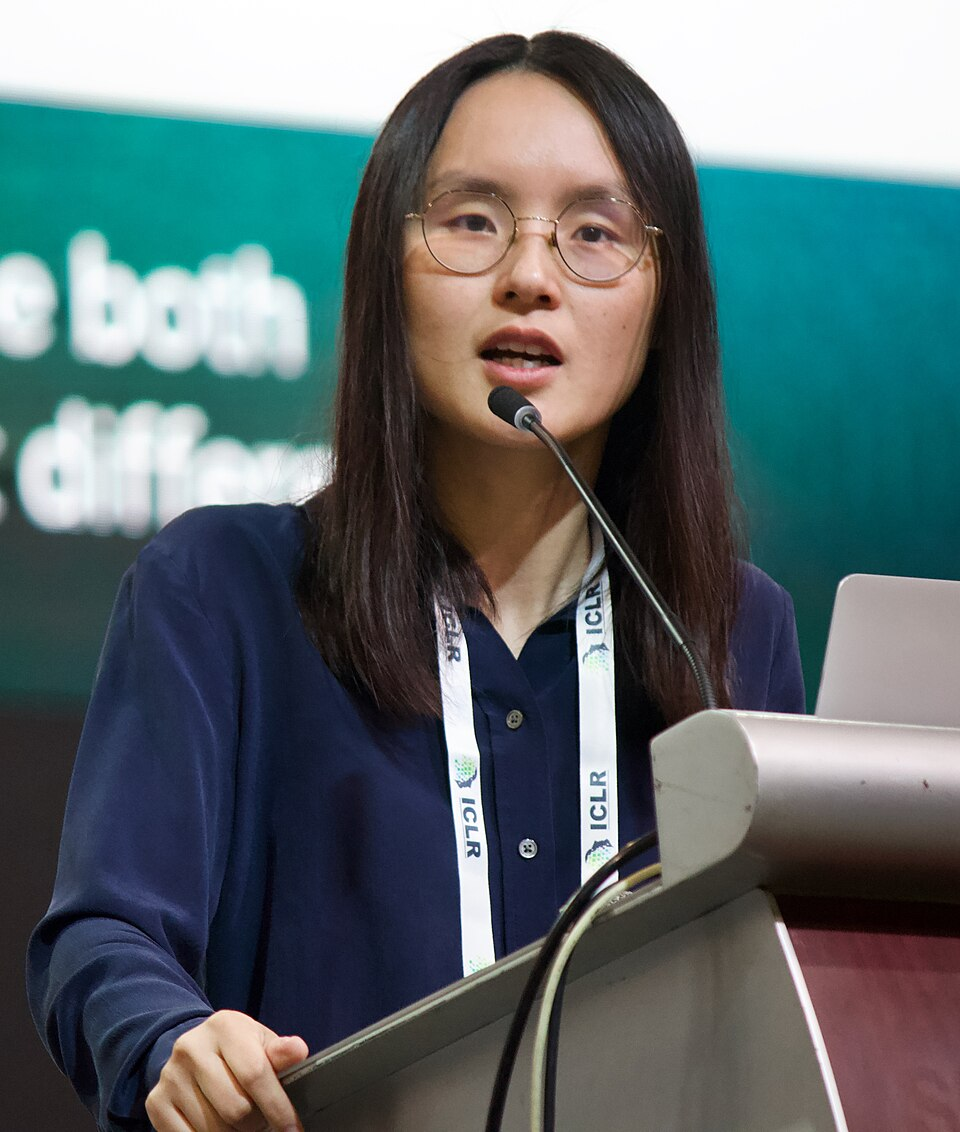 Danqi Chen (陈丹琦)合作论文数1
 Gabriel Synnaeve合作论文数Meta1
 Binyuan Hui合作论文数Alibaba DAMO Academy1
 Tony Yang (杨闰哲)合作论文数Neuroscience Institute, Princeton University;Computer Science Department, Princeton University1
 Yanzhe Zhang (张彦哲)合作论文数Georgia Institute of Technology1
 Yuan Cao合作论文数Google DeepMind1
 Muhammad Shafique合作论文数Division of Engineering, New York University Abu Dhabi1
 Howard Chen合作论文数Department of Computer Science, Princeton University1
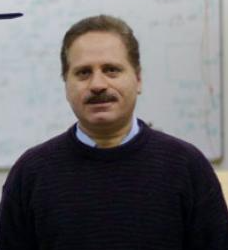 Farshad Khorrami合作论文数Control/Robotics Research Laboratory, Tandon School of Engineering, New York University1
 Brendan Dolan-Gavitt合作论文数Computer Science and Engineering Department, Tandon School of Engineering, New York University;Polytechnic Institute, Tandon School of Engineering, New York University1
 Izhak Shafran合作论文数Google1
 Ramesh Karri合作论文数Tandon School of Engineering, New York University;Center for Cybersecurity, New York University1
 Tanmay Rajpurohit合作论文数1




