Turning ideas into full software projects from scratch has become a popular use case for language models. Agents are being deployed to seed, maintain, and grow codebases over extended periods with minimal human oversight. Such settings require models to make high-level software architecture decisions. However, existing benchmarks measure focused, limited tasks such as fixing a single bug or developing a single, specified feature. We therefore introduce ProgramBench to measure the ability of software engineering agents to develop software holisitically. In ProgramBench, given only a program and its documentation, agents must architect and implement a codebase that matches the reference executable's behavior. End-to-end behavioral tests are generated via agent-driven fuzzing, enabling evaluation without prescribing implementation structure. Our 200 tasks range from compact CLI tools to widely used software such as FFmpeg, SQLite, and the PHP interpreter. We evaluate 9 LMs and find that none fully resolve any task, with the best model passing 95% of tests on only 3% of tasks. Models favor monolithic, single-file implementations that diverge sharply from human-written code.
Optimizing the performance of large-scale software repositories demands expertise in code reasoning and software engineering (SWE) to reduce runtime while preserving program correctness. However, most benchmarks emphasize what to fix rather than how to fix code. We introduce SWE-fficiency, a benchmark for evaluating repository-level performance optimization on real workloads. Our suite contains 498 tasks across nine widely used data-science, machine-learning, and HPC repositories (e.g., numpy, pandas, scipy): given a complete codebase and a slow workload, an agent must investigate code semantics, localize bottlenecks and relevant tests, and produce a patch that matches or exceeds expert speedup while passing the same unit tests. To enable this how-to-fix evaluation, our automated pipeline scrapes GitHub pull requests for performance-improving edits, combining keyword filtering, static analysis, coverage tooling, and execution validation to both confirm expert speedup baselines and identify relevant repository unit tests. Empirical evaluation of state-of-the-art agents reveals significant underperformance. On average, top agents achieve less than 0.23x the expert speedup: agents struggle in localizing optimization opportunities, reasoning about execution across functions, and maintaining correctness in proposed edits. We release the benchmark and accompanying data pipeline to facilitate research on automated performance engineering and long-horizon software reasoning.
Existing coding benchmarks evaluate language models (LMs) on concrete, well-specified tasks such as fixing bugs or writing tests. However, human programmers do not spend all day addressing isolated GitHub issues. Instead, real-world software development is grounded in the pursuit of high-level goals. Evaluating whether LMs can iteratively develop code to accomplish open-ended objectives without explicit guidance remains an open challenge. We introduce CodeClash, a benchmark where LMs compete in multi-round tournaments to build the best codebase for achieving a competitive objective. Each round proceeds in two parts: agents edit their code, then their codebases compete head-to-head in a code arena that determines winners based on objectives like score maximization, resource acquisition, or survival. Models must decide for themselves how to improve their code both absolutely and against their opponents. We run 1680 tournaments to evaluate 8 LMs across 6 arenas, revealing how models exhibit diverse development styles and share fundamental limitations in strategic reasoning. Models also struggle with long-term codebase maintenance; repositories become progressively messy and redundant. Top models lose every round against expert human programmers. We open-source CodeClash to advance the study of autonomous, goal-oriented code development.
Although language model (LM) agents have demonstrated increased performance in multiple domains, including coding and web-browsing, their success in cybersecurity has been limited. We present , an LM agent for autonomously solving Capture The Flag (CTF) challenges. We introduce new tools and interfaces to improve the agent's ability to find and exploit security vulnerabilities, focusing on interactive terminal programs. These novel enable LM agents, for the first time, to run interactive utilities, such as a debugger and a server connection tool, which are essential for solving these challenges.Empirical analysis on 390 CTF challenges across four benchmarks demonstrate that these new tools and interfaces substantially improve our agent's performance, achieving state-of-the-art results on NYU CTF, Intercode-CTF, and CyBench. Finally, we analyze data leakage, developing new methods to quantify it and identifying a new phenomenon we term , where the model self-generates hallucinated observations without interacting with the environment.
Despite recent progress in Language Models (LMs) for software engineering, collecting training data remains a significant pain point. Existing datasets are small, with at most 1,000s of training instances from 11 or fewer GitHub repositories. The procedures to curate such datasets are often complex, necessitating hundreds of hours of human labor; companion execution environments also take up several terabytes of storage, severely limiting their scalability and usability. To address this pain point, we introduce SWE-smith, a novel pipeline for generating software engineering training data at scale. Given any Python codebase, SWE-smith constructs a corresponding execution environment, then automatically synthesizes 100s to 1,000s of task instances that break existing test(s) in the codebase. Using SWE-smith, we create a dataset of 50k instances sourced from 128 GitHub repositories, an order of magnitude larger than all previous works. We train SWE-agent-LM-32B, achieving 40.2
Despite progress in language model (LM) capabilities, evaluations have thus far focused on models' performance on tasks that humans have previously solved, including in programming (Jimenez et al., 2024) and mathematics (Glazer et al., 2024). We therefore propose testing models' ability to design and implement algorithms in an open-ended benchmark: We task LMs with writing code that efficiently solves computationally challenging problems in computer science, physics, and mathematics. Our AlgoTune benchmark consists of 155 coding tasks collected from domain experts and a framework for validating and timing LM-synthesized solution code, which is compared to reference implementations from popular open-source packages. In addition, we develop a baseline LM agent, AlgoTuner, and evaluate its performance across a suite of frontier models. AlgoTuner achieves an average 1.72x speedup against our reference solvers, which use libraries such as SciPy, sk-learn and CVXPY. However, we find that current models fail to discover algorithmic innovations, instead preferring surface-level optimizations. We hope that AlgoTune catalyzes the development of LM agents exhibiting creative problem solving beyond state-of-the-art human performance.
Vision-language models (VLMs) have achieved strong results on coding and math benchmarks that are challenging for humans, yet their ability to perform tasks that come naturally to humans–such as perception, spatial navigation, and memory management–remains understudied. Real video games are crafted to be intuitive for humans to learn and master by leveraging innate inductive biases, making them an ideal testbed for evaluating such capabilities in VLMs. To this end, we introduce VideoGameBench, a benchmark consisting of 10 popular video games from the 1990s that VLMs directly interact with in real-time. VideoGameBench challenges models to complete entire games with access to only raw visual inputs and a high-level description of objectives and controls, a significant departure from existing setups that rely on game-specific scaffolding and auxiliary information. We keep three of the games secret to encourage solutions that generalize to unseen environments. Our experiments show that frontier vision-language models struggle to progress beyond the beginning of each game. We find inference latency to be a major limitation of frontier models in the real-time setting; therefore, we introduce VideoGameBench Lite, a setting where the game pauses while waiting for the LM's next action. The best performing models, Gemini 2.5 Pro and Claude 3.7 Sonnet, complete only 0.48
While large language models (LLMs) with reasoning capabilities are progressing rapidly on high-school math competitions and coding, can they reason effectively through complex, open-ended challenges found in frontier physics research? And crucially, what kinds of reasoning tasks do physicists want LLMs to assist with? To address these questions, we present the CritPt (Complex Research using Integrated Thinking - Physics Test, pronounced "critical point"), the first benchmark designed to test LLMs on unpublished, research-level reasoning tasks that broadly covers modern physics research areas, including condensed matter, quantum physics, atomic, molecular optical physics, astrophysics, high energy physics, mathematical physics, statistical physics, nuclear physics, nonlinear dynamics, fluid dynamics and biophysics. CritPt consists of 71 composite research challenges designed to simulate full-scale research projects at the entry level, which are also decomposed to 190 simpler checkpoint tasks for more fine-grained insights. All problems are newly created by 50+ active physics researchers based on their own research. Every problem is hand-curated to admit a guess-resistant and machine-verifiable answer and is evaluated by an automated grading pipeline heavily customized for advanced physics-specific output formats. We find that while current state-of-the-art LLMs show early promise on isolated checkpoints, they remain far from being able to reliably solve full research-scale challenges: the best average accuracy among base models is only 5.7
Autonomous systems for software engineering are now capable of fixing bugs and developing features. These systems are commonly evaluated on SWE-bench (Jimenez et al., 2024a), which assesses their ability to solve software issues from GitHub repositories. However, SWE-bench uses only Python repositories, with problem statements presented predominantly as text and lacking visual elements such as images. This limited coverage motivates our inquiry into how existing systems might perform on unrepresented software engineering domains(e.g., front-end, game development, DevOps), which use different programming languages and paradigms. Therefore, we propose SWE-bench Multimodal (SWE-bench M), to evaluate systems on their ability to fix bugs in visual, user-facing JavaScript software. SWE-bench M features 617 task instances collected from 17 JavaScript libraries used for web interface design, diagramming, data visualization, syntax highlighting, and interactive mapping. Each SWE-bench M task instance contains at least one image in its problem statement or unit tests. Our analysis finds that top-performing SWE-bench systems struggle with SWE-bench M, revealing limitations in visual problem-solving and cross-language generalization. Lastly, we show that SWE-agent’s flexible language-agnostic features enable it to substantially outperform alternatives on SWE-bench M, resolving 12% of taskinstances compared to 6% for the next best system.
Since language models (LMs) now outperform average humans on many challenging tasks, it has become increasingly difficult to develop challenging, high-quality, and realistic evaluations. We address this issue by examining LMs' capabilities to generate code for solving real scientific research problems. Incorporating input from scientists and AI researchers in 16 diverse natural science sub-fields, including mathematics, physics, chemistry, biology, and materials science, we created a scientist-curated coding benchmark, SciCode. The problems in SciCode naturally factorize into multiple subproblems, each involving knowledge recall, reasoning, and code synthesis. In total, SciCode contains 338 subproblems decomposed from 80 challenging main problems. It offers optional descriptions specifying useful scientific background information and scientist-annotated gold-standard solutions and test cases for evaluation. Claude3.5-Sonnet, the best-performing model among those tested, can solve only 4.6% of the problems in the most realistic setting. We believe that SciCode demonstrates both contemporary LMs' progress towards becoming helpful scientific assistants and sheds light on the development and evaluation of scientific AI in the future.
Language models have outpaced our ability to evaluate them effectively, but for their future development it is essential to study the frontier of their capabilities. We find real-world software engineering to be a rich, sustainable, and challenging testbed for evaluating the next generation of language models. To this end, we introduce SWE-bench, an evaluation framework consisting of $2,294$ software engineering problems drawn from real GitHub issues and corresponding pull requests across $12$ popular Python repositories. Given a codebase along with a description of an issue to be resolved, a language model is tasked with editing the codebase to address the issue. Resolving issues in SWE-bench frequently requires understanding and coordinating changes across multiple functions, classes, and even files simultaneously, calling for models to interact with execution environments, process extremely long contexts and perform complex reasoning that goes far beyond traditional code generation tasks. Our evaluations show that both state-of-the-art proprietary models and our fine-tuned model SWE-Llama can resolve only the simplest issues. The best-performing model, Claude 2, is able to solve a mere $1.96$% of the issues. Advances on SWE-bench represent steps towards LMs that are more practical, intelligent, and autonomous.
Thousands of new scientific papers are published each month. Such information overload complicates researcher efforts to stay current with the state-of-the-art as well as to verify and correctly attribute claims. We pose the following research question: Given a text excerpt referencing a paper, could an LM act as a research assistant to correctly identify the referenced paper? We advance efforts to answer this question by building a benchmark that evaluates the abilities of LMs in citation attribution. Our benchmark, CiteME, consists of text excerpts from recent machine learning papers, each referencing a single other paper. CiteME use reveals a large gap between frontier LMs and human performance, with LMs achieving only 4.2-18.5% accuracy and humans 69.7%. We close this gap by introducing CiteAgent, an autonomous system built on the GPT-4o LM that can also search and read papers, which achieves an accuracy of 35.3\% on CiteME. Overall, CiteME serves as a challenging testbed for open-ended claim attribution, driving the research community towards a future where any claim made by an LM can be automatically verified and discarded if found to be incorrect.
Language model agents are increasingly being used to automate complicated tasks in digital environments. Just as humans benefit from powerful software applications, such as integrated development environments, for complex tasks like software engineering, we posit that language model agents represent a new category of end users with their own needs and abilities, and would benefit from specially built interfaces to the software they use. We investigate how the role of interface design affects the performance of language model agents. As a result of this exploration, we introduce SWE-agent: a system that facilitates language model agents to autonomously use computers to solve software engineering tasks. SWE-agent's custom agent-computer interface significantly enhances an agent's ability to create and edit code files, navigate entire repositories, and execute tests and other programs. We evaluate SWE-agent on SWE-bench and HumanEvalFix, achieving state-of-the-art performance on both with a pass@1 rate of 12.5% and 87.7%, respectively, far exceeding the previous state-of-the-art achieved with non-interactive language models. Finally, we provide insight on how the design of the agent-computer interface can impact agents' behavior and performance.
A major risk of using language models in practical applications is their tendency to hallucinate incorrect statements. Hallucinations are often attributed to knowledge gaps in LMs, but we hypothesize that in some cases, when justifying previously generated hallucinations, LMs output false claims that they can separately recognize as incorrect. We construct three question-answering datasets where ChatGPT and GPT-4 often state an incorrect answer and offer an explanation with at least one incorrect claim. Crucially, we find that ChatGPT and GPT-4 can identify 67% and 87% of their own mistakes, respectively. We refer to this phenomenon as hallucination snowballing: an LM over-commits to early mistakes, leading to more mistakes that it otherwise would not make.
Language agents, built on top of language models (LMs), are systems that can interact with complex environments, such as the open web. In this work, we examine whether such agents can perform realistic and time-consuming tasks on the web, e.g., monitoring real-estate markets or locating relevant nearby businesses. We introduce AssistantBench, a challenging new benchmark consisting of 214 realistic tasks that can be automatically evaluated, covering different scenarios and domains. We find that AssistantBench exposes the limitations of current systems, including language models and retrieval-augmented language models, as no model reaches an accuracy of more than 25 points. While closed-book LMs perform well in terms of accuracy, they exhibit low precision and tend to hallucinate facts. State-of-the-art web agents reach a score of near zero. Additionally, we introduce SeePlanAct (SPA), a new web agent that significantly outperforms previous agents, and an ensemble of SPA and closed-book models reaches the best overall performance. Moreover, we analyze failures of current systems and highlight that open web navigation remains a major challenge.
We investigate the ability of language models to perform compositional reasoning tasks where the overall solution depends on correctly composing the answers to sub-problems. We measure how often models can correctly answer all sub-problems but not generate the overall solution, a ratio we call the compositionality gap. We evaluate this ratio by asking multi-hop questions with answers that require composing multiple facts unlikely to have been observed together during pretraining. In the GPT-3 family of models, as model size increases we show that the single-hop question answering performance improves faster than the multi-hop performance does, therefore the compositionality gap does not decrease. This surprising result suggests that while more powerful models memorize and recall more factual knowledge, they show no corresponding improvement in their ability to perform this kind of compositional reasoning. We then demonstrate how elicitive prompting (such as chain of thought) narrows the compositionality gap by reasoning explicitly instead of implicitly. We present a new method, self-ask, that further improves on chain of thought. In our method, the model explicitly asks itself (and then answers) follow-up questions before answering the initial question. We finally show that self-ask's structured prompting lets us easily plug in a search engine to answer the follow-up questions, which additionally improves accuracy.
Since the introduction of the transformer model by Vaswani et al. (2017), a fundamental question has yet to be answered: how does a model achieve extrapolation at inference time for sequences that are longer than it saw during training? We first show that extrapolation can be enabled by simply changing the position representation method, though we find that current methods do not allow for efficient extrapolation. We therefore introduce a simpler and more efficient position method, Attention with Linear Biases (ALiBi). ALiBi does not add positional embeddings to word embeddings; instead, it biases query-key attention scores with a penalty that is proportional to their distance. We show that this method trains a 1.3 billion parameter model on input sequences of length 1024 that extrapolates to input sequences of length 2048, achieving the same perplexity as a sinusoidal position embedding model trained on inputs of length 2048 but training 11% faster and using 11% less memory. ALiBi's inductive bias towards recency also leads it to outperform multiple strong position methods on the WikiText-103 benchmark.
Causal transformer language models (LMs), such as GPT-3, typically require some form of positional encoding, such as positional embeddings. However, we show that LMs without any explicit positional encoding are still competitive with standard models, and that this phenomenon is robust across different datasets, model sizes, and sequence lengths. Probing experiments reveal that such models acquire an implicit notion of absolute positions throughout the network, effectively compensating for the missing information. We conjecture that causal attention enables the model to infer the number of predecessors that each token can attend to, thereby approximating its absolute position. Our findings indicate that causal LMs might derive positional awareness not only from the explicit positioning mechanism, but also from the effects of the causal mask.
The crystallization of modeling methods around the Transformer architecture has been a boon for practitioners. Simple, well-motivated architectural variations can transfer across tasks and scale, increasing the impact of modeling research. However, with the emergence of state-of-the-art 100B+ parameters models, large language models are increasingly expensive to accurately design and train. Notably, it can be difficult to evaluate how modeling decisions may impact emergent capabilities, given that these capabilities arise mainly from sheer scale alone. In the process of building BLOOM--the Big Science Large Open-science Open-access Multilingual language model--our goal is to identify an architecture and training setup that makes the best use of our 1,000,000 A100-GPU-hours budget. Specifically, we perform an ablation study at the billion-parameter scale comparing different modeling practices and their impact on zero-shot generalization. In addition, we study the impact of various popular pre-training corpora on zero-shot generalization. We also study the performance of a multilingual model and how it compares to the English-only one. Finally, we consider the scaling behaviour of Transformers to choose the target model size, shape, and training setup. All our models and code are open-sourced at https://huggingface.co/bigscience .
Large language models (LLMs) have been shown to be able to perform new tasks based on a few demonstrations or natural language instructions. While these capabilities have led to widespread adoption, most LLMs are developed by resource-rich organizations and are frequently kept from the public. As a step towards democratizing this powerful technology, we present BLOOM, a 176B-parameter open-access language model designed and built thanks to a collaboration of hundreds of researchers. BLOOM is a decoder-only Transformer language model that was trained on the ROOTS corpus, a dataset comprising hundreds of sources in 46 natural and 13 programming languages (59 in total). We find that BLOOM achieves competitive performance on a wide variety of benchmarks, with stronger results after undergoing multitask prompted finetuning. To facilitate future research and applications using LLMs, we publicly release our models and code under the Responsible AI License.
 Kilian Lieret合作论文数8
 Carlos E. Jimenez合作论文数Princeton University6
 Noah A. Smith (史諾亞)合作论文数Paul G. Allen School of Computer Science & Engineering, University of Washington;Allen Institute for Artificial Intelligence6
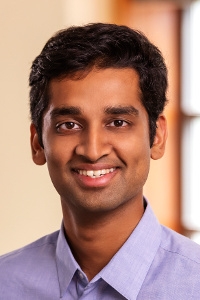 Karthik Narasimhan合作论文数Department of Computer Science, School of Engineering and Applled Sclence, Princeton University;Sierra5
 John Yang合作论文数Center for Environmental Sciences, Lincoln University of Missouri5
 Diyi Yang (杨笛一)合作论文数Computer Science Department, Stanford University4
 Ori Press合作论文数Max Planck Institute for Intelligent Systems;Eberhard-Karls-Universität Tübingen3
 Alexander Wettig合作论文数Department of Computer Science, Princeton University;Allen Institute for Artificial Intelligence3
 Niklas Muennighoff合作论文数Meta;Stanford University;Ai23
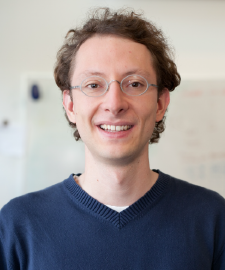 Ludwig Schmidt合作论文数Anthropic;Department of Computer Science, Stanford University3
 Mike Lewis合作论文数Meta3
 Muru Zhang合作论文数University of Southern California;Google Deepmind2
 Zheng-Xin Yong合作论文数Department of Computer Science, Brown University2
 Minyang Tian合作论文数2Jaesung Tae合作论文数Optiver2
 Lucile Saulnier合作论文数Mistral AI2
 Stas Bekman合作论文数Stasosphere Online Inc.;Contextual AI;StasoSphere.com2
 Daniel Hesslow合作论文数Hugging Face2
 Lintang Sutawika合作论文数Language Technologies Institute, Carnegie Mellon University2
 Ben Bogin合作论文数Allen Institute for AI2
 Stella Biderman合作论文数EleutherAI2
 Colin Raffel合作论文数Department of Computer Science, University of Toronto;Vector Institute;Hugging Face2
 Omer Levy合作论文数Google DeepMind2
 Iz Beltagy合作论文数Envive AI;Allen Institute for Artificial Intelligence2
 Gabriel Synnaeve合作论文数Meta2
 Shunyu Yao (姚顺雨)合作论文数2
 Jason Phang (彭展胜)合作论文数OpenAI;EleutherAI;Center for Data Science, New York University2
 Hao Peng合作论文数Paul G. Allen School of Computer Science and Engineering, University of Washington2
 Luyu Gao合作论文数Language Technologies Institute, Carnegie Mellon University2
 Matthias Bethge合作论文数Bethge Lab, University of Tuebingen;Institute for Theoretical Physics, Faculty of Science, University of Tuebingen;AI Cente, University of Tuebingen;Bundeswettbewerb KI;European Laboratory for Learning and Intelligent Systems;Maddox AI;DeepArt UG2
 Sheng Shen合作论文数University of California, Berkeley2
 John Y合作论文数Department of Computer Science, Stanford University2
 M Saiful Bari合作论文数Saudi Authority for Data and Artificial Intelligence2
 Thomas T. Y. Wang合作论文数USDA Agricultural Research Service, Beltsville Human Nutrition Research Center2
 Lior Wolf合作论文数Mentee Robotics;School of Computer Science, Tel Aviv University2
 Julien Launay合作论文数Hugging Face2
 Teven Le Scao合作论文数Mistral AI2
 Hady Elsahar合作论文数Meta AI2
 Victor Sanh合作论文数Rilix AI2
 Jonathan Berant合作论文数The Blavatnik School of Computer Science, Tel-Aviv University2Joyce Yang合作论文数1Alex Zhang合作论文数1Yufeng Du合作论文数1Yanxin Lu合作论文数1Minhui Zhu合作论文数1Shengzhu Yin合作论文数1Kha Trinh合作论文数1Hao Tong合作论文数1Yutao Ma合作论文数1




