Ovules from the Albert Long Collection were investigated for in situ microspores and pollen. The ovule Genomosperma kidstoni contains Prolycospora claytonii a trilete microspore previously attributed to the lycopods. Already reported associations between Colatisporites decorus and Stamnostoma huttonense, Colatisporites denticulatus and Lyrasperma scotica and Remysporites magnificus and Protopitys scotica were verified. This demonstrates the importance of historic collections and particularly ovules for determining the palaeobotanical affinities of dispersed miospores and pollen.
The Ballagan Formation of northern Britain provides an exceptional record of Early Mississippian ecosystems that developed as tetrapods emerged onto land. In this paper, we study two 500-metre sections of the formation near Berwick-upon-Tweed, which are characterised by abundant ferroan dolostone beds. Five lithofacies are identified: cemented siltstone and sandstone, homogeneous dolomicrite, mixed dolomite and siltstone, mixed calcite and dolomite, and dolomite with evaporite minerals. Cemented sediments have non-planar to planar subhedral dolomite crystals, up to 40 mu m in size, whereas other facies predominantly comprise dolomicrite or planar euhedral dolomite rhombs 15 mu m in size, with patches of larger rhombs indicating partial recrystallisation. The macro- and microfossil content of the dolostones is dominated by sarcopterygian (rhizodont) and actinopterygian fish, bivalves, Serpula, ostracods and Chondrites trace fossils; with rarer Spirorbis, chondrichthyans (Ageleodus, hybodonts and ?ctenacanths, xenacanths), non-gyracanth acanthodians, gastropods, eurypterids, brachiopods, plant debris, wood, lycopsid roots, charcoal, megaspores, phycosiphoniform burrows, Zoophycos? and Rhizocorallium. The oxygen and carbon isotope composition of dolomites range from -3.6% to -1.7% (for delta O-18) and -2.6% to +1.6% (for delta C-13) respectively indicating dolomite growth in mixed salinity waters. Frequent marine storm-surge events transported marine waters and animals into floodplain lakes, where evaporation, interstitial sulphate-reducing bacteria, iron reduction and methanogenesis allowed dolomite growth in the shallow sub-surface. Secondary pedogenic modification (by roots, brecciation, desiccation, and soil forming processes) is common and represents lake evaporation with, in some cases, saline marsh development. The dolostone facies are part of a complex environmental mosaic of sub-aerial dry floodplain, wet marshy floodplains, rivers, and lakes ranging in salinity from freshwater to hypersaline. Marine influence is strongest at the base of the formation and decreases over time, as the floodplain became drier, and forested areas became more established. Coastal lakes were an important habitat for animals recovering from the end-Devonian Hangenberg Crisis and may have acted as a pathway for euryhaline fishes, molluscs and arthropods to access freshwater environments.
The end-Devonian mass extinction has been framed as a turning point in vertebrate evolution, enabling the radiation of tetrapods, chondrichthyans and actinopterygians. Until very recently 'Romer's Gap' rendered the Early Carboniferous a black box standing between the Devonian and the later Carboniferous, but now new Tournaisian localities are filling this interval. Recent work has recovered unexpected tetrapod and lungfish diversity. However, the composition of Tournaisian faunas remains poorly understood. Here we report on a Tournaisian vertebrate fauna from a well-characterized, narrow stratigraphic interval from the Ballagan Formation exposed at Burnmouth, Scotland. Microfossils suggest brackish conditions and the sedimentology indicates a low-energy debris flow on a vegetated floodplain. A range of vertebrate bone sizes are preserved. Rhizodonts are represented by the most material, which can be assigned to two taxa. Lungfish are represented by several species, almost all of which are currently endemic to the Ballagan Formation. There are two named tetrapods, Aytonerpeton and Diploradus, with at least two others also represented. Gyracanths, holocephalans, and actinopterygian fishes are represented by rarer fossils. This material compares well with vertebrate fossils from other Ballagan deposits. Faunal similarity analysis using an updated dataset of Devonian-Carboniferous (Givetian-Serpukhovian) sites corroborates a persistent Devonian/Carboniferous split. Separation of the data into marine and non-marine partitions indicates more Devonian-Carboniferous faunal continuity in non-marine settings compared to marine settings. These results agree with the latest fossil discoveries and suggest that the Devonian-Carboniferous transition proceeded differently in different environments and among different taxonomic groups.
ABSTRACT In Scotland, the base of the Ballagan Formation has traditionally been placed at the first grey mudstone within a contiguous Late Devonian to Carboniferous succession. This convention places the Devonian–Carboniferous boundary within the Old Red Sandstone (ORS) Kinnesswood Formation. The consequences of this placement are that tetrapods from the Ballagan Formation were dated as late Tournaisian in age and that the ranges of typically Devonian fish found in the Kinnesswood Formation continued into the Carboniferous. The Pease Bay specimen of the fish Remigolepis is from the Kinnesswood Formation. Comparisons with its range in Greenland, calibrated against spores, show it was Famennian in age. Detailed palynological sampling at Burnmouth from the base of the Ballagan Formation proves that the early Tournaisian spore zones (VI and HD plus Cl 1) are present. The Schopfites species that occurs through most of the succession is Schopfites delicatus rather than Schopfites claviger . The latter species defines the late Tournaisian CM spore zone. The first spore assemblage that has been found in Upper ‘ORS' strata underlying the Ballagan Formation (Preston, Whiteadder Water), contains Retispora lepidophyta and is from the early latest Famennian LL spore zone. The spore samples are interbedded with volcaniclastic debris, which shows that the Kelso Volcanic Formation is, in part, early latest Famennian in age. These findings demonstrate that the Ballagan Formation includes most of the Tournaisian with the Devonian–Carboniferous boundary positioned close to the top of the Kinnesswood Formation. The Stage 6 calcrete at Pease Bay can be correlated to the equivalent section at Carham, showing that it represents a time gap equivalent to the latest Famennian glaciation(s). Importantly, some of the recently described Ballagan Formation tetrapods are older than previously dated and now fill the key early part of Romer's Gap.
A conglomerate bed from the Tournaisian Ballagan Formation of Scotland preserves a rich array of vertebrate and other nonmarine fossils providing an insight into the wider ecosystem and paleoenvironment that existed during this pivotal stage of Earth history. It challenges hypotheses of a long-lasting post-extinction trough following the end-Devonian extinction event. The fauna recovered includes a wide size range of tetrapods, rhizodonts, and dipnoans, from tiny juveniles or small-bodied taxa up to large adults, and more than one taxon of each group is likely. Some fauna, such as actinopterygians and chondrichthyans, are rare as macrofauna but are better represented in the microfossil assemblage. The fauna provides evidence of the largest Carboniferous lungfish ever found. The specimens are preserved in a localized, poorly-sorted conglomerate which was deposited in the deepest part of a river channel, the youngest of a group of channels. In addition to the fossils (micro- and macro-), the conglomerate includes locally-derived clasts of paleosols and other distinctive elements of the surrounding floodplains. Charcoal fragments represent small woody axes and possible larger trunk tissue from arborescent pteridosperms. Preservation of the fossils indicates some aerial exposure prior to transport, with abrasion from rolling. The findings presented here contrast with other published trends in vertebrate size that are used to interpret a reduction in maximum sizes during the Tournaisian. The richness of the fauna runs counter to the assumption of a depauperate nonmarine fauna following the end-Devonian Hangenberg event, and charcoal content highlights the occurrence of fire, with the requisite levels of atmospheric oxygen during that stage.
Until recently the immediate aftermath of the Hangenberg event of the Famennian Stage (Upper Devonian) was considered to have decimated sarcopterygian groups, including lungfish, with only two taxa, Occludus romeri and Sagenodus spp., being unequivocally recorded from rocks of Tournaisian age (Mississippian, Early Carboniferous). Recent discoveries of numerous morphologically diverse lungfish tooth plates from southern Scotland and northern England indicate that at least 10 dipnoan taxa existed during the earliest Carboniferous. Of these taxa, only two, Xylognathus and Ballgadus, preserve cranial and postcranial skeletal elements, which have yet to be described. Here we present a description of the skull of a new genus and species of lungfish, Limanichthys fraseri gen. et sp. nov., which hails from the very earliest Tournaisian in the Ballagan Formation of Burnmouth, southern Scotland. The new specimen represents the earliest definitive Tournaisian lungfish skull material, thus providing an invaluable insight into the response of this group – and, indeed, Sarcopterygii as a whole – immediately following the latest Devonian Hangenberg event. Phylogenetic analysis places Limanichthys fraseri within the Devonian ‘phaneropleurid-fleurantiid’ grade of lungfish and shows that the Carboniferous lungfish represent forms that have their origins deep in the Middle and Late Devonian as well as those from a unique Carboniferous radiation. http://zoobank.org/urn:lsid:zoobank.org:pub:101FFE43-42D5-4950-9169-A900113B6F1D
ABSTRACT The lower Mississippian Ballagan Formation of northern Britain is one of only two successions worldwide to yield the earliest known tetrapods with terrestrial capability following the end-Devonian mass extinction event. Studies of the sedimentary environments and habitats in which these beasts lived have been an integral part of a major research project into how, why and under what circumstances this profound step in the evolution of life on Earth occurred. Here, a new palaeogeographic map is constructed from outcrop data integrated with new and archived borehole material. The map shows the extent of a very low-relief coastal wetland developed along the tropical southern continental margin of Laurussia. Coastal floodplains in the Midland Valley and Tweed basins were separated from the marginal marine seaway of the Northumberland–Solway Basin to the south by an archipelago of more elevated areas. A complex mosaic of sedimentary environments was juxtaposed, and included fresh and brackish to saline and hypersaline lakes, a diverse suite of floodplain palaeosols and a persistent fluvial system in the east of the region. The strongly seasonal climate led to the formation of evaporite deposits alternating with flooding events, both meteoric and marine. Storm surges drove marine floods from the SW into both the western Midland Valley and Northumberland–Solway Basin; marine water also flooded into the Tweed Basin and Tayside in the east. The Ballagan Formation is a rare example in the geological record of a tropical, seasonal coastal wetland that contains abundant, small-scale evaporite deposits. The diverse sedimentary environments and palaeosol types indicate a network of different terrestrial and aquatic habitats in which the tetrapods lived.
Silicified beyrichiocopid and podocopid ostracods from limestone nodules derived from the middle part of the Ichinotani Formation within the Hida Gaien Terrane of central Honshu Island, Japan, are associated with fusulinid foraminifera that indicate strata of the middle Moscovian (Pennsylvanian, Carboniferous). This is a rare record of ostracods from the Palaeozoic of Japan and the first systematic description of ostracods from the Carboniferous of the Hida Gaien Terrane. The fauna comprises six ostracod species (two new) assigned to the genera Amphissites, Kirkbya, Bairdia, Aechmina and Healdia, and additional material of possible cavellinids. The numerical dominance of ornamented beyrichiocopids such as Kirkbya and Amphissites, along with smaller numbers of smooth podocopids such as Bairdia, indicates an Eifelian mega-assemblage' ecotype (sensu G. Becker), that is typical of mid Palaeozoic shallow marine, high-energy environments in a fore-reef ecosystem.
The oxygen isotope composition of well-preserved trilobite eye calcite, retaining its original optical properties, represents a possible source of information on Paleozoic sea temperatures. Species of the epipelagic telephinid genera Carolinites and Opipeuterella from strata of Early to Middle Ordovician age in Spitsbergen and Australia were analyzed, and compared with benthic asaphid species. Scanning electron microscope (SEM), cathodoluminescence (CL), electron microprobe and Electron Backscatter Diffraction (EBSD) techniques were used to assess eye preservation prior to isotope analysis. Some apparently well-preserved eyes are identified from the Valhallfonna (Spitsbergen) and Emanuel (Australia) formations. The eyes show a wide variation in δ18O values: −6.2‰ to −9.8‰ for the Valhallfonna Formation, −3.2‰ to −10.4‰ for the Emanuel Formation, and −3.6‰ to −7.4‰ for the Horn Valley Siltstone (Australia). Intra-eye Secondary Ion Mass Spectrometry (SIMS) isotope results reveal an even larger range in δ18O in some specimens (δ18O of −2.4‰ to −10.4‰), suggesting that the trilobite eyes have undergone cryptic recrystallization. A sub-set of trilobite cuticle from the three formations were analyzed for their carbonate clumped isotope compositions (Δ47), and yielded crystallization temperatures above 50°C, consistent with diagenetic alteration. The SIMS and Δ47 results suggest that classic preservation assessment protocols for the stable isotope study of deep-time carbonate samples may be insufficient, especially for these techniques. There is a need for extensive microstructural characterization of lower Paleozoic biogenic carbonates, by techniques including EBSD, SIMS and Δ47, before their stable isotope signatures can be used with certainty in paleoclimate studies.
Extensive evaporites in Lower Mississippian successions from palaeoequatorial regions are commonly used as evidence for an arid to semi‐arid palaeoclimate. However, in this article, detailed studies of evaporites and their context refute this interpretation. Detailed sedimentological and petrographical analysis of the Lower Mississippian of northern Britain, is combined with archived log data from more than 40 boreholes across southern Scotland, northern England and Northern Ireland, and published literature from Canada. Two key cores from the Tweed Basin and the northern margin of the Northumberland – Solway Basin contain 178 evaporite intervals and reveal twelve distinct forms of gypsum and anhydrite across seven facies that are associated with planar laminated siltstone and intercalated thin beds of ferroan dolostone. Nodular gypsum and anhydrite, typically in intervals <1 to 2 m thick, are integral components of the succession. Nodular evaporite occurs within about 1 m of a palaeosurface, but most evaporite deposits represent ephemeral brine pans to semi‐permanent hypersaline lakes or salinas on a floodplain that was subjected periodically to storm surges introducing marine waters. Formation of evaporites under a strongly seasonal climate in a coastal wetland is supported by palaeosol types and geochemical proxies, and from palaeobotanical evidence published previously. Although 65% of modern equatorial areas experience a strongly seasonal climatic regime, salinas and sabkhas are a minor component today in comparison with the evidence from these Lower Mississippian successions. This implies that the earliest terrestrial environments were complex and dynamic, providing a diverse range of habitats in which the early tetrapods became terrestrialized and represent a setting that is rarely preserved in the geological record.
Changing patterns of human resource use and food consumption have profoundly impacted the Earth's biosphere. Until now, no individual taxa have been suggested as distinct and characteristic new morphospecies representing this change. Here we show that the domestic broiler chicken is one such potential marker. Human-directed changes in breeding, diet and farming practices demonstrate at least a doubling in body size from the late medieval period to the present in domesticated chickens, and an up to fivefold increase in body mass since the mid-twentieth century. Moreover, the skeletal morphology, pathology, bone geochemistry and genetics of modern broilers are demonstrably different to those of their ancestors. Physical and numerical changes to chickens in the second half of the twentieth century, i.e. during the putative Anthropocene Epoch, have been the most dramatic, with large increases in individual bird growth rate and population sizes. Broiler chickens, now unable to survive without human intervention, have a combined mass exceeding that of all other birds on Earth; this novel morphotype symbolizes the unprecedented human reconfiguration of the Earth's biosphere.
ABSTRACT A diverse millipede (diplopod) fauna has been recovered from the earliest Carboniferous (Tournaisian) Ballagan Formation of the Scottish Borders, discovered by the late Stan Wood. The material is generally fragmentary; however, six different taxa are present based on seven specimens. Only one displays enough characters for formal description and is named Woodesmus sheari Ross, Edgecombe & Clark gen. & sp. nov. The absence of paranota justifies the erection of Woodesmidae fam. nov. within the Archipolypoda. The diverse fauna supports the theory that an apparent lack of terrestrial animal fossils from ‘Romer's Gap' was due to a lack of collecting and suitable deposits, rather than to low oxygen levels as previously suggested.
ABSTRACT The early tetrapod Crassigyrinus scoticus was a large aquatic predator from the mid Carboniferous (late Viséan or early Serpukovian) of Scotland, around 330 My in age. There are five main specimens with cranial remains: an articulated skeleton; two incomplete skulls; and two lower jaws. Crassigyrinus retains several apparently primitive features of the palatal dentition and lower jaw, and its phylogenetic position is disputed. A partial lower jaw resembling that of Crassigyrinus was discovered at Burnmouth in the Borders region of Scotland. The horizon in which it was found is dated as late Tournaisian, CM palynozone, around 350 My in age. Though it lacks dentition, the jaw preserves much of the postsplenial, angular and surangular, whose appearance externally and internally is almost identical to that of C. scoticus. Internally, the jaw shows a similarly limited extent of the suturing between the splenial series and the prearticular, a primitive condition. Externally, the type and distribution of dermal ornamentation closely matches that of C. scoticus, as does the deeply excavated and marginally positioned lateral line groove. As well as external and internal features, all specimens of C. scoticus are of similar skull size, though the Burnmouth jaw is somewhat smaller. If correctly attributable to Crassigyrinus, this specimen extends the existence of the genus by approximately 20 million years towards the base of the Carboniferous.
Flood-generated sandy siltstones are under-recognised deposits that preserve key vertebrate (actinopterygians, rhizodonts, and rarer lungfish, chondrichthyans and tetrapods), invertebrate and plant fossils. Recorded for the first time from the lower Mississippian Ballagan Formation of Scotland, more than 140 beds occur throughout a 490m thick core succession characterised by fluvial sandstones, palaeosols, siltstones, dolostone cementstones' and gypsum from a coastal-alluvial plain setting. Sandy siltstones are described as a unique taphofacies of the Ballagan Formation (Scotland, UK); they are matrix-supported siltstones with millimetre-sized siltstone and very fine sandstone lithic clasts. Common bioclasts include plants and megaspores, fish, ostracods, eurypterids and bivalves. Fossils have a high degree of articulation compared with those found in other fossil-bearing deposits, such as conglomerate lags at the base of fluvial channel sandstones. Bed thickness and distribution varies throughout the formation, with no stratigraphic trend. The matrix sediment and clasts are sourced from the reworking of floodplain sediments including desiccated surfaces and palaeosols. Secondary pedogenic modification affects 30% of the sandy siltstone beds and most (71%) overlie palaeosols or desiccation cracks. Sandy siltstones are interpreted as cohesive debris flow deposits that originated by the overbank flooding of rivers and due to localised floodplain sediment transport at times of high rainfall; their association with palaeosols and desiccation cracks indicates seasonally wet to dry cycles throughout the Tournaisian. Tetrapod and fish fossils derived from floodplain lakes and land surfaces are concentrated by local erosion and reworking, and are preserved by deposition into temporary lakes on the floodplain; their distribution indicates a local origin, with sediment transported across the floodplain in seasonal rainfall episodes. These deposits are significant new sites that can be explored for the preservation of rare non-marine fossil material and provide unique insights into the evolution of early terrestrial ecosystems.
The end-Devonian to mid-Mississippian time interval has long been known for its depauperate palaeontological record, especially for tetra pods. This interval encapsulates the time of increasing terrestriality among tetrapods, but only two Tournaisian localities previously produced tetrapod fossils. Here we describe five new Tournaisian tetrapods (Perittodus apsconditus, Koilops herma, Ossirarus kierani, Diploradus austiumensis and Aytonerpeton microps) from two localities in their environmental context. A phylogenetic analysis retrieved three taxa as stem tetrapods, interspersed among Devonian and Carboniferous forms, and two as stem amphibians, suggesting a deep split among crown tetra pods. We also illustrate new tetrapod specimens from these and additional localities in the Scottish Borders region. The new taxa and specimens suggest that tetra pod diversification was well established by the Tournaisian. Sedimentary evidence indicates that the tetrapod fossils are usually associated with sandy silt stones overlying wetland palaeosols. Tetra pods were probably living on vegetated surfaces that were subsequently flooded. We show that atmospheric oxygen levels were stable across the Devonian/Carboniferous boundary, and did not inhibit the evolution of terrestriality. This wealth of tetra pods from Tournaisian localities highlights the potential for discoveries elsewhere.
The Lower Mississippian (Tournaisian) Ballagan Formation in SE Scotland yields tetrapod fossils that provide fresh insights into the critical period when these animals first moved onto land. The key to understanding the palaeoenvironments where they lived is a detailed analysis of the sedimentary architecture of this formation, one of the thickest and most completely documented examples of a coastal floodplain and marginal marine succession from this important transitional time anywhere in the world. Palaeosols are abundant, providing a unique insight into the early Carboniferous habitats and climate.More than 200 separate palaeosols are described from three sections through the formation. The palaeosols range in thickness from 0.02 to 1.85 m and are diverse: most are Entisols and Inceptisols (63%), indicating relatively brief periods of soil development. Gleyed Inseptisols and Vertisols are less common (37%). Vertisols are the thickest palaeosols (up to 185 cm) in the Ballagan Formation and have common vertic cracks. Roots are abundant through all the palaeosols, from shallow mats and thin hair-like traces to sporadic thicker root traces typical of arborescent lycopods.Geochemical, isotope and clay mineralogical analyses of the palaeosols indicate a range in soil alkalinity and amount of water logging. Estimates of mean annual rainfall from palaeosol compositions are 1000-1500 mm per year. The high mean annual rainfall and variable soil alkalinities contrast markedly with dry periods that developed deep penetrating cracks and evaporite deposits. It is concluded that during the early Carboniferous, this region experienced a sharply contrasting seasonal climate and that the floodplain hosted a mosaic of closely juxtaposed but distinct habitats in which the tetrapods lived. The diversification of coastal floodplain environments identified here may link to the evolution and movement of tetrapods into the terrestrial realm. (C) 2016 The Authors. Published by Elsevier B.V. All rights reserved.
Biospheric relationships between production and consumption of biomass have been resilient to changes in the Earth system over billions of years. This relationship has increased in its complexity, from localized ecosystems predicated on anaerobic microbial production and consumption to a global biosphere founded on primary production from oxygenic photoautotrophs, through the evolution of Eukarya, metazoans, and the complexly networked ecosystems of microbes, animals, fungi, and plants that characterize the Phanerozoic Eon (the last ∼541 million years of Earth history). At present, one species, Homo sapiens, is refashioning this relationship between consumption and production in the biosphere with unknown consequences. This has left a distinctive stratigraphy of the production and consumption of biomass, of natural resources, and of produced goods. This can be traced through stone tool technologies and geochemical signals, later unfolding into a diachronous signal of technofossils and human bioturbation across the planet, leading to stratigraphically almost isochronous signals developing by the mid‐20th century. These latter signals may provide an invaluable resource for informing and constraining a formal Anthropocene chronostratigraphy, but are perhaps yet more important as tracers of a biosphere state that is characterized by a geologically unprecedented pattern of global energy flow that is now pervasively influenced and mediated by humans, and which is necessary for maintaining the complexity of modern human societies.
Ichnofossils from a Lower Mississippian (Tournaisian) coastal plain succession with a rich vertebrate fauna, including early tetrapods, record repeated, short-lived marine interactions that influenced floodplain lake development and ecosystems. The ichnofauna contrasts with the more typical Scoyenia Ichnofacies of other Devonian-Carboniferous tetrapod sites. In the Tournaisian Ballagan Formation of the Scottish Borders, Chondrites is identified in 128 horizons within a 500-m succession and is associated with lesser occurrences of phycosiphoniform burrows, Diplocraterion, Rhizocorallium and Zoophycos?. Chondrites and phycosiphoniform burrows commonly occur within dolostones, interpreted as part of a saline-hypersaline lake facies association, containing a non-marine to marginal marine macrofauna of bivalves, ostracods, Spirorbis, Serpula and sarcopterygian fish. Marine scolecodonts are reported from 18 horizons of diverse lithology, four of which co-occur with Chondrites. The single-colonisation, single-tier, high ichnofabric index and thin beds (mean 10cm thick) that characterise Chondrites horizons indicate: 1) adverse environmental conditions; 2) rapid colonisation of the sediment; and 3) short-lived bioturbation episodes. Other ichnotaxa identified are Monocraterion and Asterosoma?, which occur exclusively within the overbank or fluvial facies associations, and are here interpreted to have lived in freshwater conditions. The Chondrites trace-makers are interpreted as having originated in shallow-marine waters and were transported into floodplain lakes by storm surge events, although a few examples suggest more significant transgressions. Ichnofossils are much more common than marine body fossils or scolecodonts, and thus record cryptic marine incursions that might otherwise remain unidentified. This study contributes to our understanding of the complex mosaic of environments present when terrestrial tetrapods first appeared.
 Timothy Kearsey合作论文数School of Earth, Ocean and Environmental Sciences, University of Plymouth16
 David Millward合作论文数14Sarah J. Davies1, Nancye H. Dawers2合作论文数13
 Melanie Jane Leng (Melanie Leng)合作论文数British Geological Survey;School of Biosciences, Faculty of Science, University of Nottingham;Centre of Environmental Geochemistry, University of Nottingham9
 Timothy Smithson合作论文数Department of Zoology, University of Cambridge8
 Jennifer A. Clack合作论文数University Museum of Zoology, Cambridge8
 John Marshall合作论文数Department of Earth, Atmospheric and Planetary Sciences, Massachusetts Institute of Technology7
 Mark Williams合作论文数School of Geography, Geology and the Environment, University of Leicester7Michael A. E. Browne合作论文数6J. E. A. Marshall合作论文数National Oceanography Center School of Ocean and Earth Science, University of Southampton6s j davies合作论文数4M. A. E. Browne合作论文数3janet sherwin合作论文数3
 Andrew Ross合作论文数3Emma Reeves合作论文数3
 Jan Zalasiewicz合作论文数Centre for Palaeobiology, School of Geography, Geology and the Environment, University of Leicester3
 Thijs Vandenbroucke合作论文数Department of Geology, Faculty of Sciences, Ghent University3
 Chris Stocker合作论文数Sch Geog Geol & Environm, Univ Leicester2Benjamin K. A. Otoo合作论文数2
 Nicholas C Fraser合作论文数2
 Andrea Snelling合作论文数2
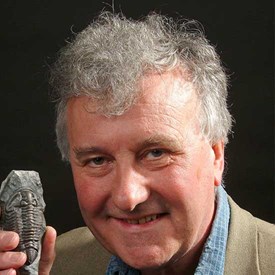 Richard Alan Fortey (Richard Fortey)合作论文数Department of Earth Sciences, Natural History Museum2Alex Page合作论文数2Alan W. Owen合作论文数2
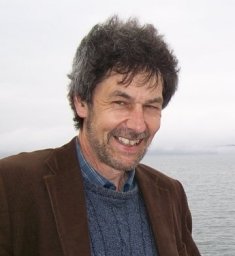 Matt Edgeworth合作论文数Sch Archaeol & Ancient Hist, Univ Leicester2Derek J. Siveter合作论文数2
 Axel Munnecke合作论文数University Erlangen-Nürnberg Institute of Paleontology2P. J. Brand合作论文数2Ben Coles合作论文数1Keturah Zoe Smithson合作论文数1Sarah Wallace-Johnson合作论文数1Tom Harvey合作论文数1nivedita mandal合作论文数1
 John R. Laurie合作论文数1Takumi Maekawa合作论文数1Masatoshi Okura合作论文数1Alison Foster合作论文数1
 Clare Torney合作论文数1david k carpenter合作论文数1
 Holly Miller合作论文数Department of Classics and Archaeology, School of Humanities, Faculty of Arts, The University of Nottingham1d j millward合作论文数1
 A. S. HOWARD合作论文数Environmental Science Centre, British Geological Survey1Sarah Davies合作论文数1
 Tom Challands合作论文数Earth and Planetary Science, School of GeoSciences, The University of Edinburgh1
 Thomas H P Harvey合作论文数Department of Earth Sciences, University of Cambridge1
 Alexander Wolfe合作论文数Department of Biological Sciences, University of Alberta1




