Transmission electron microscopy has become a valuable tool for time-resolved characterization of nano-scale materials during exposure to liquid environments. As the imaging resolution and contrast depends on liquid thickness, measurements and control of the liquid phase are of critical importance. While the log-ratio method in electron energy-loss spectroscopy (EELS) has been demonstrated for estimating the thickness of thin liquid layers, this method becomes unreliable for liquid layers, with log-ratio measures larger than 4. Herein, we demonstrate that the energy position of the multiple scattering peak can be calibrated to be used as an alternative thickness measure of thicker samples in both broad-beam and focused-beam illumination conditions. With this approach it is shown that in addition to unavoidable window bulging of the silicon nitride window membranes, the silicon chips can also bulge when clamped in the liquid holder which gives rise to additional liquid thickness and means to suppress this unwanted effect are demonstrated.
The intermetallic compound δ-Ni₅Ga₃ has emerged as a promising catalyst for CO2 hydrogenation to methanol, offering low-pressure operation, high selectivity, and enhanced stability compared to conventional Cu/ZnO catalysts. However, the fundamental understanding of its active sites, reaction mechanisms, and deactivation pathways remains incomplete, hindering its further development. In this study, we utilize well-defined δ-Ni₅Ga₃ thin film model catalysts synthesized via magnetron sputtering to investigate these aspects under realistic reaction conditions. Combining in situ ambient pressure X-ray photoelectron spectroscopy (AP-XPS), μ-reactor activity testing, temperature-programmed desorption (TPD), and density functional theory (DFT) calculations, we reveal critical insights into the catalyst’s behavior. Our findings demonstrate: (1) dynamic surface evolution during activation, (2) the presence of key intermediates, such as formate, carboxyl, and methoxy species, which elucidate the methanol production pathway, and (3) catalyst deactivation at elevated temperatures. Notably, the study identifies distinct pathways for methanol synthesis and methanation, with methoxy formation correlating directly with methanol activity.
High-pressure studies of well-defined catalysts, deposited on planar supports in ultra-high vacuum using physical methods, may bridge the gap between surface science and applied catalysis approaches in order to develop better catalysts for crucial reactions such as CO2 hydrogenation. However, the chemical reactors necessary for such investigations, typically involving catalyst quantities down to a few hundred nanograms, are lacking. We present the novel design and evaluation of a 50 mu L rectangular microchannel reactor capable of testing small quantities of catalyst at pressures up to 40 bar and temperatures up to 240 degrees C. To evaluate the microreactor performance, Pd 0.25 Zn 0.75 O x nanoclusters soft-landed on SiO2-coated mica sheets using the cluster beam deposition technique, were tested for CO2 hydrogenation via the reverse water-gas shift reaction through a series of kinetic experiments. Experimental results, combined with computational fluid dynamics and mass transport analysis, demonstrate that the proposed microreactor setup allows for testing minute quantities of catalysts with very high sensitivity at industrially relevant temperatures and pressures. Although not restricted to a particular catalyst preparation method, the setup is an excellent platform for conducting catalytic tests on composition-controlled, mass- selected, gas-phase nanoparticles deposited on planar substrates, facilitating the determination of reliable structure-activity relationships and enabling a more rational design of catalysts.
The emerging trends in carbon nanotube applications make them exceptional functional materials of highly added value. Thermocatalytic CH 4 decomposition is an effective pathway toward their production, forming H 2 as the only byproduct. However, catalyst deactivation due to sintering and blockage of the active sites, together with their detachment from the support remains a challenge. In this work, nickel phyllosilicate is employed as a catalyst precursor for the formation of active and stable metal sites. Surprisingly, the particles remain attached to the support, switching from the typical tip‐growth reported for state‐of‐the‐art catalysts to a base growth mechanism. The nickel nanoparticles remain stable against sintering even under harsh conditions up to 750 °C. A combination of DFT calculations, in situ TEM, and in situ XRD studies reveals that the reduction of Ni─O bonds, particularly those involving silicon‐bonded oxygen (Si─O─Ni; apical oxygen), requires high temperatures. Post‐activation, the small, dispersed nickel nanoparticles catalyze CH 4 decomposition into carbon nanotubes and H 2 . Unlike prior reports, in situ XRD confirms no nickel carbide formation in the bulk. Additionally, in contrast to any known nickel‐based catalyst, it is demonstrated that particles below 10 nm can effectively activate CH 4 cracking, avoid encapsulation, and enable the base‐growth of micrometer‐long, narrow carbon nanotubes.
Thermocatalytic ammonia decomposition is a critical step in utilizing ammonia as a zero-emission fuel and energy carrier. Despite its industrial relevance, the impact of water-commonly added to ammonia to prevent tank and pipeline degradation by stress corrosion cracking-on catalyst performance remains largely unexplored. Here, we investigate the influence of trace water on the activity of Co- and Fe-based ammonia decomposition catalysts through a combined experimental and theoretical approach. Our findings reveal that while some promoted catalysts experience a detrimental activity loss, a barium-promoted cobalt catalyst demonstrates remarkable resilience, retaining most of its activity even at water concentrations up to 1%.
Magnetron sputtering is a versatile method for investigating model system catalysts thanks to its simplicity, reproducibility, and chemical-free synthesis process. It has recently emerged as a promising technique for synthesizing delta-Ni5Ga3 thin films. Physically deposited thin films have significant potential to clarify certain aspects of catalysts by eliminating parameters such as particle size dependence, metal-support interactions, and the presence of surface ligands. In this work, we demonstrate the potential of magnetron sputtering for the synthesis and analysis of thin film catalysts, using Ni5Ga3 as a model system. Initially, deposition conditions were optimized by varying the deposition pressure, followed by an investigation of the temperature effects, aiming to map a structure zone dependence on temperature and pressure as in the Thornton model. The evolution of film crystallinity was monitored using a combination of grazing incidence X-ray diffraction (GI-XRD) and high-resolution scanning electron microscopy (HR-SEM). Additionally, ultrathin films were synthesized and annealed in H2 at high temperatures to demonstrate the possibility of producing size-controlled nanoparticles by adjusting the annealing conditions. This work demonstrates the full potential of magnetron sputtering as a technique for synthesizing model system catalysts in various forms, opening new avenues for the research and development of additional catalytic systems.
High-pressure studies of catalyst quantities down to a few hundred nanograms, particularly well-defined catalysts prepared using physical methods in ultra-high vacuum on planar supports can potentially bridge the surface science and applied catalysis approaches to catalyst development. However, the chemical reactors required for such investigations are lacking. We present the novel design and evaluation of a 50 µL rectangular microchannel reactor capable of testing small quantities of catalyst at pressures up to 40 bar and temperatures up to 250°C. To evaluate the microreactor's performance, Pd0.25Zn0.75Ox nanoclusters soft-landed on SiO2-coated mica sheets using the cluster beam deposition technique, were tested for the reverse water-gas shift reaction through a series of kinetic experiments. Experimental results, combined with computational fluid dynamics and mass transport analysis, demonstrate that the proposed microreactor setup allows for testing minute quantities of catalysts with high sensitivity at industrially relevant temperatures and pressures. Although not restricted to a particular catalyst preparation method, the setup is an excellent platform for conducting catalytic tests on composition-controlled, mass-selected, gas-phase nanoparticles deposited on planar substrates, facilitating the development of reliable structure-activity relationships and enabling a more rational design of catalysts.
AuTiOx nanoparticles with a core–shell structure on TiO2 show improved stability for CO oxidation compared to pure Au nanoparticles.
The ability to perform both electrochemical and structural/elemental characterization in the same experiment and at the nanoscale allows to directly link electrochemical performance to the material properties and their evolution over time and operating conditions. Such experiments can be important for the further development of solid oxide cells, solid-state batteries, thermal electrical devices, and other solid-state electrochemical devices. The experimental requirements for conducting solid-state electrochemical TEM experiments in general, including sample preparation, electrochemical measurements, failure factors, and possibilities for optimization, are presented and discussed. Particularly, the methodology of performing reliable electrochemical impedance spectroscopy measurements in reactive gases and at elevated temperatures for both single materials and solid oxide cells is described. The presented results include impedance measurements of electronic conductors, an ionic conductor, and a mixed ionic and electronic conductor, all materials typically applied in solid oxide fuel and electrolysis cells. It is shown that how TEM and impedance spectroscopy can be synergically integrated to measure the transport and surface exchange properties of materials with nanoscale dimensions and to visualize their structural and elemental evolution via TEM/STEM imaging and spectroscopy.
Hydrogenation of CO to higher alcohols such as ethanol is an attractive pathway for industrial production while avoiding competition with food crops. However, thermocatalytic ethanol production from syngas is currently hindered by the lack of selective catalysts. The structural integrity of ternary-alloyed CoCu2Ga nanoparticles supported on silica was studied during thermo-catalytic CO hydrogenation. Catalysts of four different CoCu2Ga weight-loadings were tested catalytically under differential conversion, showing their different intrinsic selectivity during CO hydrogenation towards ethanol, methanol, and hydrocarbons. CoCu2Ga catalysts with 3.5 wt% and 17.8 wt% proved most and least selective towards ethanol formation, respectively. These two were studied in depth using STEM-EDX of fresh and spent samples showing different size distributions of the nanoparticles for all samples, and a change in the Co/Cu distribution of the nanoparticles from fresh to spent samples. In situ characterization using XRD, XANES, and EXAFS during CO hydrogenation supported the findings of the STEMEDX and elucidated that the fresh more homogenous catalyst consisting of ternary CoCu2Ga nanoparticles dealloyed into Cu-rich and CoGa-rich nanoparticles. This de-alloying was possibly driven by two factors: the metastable phase of CoCu2Ga decreasing its free energy by separating Cu and Co; and the strong interaction between Co and CO further driving a segregation. From a theoretical standpoint, Cu-Co intermetallics present the most selective catalyst to form ethanol over methane and methanol. The experimental findings presented here support the theory, although further efforts are needed to improve structural stability during the catalytic reaction.
While model studies with small nanoparticles offer a bridge between applied experiments and theoretical calculations, the intricacies of working with well-defined nanoparticles in electrochemistry pose challenges for experimental researchers. This perspective dives into nanoparticle electrochemistry, provides experimental insights to uncover their intrinsic catalytic activity and draws conclusions about the effects of altering their size, composition, or loading. Our goal is to help uncover unexpected contamination sources and establish a robust experimental methodology, which eliminates external parameters that can overshadow the intrinsic activity of the nanoparticles. Additionally, we explore the experimental difficulties that can be encountered, such as stability issues, and offer strategies to mitigate their impact. From support preparation to electrocatalytic tests, we guide the reader through the entire process, shedding light on potential challenges and crucial experimental details when working with these complex systems.
Previous studies have identified delta-Ni5Ga3 as a promising catalyst for the hydrogenation of CO2 to methanol at atmospheric pressure. Given its recent discovery, the current understanding of this catalyst is very limited. Additionally, the presence of multiple thermodynamically stable crystal phases in the Ni/Ga system complicates the experiments and their interpretation. Conventional synthesis methods often result in the production of unwanted phases, potentially leading to incorrect conclusions. To address this issue, this study focuses on the synthesis of pure delta-Ni5Ga3 using magnetron sputtering deposition followed by low-temperature H-2 annealing. Extensive characterization confirmed the reproducible synthesis of well-defined delta-Ni5Ga3 thin films. These films, deposited directly into state-of-the-art mu-reactors, demonstrated methanol production at low temperatures and maintained a high stability over time. This method allowed for detailed surface and bulk characterization before and after the reaction, providing a comprehensive understanding of the deactivation mechanism. Our findings significantly contribute to the understanding of the Ni/Ga system and its behavior during catalytic activity, deactivation, and regeneration. This study also sets an example of how physical synthesis methods such as magnetron sputtering can be effectively employed to investigate complex catalytic systems, offering a viable alternative to more elaborate chemical methods.
The efficiency of the catalytic decomposition of ammonia is a central challenge for the use of ammonia as a potential hydrogen vector and fuel for heavy-duty applications. In this study, we explore the promotional effect of alkali and earth-alkaline metals on cobalt and nickel catalysts for ammonia decomposition in a computational screening. We elucidate the strong influence of the recently proposed spin promotion effect on catalytic activity and identify barium as a promising and stable promoter of Co under the relevant reaction conditions. The predictions are validated experimentally through the study of a BaCo catalyst, ultimately yielding a metal-based hydrogen productivity of 12.2 mol gCo-1 h-1 at 500 degrees C, common for state-of-the-art ruthenium catalysts. This work not only reports the successful development of a novel catalyst but also provides validation for the spin-promotion effect and its substantial influence on catalyst performance.
For maximizing the atomic efficiency in noble metal-based catalysts, dedicated preparation routes and high lifetime are essential. Both aspects require an in-depth understanding of the fate of noble metal atoms under reaction conditions. For this purpose, we used a combination of complementary in situ/operando characterization techniques to follow the lifecycle of the Pd sites in a 0.5% Pd/5% CeO2-Al2O3 catalyst during oxygen-rich CO oxidation. Time-resolved X-ray absorption spectroscopy showed that Pd cluster formation under reaction conditions is important for a high CO oxidation activity. In combination with density functional theory calculations, we concluded that the ideal Pd cluster size amounts to about 10-30 Pd atoms. The cluster formation and stability were affected by the applied temperature and reaction conditions. Already short pulses of 1000 ppm CO in the lean reaction feed were found to trigger sintering of Pd at temperatures below 200 degrees C, while at higher temperatures oxidation processes prevailed. Environmental transmission electron microscopy unraveled redispersion at higher temperatures (400-500 degrees C) in oxygen atmosphere, leading to the formation of single sites and thus the loss of activity. However, due to the reductive nature of CO, clusters formed again upon cooling in reaction atmosphere, thus closing the catalytic cycle. Exploiting the gained knowledge on the lifecycle of Pd clusters, we systematically investigated the effect of catalyst composition on the cluster formation tendency. As uncovered by DRIFTS measurements, the Pd to CeO2 ratio seems to be a key descriptor for Pd agglomeration under reaction conditions. While for higher Pd loadings, the probability of cluster formation increased, a higher CeO2 content leads to the formation of oxidized dispersed Pd species. According to our results, a Pd:CeO2 weight ratio of 1:10 for CeO2-Al2O3-supported catalysts leads to the highest CO oxidation activity under lean conditions independent of the applied synthesis method.
 Jakob B. Wagner合作论文数National Centre for Nano Fabrication and Characterization, Technical University of Denmark40
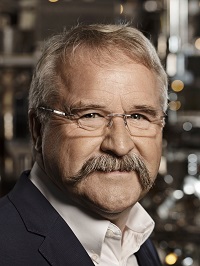 Ib Chorkendorff合作论文数Department of Physics, Danmarks Tekniske Universitet37
 Jan-Dierk Grunwaldt合作论文数Institut für Technische Chemie und Polymerchemie, Karlsruher Institut für Technologie;Institute for Chemical Technology and Polymer Chemistry, Faculty for Chemistry and Applied Biosciences, Karlsruher Institute of Technology;University of Karlsruhe19
 Sharafutdinov Irek合作论文数17
 Thomas W. Hansen合作论文数Departments of Cell Biology and Anatomy and Pathology;New York Medical College;Departments of Cell Biology and Anatomy and Pathology, New York Medical College17
 Stig Helveg合作论文数Department of Physics, Delhi Technological University16
 Jakob Kibsgaard合作论文数Department of Physics, Technical University of Denmark;Center for Visualizing Catalytic Processes, Technical University of Denmark16
 diego gardini合作论文数Center for Electron Nanoscopy, Technical University of Denmark15Duchstein Linus Daniel Leonhard合作论文数12
 Elisabetta Maria Fiordaliso合作论文数DTU Nanolab - National Center for Nano Fabrication and Characterization, Technical University of Denmark11
 Anker Degn Jensen合作论文数CHEC Research Centre, Department of Chemical and Biochemical Engineering, Technical University of Denmark11
 Jens Kehlet Nørskov合作论文数Department of Physics, Technical University of Denmark10Thomas E. L. Smitshuysen合作论文数9
 Hudson W. P. de Carvalho合作论文数9Hugo Silva合作论文数GKSS Research Centre9
 Peter C. K. Vesborg合作论文数Dept Phys, Tech Univ Denmark9Cs Jacobsen合作论文数8
 Mikkel Fougt Hansen合作论文数8Soren Dahl合作论文数Haldor Topsøe A/S8Filippo Romeggio合作论文数7Cristiano Spiga合作论文数7Ole Hansen合作论文数6Rikke Egeberg Tankard合作论文数6Christensen Jakob M合作论文数6
 Thomas Sheppard合作论文数6
 Filippo Cavalca合作论文数Technical University of Denmark, Technical Univ of Denmark6
 Christian Schroer合作论文数Deutsches Elektronen-Synchrotron;University of Hamburg6T. W. Hansen合作论文数5Christian Fink Elkjaer合作论文数5Mads Lützen合作论文数5Juliane Reinhardt合作论文数Australian Nucl Sci & Technol Org, Australian Synchrotron5Sina Baier合作论文数Dept Phys, Tech Univ Denmark5Holmes Stuart合作论文数5
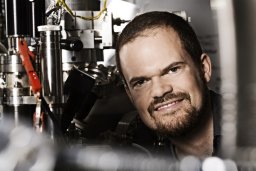 Christian F. Elkjær合作论文数Center for Individual Nanoparticle Functionality, Technical University of Denmark5
 Joerg R. Jinschek合作论文数National Centre for Nano Fabrication and Characterization, Technical University of Denmark5JB Hansen合作论文数4
 Federico Benzi合作论文数4
 Mads Radmer Almind合作论文数4qiongxiao wu合作论文数4Dalslet, B.T.合作论文数Dept. of Micro & Nanotechnol., Tech. Univ. of Denmark;c4Mølgaard Mortensen Peter合作论文数4
 Takeshi Kasama合作论文数4Jørn Bindslev Hansen合作论文数4
 Cathrine Frandsen合作论文数4
 Peter Arendt Jensen合作论文数Department of Chemical and Biochemical Engineering, Danmarks Tekniske Universitet4
 Felix Studt合作论文数Institute of Catalysis Research and Technology, Karlsruhe Institute of Technology4Monia R. Nielsen合作论文数4J. Claydon合作论文数3
 Max Schumann合作论文数3




