This paper describes a multi-variable robust control scheme for frequency regulation in a diesel–photovoltaic–supercapacitor hybrid power generation system operating in stand-alone mode. The proposed control structure relies on a two-level architecture, with conventional PI-based current tracking controllers placed on the lower control level and receiving references from an ℋ_∞ -control-based upper level. The specific engineering demands of microgrid operation are cast into an ℋ_∞ control formalism. A rapid-prototyping test bench composed of a real supercapacitor-based energy storage system and an emulated diesel–photovoltaic–load grid is developed using real-time digital simulators, namely RT-LAB ^ and dSPACE ^ , in order to experimentally validate the proposed frequency robust control strategy under realistic operating conditions.
Cette plaquette est un complement aux 3 plaquettes de bonnes pratiques liees au developpement logiciel proposees par le reseau des acteurs du DEVeloppement LOGiciel au sein de l'Enseignement Superieur et de la Recherche : DevLOG. Ce volet est dedie aux bonnes pratiques en termes d'ecoconception de service numerique qui permettent d'apprehender, de comprendre et de reduire l'impact environnemental du numerique. Apres avoir explicite le contexte general dans une premiere fiche, une seconde fiche (Mais pourquoi ?) met en evidence la necessite d'integrer une dimension environnementale dans nos conceptions de service numerique, et par consequent dans nos developpements de logiciels. La troisieme fiche (Quand ?) rappelle les etapes du cycle de vie d'un service numerique pour introduire les fiches de bonnes pratiques qui correspondent aux differentes etapes : Avant, Pendant et Apres, en gardant a l'esprit que le developpement est souvent iteratif, et les frontieres entre les differentes etapes sont permeables. Vous trouverez a la fin de la plaquette une fiche specifique sur les bonnes pratiques d'ecoconception pour le calcul scientifique, ainsi que des fiches sur le developpement sur plateforme mobile, pour le web et sur accelerateur.
HAL is a multi-disciplinary open access archive for the deposit and dissemination of scientific research documents, whether they are published or not. The documents may come from teaching and research institutions in France or abroad, or from public or private research centers. L’archive ouverte pluridisciplinaire HAL, est destinée au dépôt et à la diffusion de documents scientifiques de niveau recherche, publiés ou non, émanant des établissements d’enseignement et de recherche français ou étrangers, des laboratoires publics ou privés.
The rural electrification of Sub-Saharan Africa and South-East Asia is crucial to end the energy poverty in which around 1 billion people are trapped. Swarm electrification, i.e., the progressive building of decentralized and decarbonized electric infrastructure in a bottom-up manner, tackles rural electrification challenges by quickly providing modern and reliable electricity services to unelectrified communities while fostering local socio-economic development. This paper follows the technological approach of this electrification model and presents the development of a DC microgrid with decentralized production and storage suitable for rural electrification. This DC microgrid aims at interconnecting nanogrids, small collective autonomous power units composed of a solar panel and a lead–acid battery for 4 to 6 households, to increase the electrical services brought to the community and enhance the economic sustainability of this rural electrification model. The design of the proposed microgrid as well as its control algorithm are thoroughly addressed and tested from software simulations and experimental testing to field deployment in Madagascar. Extensive software, experimental and field-tests results are illustrated, and the microgrid design feedback is given. This paper overall validates the proper operation of the proposed microgrid, confirming the technical feasibility of the swarm electrification approach.
Large-scale fast-varying sinusoidal disturbances (FVSDs) strongly impact the operation of Grid-connected Converters (GcCs). A conventional extended state observer (ESO) is not sufficiently capable to deal with these rapid disturbances. This critical weakness has limited ESO's applications to GcCs. Therefore, a generalized integrator-ESO (GI-ESO) is developed from ESO to address such issues. Knowing that grid common disturbances can be expressed as a phase, frequency, or magnitude disturbed sinusoidal signal, multi-GIs of selective resonant frequencies are, hence, applied into the disturbance estimation loop, which enables FVSD to be observed with relatively low bandwidth. Besides, a frequency-adaptive mechanism is introduced in order to mitigate the effects of frequency deviations. The proposed GI-ESO resolves the tradeoff between the observer's bandwidth and noise filtering. A case of the three-phase phase-locked loop control system of disturbed regimes is, in particular, studied to assess the performance of GI-ESO and the stability of the resulting controlled system. Theoretical analysis and experimental results have proven its effectiveness in applications to GcCs in the presence of various disturbances.
This paper proposes a cyber-physical framework for investigating distributed control systems operating in the context of smart-grid applications. At the moment, the literature focuses almost exclusively on the theoretical aspects of distributed intelligence in the smart-grid, meanwhile, approaches for testing and validating such systems are either missing or are very limited in their scope. Three aspects need to be taken into account while considering these applications: (1) the physical system, (2) the distributed computation platform, and (3) the communication system. In most of the previous works either the communication system is neglected or oversimplified, either the distributed computation aspect is disregarded, either both elements are missing. In order to cover all these aspects, we propose a framework which is built around a fleet of low-cost single board computers coupled with a real-time simulator. Additionally, using traffic control and network emulation, the flow of data between different controllers is shaped so that it replicates various quality of service (QoS) conditions.The versatility of the proposed framework is shown on a study case in which 27 controllers self-coordinate in order to solve the distributed optimal power flow (OPF) algorithm in a dc network.
This paper proposes an observer-based current controller for a virtual synchronous generators (VSG) to improve its operational performances. First, the model and the controllers are analytically described. Two controller are compared to the proposed one (PI integrating a state observer): a traditional PI and a PI integrating virtual impedances for filtering. Secondly, the advantage of the observer in the current controller loop for the VSG application is studied and compared to the other controllers. Finally, experimental results validate the capacity of the VSG-based inverter to supply unknown and unpredictable loads, thanks to the integration of the observer in the current control loop.
Variable Speed Hydro-Electric Plant (VS-HEP) equipped with power electronics has been increasingly introduced into the hydraulic context. This paper is targeting a VS-HEP Power Hardware-In-the-Loop (PHIL) real-time simulation system, which is dedicated to different hydraulic operation schemes tests and control laws validation. Then, a proper hydraulic model will be the key factor for building an efficient PHIL real-time simulation system. This work introduces a practical and generalised modelling hydraulic modelling approach, which is based on 'Hill Charts' measurements provided by industrial manufacturers. The hydraulic static model is analytically obtained by using mathematical optimization routines. In addition, the nonlinear dynamic model of the guide vane actuator is introduced in order to evaluate the effects of the induced dynamics on the electric control performances. Moreover, the reduced-scale models adapted to different laboratory conditions can be established by applying scaling laws. The suggested modelling approach enables the features of decent accuracy, light computational complexity, high flexibility and wide applications for their implementations on PHIL real-time simulations. Finally, a grid-connected energy conversion chain of bulb hydraulic turbine associated with a permanent magnet synchronous generator is chosen as an example for PHIL design and performance assessment.
A new fully digital Giant Magneto-Impedance (GMI) sensor is presented. The design combines the off-diagonal configuration of the sensitive element with a real-time digital electronic conditioning based on a Software Defined Radio (SDR). Compared to a conventional implementation of these sensors, the proposed design exhibits key advantages. These include firstly the simplicity of obtaining a quasi-linear sensor response around the zero-field point without making use of a bias magnetic field and an offset cancelling device. Secondly, the potential of integration, the flexibility of reconfiguration as well as the low-noise and high-sensitivity are promising features of the developed concept. Noise performance of 1.8 pT/root Hz Hz was obtained in the white noise region.
In the context of the ever-expanding application of soft magnetic materials, the fully controlled magnetic measurement has, therefore, become essential. It ensures not only the accurate modeling of materials but also the rigorous quality control throughout the manufacturing process, as well as the explicit communication of magnetic data in academic studies or between suppliers and customers. Due to the nonlinearity and hysteresis nature of electrical steels, automatic flux density controller is required for high standard measurements. In this article, we propose a novel steady-state digital control algorithm with two loops, one to regulate the amplitude and the other to correct the waveform of the flux density. Measurement results for various samples tested by Epstein frame and ring specimens under different waveforms, a wide range of frequency and high amplitudes of the flux density have proven the high adaptability, accuracy, and convergence speed of this controller. Its principle is discussed in detail, together with the employed measurement bench.
This paper evaluates the effect of converter and generator losses on the maximum power point (MPP) of variable speed micro-hydropower energy conversion systems. As a case study, a semi-Kaplan micro hydropower turbine with a permanent magnet (PM) generator and a back-to-back full converter is considered. Using the analytical model, different loss terms, such as converter losses, PM generator losses and mechanical losses are calculated at different shaft speeds. Then, the curves of turbine power and injected power to the grid are extracted as a function of turbine speed. It is shown that the maximum attainable power of the variable-speed hydropower system does not correspond to the MPP of hydraulic turbine. In other words, to get the maximum power from the whole hydropower system, it is necessary to consider power losses of the electric generator and power electronic interface between the turbine and the grid. These power losses can change the power-speed characteristics or MPP location of the hydropower system. According to this fact, the conventional MPP tracking (MPPT) algorithms which try to track the MPP of hydraulic turbines fail to extract the maximum power. Hence, a modified perturb and observe (P&O) MPP tracking algorithm is proposed for the variable speed hydropower systems to increase their efficiency. The modified tracking algorithm finds the "optimum MPP" automatically and without the extra calculations. Also, the injected power to the grid is increased 3.7% when the modified algorithm is applied to the studied case study. Finally, the validity of theoretical claims is verified by experimental tests on a 5 kW hardware prototype. (C) 2018 Elsevier Ltd. All rights reserved.
Distributed algorithms are regularly used to deploy distributed paradigms in smart grids. Computations are executed without any centralized server even in a limited bandwidth network. However, there are still some drawbacks in the proof of convergence as well as a lack of programming abstraction. In this paper, we propose a new approach to the distributed paradigm by using distributed programming in a data manipulation language called Smartlog. A distributed programming methodology will automatically divide a centralized Smartlog program into multiple rules while ensuring the correct transformation of the centralized computations. An application of voltage control in a distribution grid with high penetration of PV systems is used as an illustration of this approach. Two implementations are compared: centralized programming and distributed programming. Both are deployed in a real-time simulation with OPAL-RT and a network of Raspberry Pis. The response time of each implementation is analyzed to evaluate their respective performance, showing that the Smartlog language is particularly appropriate to smart grids in terms of compacity and simplicity.
This paper aims at enhancing the robustness and the disturbance rejection ability of a Phase-Locked Loop (PLL). An Extended State Observer (ESO)-based controller is implemented into the loop filter for this purpose. Firstly, the total unpredictable disturbances (phase jumps, frequency variations, nonlinear dynamics, etc.) are estimated by the ESO. Then, the observed generalized disturbances are actively compensated into the closed-loop dynamics in real-time, and the dynamic behaviours and its robustness are thus enhanced. Besides, the proposed strategy is simple to design and implement for practical engineers. Simulations and experimental results are both provided to verify its effectiveness.
To track the maximum power of a hydraulic turbine, the rotational speed needs to be adapted to flow rates variations, enabling higher speed tracking demands. Moreover, a Variable Speed Micro-Hydro Plant (VS-MHP) is a complex nonlinear system affected by large uncertainties. Active Disturbance Rejection Control (ADRC) can estimate and compensate the total disturbances in real-time, achieving higher robustness. A Linear-ADRC (LADRC) with the torque compensation is implemented to the speed control loop of a VS-MHP, which is tested under a real-time power Hardware-In-the-Loop benchmark. Experimental results prove its advantages for VS-MHP applications.
Strong digitalization and shifting from unidirectional to bidirectional topology have transformed the electrical grid into a cyber-physical energy system, i.e. smart grid, with strong interdependency among various domains. It is mandatory to develop a comprehensive and holistic validation approach for such large scale system. However, a single research infrastructure may not have sufficient expertise and equipment for such test, without huge or eventually unfeasible investment. In this paper, we propose another adequate approach: connecting existing and established infrastructures with complementary specialization and facilities into a cross-infrastructure holistic experiment. The proposition enables testing of CPES assessment research in near real-world scenario without significant investment while efficiently exploiting the existing infrastructures. Hybrid cloud based architecture is considered as the support for such setup and the design of cross-infrastructure experiment is also covered.
This paper focuses on the enhanced control and improved fault-ride-through capability of a doubly fed induction generator (DFIG)-based wind energy conversion system (WECS) under disturbed grid conditions. An adaptive sliding-mode control of stator powers, with sensorless rotor current and constant switching frequency, is introduced. The proposed control method is derived directly from the nonlinear DFIG state model, and the control law is computed based on nominal stator flux. Therefore, the flux estimation or measure, which is cumbersome in some methods, is no longer required. Furthermore, an adaptive term is added to sliding-mode control in order to attenuate the chattering effect. The proposed control law is validated via simulations in the case of 1.5 MW DFIG-based WECS, and experimental results on a 7.5 kW hardware prototype. The control system robustness and performance is assessed in the presence of modeling errors, parameter variations, and grid side disturbances, such as voltage dip, swell, imbalance, distortion, and flicker (according to IEEE Standard 1159).
 Antoine Labonne合作论文数G2Elab, Univ Grenoble Alpes6
 Mazen Alamir合作论文数Gipsa-lab, Control Systems Dept. University of Grenoble6
 Seddik Bacha合作论文数SuperGrid Institute;Laboratoire G2Elab, Universite Grenoble Alpes6
 Baoling Guo (郭保玲)合作论文数Beijing Gas4
 Afef Kedous-Lebouc合作论文数4
 Vincent Debusschere合作论文数SATIE, Ecole Normale Supérieure de Cachan4
 Catalin Gavriluta合作论文数3
 Nouredine Hadjsaid合作论文数3Francis Vivat合作论文数2Karin Dassas合作论文数2Papa Silly Traore合作论文数2
 Mustapha Rahmani合作论文数2
 Marie-Pierre Vaillant合作论文数2Anh-Tuan Vo合作论文数2Audrey Moulichon合作论文数2
 Quang Linh Lam合作论文数G2Elab, Univ Grenoble Alpes2Amgad Mohamed合作论文数2Oualid Messal合作论文数2
 Lauric Garbuio合作论文数2
 Lebel, G.合作论文数KTH;c;KTH2
 Yvon Besanger合作论文数2
 Loic Michel合作论文数Dept. de Genie Electr. et Genie Inf., Univ. du Quebec a Trois-Rivieres;res;c;Dept. de Genie Electr. et Genie Inf., Univ. du Quebec a Trois-Rivieres2Aktham Asfour合作论文数2
 David Frey合作论文数2Mercier, A.合作论文数2Laurent Lefevre合作论文数French Institute for Research in Computer Science2
 Antoneta Iuliana Bratcu合作论文数2
 Delphine Riu合作论文数2
 Hossein Imaneini合作论文数College of Engineering, University of Tehran2
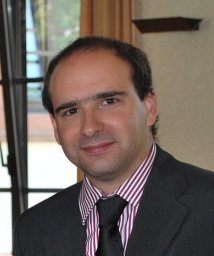 Raphael Caire合作论文数G2Elab, Univ. Grenoble Alpes2Jean-Paul Yonnet合作论文数2
 Cyrille Bonamy合作论文数2Herve Buttin合作论文数1Marylin Fassenet合作论文数1Nicolas Saincy合作论文数1Mahana Bernier合作论文数1hugo mesnage合作论文数1
 Van Hoa Nguyen合作论文数1Martin Thomas合作论文数1
 Thi-Thanh-Quynh Nguyen合作论文数Grenoble INP (Institute of Engineering University Grenoble Alpes),, University Grenoble Alpes1
 Tran The Hoang合作论文数Liten, CEA1
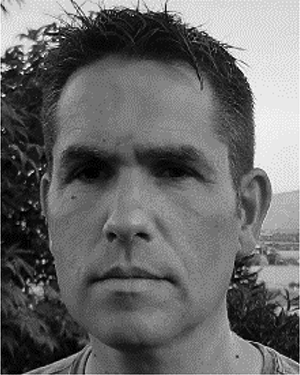 Thierry Braconnier合作论文数1
 Lucas Richard合作论文数G2Elab, Univ Grenoble Alpes1
 Quang-Huy Giap合作论文数Faculty of Electrical Engineering, The University of Danang - University of Science and Technology1
 Tung Lam Nguyen合作论文数Univ Grenoble Alpes, G2Elab, F-38000 Grenoble, France1
 Marie-Cecile Alvarez-Herault合作论文数G2Elab),, Grenoble Electr. Eng. Lab.;res;c;G2Elab),, Grenoble Electr. Eng. Lab.1
 Julien Pouget合作论文数1
 Benoit, C.合作论文数1Abdelhak Djoudi合作论文数1




