This paper focuses on reporting of Internet malicious activity (or mal-activity in short) by public blacklists with the objective of providing a systematic characterization of what has been reported over the years, and more importantly, the evolution of reported activities. Using an initial seed of 22 blacklists, covering the period from January 2007 to June 2017, we collect more than 51 million mal-activity reports involving 662K unique IP addresses worldwide. Leveraging the Wayback Machine, antivirus (AV) tool reports and several additional public datasets (e.g., BGP Route Views and Internet registries) we enrich the data with historical meta-information including geo-locations (countries), autonomous system (AS) numbers and types of mal-activity. Furthermore, we use the initially labelled dataset of approx 1.57 million mal-activities (obtained from public blacklists) to train a machine learning classifier to classify the remaining unlabeled dataset of approx 44 million mal-activities obtained through additional sources. We make our unique collected dataset (and scripts used) publicly available for further research. The main contributions of the paper are a novel means of report collection, with a machine learning approach to classify reported activities, characterization of the dataset and, most importantly, temporal analysis of mal-activity reporting behavior. Inspired by P2P behavior modeling, our analysis shows that some classes of mal-activities (e.g., phishing) and a small number of mal-activity sources are persistent, suggesting that either blacklist-based prevention systems are ineffective or have unreasonably long update periods. Our analysis also indicates that resources can be better utilized by focusing on heavy mal-activity contributors, which constitute the bulk of mal-activities.
A look at JavaScript libraries in the wild.
When desirable Internet domain names expire, they are often re-registered in the very moment the old registration is deleted, in a highly competitive and resource-intensive practice called domain drop-catching. To date, there has been little insight into the daily time period when expired domain names are deleted, and the race to re-registration that takes place. In this paper, we show that .com domains are deleted in a predictable order, and propose a model to infer the earliest possible time a domain could have been re-registered. We leverage this model to characterise at a precision of seconds how fast certain types of domain names are re-registered. We show that 9.5 % of deleted domains are re-registered with a delay of zero seconds. Domains not taken immediately by the drop-catch services are often re-registered later, with different behaviours over the following seconds, minutes and hours. Since these behaviours imply different effort and price points, our methodology can be useful for future work to explain the uses of re-registered domains.
Modern applications are often split into separate client and server tiers that communicate via message passing over the network. One well-understood threat to privacy for such applications is the leakage of sensitive user information either in transit or at the server. In response, an array of defensive techniques have been developed to identify or block unintended or malicious information leakage. However, prior work has primarily considered privacy leaks originating at the client directed at the server, while leakage in the reverse direction -- from the server to the client -- is comparatively under-studied. The question of whether and to what degree this leakage constitutes a threat remains an open question. We answer this question in the affirmative with Hush, a technique for semi-automatically identifying Server-based InFormation OvershariNg (SIFON) vulnerabilities in multi-tier applications. In particular, the technique detects SIFON vulnerabilities using a heuristic that overshared sensitive information from server-side APIs will not be displayed by the application's user interface. The technique first performs a scalable static program analysis to screen applications for potential vulnerabilities, and then attempts to confirm these candidates as true vulnerabilities with a partially-automated dynamic analysis. Our evaluation over a large corpus of Android applications demonstrates the effectiveness of the technique by discovering several previously-unknown SIFON vulnerabilities in eight applications.
Every day, hundreds of thousands of Internet domain names are abandoned by their owners and become available for re-registration. Yet, there appears to be enough residual value and demand from domain speculators to give rise to a highly competitive ecosystem of drop-catch services that race to be the first to re-register potentially desirable domain names in the very instant the old registration is deleted. To pre-empt the competitive (and uncertain) race to re-registration, some registrars sell their own customers' expired domains pre-release, that is, even before the names are returned to general availability. These practices are not without controversy, and can have serious security consequences. In this paper, we present an empirical analysis of these two kinds of post expiration domain ownership changes. We find that 10 % of all com domains are re-registered on the same day as their old registration is deleted. In the case of org, over 50 % of re-registrations on the deletion day occur during only 30 s. Furthermore, drop-catch services control over 75 % of accredited domain registrars and cause more than 80 % of domain creation attempts, but represent at most 9.5 % of successful domain creations. These findings highlight a significant demand for expired domains, and hint at highly competitive re-registrations. Our work sheds light on various questionable practices in an opaque ecosystem. The implications go beyond the annoyance of websites turned into "Internet graffiti" [26], as domain ownership changes have the potential to circumvent established security mechanisms.
Web developers routinely rely on third-party Java-Script libraries such as jQuery to enhance the functionality of their sites. However, if not properly maintained, such dependencies can create attack vectors allowing a site to be compromised. In this paper, we conduct the first comprehensive study of client-side JavaScript library usage and the resulting security implications across the Web. Using data from over 133 k websites, we show that 37% of them include at least one library with a known vulnerability; the time lag behind the newest release of a library is measured in the order of years. In order to better understand why websites use so many vulnerable or outdated libraries, we track causal inclusion relationships and quantify different scenarios. We observe sites including libraries in ad hoc and often transitive ways, which can lead to different versions of the same library being loaded into the same document at the same time. Furthermore, we find that libraries included transitively, or via ad and tracking code, are more likely to be vulnerable. This demonstrates that not only website administrators, but also the dynamic architecture and developers of third-party services are to blame for the Web's poor state of library management. The results of our work underline the need for more thorough approaches to dependency management, code maintenance and third-party code inclusion on the Web.
Targeted advertising has inherent privacy risks: ad providers aim to maximize the information inferred about the users in order to increase their click-through ratio. This in turn leads to long-term privacy risks for the users as their information is traded among ad agencies and unknown third parties. In this paper we focus on the privacy associated with information such as location and income, and their relationships with the ads served to users. We first show the possibility for an attacker to use topic modelling and machine learning techniques on ads served to a user as a means to accurately infer their location and income band within a city. We then attempt to reduce this risk of inference using obfuscation, or hiding in plain sight. The idea is to hide the targeted ads, not by relying on encryption, rather by producing just enough noise such that an attacker cannot distinguish between the actual ads served and the ads which are just noise. Our results are promising and demonstrate that efforts such as TrackMeNot can help advertising and users achieve a balance between targeted advertising and location privacy exposure.
Internet domain names expire when not renewed and may be claimed by a new owner. To date, despite existing work on abuses of residual trust after domain ownership changes, it is not well understood how often and how fast re-registrations occur, and the underlying processes are often over-simplified in scientific literature, leading to a potential bias in those studies. While in principle registration data is available in Whois databases, scalability issues and data ambiguities make re-registrations a challenging subject of study in practice. By focusing on domains about to be deleted, we were able to track 7.4 M com, net, org, biz and name domains over up to ten months to gather data for a survival analysis of re-registrations. Our results show that expiration processes may vary, and that many re-registrations happen soon after deletion, especially for older domains. We also discuss intricacies of Whois data to aid in avoiding potential pitfalls, as fast domain ownership changes combined with hidden domain states may pose challenges to operational and research communities.
Passwords are widely used for user authentication, and will likely remain in use in the foreseeable future, despite several weaknesses. One important weakness is that human-generated passwords are far from being random, which makes them susceptible to guessing attacks. Understanding the adversaries capabilities for guessing attacks is a fundamental necessity for estimating their impact and advising countermeasures.This paper presents OMEN, a new Markov model-based password cracker that extends ideas proposed by Narayanan and Shmatikov (CCS 2005). The main novelty of our tool is that it generates password candidates according to their occurrence probabilities, i.e., it outputs most likely passwords first. As shown by our extensive experiments, OMEN significantly improves guessing speed over existing proposals.In particular, we compare the performance of OMEN with the Markov mode of John the Ripper, which implements the password indexing function by Narayanan and Shmatikov. OMEN guesses more than 40% of passwords correctly with the first 90 million guesses, while JtR-Markov (for T = 1 billion) needs at least eight times as many guesses to reach the same goal, and OMEN guesses more than 80% of passwords correctly at 10 billion guesses, more than all probabilistic password crackers we compared against.
Internet censorship is enforced by numerous governments worldwide, however, due to the lack of publicly available information, as well as the inherent risks of performing active measurements, it is often hard for the research community to investigate censorship practices in the wild. Thus, the leak of 600GB worth of logs from 7 Blue Coat SG-9000 proxies, deployed in Syria to filter Internet traffic at a country scale, represents a unique opportunity to provide a detailed snapshot of a real-world censorship ecosystem. This paper presents the methodology and the results of a measurement analysis of the leaked Blue Coat logs, revealing a relatively stealthy, yet quite targeted, censorship. We find that traffic is filtered in several ways: using IP addresses and domain names to block subnets or websites, and keywords or categories to target specific content. We show that keyword-based censorship produces some collateral damage as many requests are blocked even if they do not relate to sensitive content. We also discover that Instant Messaging is heavily censored, while filtering of social media is limited to specific pages. Finally, we show that Syrian users try to evade censorship by using web/socks proxies, Tor, VPNs, and BitTorrent. To the best of our knowledge, our work provides the first analytical look into Internet filtering in Syria.
Internet censorship is enforced by numerous governments worldwide, however, due to the lack of publicly available information, as well as the inherent risks of performing active measurements, it is often hard for the research community to investigate censorship practices in the wild. Thus, the leak of 600GB worth of logs from 7 Blue Coat SG-9000 proxies, deployed in Syria to filter Internet traffic at a country scale, represents a unique opportunity to provide a detailed snapshot of a real-world censorship ecosystem.
Internet censorship is enforced by numerous governments worldwide, however, due to the lack of publicly available information, as well as the inherent risks of performing active measurements, it is often hard for the research community to investigate censorship practices in the wild. Thus, the leak of 600GB worth of logs from 7 Blue Coat SG-9000 proxies, deployed in Syria to filter Internet traffic at a country scale, represents a unique opportunity to provide a detailed snapshot of a real-world censorship ecosystem. This paper presents the methodology and the results of a measurement analysis of the leaked Blue Coat logs, revealing a relatively stealthy, yet quite targeted, censorship. We find that traffic is filtered in several ways: using IP addresses and domain names to block subnets or websites, and keywords or categories to target specific content. We show that keyword-based censorship produces some collateral damage as many requests are blocked even if they do not relate to sensitive content. We also discover that Instant Messaging is heavily censored, while filtering of social media is limited to specific pages. Finally, we show that Syrian users try to evade censorship by using web/socks proxies, Tor, VPNs, and BitTorrent. To the best of our knowledge, our work provides the first analytical look into Internet filtering in Syria.
We examine third-party Online Social Network (OSN) applications for two major OSNs: Facebook and RenRen. These third-party applications typically gather, from the OSN, user personal information. We develop a measurement platform to study the interaction between OSN applications and fourth parties. We use this platform to study the behavior of 997 Facebook applications and 377 RenRen applications. We find that the Facebook and RenRen applications interact with hundreds of different fourth-party tracking entities. More worrisome, 22% of Facebook applications and 69% of RenRen applications provide users’ personal information to one or more fourth-party tracking entities.
This paper addresses the important goal of quantifying the threat of linking external records to public Online Social Networks (OSN) user profiles, by providing a method to estimate the uniqueness of such profiles and by studying the amount of information carried by public profile attributes. Our first contribution is to leverage the Ads audience estimation platform of a major OSN to compute the information surprisal (IS) based uniqueness of public profiles, independently from the used profiles dataset. Then, we measure the quantity of information carried by the revealed attributes and evaluate the impact of the public release of selected combinations of these attributes on the potential to identify user profiles. Our measurement results, based on an unbiased sample of more than 400 thousand Facebook public profiles, show that, when disclosed in such profiles, current city has the highest individual attribute potential for unique identification and the combination of gender, current city and age can identify close to 55
Passwords are widely used for user authentication and, despite their weaknesses, will likely remain in use in the foreseeable future. Human-generated passwords typically have a rich structure, which makes them susceptible to guessing attacks. In this paper, we study the effectiveness of guessing attacks based on Markov models. Our contributions are two-fold. First, we propose a novel password cracker based on Markov models, which builds upon and extends ideas used by Narayanan and Shmatikov (CCS 2005). In extensive experiments we show that it can crack up to 69% of passwords at 10 billion guesses, more than all probabilistic password crackers we compared again t. Second, we systematically analyze the idea that additional personal information about a user helps in speeding up password guessing. We find that, on average and by carefully choosing parameters, we can guess up to 5% more passwords, especially when the number of attempts is low. Furthermore, we show that the gain can go up to 30% for passwords that are actually based on personal attributes. These passwords are clearly weaker and should be avoided. Our cracker could be used by an organization to detect and reject them. To the best of our knowledge, we are the first to systematically study the relationship between chosen passwords and users' personal information. We test and validate our results over a wide collection of leaked password databases.
According to copyright holders, One-Click Hosters (OCHs) such as Megaupload are frequently used to host and distribute copyright infringing content. This has spurred numerous initiatives by legislators, law enforcement and content producers. Due to a lack of representative data sets that properly capture private uses of OCHs (such as sharing holiday pictures among friends), to date, there are no reliable estimates of the proportion of legitimate and infringing files being uploaded to OCHs. This situation leaves the field to the partisan arguments brought forward by copyright owners and OCHs. In this paper, we provide empirical data about the uses and misuses of OCHs by analysing six large data sets containing file metadata that we extracted from a range of popular OCHs. We assess the status of these files with regard to copyright infringement and show that at least 26% to 79% of them are potentially infringing. Perhaps surprising after the shutdown by the FBI for alleged copyright infringement, we found Megaupload to have the second highest proportion of legitimate files in our study.
As the Internet struggles to cope with scalability, mobility, and security issues, new network architectures are being proposed to better accommodate the needs of modern systems and applications. In particular, Content-Oriented Networking (CON) has emerged as a promising next-generation Internet architecture: it sets to decouple content from hosts, at the network layer, by naming data rather than hosts. CON comes with a potential for a wide range of benefits, including reduced congestion and improved delivery speed by means of content caching, simpler configuration of network devices, and security at the data level. However, it remains an interesting open question whether or not, and to what extent, this emerging networking paradigm bears new privacy challenges. In this paper, we provide a systematic privacy analysis of CON and the common building blocks among its various architectural instances in order to highlight emerging privacy threats, and analyze a few potential countermeasures. Finally, we present a comparison between CON and today's Internet in the context of a few privacy concepts, such as, anonymity, censoring, traceability, and confidentiality.
Suppose that a Facebook user, whose age is hidden or missing, likes Britney Spears. Can you guess his/her age? Knowing that most Britney fans are teenagers, it is fairly easy for humans to answer this question. Interests (or likes) of users is one of the highly-available on-line information. In this paper, we show how these seemingly harmless interests (e.g., music interests) can leak privacy sensitive information about users. In particular, we infer their undisclosed (private) attributes using the public attributes of other users sharing similar interests. In order to compare user-defined interest names, we extract their semantics using an ontologized version of Wikipedia and measure their similarity by applying a statistical learning method. Besides self-declared interests in music, our technique does not rely on any further information about users such as friend relationships or group belongings. Our experiments, based on more than 104K public profiles collected from Facebook and more than 2000 private profiles provided by volunteers, show that our inference technique efficiently predicts attributes that are very often hidden by users. To the best of our knowledge, this is the first time that user interests are used for profiling, and more generally, semantics-driven inference of private data is addressed.
In this paper, we examine web user tracking capabilities of the three major global Online Social Networks (OSNs). We study the mechanisms which enable these services to persistently and accurately follow users web activity, and evaluate to which extent this phenomena is spread across the web. Through a study of the top 10K websites, our findings indicate that OSN tracking is diffused among almost all website categories, independently from the content and from the audience. We also evaluate the tracking capabilities in practice and demonstrate by analyzing a real traffic traces that OSNs can reconstruct a significant portion of users web profile and browsing history. We finally provide insights into the relation between the browsing history characteristics and the OSN tracking potential, highlighting the high risk properties.
 Dali Kaafar合作论文数Faculty of Science and Engineering, MQ school of Computing, Macquarie University16
 William Robertson合作论文数Khoury College of Computer Sciences, Northeastern University;Department of Electrical & Computer Engineering, College of Engineering, Northeastern University6
 Tobias Lauinger合作论文数6
 Engin Kirda合作论文数Department of Electrical and Computer Engineering, College of Engineering, Northeastern University;Khoury College of Computer Sciences, Northeastern University5
 Emiliano De Cristofaro合作论文数Department of Computer Science and Engineering, University of California, Riverside4
 Claude Castelluccia合作论文数Inria4Stevens Le Blond合作论文数SWS, MPI3
 Kaan Onarlioglu合作论文数Akamai Technologies3
 Roksana Boreli合作论文数Natl ICT Australia3
 Arik Friedman合作论文数Computer Science Department, Technion, Haifa, Israel.3Pere Manils合作论文数3Daniele Perito合作论文数INRIA Rhone Alpes3Terence Chen合作论文数3
 Ahmet Salih Buyukkayhan合作论文数2Markus Dürmuth合作论文数Ruhr Univ Bochum2
 Ratan Dey合作论文数Polytechnic Institute of NYU2
 Walid Dabbous合作论文数Diana team, Inria2
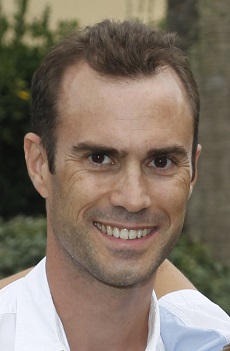 Arnaud Legout合作论文数INRIA - EPI DIANA2
 Mathieu Cunche合作论文数INSA Lyon, Univ Lyon2
 Christo Wilson合作论文数Khoury College of Computer Sciences, Northeastern University;Berkman Klein Center for Internet & Society, Harvard University2
 Muhammad Ikram合作论文数1
 William Koch合作论文数Boston Univ, Dept Comp Sci, 111 Cummington St, Boston, MA 02215 USA1
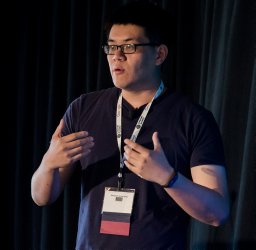 Benjamin Zi Hao Zhao合作论文数University of New South Wales1Kanchana Thilakarathna合作论文数School of Computer Science, Faculty of Engineering, The University of Sydney1
 Hamed Haddadi合作论文数Brave Software;Department of Computing, Faculty of Engineering, Imperial College London;Networks and Systems Lab, Imperial College London1Yuan Ding合作论文数Polytechnic Institute of NYU1
 Manuel Egele合作论文数Department of Electrical and Computer Engineering, College of Engineering, Boston University;College of Arts & Sciences, Boston University1
 Sana Ben Hamida合作论文数Centre de Mathematiques Appliquees;Ecole Superieure de Technologie et Informatique;Centre de Mathematiques Appliquees, Ecole Superieure de Technologie et Informatique1
 Sajjad “JJ” Arshad合作论文数Google1Gergely Ács合作论文数Budapest University of Technology and Economics;Department of Telecommunications;Laboratory of Cryptography and Systems Security;Laboratory of Cryptography and Systems Security, Budapest University of Technology and Economics1
 Mate Soos合作论文数Ethereum Foundation1Hassan Jameel合作论文数Macquarie University NSW 2109;Computing Department1
 Ersin Uzun合作论文数ESL Global Cybersecurity Institute, Rochester Institute of Technology;Department of Computing Security, Golisano College of Computing & Information Sciences, Rochester Institute of Technology1
 Keith Ross合作论文数Department of Computer Science, New York University Abu Dhabi;Polytechnic Institute, Tandon School of Engineering, New York University1
 Pierre-Ugo Tournoux合作论文数AAS/CNRS1




