This study describes processes of language change in Angolan Portuguese focusing on the use of intensifiers. Previous studies have shown that intensifiers are a relevant category for the study of language change due to their rapid change and variable meaning. It has been noted that intensifiers are particularly prone to renewal, suggesting speakers’ desire to innovate. Informed by a Digital Humanities approach, we collect and analyze data from Twitter (now X), focusing on the multi-functional intensifier bué, ‘very’, in Angolan Portuguese (AP). In this paper, we (1) provide an overview of the word’s distribution in AP, (2) consider the processes of change involved in bué’s variation, and (3) discuss the role of linguistic borrowing in language change and grammaticalization, shedding light on some of the cultural aspects that play a role in this word’s development, such as the influence of the media and the contact situation between Angolan and European Portuguese.
Latinx populations in the USA have grown steadily in recent decades, with significant increases taking place in “new destination communities” of the U.S. South. The focus of our paper is to highlight opportunities for working with these populations, including traditional sociolinguistic ethnographies and community-engaged research. We highlight an initiative named “The SEC Spanish Consortium” which is an interinstitutional collaboration centered on scholarship and service involving Latinx populations in new destination communities of the U.S. South. We show that ongoing and future scholarly work in the U.S. South can act as a mechanism for documenting these emerging Latinx communities while simultaneously serving the underrepresented and minority speakers of these linguistic varieties.
Spanish ad sensum agreement involves a semantically-plural, but grammatically-singular subject, of the form [NP1 [de NP2]] 'NP1 of NP2', appearing with a plural verb. Apparent agreement with a structurally-lower NP2 is problematic for syntactic accounts dependent on c-command (e.g. Reinhart 1976). Previous accounts identify 'head N' via stipulation and cannot predict variable agreement. We propose a uniform account of collective agreement and ad sensum/attraction phenomena in Spanish. Our proposal predicts variable agreement when semantic and grammatical number clash, triggering a Count mechanism that calculates phi-proportions, an index that informs variation in subsequent subject-verb agreement, similar to Adger (2006).
Throughout the long history of comparative Romance linguistics, the study of Spanish has played an important role in our understanding of both the relevant phenomena that characterize this family of languages and the mechanisms of variation and change that gave rise to them. In this chapter, we provide an overview of the trajectory of comparative Romance linguistics, focusing specifically on the development of methodological perspectives. Our goal 464is twofold: to situate the study of Spanish with respect to the set of topics, both traditional and innovative, that have come to characterize this field and to demonstrate how the use of corpora, particularly those that include Spanish, have taken a primary role in the effort to understand cross-linguistic patterns. After a review of the relevant background literature, we offer an overview of the current state of affairs concerning the use of corpora in studies that involve Spanish, with special attention on a case study involving forms of past reference. From there, we survey the use of parallel and comparable corpora in comparative Romance linguistics, providing a summary of the advantages and disadvantages of each and offering an additional case study involving the behavior of intensifiers in Spanish and Portuguese. We conclude in Section 5 with a description of current and forthcoming developments in the application of corpus methods in comparative Romance linguistics, along with comments concerning what remains to be done within the field of comparative analysis.
In this paper, we take a corpus approach to analyzing a low-frequency phenomenon in under-represented varieties of Spanish. A quick comparison of publicly available corpora (e.g., the Corpus del Español, Davies, 2016-) reveals a wide disparity between well-represented varieties, such as Mexican Spanish and Peninsular Spanish which represent over a third of total data in the Corpus del Español, and less commonly studied varieties, like Salvadoran, Honduran, and Nicaraguan Spanish, which together comprise less than 6%. The data from these lesser-studied dialects, though limited in comparison to other varieties, offer important opportunities to understand otherwise neglected linguistic patterns. To address this gap in the literature, we explore the use the verb andar in transitive contexts, as in Y esta es la razón por la que no ando novia ‘And this is the reason that I don’t have a girlfriend’ (example from Twitter; see Hernández, 2002 and Lipski, 1994). These claims are based on a variety of data sources, including the aforementioned Corpus del Español. The tokens of andar were analyzed using a logistic regression with various grammatical factors serving as predictor—e.g., subject type and animacy of the object. Our analysis reveals that this pattern is unique to Central American Spanish and extending into broader contexts of possession. The over-arching objective with this analysis is to show how tools from corpus linguistics can be leveraged to address linguistic issues in under-sourced varieties.
Abstract At the center of grammaticalization studies has been an effort to understand the interplay between form and function throughout the development of a construction. A recent analysis by Dehé & Stathi (2016) has made the case that desemanticization (semantic reduction) and erosion (phonetic reduction) occur in parallel and that different phonetic patterns can be associated with different degrees of grammaticalization. This paper approaches Dehé and Stathi’s proposal by means of the periphrastic past (PP) in Spanish, a form that shows considerable variation across dialects and has been shown to display various degrees of grammaticalization (Howe 2013). Focusing specifically on the PP’s use in sequenced past narratives in Peninsular Spanish, this analysis observes the behavior of the haber auxiliary and finds evidence for increased reduction/omission in these innovative narrative contexts. The patterns of reduction shown in this analysis are consistent with the claim made by Dehé and Stathi regarding the association of specific reductive processes with more advanced stages of grammaticalization. These data reveal a coevolution of form and meaning with the PP not yet discussed in the literature, one that has broader implications for the study of periphrastic past forms in Romance.
Intensifiers have been the focus of a number of studies over the past decade, with considerable interest in their meaning and variability. Several scholars have discussed the use of such forms, particularly in English (Ito and Tagliamonte 2003, Tagliamonte 2008) and Spanish (Brown and Cortes-Torres 2013; Kanwit et al. 2017), exploring their structure and sociolinguistics. The objectives of the current analysis are 1) to explain the use and behavior of the canonical intensifier muito and its more colloquial counterpart bem; and 2) to understand this dichotomy in four varieties of Portuguese, namely Angolan, Brazilian, European, and Mozambican. Previous studies have shown that intensifier variation in English (e.g., very versus really) and Spanish (e.g., muy versus bien) is sensitive to a variety of language-internal and -external factors. Using a Digital Humanities-informed approach with corpus data from Corpus de referencia do portugues contemporaneo (CRPC) and Spoken Portuguese Corpus (SPC), we show that the distribution of Portuguese muito and bem, while semantically parallel to that Spanish muy/bien, displays a wide range of dialectal nuances. This work is the first to provide a comprehensive account of the behavior of intensifiers in Portuguese, both within and across dialects.
This paper discusses the evolution of the periphrastic past (PPC) in Spanish and, more specifically, the structural and semantic changes that characterize its development. The analysis assumes a grammaticalization perspective of language change, one that, according to the literature, can be divided into primary and secondary grammaticalization. The latter has been argued to represent changes along a scale of increasing grammatical status, such as the type of change represented by the perfectivization of the PPC in Peninsular Spanish and in other Romance Languages (e.g., French). This development, I argue, occurs in tandem with a number of structural changes including the possibility of a reduced or elided auxiliary haber. I argue that this phenomenon, which has received almost no attention, is characteristic of a later stage of grammaticalization of the PPC, namely the stage at which speakers use the PPC to indicate temporal sequencing in narratives. Using established corpus data with data from sociolinguistic interviews, the distribution of auxiliary omission is explored and is ultimately argued to be a reasonable heuristic in observing advanced development in the case of the PPC.
This paper discusses the evolution of the periphrastic past (PPC) in Spanish and, more specifically, the structural and semantic changes that characterize its development. The analysis assumes a grammaticalization perspective of language change, one that, according to the literature, can be divided into primary and secondary grammaticalization. The latter has been argued to represent changes along a scale of increasing grammatical status, such as the type of change represented by the perfectivization of the PPC in Peninsular Spanish and in other Romance Languages (e.g., French). This development, I argue, occurs in tandem with a number of structural changes including the possibility of a reduced or elided auxiliary haber. I argue that this phenomenon, which has received almost no attention, is characteristic of a later stage of grammaticalization of the PPC, namely the stage at which speakers use the PPC to indicate temporal sequencing in narratives. Using established corpus data with data from sociolinguistic interviews, the distribution of auxiliary omission is explored and is ultimately argued to be a reasonable heuristic in observing advanced development in the case of the PPC.
The most commonly invoked criterion for discerning the envelope of variation for Present Perfect (PP) and Preterite (PRET) usage in Spanish is some notion of perfective past reference (Howe 2006; Burgo 2008; Schwenter & Torres Cacoullos 2008; Copple 2009; Rodriguez Louro 2009). This criterion is defined broadly so as to be consistent with the variationist principle of weak complementarity, which holds that potential variants “can serve one or more generally similar discourse functions” and in turn explains why morphosyntactic change often occurs via the “forcible juxtaposition of grammatically very different constructions” (Sankoff & Thibault 1981: 207–208). Regarding the PP/PRET distinction, the literature has consistently demonstrated that in some varieties of Peninsular Spanish indeterminate past reference serves as a context of neutralization between these two forms with one result being that the PP acquires seemingly perfective functions typically ascribed only to the PRET (e.g., use with definite past adverbials). What most analyses do not take into account, however, is the diverse aspectual profile of the Spanish PP, which in addition to its perfective uses, exemplified in (1), can also display imperfective meaning, as shown in example (2). These two distinct, and in our view divergent, contexts demonstrate that the sphere of functional overlap associated with the PP includes not only the PRET but also the Present Tense (PT) as the latter is also imperfective and displays similar discursive functions as the PP, demonstrated in example (3). By observing the PP/PT opposition in Spanish, we propose that (i) a given linguistic element may be associated with multiple, non-overlapping envelopes of variation and that these variable contexts play independent roles in the distribution and evolution of the form and that, importantly, (ii) current variationist approaches to the study of variation in the domain of tense/aspect have yet to address these types of Peripheral Domains of functional opposition (cf. Tagliamonte 2011).
The focus of this chapter is to provide a general characterization of the perfect as represented in some varieties of Peruvian Spanish, with special attention devoted to discerning those contexts that favor perfective functions. This description, as in the previous chapter, is developed in accordance with the feature typology proposed in Chapter 2. Further included with the data summary will be a group of examples that have been claimed to epitomize the so-called 'innovative' uses of the perfect in this group of dialects (Escobar 1997, Sánchez 2004). Analysis of this set of examples along with those gathered from various corpus sources will provide new insight into the heretofore poorly understood factors influencing the distribution of the Peruvian present perfect.
Throughout this paper, we will use RESULTATIVE INTERPRETATION to refer to the interpretation in which a Present Perfect indicates the existence of a resultant state.We will discuss "durative" readings of the PPC in Portuguese as well: this type of interpretation is also referred to as the
 Camila Lívio合作论文数3
 Scott Schwenter合作论文数Ohio State University2
 Patrícia Amaral合作论文数Centro de Biologia Ambiental, Faculdade de Ciências da Universidade de Lisboa2Erin O'Rourke合作论文数1
 Stephen Fafulas合作论文数Univ Mississippi, University Pk1
 Rafael Orozco合作论文数Louisiana State University1
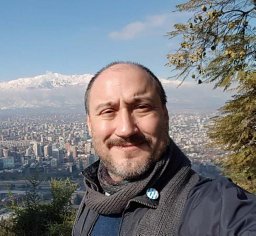 Timothy Gupton合作论文数Univ Georgia1
 Celeste Rodriguez Louro合作论文数Univ Western Australia1
 Nina Moreno合作论文数Georgetown University1
 Diana Ranson合作论文数1




