Both Brazilian Portuguese (BP) and European Portuguese (EP) permit definite third-person null direct objects (DOs) in anaphoric contexts, but differ with regard to the overt DO variant, with the former variety favoring tonic pronouns, the latter clitics. Previous research on language production has shown that the choice between variants in both varieties is constrained by semantic-pragmatic features such as animacy and specificity. We analyze speaker evaluation of these forms in EP and BP, using an experimental acceptability judgment task in which stimuli varied according to DO variant, animacy, and specificity. Data are drawn from the evaluative responses (n= 1752) of 215 Portuguese-speaking participants. Our results demonstrate that the null variant is evaluated most positively overall in both varieties. For EP and BP respectively, the clitic and tonic variants were evaluated most positively with animate specific referents. Our findings show that the patterns of variation previously found in production are reflected in gradient evaluations of anaphoric DOs in EP and BP. This provides support for the hypothesis that in the shift from clitic to tonic DO pronouns in BP, the overt tonic variant has preferentially taken on the same properties of the former clitic DOs.
This study investigates the expression of predicative possession in Argentinian Spanish, focusing on the alternation between two constructions: tener ('have') + NP and estar con ('be with') + NP. Building on previous research, we explore the factors that determine speakers' choices between these constructions, particularly the influence of temporal context and the presence of adverbs. Using a forced-choice experimental design, participants were presented with vignettes varying in temporal duration (durative vs. non-durative) and adverbial modification (extending, limiting, or none). Results show a strong overall preference for the tener + NP construction, particularly in durative contexts. However, the estar con + NP construction is more likely to be selected in non-durative contexts, especially when a limiting adverb is present. These findings suggest that the distinction between the two constructions is not purely semantic but also pragmatically modulated by temporal and contextual factors. We argue that this pattern reflects a subset-superset relationship between the two constructions, where tener + NP can cover a broader temporal scope than estar con + NP. This overlap mirrors cross-linguistic findings on possessive constructions and aspectual distinctions, with implications for understanding grammaticalization processes in Romance languages.
English wait and Spanish and Brazilian Portuguese espera/pera/perai 'wait (there)' are derived from imperatives that signal physical waiting. Using examples from tweets, text messages, and spoken interactions, we offer an exploratory investigation of the meta-discursive functions of these wait-forms as discourse markers that signal the need to pause and adjust interlocutors'mental discourse models of the common ground (CG) before proceeding. We show that wait-forms appear in dialogues and monologues, to signal misalignment with an interlocutor or with one's own expectations, and can be triggered by both linguistic and non-linguistic material in the CG or a speaker's own mental model. Wait-forms introduce expressions of surprisal, challenge presuppositions, refer back to unresolved discursive material, and convey sarcasm-all of which share the core pragmatic effect of initiating repair of a perceived misalignment in speakers' mental models of the ongoing discourse. Tests of pragmatic function show that these wait-forms are constrained to refer to content assumed to be part of the CG (Wait, didn't you hear the news?) and that their removal results in loss of an important pragmatic cue that relates the upcoming modification to existing CG content. Our analysis contributes to the body of pragmatic-typological literature on the cross-linguistic uniformity of discursive repair strategies. It goes beyond this research, however, in highlighting the role that discourse markers can play in CG management in dialogues, and furthermore demonstrating their capacity to indicate self-initiated misalignment of a speaker's mental model in monologues, despite the origins of these forms as addressee-oriented imperatives. (c) 2025 Elsevier B.V. All rights are reserved, including those for text and data mining, AI training, and similar technologies.
We reanalyze the phenomenon of verbal (non)agreement with the 2SG tu in a megacorpus of Brazilian Portuguese compiled from the web. Unlike previous research, which has analyzed sociolinguistic interview data and regional differences, we examine these data with a focus on the internal linguistic factors that constrain the variability. Our analysis of 4860 tokens of tu + verb reveals that non-agreement with the 3SG verb form is by far the most common pattern, 2SG agreement being relatively infrequent. Individual verb lexemes show highly distinct rates of (non)agreement. In addition, the specific tense/aspect/mood forms and main/auxiliary status are likewise significant factors affecting the variation. We conclude that future studies of this phenomenon should not ignore these internal linguistic factors. We situate our study within a group of other recent studies in Romance linguistics, which have found that individual verbal and constructional patterns can have diverse effects on morphosyntactic variation.
Direct object pronouns show considerable variation in Brazilian Portuguese, where normative clitic pronouns compete with their tonic counterparts. However, no prior studies have investigated empirically speaker evaluations of these competing pronoun variants. We created a perception experiment of direct object pronouns in spoken Brazilian Portuguese, in order to investigate the role of attitudes and social evaluations in language variation. Results from 160 native speakers show broad evaluative differences between clitic and tonic pronouns, while at the same time showing individual differences by pronoun and effects of the context of utterance. We conclude that the role that social evaluation plays in usage preferences in BP should be re-assessed based on studies linking subjective attitudes with grammatical choices.
Linguistic research on Spanish clitic pronouns has analyzed the expression, placement, and gender or number marking of direct (DO) and indirect objects (IO). We first provide a brief overview of the literature concerned with this variable clitic use, then offer a variationist perspective of three specific phenomena, with a focus on their linguistic conditioning: use of se los for se lo in ditransitive constructions; use of le for les with plural dative referents; and DO (and IO) clitic position or "clitic climbing." Using both new and existing data and pairing qualitative and quantitative methods, we demonstrate that while these three phenomena are distinct and vary across Spanish dialects, they are united by important cross-dialectal and cross-constructional patterns. Specifically, all three phenomena showcase the interrelated nature of DOs and IOs and the effects of animacy and referent accessibility on the expression of both DOs and IOs.
Employing both quantitative and qualitative methodologies, we provide a new perspective on 2PL pronoun use in both Spain and Latin America. We argue first that the purported symmetry between the singular and plural T/V forms in Spain is illusory: for many speakers, only vosotros is productive in the plural, and it often corresponds to both tu and usted in the singular. We then show that the realms in which ustedes in Spain and vosotros in Latin America are employed show considerable overlap. In both cases, these forms are residual and are restricted to more formal contexts or registers. We conclude that the opposition between vosotros and ustedes in these two macro-regions of the Spanish-speaking world shows remarkable similarities that have not been brought to light in previous research. The breakdown of this opposition follows a general pattern by which 2PL pronominal distinctions are often lost completely even when those in the singular survive.
Linguistic research on Spanish clitic pronouns has analyzed the expression, placement, and gender or number marking of direct (DO) and indirect objects (IO). We first provide a brief overview of the literature concerned with this variable clitic use, then offer a variationist perspective of three specific phenomena, with a focus on their linguistic conditioning: use of se los for se lo in ditransitive constructions; use of le for les with plural dative referents; and DO (and IO) clitic position or “clitic climbing.” Using both new and existing data and pairing qualitative and quantitative methods, we demonstrate that while these three phenomena are distinct and vary across Spanish dialects, they are united by important cross-dialectal and cross-constructional patterns. Specifically, all three phenomena showcase the interrelated nature of DOs and IOs and the effects of animacy and referent accessibility on the expression of both DOs and IOs.
Employing both quantitative and qualitative methodologies, we provide a new perspective on 2PL pronoun use in both Spain and Latin America. We argue first that the purported symmetry between the singular and plural T/V forms in Spain is illusory: for many speakers, only vosotros is productive in the plural, and it often corresponds to both tú and usted in the singular. We then show that the realms in which ustedes in Spain and vosotros in Latin America are employed show considerable overlap. In both cases, these forms are residual and are restricted to more formal contexts or registers. We conclude that the opposition between vosotros and ustedes in these two macro-regions of the Spanish-speaking world shows remarkable similarities that have not been brought to light in previous research. The breakdown of this opposition follows a general pattern by which 2PL pronominal distinctions are often lost completely even when those in the singular survive.
Abstract We examine the alternation between normative se lo/la and se los/las to express a plural indirect object and singular direct object. Using corpus data from Mexico City and Monterrey, we find that significant predictors of the more frequent variant, se los, are number of the verb, referential distance, and presence of a dative prepositional phrase. Contra previous claims that se los marks plurality in ambiguous dative referents, we argue that it serves as an accessibility marker that makes a plural referent more salient if not recently mentioned. Se los is used most frequently with first-person singular verbs, resulting in (near-)fixed expressions. These findings demonstrate the sensitivity of Spanish clitics to discourse-pragmatic context and highlight limitations of sentence-level analysis of morphosyntactic variants.
Abstract We performed a large-scale corpus study of the subjunctive across Argentine, Mexican, and Peninsular Spanish, in order to determine possible differences in productivity across dialects. Our data (N = 6,822) from the web/dialects section of Davies’ (2016–) Corpus del Español were collected through random sampling of 22 matrix verb governors. All three dialects were significantly different from one another in type:token ratio, whereas only Spain differed from the others in terms of hapax legomena:type ratio. Furthermore, only eight verbs showed the same behavior across all dialects. Subjunctive productivity thus varies by both dialect and governor, thereby revealing the critical importance of both inter- and intra-dialectal variation for the correct analysis of morphosyntactic phenomena. The conditioning of the variation across dialects, nevertheless, was similar: mixed-effects logistic regression in R revealed that negated governors and cases of non-coreferentiality between main and subordinate clause subjects select significantly more subjunctive.
We provide an aspectual analysis of Brazilian Portuguese predicative possessives, ter ('have') NP vs. estar com ('to be with') NP, which have been analyzed as denoting permanent versus temporary possession, respectively. Data include 20th century tokens of estar com NP (n=553) and ter NP (n=2976) from Davies' Corpus do Português. These data show that both possessive constructions can occur with the same temporal/aspectual reference and possessum, but that ter NP has a 0.55 type-token ratio while estar com NP shows significantly lower (p<0.01) productivity (0.41). An online experimental survey in which we manipulated the possessum and the duration of the possession was designed and responded to by over 200 native Brazilian participants. Results show that while both forms are possible in all contexts they are nevertheless sensitive to the duration of the possession, thus suggesting that the association with permanent versus temporary possession is pragmatic in nature. We propose that estar com NP’s possessive interval is co-extensive with the reference interval supplied by context, while ter NP’s possessive interval is a superinterval of the reference interval, like progressive and imperfective aspects, respectively (Deo 2009).
We describe the system of confirming affirmative responses in Brazilian Portuguese (BP) on the basis of a corpus of natural spoken dialogues between interlocutors that share a high degree of familiarity. While the BP response system has been characterized as an echo system (Sadock and Zwicky 1985), the unmarked option being a verb that echoes the verb in the antecedent utterance, our analysis reveals that this characterization only applies to polar question antecedents. Using inferential statistical modeling, we demonstrate that the echoicity of a verbal response crucially depends on the speech act of the antecedent. The use of echoic responses is more likely for antecedents in which the speaker displays a low degree of commitment to the truth of the utterance than for antecedents with a high degree of commitment. Our analysis also reveals that it is necessary to distinguish two specific verbal response types – é ‘is’ and tá ‘is’ – from other verbal responses. Whereas é has been conventionalized as a multi-purpose affirmation particle, tá is typically used to respond to orders or proposals, which is why é and tá are significantly less probable to be used as echoes than other verbal responses.
This chapter contributes a new perspective on non-canonical negation by providing a detailed comparison of a near-equivalent non-canonical negator, which we term NEG-NADA, in two related languages: Brazilian Portuguese (BP) and Argentinian Spanish (AS). The role of NEG-NADA in both of these Romance varieties is similar in that it indexes some prior propositional information in the discourse model as the target of negation and carries out the speech act of denying the truth of that prior information. The NEG-NADA construction in each variety is different, however, in the properties of the information that is targeted, and more specifically in how that information has come to form part of the common ground. More generally, we conclude that, cross-linguistically, non-canonical negatives are sensitive to precise information-structural differences.
Some Portuguese verbs have two past participle forms: one regular (stem + -do), and the other irregular (often identical to the first person singular present indicative). Per grammars, the perfect auxiliaries ter/haver take regulars, while irregulars appear with passive/adjectival ser/estar. To test these claims, we analyzed naturally-occurring data from Brazil (twentieth century) and Portugal (nineteenth and twentieth). We coded 1077 tokens from 21 verbs for ten predictors and performed mixed-effects logistic regressions in R. Irregulars appear with ter/haver 54% overall and in 68% of cases from Portugal. Our results demonstrate that past participle choice is determined by the interaction of several linguistic factors. While lexical verb is the most significant predictor of participle selection, verbs with irregular participles identical to the first person singular present indicative occur in the irregular significantly more than other verbs. We conclude that analogical processes underpin the variation. This conclusion allows us to adjudicate between competing accounts of past participle choice in Portuguese.
Imperatives in Brazilian Portuguese can be expressed either by the indicative (come!) or the subjunctive (coma!) forms. Prior research has explained this variation in terms of regional differences and as a change in progress toward more use of the indicative. Our experimental research shows that speakers from several different regions share a strong preference for the subjunctive form in distant temporal contexts, while the indicative is favored when the temporal context is more immediate. Statistical analysis of our data reveals that a potential change in progress toward greater indicative use can only be found in the more immediate contexts. The use of the subjunctive is stable in more distant contexts. We conclude that an adequate explanation of the variation must take into account the temporal reference of the imperative in its discourse context.
O imperativo em português brasileiro pode ser expresso tanto com indicativo (come!) quanto subjuntivo (coma!). Pesquisas anteriores explicam esta variação segundo a região e como mudança em progresso para o indicativo. Nossa pesquisa experimental mostra que falantes de diversas regiões compartilham uma forte preferência pela forma do subjuntivo quando o contexto discursivo referido ocorre em um futuro distante, enquanto o indicativo é favorecido em contextos mais imediatos. A análise estatística dos dados revela que só nesses últimos contextos se percebe uma possível mudança em progresso para mais indicativo. O uso do subjuntivo em contextos temporais distantes mostra estabilidade. Concluímos que uma explicação adequada da variação precisa tomar em conta a referência temporal do imperativo em seu contexto discursivo.
 Mark Hoff合作论文数Universiteit8
 Kendra V Dickinson合作论文数Department of Spanish and Portuguese, Rutgers University4
 Luana Lamberti合作论文数The, Ohio State University4
 Elizabeth Traugott合作论文数Stanford University4
 Rena Torres Cacoullos合作论文数Department of Spanish, Italian, and Portuguese, College of The Liberal Arts, The Pennsylvania State University3
 Terrell A. Morgan合作论文数Ohio State University3
 Malte Rosemeyer合作论文数University of Freiburg;KU Leuven;KU Leuven, University of Freiburg2
 Chad Howe合作论文数Univ Georgia2
 Patrícia Amaral合作论文数Centro de Biologia Ambiental, Faculdade de Ciências da Universidade de Lisboa2
 Salvador Pons Borderia合作论文数2
 jeanluc cochard合作论文数1Andrew Bredenkamp合作论文数1
 Ivo Rosario合作论文数1ian robert tippets合作论文数1Lorena Sainzmaza-Lecanda合作论文数1Ashlee Dauphinais合作论文数1
 Meghan E. Armstrong合作论文数University of Massachusetts Amherst1
 Sanderleia Roberta Longhin合作论文数Univ Estadual Paulista1
 Marcia N. Macedo合作论文数Department of Ecology, Evolution, and Environmental Biology, Columbia University;Department of Ecology, Evolution, and Environmental Biology, Columbia University1
 Judith Klein-Seetharaman合作论文数College of Health Solutions, Arizona State University;School of Molecular Sciences, Arizona State University1
 Jean-Pierre Koenig合作论文数Department of Linguistics, College of Arts and Sciences, University at Buffalo1
 Glaucia Silva合作论文数1
 Gilles Fauconnier合作论文数1
 Joost Schilperoord合作论文数Communication & Cognition Research Group;Faculty of Humanities;Communication & Cognition Research Group|Faculty of Humanities1
 Richard Cameron合作论文数Department of Linguistics, University of Illinois at Chicago1
 Richard Waltereit合作论文数Newcastle University1Klaus Netter合作论文数1
 Shravan Vasishth合作论文数Department of Linguistics, University of Potsdam1
 Elisabeth Murisasco合作论文数Université de Toulon1Joe Grady合作论文数1
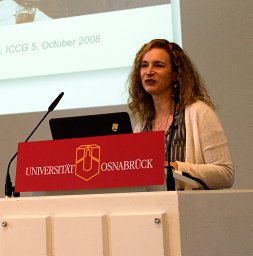 Laura A. Michaelis合作论文数University of Colorado at Boulder1Siobhan Devlin合作论文数1
 Knud Lambrecht合作论文数Rice University1Jacques Le Maitre合作论文数Université du Sud Toulon-Var1




