Pool-type sodium-cooled fast reactors (SFR) have become one of the main selections of Generation-IV reactors due to large thermal inertia and inherent safety, which solve the future shortage of natural uranium and the disposal challenges of spent nuclear fuel (SNF). The decay heat removal system (DHRS) is one of the most important safety systems and must be highly reliable. This study illustrates the design and innovations of the DHRS on the China Fast Reactor. A thermal-hydraulic analysis was conducted using the system program (named ERAC) under station blackout (SBO) conditions, and key parameters of the natural circulation process were evaluated. China's fast reactor design is innovative in many respects, and its novel DHRS design ensures the reactor's safety during emergencies. The analysis results show that the DHRS system operates effectively and that the calculations align with the design goals. Under natural circulation, the peak temperature reached approximately 592 degrees C at 1000 s. As natural circulation progressed, the core outlet temperature gradually decreased; by 5000 s, the average core fuel outlet temperature was 574 degrees C. The design of the core throttling component meets the requirements and can provide sufficient natural circulation. This study could provide a valuable reference for the design of SFRs.
In this paper, the self-developed subchannel analysis program SACOS-PB was used to analyze the thermal hydraulic characteristics of 127 rods in horizontal lead-bismuth reactor under steady state and typical ocean transient conditions. The results of the steady-state analysis showed that the coolant flow and temperature of the vertical assembly were symmetrically distributed, the coolant flow of the horizontal assembly gradually increased along the gravity direction, the temperature rose first and then fell, and the peak coolant temperature of the cross-sectional channel was about 365 degrees C. Three typical ocean transient operating conditions, inclined, undulating and swing, were also carried out. The results showed that the maximum temperature of the coolant at the exit of the assembly increased with the increase of the transverse heeling angle and the decrease of the trim angle after the incline motion changes the gravity component. Under the undulating and swing conditions, the coolant hydrothermal parameters fluctuated periodically, and the parameter fluctuation period is 10s in line with the oceanic conditions. In the above transient conditions, the peak coolant temperature at the assembly outlet increases and exceeds 365 degrees C. Compared with the pitching motion on the Y-axis, the rolling and tumbling motion on the X-axis had a significant effect on the coolant flow rate and temperature distribution. The calculation results can provide support for the analysis study of the safety characteristics of lead-bismuth power units under marine conditions.
In order to improve the reliability and maintainability of rod control power cabinets in nuclear power plants, this paper uses insulated gate bipolar transistors (IGBTs), the key power device of rod control power cabinets, as the object of research on cross-working-condition fault prediction. An improved transfer learning (TL) model based on a temporal convolutional network (TCN) is proposed to solve the problem of low fault prediction accuracy across operating conditions. First, the peak emitter voltage of an IGBT aging dataset is selected as the source domain failure characteristic, and the TCN model is trained after the removal of outliers and noise reduction. Then, the time–frequency features are extracted according to the characteristics of the target domain data, and the target domain representation data are obtained using kernel principal component analysis (KPCA) for dimensionality reduction. Finally, the TCN model trained on the source domain is transferred; the model is fine-tuned according to the target domain data, and the learning rate, the number of hidden layer nodes, and the number of training times in the network model are optimized using the dung beetle optimization (DBO) algorithm to obtain the optimal network, making it more suitable for target sample fault prediction. The prediction results of this TCN model, the long short-term memory (LSTM) model, the gated recurrent unit (GRU) model, and the recursive neural network (RNN) model are compared and analyzed by selecting prediction performance evaluation indexes. The results show that the TCN model has a better predictive effect. Comparing the prediction results of the TCN-based optimized transfer learning model with those of the directly trained TCN model, the mean square error, root mean square error, and mean absolute error are reduced by a factor of two to three, which provides an effective solution for fault prediction across operating conditions.
The research on the flow and heat transfer characteristics of lead bismuth(LBE) is significant for the thermal-hydraulic calculation, safety analysis and practical application of lead-based fast reactors(LFR). In this paper, a new CFD model is proposed to solve the thermal-hydraulic analysis of LBE. The model includes two parts: turbulent model and turbulent Prandtl, which are the important factors for LBE. In order to find the best model, the experiment data and design of 19-pin hexagonal rod bundle with spacer grid, undertaken at the Karlsruhe Liquid Metal Laboratory (KALLA) are used for CFD calculation. Furthermore, the turbulent model includes SST k - u and k - ??; the turbulent Prandtl includes Cheng-Tak and constant (Prt =1.5,2.0,2.5,3.0). Among them, the combination between SST k - u and Cheng-Tak is more suitable for the experiment. But in the low Pe region, the deviation between the experiment data and CFD result is too much. The reason may be the inlet-effect and when Pe is in a low level, the number of molecular thermal diffusion occupies an absolute advantage, and the buoyancy will enhance. In order to test and verify versatility of the model, the NCCL performed by the Nuclear Thermal-hydraulic Laboratory (Nuthel) of Xi'an Jiao tong University is used for CFD to calculate. This paper provides two verification examples for the new universal model. ?? 2022 Korean Nuclear Society, Published by Elsevier Korea LLC. This is an open access article under the CC BY-NC-ND license (http://creativecommons.org/licenses/by-nc-nd/4.0/).
 Guanghui Su (苏光辉)合作论文数Department of Nuclear Science and Technology, School of Energy and Power Engineering, Xi'an Jiaotong University2
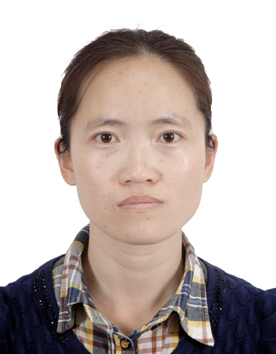 Dalin Zhang (张大林)合作论文数School of Energy and Power Engineering, Xi'an Jiaotong University2
 Chenglong Wang (王成龙)合作论文数School of Energy and Power Engineering, Xi'an Jiaotong University2
 Wenxi Tian (田文喜)合作论文数School of Energy and Power Engineering, Xi'an Jiaotong University;School of Nuclear Science and Technology, Xi'an Jiaotong University;Shaanxi Key Laboratory of Advanced Nuclear Energy and Technology2
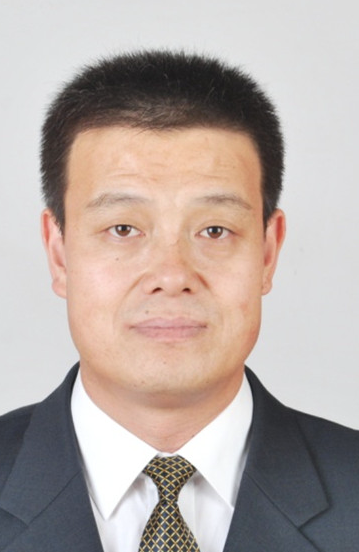 Suizheng Qiu (秋穗正)合作论文数School of Energy and Power Engineering, Xi'an Jiaotong University;School of Nuclear Science and Technology, Xi'an Jiaotong University2
 Jie Liu合作论文数1
 Zhou Lei合作论文数1
 Zhiwen Dai合作论文数1Shibao Wang合作论文数1Yifan Jian合作论文数1Yapeng Liu合作论文数1
 Chen Zhi合作论文数1
 Ping Song (宋平)合作论文数School of Economics, Wuhan University of Technology1Zhiwei Zhou (周志伟)合作论文数1




