The global installed capacity of nuclear power is expected to grow significantly. Fast Breeder Reactors (FBRs) could offer an efficient, safe, and sustainable energy solution, supporting long-term nuclear power development while reducing nuclear waste. This paper develops scale estimation and economic analysis models for the two-component nuclear power system consisting of Pressurized Water Reactors (PWRs) and FBRs, using 1.2 GWe commercial fast reactors CFR1000 and BN-1200 as case studies. The development scales of PWRs and FBRs are estimated through case studies in China, considering single-reactor systems, once-through cycles, and two-component nuclear power systems. The results indicate that China's two-component nuclear power system could achieve a total installed capacity of 500 GWe. Economic modeling reveals Levelized Unit Energy Costs (LUEC) of 0.0459 USD/kWh for CFR1000 and 0.0494 USD/kWh for BN-1200, with a detailed sensitivity analysis of key impact factors. As the two-component nuclear power system continues to develop globally, fission power of PWR and FBR could serve as an affordable and sustainable baseload power in the future.
Pool-type sodium-cooled fast reactors (SFR) have become one of the main selections of Generation-IV reactors due to large thermal inertia and inherent safety, which solve the future shortage of natural uranium and the disposal challenges of spent nuclear fuel (SNF). The decay heat removal system (DHRS) is one of the most important safety systems and must be highly reliable. This study illustrates the design and innovations of the DHRS on the China Fast Reactor. A thermal-hydraulic analysis was conducted using the system program (named ERAC) under station blackout (SBO) conditions, and key parameters of the natural circulation process were evaluated. China's fast reactor design is innovative in many respects, and its novel DHRS design ensures the reactor's safety during emergencies. The analysis results show that the DHRS system operates effectively and that the calculations align with the design goals. Under natural circulation, the peak temperature reached approximately 592 degrees C at 1000 s. As natural circulation progressed, the core outlet temperature gradually decreased; by 5000 s, the average core fuel outlet temperature was 574 degrees C. The design of the core throttling component meets the requirements and can provide sufficient natural circulation. This study could provide a valuable reference for the design of SFRs.
Throttle devices are critical components installed at the inlets of heat exchange tubes in nuclear power plant steam generators, as they regulate fluid flow to mitigate two-phase flow instability. However, the complex flow field within these devices induces the deposition of impurity particles detached from the water loop, resulting in blockage, degraded system efficiency, and potential safety hazards. To address this challenge, this study employs a bidirectionally coupled Computational Fluid Dynamics-Discrete Element Method (CFD-DEM) to investigate the impurity deposition and blockage mechanisms in two-stage throttle devices. Addressing the difficulty of experimental calibration of particle contact parameters under nominal nuclear power plant operating conditions, an Orthogonal Experimental Design (OED) is adopted to calibrate contact parameters. This calibration method reduces the discrepancy between simulation results and plant operational data to less than 10%. Furthermore, the study evaluates the efficacy of flow channel enlargement as a blockage mitigation strategy, demonstrating that increasing the flow channel area by 10% reduces the relative pressure drop increment by 44.5%. The findings of this study not only clarify the intrinsic mechanisms of impurity deposition and blockage in throttle devices but also provide a reliable parameter calibration methodology for industrial-scale particle deposition simulations and a feasible flow channel optimization strategy for blockage mitigation. These results offer valuable theoretical and technical support for the design optimization, maintenance, and safe operation of similar nuclear power plant equipment.
The Sodium-cooled fast reactor could use the reactor fuel more efficiently and produce less long-lived radioactive waste, which will play a key role in World's carbon peaking and carbon neutralization goal in the future. Owing to the high temperature at the reactor's outlet (above 500 degrees C), high-efficiency (above 40%), and high-tech maturity (more than 400 reactor years), which can provide the thermal power and electrical energy for hydrogen production simultaneously. This paper analyzes hydrogen production through CFR1000 using HEEP(V2021) software, which was developed by the International Atomic Energy Agency (IAEA). The results show that the most suitable hydrogen production methods for SFR are the copper-chlorine cycle and conventional electrolysis, considering the reactor's outlet temperature and the goal of zero-carbon emission. The economic analysis shows that the cost of hydrogen production by water electrolysis through CFR1000 is 3.04 $/kg, through IFR is 2.84 $/kg. And this paper also conducted the hydrogen transportation method through the nuclear power plant. The research result shows that converting hydrogen into ammonia for off-site transportation is the best solution Considering safety and economy.
Space nuclear reactors possess the inherent benefits of independence from solar energy and the capability to withstand intricate external circumstances. Distinguishing themselves from terrestrial reactors, space nuclear reactors function within the realm of outer space, operating autonomously throughout their entire operational cycles. Consequently, the establishment of a dependable automatic control system assumes utmost significance. In this paper, a high-fidelity nonlinear space thermionic nuclear reactor model is established, encompassing neutron physics, thermal-hydraulic, and thermoelectric conversion system models. An automatic control system with a model predictive controller (MPC) is designed based on the system. A simplified state-space model is established based on system identification as the internal model for the MPC controller, demonstrating good agreement with the dynamic response of the nonlinear system model. The deployment of the MPC controller for system control simulations exhibits excellent control performance under various operating conditions. In the case of a nuclear power step response, the MPC controller achieves an overshoot of 0.07 % and a settling time of 0.65 s. For an electric power step response, the MPC controller yields an overshoot of 0.28 % and a settling time of 36.6 s. These control performances are significantly better than those achieved by the PID controller. In power tracking control, the MPC controller demonstrates virtually error-free tracking performance. When external reactivity disturbances are introduced, the MPC controller outperforms the PID controller in swiftly compensating for the disturbances, maintaining the system's operating state at the desired level.
Space nuclear reactors have the advantages of not relying on solar energy and being able to adapt to complex external conditions. Different from ground reactors, space nuclear reactors work in space and are unattended during the entire operating cycle. Thus, a reliable automatic control system is very important. In this paper, a control drum system is designed based on the high-fidelity thermionic space reactor system code TASTIN. A model predictive controller (MPC) is installed in the control drum system, which can satisfy the optimal control problem under constraints. The model predictive controller adopts point kinetics model with six groups of delayed neutrons, and seven different parts of reactivity feedback models as an internal model, which have relatively high fidelity. By selecting the appropriate prediction horizon, control horizon and input and output weights, the MPC controller with superior performance is finally obtained. Finally, in order to evaluate the control performance of the model predictive controller, the simulations are carried out for the control variable step condition and the nuclear power following condition, and compared with a PID controller with good performance. The results show that, in various transient conditions, the MPC controller has better control performance than the traditional PID controller. In the nuclear power step condition, the MPC controller has better performance, its setting time is 0.12 s, and overshoot is 0.45
For the wire-wrapped fuel assemblies in liquid metal reactors, high-speed scouring of the liquid metal coolant, and the lateral flow caused by the presence of wires lead to the vibration of fuel rods. And the vibration may induce micro-motion wear and damage the integrity of the cladding. In this paper, the flow-induced vibration problem of a 7-pin bundle assembly with filament winding positioned under axial flow of lead-bismuth alloy was analyzed by FSI numerical simulation method. Firstly, the vibration response of the wire-wrapped rod bundle with different pitch was calculated by changing the pitches of the winding wire. Then the vibration response of the wire-wrapped rod bundle with different pitch to diameter ratio was calculated by changing the pitch value. Finally, the vibration response of the wire-wrapped rod bundle with different inlet velocities was calculated by changing the inlet velocity. The analysis results show that the change of pitch of wire will affect the amplitude, vibration balance position and vibration frequency of the wire-wrapped fuel bundle; the change of pitch to diameter ratio will affect the vibration balance position, but not the amplitude and vibration frequency; the change of inlet velocity will affect the vibration balance position and vibration frequency, but not the amplitude.
随着深空探测任务动力要求不断提高,空间大功率核电源系统势在必行.本文针对锂冷快堆结合斯特林循环的空间核动力系统,建立堆芯、斯特林发电机、辐射散热器、泵及相关管道模型,基于Fortran语言开发了瞬态系统热工安全分析程序.基于斯特林实验数据,验证了斯特林数学模型的准确性,最大相对误差为17.3%.进而建立空间锂冷电源系统模型,并通过稳态计算值与设计值对比,校核了系统程序模型的合理性,最大相对误差为13.3%.对系统典型事故工况进行瞬态分析,结果表明,由于堆芯整体负反应性反馈,燃料芯块峰值温度在安全限值范围内,系统具有一定安全特性.本文为百千瓦级空间堆热工安全分析提供理论支撑.
通过碱金属高温热管冷却的核动力电源具有能量密度大、续航能力强、受环境干扰小、固有安全性高等优点,已成为深空深海探索能源动力供给的重点研究方向之一.碱金属高温热管的运行特性对核动力电源的热电转换、废热排放、余热导出等至关重要.从瞬态和稳态两方面对碱金属高温热管的传热特性进行研究分析,总结近些年的研究成果,并对未来的研究方向进行展望.
As the power requirements for deep space exploration continue to increase, space nuclear power systems are imperative. In this paper, a set of models are established for the lithium-cooled space reactor com-bined with the Stirling engine. The space lithium-cooled reactor system is modeled, and the result of the steady-state is checked with the maximum relative error of 13.3%. Moreover, the characteristics under the unprotected reactivity insertion accident (URIA) and the unprotected loss of heat sink accident (LOHA) are obtained and analyzed. The results showed that: a) the solar heat flux cause the radiator tem-perature to fluctuate but has limited impact, b) under LOHA, the temperature of hot spot decreases rapidly from 1436 K to 1423 K, verifying the inherent safety of the system, c) under URIA, the hot spot temperature rises to 1546 K within 160 s. This work provides a solid basis for the design and analysis of space nuclear systems. (c) 2021 Elsevier Ltd. All rights reserved.
The Free-Piston Stirling engine (FPSE) is of interest for many research in aerospace due to its advantages of long operating life, higher efficiency, and zero maintenance. In this study, a 1-kW FPSE was proposed by analyzing the requirements of Space Reactor Power Systems (SRPS), of which performance was evaluated by developing a code through the Simple Analysis Method. The results of SAM showed that the critical parameters of FPSE could satisfy the designed requirements. The heater of the FPSE was designed with the copper rectangular fins to enhance heat transfer, and the parametric study of the heater was performed with Computational Fluid Dynamics (CFD) software STAR-CCM+. The Performance Evaluation Criteria (PEC) was used to evaluate the heat transfer enhancement of the fins in the heater. The numerical results of the CFD program showed that pressure drop and Nusselt number ratio had a linear growth with the height of fins, and PEC number decreased as the height of fins increased, and the optimum height of the fin was set as 4 mm according to the minimum heat exchange surface area. This paper can provide theoretical supports for the design and numerical analysis of an FPSE for SRPSs.
Numerical simulation of the Space Reactor Power System is of great importance to reactors development and application in aerospace. In this paper, thermal-hydraulic and thermoelectric characteristics analysis based on 1/6th full thermionic reactor core of the TOPAZ-II were performed using 3-D computational fluid dynamics software STAR-CCM+. A Benchmark study was conducted by comparing the numerical results with experimental data and design values with a maximum error of 5.4%-11.8%. For the thermal-hydraulic analysis: (a) the highest temperature point occurred at the center hole of the center thermionic fuel element (TFE) with the temperature of 2303 K; (b) the maximum temperature difference located in the fuel region and interelectrode gap with the value about 200 K and 1000 K, respectively; (c) axial temperature distribution of coolant is similar in each flow channel, and the maximum temperature difference appears at the reactor core outlet with the value of 10 K. For the thermoelectric analysis, the potential on center or the edge TFE is much higher or lower than the others, the calculated electrical power of the full thermionic reactor core is 4.95 kW, the distribution trend of current and potential is in a good agreement with the axial emitter temperature.
在新型热管冷却反应堆中,高温金属热管会受到持续的中子辐照.锂在热中子区的中子反应微观截面很大,会产生一定量的氦气,氦气作为不凝性气体将影响高温热管的正常运行.本文分析了堆内中子辐照条件对高温锂金属热管中不凝性气体产生特性的影响.首先对稳态标准算例进行了产氦量分析,并转换得到了不凝性气体体积份额.此外,得到了不凝性气体产量随热管充液量、金属锂富集度、中子通量密度、热管工作温度等因素的变化关系.不凝性气体产量随热管充液量、锂富集度的增大而增加.控制转鼓位于不同角度时,中子通量密度改变有限,对产氦量影响不大,由于高温锂热管工作温度很高,高温下中子反应微观截面差距很小,因此热管工作温度对产氦量影响也有限.本研究可为热管冷却反应堆内高温锂热管中锂富集度设计提供借鉴.
Reactor fuel's power distribution plays a vital role in designing the new generation thermionic Space Reactor Power Systems (SRPS). In this paper, the 1/12th SPACE-R's full reactor core was numerically analyzed with two kinds of different axial power distribution, to identify their impacts on thermal-hydraulic and thermoelectric characteristics. In the benchmark study, the maximum error between numerical results and existing data or design values ranged from 0.2 to 2.2%. Four main conclusions were obtained in the numerical analysis: a) The axial power distribution has less impact on coolant temperature. b) Axial power distribution influenced the emitter temperature distribution a lot, when the core power was cosine distributed, the maximum temperature of the emitter was 194 K higher than that of the uniform power distribution. c) Comparing to the cosine axial power distribution, the uniform axial power distribution would make the maximum temperature in each component of the reactor core much lower, reducing the requirements for core fuel material. d) Voltage and current distribution were similar to the axial electrode temperature distribution, and the axial power distribution has little effect on the output power.
The passive residual heat removal system (PRHRS) is of great significance to ensure the safety of small modular reactors. In this work, a PRHRS based on the reactor pressure vessel was designed and optimized for the lead-bismuth reactor SVBR-100 and an one-dimensional transient analysis code transient analysis codes for LBE reactor was developed as well. The uncertainty analysis was carried out to identify and optimize the key parameters affecting PRHRS, based on the one-dimensional physical fields obtained from the primary loop and evaporator. The results of transient calculation showed that the designed PRHRS can effectively remove the heat of the core under the accident of unprotected loss of flow and the station blackout (SBO). The results of sensitivity analysis showed that the maximum temperature of lead-bismuth eutectic (LBE) was strongly positively correlated with heat capacity and thermal conductivity of the cladding, and was moderately positively correlated with the kinetic coefficient of the pump; The medium negative correlation factor of peak pellet temperature (PPT), peak cladding temperature (PCT), and maximum LBE temperature was the diameter of the sleeve of PRHRS, and therefore, increasing the diameter of the sleeve can improve the performance of the system. The results of uncertainty quantification showed that the output uncertainties of PPT and PCT were larger than those inputs. The uncertainty of LBE temperature was very low, and all thermal parameters in SBO were within safe limits. Finally, the optimized parameters of PRHRS were obtained. This work can provide a reference for the development of designing PRHRS and relevant transient calculation codes for small modular LBE reactors.
The free-piston Stirling engine (FPSE) has been widely used in aerospace owing to its advantages of high efficiency, high reliability, and self-starting ability. In this paper, a 20-kW FPSE is proposed by analyzing the requirements of space nuclear power reactor. A code was developed based on an improved simple analysis method to evaluate the performance of the proposed FPSE. The code is benchmarked with experimental data, and the maximum relative error of the output power is 17.1%. Numerical results show that the output power is 21 kW, which satisfies the design requirements. The results show that: a) reducing the pressure shell’s thickness can improve the output power significantly; b) the system efficiency increases with the wire porosity, while the growth of system efficiency decreases when the porosity is higher than 80%, and system efficiency exhibits a linear relationship with the temperatures of the cold and hot sides; c) the system efficiency increases with the compression ratio; the compression ratio increases by 16.7% while the system efficiency increases by 42%. This study can provide valuable theoretical support for the design and analysis of FPSEs for space nuclear power reactors.
A thermoelectric analysis of space nuclear power reactor is of great importance to the space reactors development. In this paper, the reactor core model of TOPAZ-II designed by Soviet Union, including neutronics model, thermal-hydraulic model, and electrical circuit model, is established based on reasonable assumptions. A system analysis code is developed to analyze the thermoelectric characteristics of the TOPAZ-II under the condition of steady-state operation, start-up procedure, power change mode, and reactor shutdown. The code has been benchmarked with experimental data, and the maximum relative error is 16.6%. Numerical results show that for the steady state, the simulated electrical power is 5.2 kW within the design value range. For transient state, the reactor thermoelectric characteristics are mainly affected by the electrode temperature: (a) For the start-up procedure, when the emitter temperature increases above 1700 K, electrical system begins to work and reach full power in 5 minutes. (b) For power change mode, the emitter temperature decreases by 5%, while the electrical power decreases by 67%; (c) For reactor shutdown, electrical power reduces to 0 kW as the emitter temperature decreases to 1400 K in 100 seconds. This study provides valuable theoretical supports for the design and analysis of the thermionic space nuclear power reactor.
随着空间探索领域的快速发展,研究高功率、安全、可靠的空间核反应堆电源将变得愈发重要.本文针对国内外空间核反应堆电源的热工水力关键问题,即空间堆系统稳态和事故瞬态研究、堆芯单冷却剂通道及全堆芯的三维流动换热、静态与动态热电转换装置分析、热工水力特性试验研究等进行研究,分析了空间核反应堆电源热工水力研究的趋势.本文结果可为空间核反应堆电源设计分析及热工水力安全特性研究提供帮助和指导.
目的 探讨维生素A(VA)对稳定期慢性阻塞性肺疾病(COPD)患者肺功能及生活质量的影响.方法 纳入100例稳定期COPD患者,随机分为对照组、VA5 000 U及10 000 U治疗组进行干预,治疗组分别予VA5 000 U及10 000 U口服、每日一次、晨起顿服,疗程6个月,分别于治疗前,治疗1月、3月、6月后测定患者血清VA浓度、肺功能[第1 s用力呼气容积占用力肺活量的百分比(FEV1/FVC)及第1 s用力呼气容积占预计值百分比(FEV1%)]、6 min步行距离(6 MWD)及圣乔治呼吸问卷(SGRQ)评分.结果 给予VA补充后患者血清VA水平明显升高.补充VA3月后,2个治疗组患者肺功能(FEV1%和FEV1/FVC)及步行距离较基线时明显增加,SGRQ评分较基线时有所下降(P<0.05);2个治疗组比较差异无统计学意义(P>0.05).治疗6月后,2个治疗组FEV1%、FEV1/FVC及步行距离分别较治疗3月随访时有所增加,10 000 U组增加更显著(P<0.05).SGRQ评分与疗程3月比较无明显变化,差异无统计学意义(P>0.05).VA干预组无1例不良反应发生.结论 VA可以改善稳定期COPD患者的肺功能及生活质量,是一种安全、有效、经济的治疗手段.
OBJECTIVE: To investigate the effect of vitamin A (VA) on cytokines expression of patients with chronic obstructive pulmonary disease (COPD) in stable stage. METHODS: 84 COPD patients in stable stage were randomly divided into 3 groups: first treatment group (VA 5 000 u), second treatment group (VA 10 000 u) and control group. They were given oral dose of VA for 6 months. Adverse drug reactions were recorded. The serum concentration of VA was determined by HPLC. The levels of IL-8, IL-1β and TNF-α in serum and induced sputum were measured with RIA. RESULTS: The concentration of vitamin A was increased after treatment in time and dose dependent manners in 3 groups, there was statistical significance(P0.05). After 1 month of treatment, cytokines levels had no significant change, there were statistical significance(P0.05). The cytokines levels were lowered after 3 month(P0.05). There was no statistical difference among 3 groups(P0.05). After 6 months, the cytokines levels were significantly decreased in treatment groups, compared with after 3 months, there was statistical significance. The cytokines levels of treatment groups were lower than those of control group (P0.05). Those of second treatment group were lower than those of first treatment group(P0.05). CONCLUSION: VA could down-regulate the levels of IL-8, IL-1β and TNF-α and may restrain systemic inflammatory reaction of COPD patients in stable stage.
 Guanghui Su (苏光辉)合作论文数Department of Nuclear Science and Technology, School of Energy and Power Engineering, Xi'an Jiaotong University12
 Chenglong Wang (王成龙)合作论文数School of Energy and Power Engineering, Xi'an Jiaotong University12
 Wenxi Tian (田文喜)合作论文数School of Energy and Power Engineering, Xi'an Jiaotong University;School of Nuclear Science and Technology, Xi'an Jiaotong University;Shaanxi Key Laboratory of Advanced Nuclear Energy and Technology12
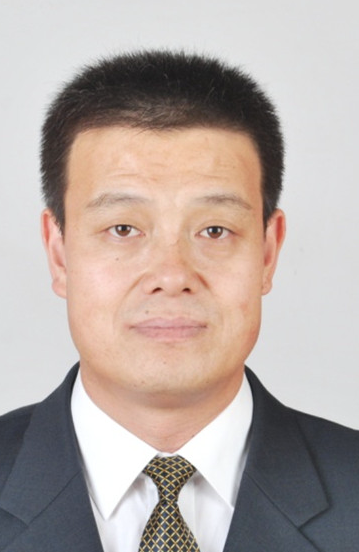 Suizheng Qiu (秋穗正)合作论文数School of Energy and Power Engineering, Xi'an Jiaotong University;School of Nuclear Science and Technology, Xi'an Jiaotong University12
 Dalin Zhang (张大林)合作论文数School of Energy and Power Engineering, Xi'an Jiaotong University9
 JIN Zhao (金钊)合作论文数3LI Ke-ke (李可可)合作论文数3Jun Wang (汪俊)合作论文数3Minli Yang (杨敏丽)合作论文数3XU Min (徐敏)合作论文数2Xiao Liu合作论文数2Bo Liu (刘波)合作论文数2Zhao Jin合作论文数1Hongjian Guo合作论文数1Haiwang Yang合作论文数1Chao Lin合作论文数1Minghao Zhang (张明昊)合作论文数1Hao SUN (孙浩)合作论文数1Yuxin Li合作论文数1Xiao-dan YU (余晓丹)合作论文数1Yong Shao (邵勇)合作论文数1
 Mingjun Wang (王明军)合作论文数School of Energy and Power Engineering, Xi'an Jiaotong University1
 Xiaodan Yu (余晓丹)合作论文数Shanghai Children's Medical Center, School of Medicine, Shanghai Jiao Tong University1
 Jie Cheng (程杰)合作论文数College of Nuclear Science and Technology, Harbin Engineering University1
 Xiaoli Zou (邹晓莉)合作论文数West China School of Public Health, Sichuan University1
 Jing Zhang (章静)合作论文数School of Energy and Power Engineering, Xi'an Jiaotong University1Tiancai Liu (刘天才)合作论文数China Institute Of Atomic Energy1
 Yingwei Wu (巫英伟)合作论文数Xi'an Jiaotong University1Zhiwei Zhou (周志伟)合作论文数1




