While NeRF is a groundbreaking method in the field of scene reconstruction, it faces challenges when dealing with the data characterized by varying occlusions and shadows. To overcome the limitations of NeRFs in occlusion removal and shadow mitigation, we propose a shadow-casting object removal framework based on the Segment Anything Model (SAM) and associate it with NeRF. Specifically, we first introduce a prompt fusion method to effectively mix point and text prompts, guiding the vanilla SAM to better capture the masking edges. Another fine-tuned SAM incorporates with an enhanced edge extraction that leverages consistency in texture and color across the same material to improve the removal of shadows cast by objects within the scene. By combining the refined object mask with shadow-insensitive masks, our model significantly enhance the scene rendering quality, particularly when handling occluded objects. Comprehensive quantitative and qualitative results demonstrate that the proposed framework effectively addresses geometric alignment, color consistency, and texture fidelity, achieving superior performance in object removal and shadow mitigation tasks for NeRFs.
As a fundamental task in fields such as remote sensing, autonomous vehicles, augmented reality, and robotic navigation, Point-cloud semantic segmentation is critical for interpreting 3D environments, as it involves classifying point cloud data to assign semantic labels to points within a 3D scene. Leveraging spatial positions and other attributes, 3D semantic segmentation enables accurate object representation and categorization. While deep learning has advanced feature extraction from point clouds, developing efficient and accurate segmentation networks remains challenging. To address this, we propose an encoder-decoder framework that integrates local polar embedding and attention fusion. The method enhances local geometric feature extraction and reduces the semantic gap between encoded and decoded features. For enhancing the network’s ability to segment complex-shaped point clouds, we first employ polar encoding and offset updating to redefine neighborhood coordinates. Then, a hybrid pooling module is introduced to improve local feature sensing. Finally, we integrate attention feature fusion between encoding and decoding layers to minimize semantic discrepancies and optimize feature mapping. Both qualitative and quantitative experiments demonstrate the effectiveness of our approach, showcasing its competitiveness with state-of-the-art methods in 3D semantic segmentation.
The opacity of black-box neural networks has raised significant concerns in critical domains such as healthcare, finance, and safety, where model interpretability and robustness are essential alongside predictive performance. Existing deep learning models often struggle with data distribution shifts, including label noise, class imbalance, and outliers, limiting their real-world applicability. To address these challenges, we introduce the Bilevel Additive Taylor Model (BATM), an interpretable and robust framework that integrates bilevel optimization with sparse neural additive modeling. BATM employs an adaptive weighting mechanism to mitigate label noise and class imbalance while maintaining interpretability through additive feature contributions. The incorporation of Tucker decomposition efficiently handles high-order interactions in the Taylor expansion, substantially reducing computational complexity and enhancing scalability for large-scale data without sacrificing accuracy. Extensive experiments on multiple real-world datasets demonstrate that BATM outperforms some state-of-the-art baselines in robustness, interpretability, and resistance to catastrophic forgetting. Theoretical analysis further guarantees the convergence properties of our bilevel optimization scheme. Our work bridges the gap between interpretability and robustness in machine learning, offering a practical solution for high-stakes decision-making scenarios. The implementation code for this research has been made publicly available at https://github.com/tjuzwx/BATM.
We propose an approach to learning sample embedding for analyzing multi-dimensional datasets. The basic idea is to extract rules from the given dataset and learn the embedding for each sample based on the rules it satisfies. The approach can filter out pattern-irrelevant attributes, leading to significant visual structures of samples satisfying the same rules in the projection. In addition, analysts can understand a visual structure based on the rules that the involved samples satisfy, which improves the projection’s pattern interpretability. Our research involves two methods for achieving and applying the approach. First, we give a method to learn rule-based embedding for each sample. Second, we integrate the method into a system to achieve an analytical workflow. Cases on real-world dataset and quantitative experiment results show the usability and effectiveness of our approach.
In recent years, AI-driven drug development has emerged as a prominent research topic in computer chemistry. A key focus is the application of generative models for molecule synthesis, which create extensive virtual libraries of chemical molecules based on latent spaces. However, locating molecules with desirable properties within the vast latent spaces remains a significant challenge. Large regions of invalid samples in the latent space, called “dead zones”, can impede the exploration efficiency. The process is always time-consuming and repetitive. Therefore, we aim to propose a visualization system to help experts identify potential molecules with desirable properties as they wander in the latent space. Specifically, we conducted a literature survey about the application of generative networks in drug synthesis to summarize the tasks and followed this with expert interviews to determine their requirements. Based on the above requirements, we introduce ChemNav, an interactive visual tool for navigating latent space for desirable molecules search. ChemNav incorporates a heuristic latent space interpolation path search algorithm to enhance the efficiency of valid molecule generation, and a similar sample search algorithm to accelerate the discovery of similar molecules. Evaluations of ChemNav through two case studies, a user study, and experiments demonstrated its effectiveness in inspiring researchers to explore the latent space for chemical molecule discovery.
Learning with noisy labels (LNL) has been extensively studied, with existing approaches typically following a framework that alternates between clean sample selection and semi-supervised learning (SSL). However, this approach has a limitation: the clean set selected by the Deep Neural Network (DNN) classifier, trained through self-training, inevitably contains noisy samples. This mixture of clean and noisy samples leads to misguidance in DNN training during SSL, resulting in impaired generalization performance due to confirmation bias caused by error accumulation in sample selection. To address this issue, we propose a method called Collaborative Sample Selection (CSS), which leverages the large-scale pre-trained model CLIP. CSS aims to remove the mixed noisy samples from the identified clean set. We achieve this by training a 2-Dimensional Gaussian Mixture Model (2D-GMM) that combines the probabilities from CLIP with the predictions from the DNN classifier. To further enhance the adaptation of CLIP to LNL, we introduce a co-training mechanism with a contrastive loss in semi-supervised learning. This allows us to jointly train the prompt of CLIP and the DNN classifier, resulting in improved feature representation, boosted classification performance of DNNs, and reciprocal benefits to our Collaborative Sample Selection. By incorporating auxiliary information from CLIP and utilizing prompt fine-tuning, we effectively eliminate noisy samples from the clean set and mitigate confirmation bias during training. Experimental results on multiple benchmark datasets demonstrate the effectiveness of our proposed method in comparison with the state-of-the-art approaches.
Fifth-generation mobile communication technology (5G) is a powerful driving force for the Industrial Internet of Things (IIoT). In the 5G-based IIoT, multi-access edge computing (MEC) can move traffic and service computing from the centralized cloud to the edge networks, thus, effectively improving the real-time performance of task processing. In this context, it is crucial to assign real-time tasks generated by numerous edge devices to MEC servers. Existing schemes usually schedule tasks in batches within time slots and ignore the situations where edge tasks arrive with time-varying density. However, the problem is that these schemes can lead to extra waiting delay in the slots with sparse tasks, thus, resulting in additional latency in task processing. To solve this problem, we propose a task scheduling scheme based on two-stage hybrid matching. The proposed scheme measures the time-varying density of tasks and switches between two stages: offline and online matching stages, according to the different task densities. Experimental results show that our scheme has a lower task execution time compared with other state-of-the-art schemes.
Road rage is a social problem that deserves attention, but few research has been done so far. In this paper, based on the biological topology of multi-channel electroencephalogram (EEG) signals, we propose a model which combines transferable attention (TA) and regularized graph neural network (RGNN). First, topology-aware information aggregation is performed on EEG signals, and complex relationships between channels are dynamically learned. Then, the transferability of each channel is quantified based on the results of the node-wise domain classifier, which is embedded into the emotion classifier as attention score. Importantly, we recruited 10 subjects and collected their EEG signals in pleasure and rage states in simulated driving conditions. We verify the effectiveness of our method on this dataset and compare it with other methods. The results indicate that our method is simple and efficient, with 85.63% accuracy in cross-subject experiments. It can be used to identify road rage.
Generative models provide an efficient way to analyze and understand unlabeled data, creating the latent space for data modeling and generation. Since the interpretation of latent space usually requires implicit expert knowledge, this human-centered feature makes visual analytic methods effective. In the filed of computer chemistry, some research have applied generative models to generate chemical spaces and generated new molecules by sampling in the latent space. However, the latent space is typically high and sparse, and there may be a large number of “dead zones”, which may lead to decoding sample points from the latent space are noisy or invalid. Therefore, it is extremely challenging to efficiently search and traverse the latent space and generate new molecules with the desired properties. This paper aims to propose a visualization system for interactive exploration of latent space, which inspires the researchers to design new potential molecules with desired properties. The main work of this paper is as follows: First, we investigate a series of literature on the application of generative networks to drug design and synthesis, and interview experts with computer chemistry background to summarize the requirements and tasks. Second, based on the above requirements and tasks, we propose a graph-based latent space traversal and interpolation algorithms and neighborhood sampling algorithms. This can improve the number of generated potential molecules and the speed of discovery of similar molecules. Then, we conduct comparison experiments to verify the effectiveness of the algorithms. Finally, we design visualization system and then conduct the case study and user study to verify the effectiveness of the visualization system.
Despite the success of learning with noisy labels, existing approaches show limited performance when the noise level is extremely high, since deep neural networks (DNNs) are easily overfit to the training set with corrupted labels. In this paper, we introduce Lipschitz regularization to prevent the DNNs from over-fitting to noisy labels quickly. Meanwhile, to better detect and leverage the noisy samples, we pro -pose a Lipschitz regularization based framework with a combination of adaptive modeling and detection module and improved semi-supervised learning. We propose to adaptively model the real distribution of the training set, and the implicit individual clean/noisy distribution, instead of parametric models. With Bayes' rule, we then compute the posterior probability of a sample being clean, which provides a dynamic threshold for the detection of noisy labels. To reduce training instability caused by less labeled data with severe label noise, we improve the semi-supervised learning by combining the advantages of Mixup and FixMatch. It can not only increase the diversity of unlabeled samples, but also improve the generaliza-tion capability of the DNNs to avoid over-fitting. Experiments on several benchmarks demonstrate that our approach achieves comparable results with the state-of-the-art methods in the less-noisy environ-ment, and obtains a substantial improvement ( - 8% and -6% in accuracy on CIFAR-10 and CIFAR-10 0 respectively) with severe noise.(c) 2022 Elsevier Ltd. All rights reserved.
Discriminative correlation filters (DCF) have demonstrated competitive tracking performance in recent years. In these approaches, DCF methods only learn the appearance models with the historical tracking results, thus have the risks of drifting the targets due to the unforeseen target appearances in the future. In this paper, we present a novel tracking framework which rectifies the DCF models in the current frame with the potential future target appearances. To achieve this, the tracking model is updated with time-delay strategies and the model learning in each frame consists of two strategies: an exploration module and an exploitation module. The exploration module aims at discovering the potential target appearances in the near future, while the exploitation module further combines the future target appearances with the historical tracking results to learn more robust DCF models. To validate the proposed method, we integrate it into two state-of-the-art DCF trackers, i.e., spatially regularized discriminative correlation filters decontamination and efficient convolution operators, and also conduct extensive experiments on three tracking benchmarks: OTB-2015, Temple-Color and LaSOT. The results show that by incorporating with the proposed framework, the modified DCF methods can leverage the future target appearances for learning more robust models and are also superior to the baseline methods. In addition, they can also achieve competitive performance against the state-of-the-art methods on several datasets.
Due to complex blockchain programs and numerous blockchain nodes, it takes a huge amount of time and economic cost to conduct blockchain experiments. Existing open source projects do not support modifications to the underlying blockchain, and existing blockchain simulators only focus on a single blockchain system and cannot flexibly extend or replace models. Regarding the issues above, this paper proposes a prototype system for blockchain performance evaluation, including real deployment test and simulation test. In real deployment test, a five-layer architecture for building a lightweight and efficient testing system is proposed. And in simulation test, a general scheme for building blockchain simulator is proposed, which can realize the test of throughput, storage allocation and reputation management. Experiments show that the prototype system proposed in this paper can effectively improve the efficiency of blockchain performance evaluation.
We propose an efficient multi-view stereo (MVS) network for inferring depth value from multiple RGB images. Recent studies use the cost volume to encode the matching correspondence between different views, but this structure can still be optimized from the perspective of image features. First of all, to fully aggregate the dominant interrelationship from input images, we introduce a self-attention mechanism to our feature extractor, which can accurately model long-range dependencies between adjacent pixels. Secondly, to unify the extracted feature maps into the MVS problem, we further design an efficient feature-wise loss function, which constrains the corresponding feature vectors more spatially distinctive during training. The robustness and accuracy of the reconstructed point cloud are improved by enhancing the reliability of correspondence matches. Finally, to reduce the extra memory burden caused by the above methods, we follow the coarse to fine strategy. The group-wise correlation and uncertainty estimates are combined to construct a lightweight cost volume. This can improve the efficiency and generalization performance of the network while ensuring the reconstruction effect. We further combine the previous steps to get what we called attention thin volume. Quantitative and qualitative experiments are presented to demonstrate the performance of our model.
为了进行复杂交互动作识别,提出基于深度信息的特征学习方法,并使用两层分类策略解决相似动作识别问题.该方法从频域的角度分析深度图像动作序列,提取频域特征,利用VAE对特征进行空间特征压缩表示,建立HMM模拟时序变化并进行第一层动作识别.为了解决相似动作识别问题,引入三维关节点特征进行第二层动作识别.实验结果表明,两种特征在动作数据集SBU-Kinect上能够有效地表示姿态含义,策略简单有效,识别准确率较高.
我国的建筑耗能已经达到全国能源消费总量的30%,而严寒地区的建筑耗能更是惊人.在我国提出严寒地区建筑设计应具有更高的节能目标的战略背景下,基于围护结构节能设计的相关标准建立基准空间模型,参考严寒地区绿色建筑节能设计目标设定本次研究的优化目标,对遗传算法进行改进并通过该算法实现单目标优化函数的运算求解,最终根据国内外节能设计标准制定目标最佳方案.将年最低能耗设计方案与目标能耗设计方案对比,所采用的目标能耗方案在有效节约能耗的同时可以降低3万元的设计成本,具有明显优势.
Screened Poisson Surface Reconstruction has a good performance among the state-of-art surface recon-struction algorithms in obtaining a triangle mesh from oriented points. In order to better deal with nonuniform point clouds, Screened Poisson Surface Reconstruction uses B-spline functions with a fixed support for kernel density estimation to construct a vector field for solving the screened Poisson equa-tion. In this paper, an adaptive bandwidth Gaussian kernel density estimator is applied, which reduces the bandwidth where the density is low, and increases the bandwidth where the density is high. Ex-periments show that such an estimator that makes use of both global and local points distribution can effectively remove noise and outliers in the reconstruction. (c) 2021 Elsevier Ltd. All rights reserved.
Reconstructing surface normal from the reflectance observations of real objects is a challenging issue. Although recent works on photometric stereo exploit various reflectance-normal mapping models, none of them take both illumination and LDR maximum into account. In this paper, we combine a fusion learning network with LDR maxima to recover the normal of the underlying surface. Unlike traditional formalization, the initial normal estimated by solving the generalized bas-relief (GBR) ambiguity is employed to promote the performance of our learning framework. As an uncalibrated photometric stereo network, our method, called L-DPSNet, takes advantage of LDR-derived information in normal prediction. We present the qualitative and quantitative experiments implemented using synthetic and real data to demonstrate the effectiveness of the proposed model.
A number of methods have been proposed for face reconstruction from single/multiple image(s). However, it is still a challenge to do reconstruction for limited number of wild images, in which there exists complex different imaging conditions, various face appearance, and limited number of high-quality images. And most current mesh model based methods cannot generate high-quality face model because of the local mapping deviation in geometric optics and distortion error brought by discrete differential operation. In this paper, accurate geometrical consistency modeling on B-spline parameter domain is proposed to reconstruct high-quality face surface from the various images. The modeling is completely consistent with the law of geometric optics, and B-spline reduces the distortion during surface deformation. In our method, 0th- and 1st-order consistency of stereo are formulated based on low-rank texture structures and local normals, respectively, to approach the pinpoint geometric modeling for face reconstruction. A practical solution combining the two consistency as well as an iterative algorithm is proposed to optimize high-detailed B-spline face effectively. Extensive empirical evaluations on synthetic data and unconstrained data are conducted, and the experimental results demonstrate the effectiveness of our method on challenging scenario, e.g., limited number of images with different head poses, illuminations, and expressions.
 Zhiyong Feng (冯志勇)合作论文数College of Intelligence and Computing, Tianjin University;Institute of Knowledge Science and Engineering, Tianjin University45
 Zhaopeng Meng (孟昭鹏)合作论文数College of Intelligence and Computing, Tianjin University18
 Suying Yao (姚素英)合作论文数School of Electronic Information Engineering,Tianjin University,Tianjin ,China11
 Jiangtao Xu (徐江涛)合作论文数School of Microelctronics, Tianjin University11
 Jing Hu (胡静)合作论文数College of Intelligence and Computing, Tianjin University8Zhiyuan Gao (高志远)合作论文数Faculty of Information Technology, Beijing University of Technology;Beijing Optoelectronics Technology Laboratory, Beijing University of Technology8
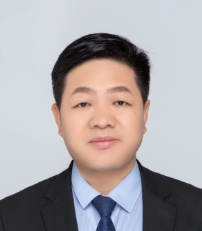 Losin Xu (许光全)合作论文数School of Cybersecurity, College of Intelligence and Computing, Tianjin University7
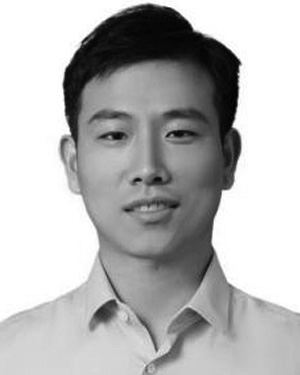 Weilong Peng合作论文数5
 Liqiang Han合作论文数5Wang Jiafang合作论文数4
 Chao Li合作论文数4Qing Miao合作论文数4
 Wangmeng Zuo (左旺孟)合作论文数School of Computer Science and Technology, Harbin Institute of Technology4
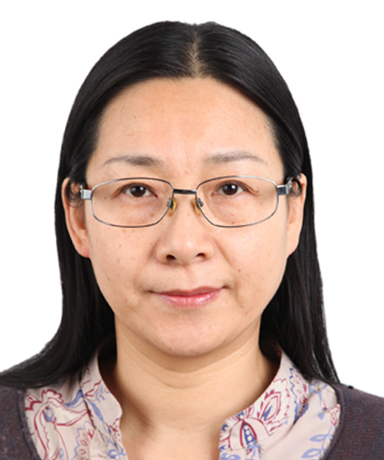 Xiaohong Li (李晓红)合作论文数School of New Media and Communication, Tianjin University;College of Intelligence and Computing, Tianjin University4
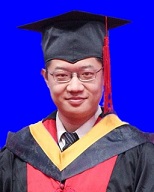 Pufeng Du (杜朴风)合作论文数College of Intelligence and Computing, Tianjin University4
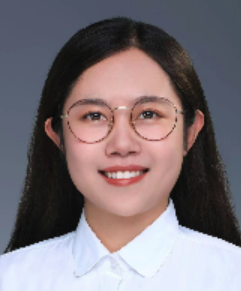 Xiaohe Wu (武小荷)合作论文数School of Computer Science and Technology, Faculty of Computing, Harbin Institute of Technology3Tianyi Cao合作论文数3Sun Yu (孙羽)合作论文数3
 Zheng Zhang (张铮)合作论文数School of Computer Science and Technology, Tiangong University3
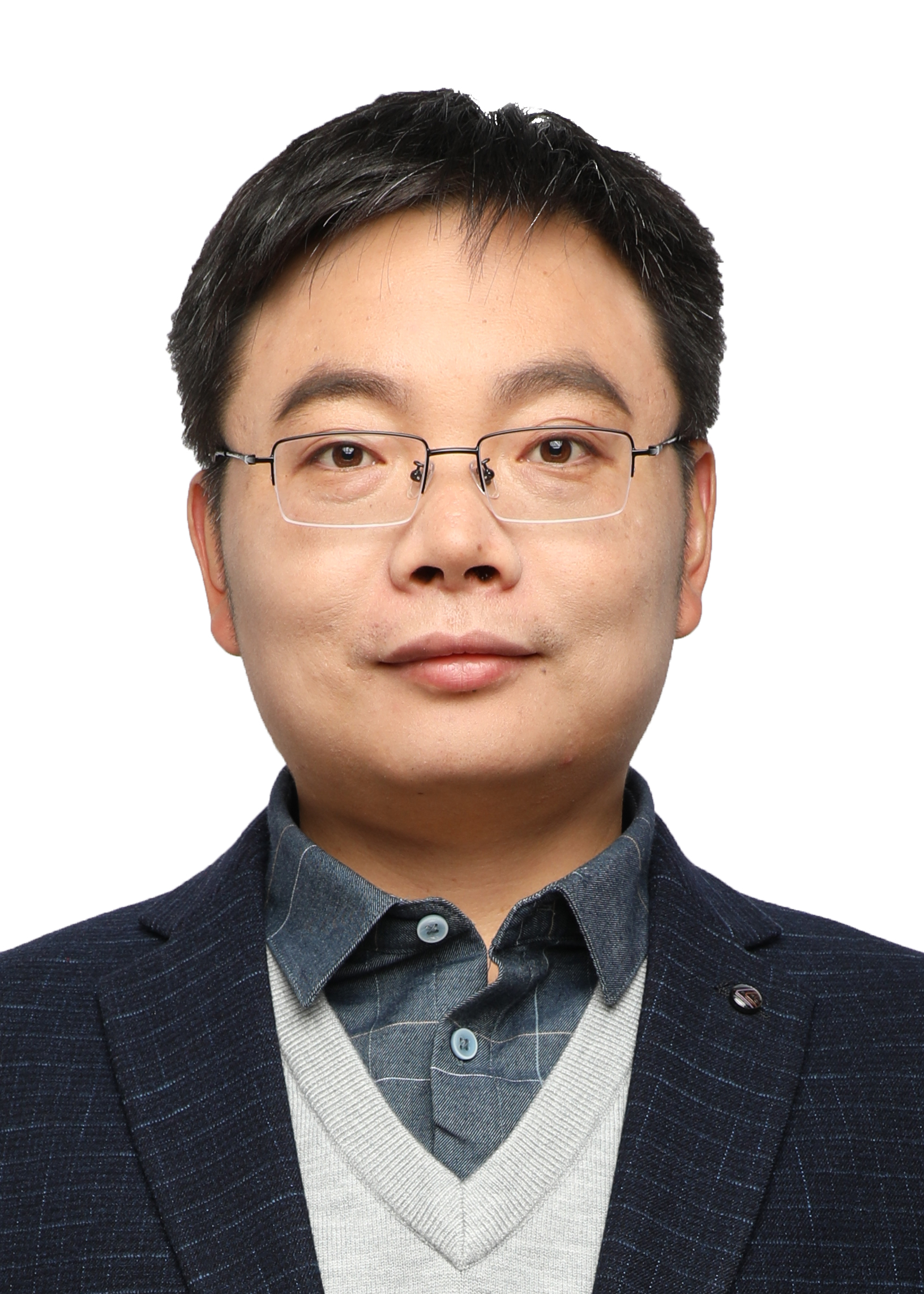 Wanli Xue (薛万利)合作论文数School of Computer Science and Engineering, Tianjin University of Technology3
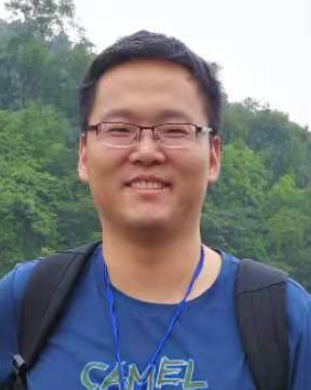 Jie Li (李杰)合作论文数School of Computer Software, College of Intelligence and Computing, Tianjin University3Caichao Dong合作论文数3
 Shizhan Chen (陈世展)合作论文数College of Intelligence and Computing, Tianjin University3
 Yong Chen (陈勇)合作论文数School of Humanities, Wenzhou University3
 Yanxiang He (何炎祥)合作论文数School of Computer Science, Wuhan University3Jinglian Liang合作论文数2Siying Guo合作论文数2Yong Su合作论文数2
 Yushi Li合作论文数Hong Kong Polytech Univ, Dept Comp, Hong Kong, Peoples R China2
 Xin Wang (王鑫)合作论文数School of Artificial Intelligence, College of Intelligence and Computing, Tianjin University2
 Bingyi Zhang (张冰怡)合作论文数College of Intelligence and Computing, Tianjin University2
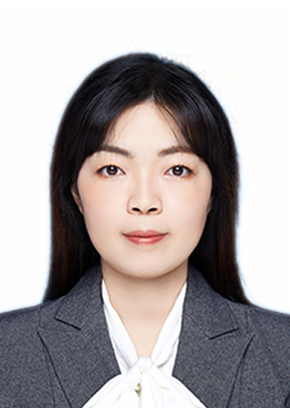 Yanli Ji (姬艳丽)合作论文数School of Intelligent Systems Engineering, Sun Yat-sen University2
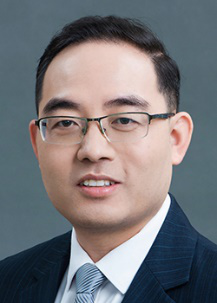 Xiao Xue (薛霄)合作论文数College of Intelligence and Computing, Tianjin University;Henan Polytechnic University2
 Hui Wang (王辉)合作论文数School of Mechanical Engineering, Tianjin University2
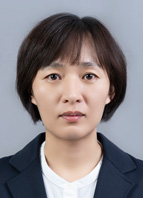 Jing Gao (高静)合作论文数School of Microelectronics, Tianjin University2
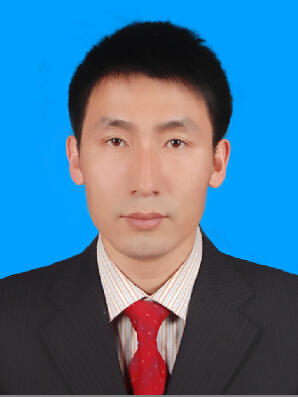 Tie Qiu (邱铁)合作论文数School of Computer Science and Technology, College of Intelligence and Computing, Tianjin University2
 Yiwen Guo合作论文数2Dongling Zhang (张冬苓)合作论文数2Xiaoning Ma (马晓宁)合作论文数2Jianbo Liu (刘健博)合作论文数2
 Qinghua Hu (胡清华)合作论文数School of Artificial Intelligence, College of Intelligence and Computing, Tianjin University2
 Xirong Ma (马希荣)合作论文数天津市北辰区人民政府2Li Binqiao合作论文数2Song Yihang合作论文数1Xuelin Zhang合作论文数College of Informatics, Huazhong Agricultural University1Xiao Jian合作论文数1Gao Xueqi合作论文数1
 Jiancheng Chi合作论文数1Chungui Li合作论文数1




