.. The least motion insertion reaction of singlet methylene into molecular hydrogen is forbidden in the sense of Woodward and Hbffman, and has been predicted to involve a barrier height of 'V 27 kcal/mole. Here ab initio. electronic structure theory has been applied to the non-least-motion features of the same potential energy surface. A double zeta basis set of contracted gaussian functions was used in conjunction with moderately _large (2120 configurations) configuration interaction (CI)·techniques. of the qualitative type 'For an initial C point group approach . s
article Free AccessA nationwide parallel computing environment Authors: Ken Kennedy Rice Univ., Houston, TX Rice Univ., Houston, TXView Profile , Charles F. Bender Ohio Supercomputer Center, Columbus Ohio Supercomputer Center, ColumbusView Profile , John W. D. Connolly Univ. of Kentucky, Lexington Univ. of Kentucky, LexingtonView Profile , John L. Hennessy Stanford Univ., Stanford, CA Stanford Univ., Stanford, CAView Profile , Mary K. Vernon Univ. of Wisconsin, Madison Univ. of Wisconsin, MadisonView Profile , Larry Smarr Univ. of Illinois at Urbana-Champaign, Urbana Univ. of Illinois at Urbana-Champaign, UrbanaView Profile Authors Info & Claims Communications of the ACMVolume 40Issue 11Nov. 1997 pp 62–72https://doi.org/10.1145/265684.265693Published:01 November 1997Publication History 17citation693DownloadsMetricsTotal Citations17Total Downloads693Last 12 Months29Last 6 weeks16 Get Citation AlertsNew Citation Alert added!This alert has been successfully added and will be sent to:You will be notified whenever a record that you have chosen has been cited.To manage your alert preferences, click on the button below.Manage my AlertsNew Citation Alert!Please log in to your account Save to BinderSave to BinderCreate a New BinderNameCancelCreateExport CitationPublisher SiteeReaderPDF
Theoretical studies are reported of the complete dipole excitation and ionization spectrum in H2O employing Franck–Condon and static-exchange approximations. Large Cartesian Gaussian basis sets are used to represent the required discrete and continuum electronic eigenfunctions at the ground-state equilibrium geometry, and previously devised moment-theory techniques are employed in constructing the continuum oscillator-strength densities from the calculated spectra. Detailed comparisons are made of the calculated excitation and ionization profiles with recent experimental photoabsorption studies and corresponding spectral assignments, electron impact–excitation cross sections, and dipole (e, 2e)/(e, e+ion) and synchrotron-radiation studies of partial-channel photoionization cross sections. The various calculated excitation series in the outer-valence (1b−11, 3a−11, 1b−12) region are found to include contributions from valence-like 2b2 (σ*) and 4a1 (γ*) virtual orbitals, as well as appropriate nsa1, npa1, nda1, npb1, npb2, ndb1, ndb2, and nda2 Rydberg states. Transition energies and intensities in the ∼7 to 19 eV interval obtained from the present studies are seen to be in excellent agreement with the measured photoabsorption cross section, and to provide a basis for detailed spectral assignments. The calculated (1b−11) X 2B1, (3a1−1)2A1, and (1b2−1)2B2 partial-channel cross sections are found to be largely atomic-like and dominated by 2p→kd components, although the 2b2(σ*) orbital gives rise to resonance-like contributions just above threshold in the 3a1→kb2 and 1b2 →kb2 channels. It is suggested that the latter transition couples with the underlying 1b1→kb1 channel, accounting for a prominent feature in the recent high-resolution synchrotron-radiation measurements. When this feature is taken into account, the calculations of the three outer-valence channels are in excellent accord with recent synchrotron-radiation and dipole (e, 2e) photoionization cross-sectional measurements. The calculated inner-valence (2a1−1) cross section is also in excellent agreement with corresponding measured values, although proper account must be taken of the appropriate final-state configuration-mixing effects that give rise to a modest failure of the Koopmans approximation, and to the observed broad PES band, in this case. Finally, the origins of the various spectral features present in the measured 1a1 oxygen K-edge electron energy-loss profile in H2O are seen to be clarified fully by the present calculations.
Molecular electronic structure theory has been applied to the low-lying electronic states of Zn2 and Cd2. Gaussian basis sets of size Zn (13s 9p 5d) and Cd (15s 11p 7d) have been optimized in atomic calculations on the ground 1S and excited 3P electronic states. The general contraction scheme of Raffenetti has been used to reduce these primitive Gaussian bases to size Zn (5s 4p 1d) and Cd (6s 4p 2d) without any degradation in the atomic SCF energies. Following X 1Σ+g ground state SCF calculations, full configuration interaction was performed for the four valence electrons. The resulting potential energy curves for Zn2 and Cd2 are, with some notable exceptions, qualitatively similar. In the case of Cd2, we have obtained potential curves which include spin–orbit coupling and have carried out a detailed analysis of the fluorescence intensity from the first 1u (3Σ+u) excited state.
A b initio calculations of the intermolecular potential Φ between two H2 molecules have been carried out for intermolecular separations corresponding to the repulsive region of Φ. In most of the calculations a contracted Gaussian basis set consisting of two s and one p functions per H was used to construct a self-consistent field (SCF) configuration and SCF plus all singly and doubly excited configurations at fixed H–H bond length. To ascertain the accuracy of the computed results, three types of more elaborate calculations were carried out. These are based on a larger Gaussian basis set (five s and two p functions per H), full configuration interaction, and variation of the H–H bond length. We found that Φ depends weakly on these factors at r≲4.5 bohr. Analytic expressions are presented to represent Φ in terms of intermolecular distance and three angles defining orientations of two H2 molecules. The minimum-energy orientation of two H2 as they approach each other is predicted to have a simple shape, two H2 forming a parallelogram. The results obtained in this work are compared with those for other Φ’s obtained from theoretical and experimental considerations. Since Φ’s based on the condensed-state data are less repulsive than the ab initio Φ, we conclude that the many-body effects in condensed states are significant over a nearly entire range of repulsion.
Calculations are reported of the potentail-energy surfaces of the molecules OH/sup + +/ and NeH/sup + +/. Avoided crossins occur in the /sup 4/..sigma../sup -/ and /sup 4/Pi states of OH/sup + +/ through which the charge-transfer reaction O/sup + +/+ H..-->..O/sup +/+H/sup +/ can proceed at thermal energies. The Landau-Zener approximation leads to a rate coefficient of 6 x 10/sup -10/ cm/sup 3/ s/sup -1/ at a temperature of 10/sup 4/ K. No such crossings occur for NeH/sup + +/, and the charge transfer process Ne/sup + +/+H..-->..Ne/sup +/+H is slow at thermal energies. The calculations establish that charge transfer affects significantly the distribution of O cI in astrophysical plasmas but not that of Ne II. The oxygen charge-transfer process leads to an excited state of O II which decays by line emission at 834 A.
Vector method procedures are adapted to evaluate Rayleigh-Schrödinger perturbation corrections to a multiconfiguration zeroth order function. If this function is sufficiently flexible, this perturbation theory can be applied to low lying excited states. The effectiveness of our theory is demonstrated on the ground state of F 2 and the low lying excited states of Mg 2 . Energies calculated through fourth order are compared with appropriate CI results.
Ab initio molecular electronic structure theory has now progressed to the point where it is capable of making genuine contributions to the understanding of simple chemical reactions. Especially noteworthy examples are the elementary fluorine hydrogen reactions pertinent to the HF chemical laser. The present paper discusses the reactions F + H2 → FH + H, H + FH → HF + H, H + F2 → HF + H, and F + HF → FH + F, with particular emphasis on the relationships between ab initio theory and experiment. Directions for future research are suggested.
We present the results of ab initio calculations for the ArKr+ potential-energy curves. The curves and calculated transition moments have been used to calculate the cross section for absorption from the bound ground state. After including spin-orbit interaction, two strong absorptions are predicted with peak cross sections and wavelengths of 1.3×10⁻¹⁶ cm2 at 295 nm and 4.8×10⁻¹⁸ cm2 at 376 nm. The 295-nm absorption band has a cross section of 1.5×10⁻¹⁷ cm2 at the 248-nm wavelength of KrF.
The photodetachment cross section of ${\mathrm{F}}^{\ensuremath{-}}$ is calculated using the method of Stieltjes imaging. This technique constructs the photodetachment cross section from the finite number of transition energies and oscillator strengths obtained in a calculation employing discrete basis functions only. The cross sections are obtained at various levels of approximation which assess the importance of the coupling between channel components and of correlation effects. These effects are not found to play an important role in the determination of absorption cross sections by the Stieltjes-imaging method for the particular case under study. The calculated cross sections agree quite well with the measured cross sections.
Ab initio molecular electronic structure theory has been applied to the nine lowest potential energy surfaces of Ne2F. A valence double zeta basis set was used in conjunction with first-order configuration interaction wavefunctions. In analogy with the results of Wadt and Hay for Ar2F, the 2 2B2 state of Ne2F was found to be significantly bound, by 0.76 eV relative to its lowest dissociation limit, Ne + 2 2Σ+ NeF. The pertinence of these results to possible neon-fluoride laser systems is noted.
Theoretical investigations of photoexcitation and ionization cross sections in molecular nitrogen are reported employing the recently devised Stieltjes–Tchebycheff moment-theory technique in the static-exchange approximation. The coupled-channel equations for photoabsorption are separated approximately by identifying the important physically distinct excitation processes associated with formation of the three lowest electronic states of the parent molecular ion. Approximate Rydberg series and pseudospectra of transition frequencies and oscillator strengths are constructed for the seven individual channel components identified using Hartree–Fock ionic core functions and normalizable Gaussian orbitals to describe the photoexcited and ejected electrons. Detailed comparisons of the theoretically determined discrete excitation series with available spectral data indicate general accord between the calculated and observed excitation frequencies and oscillator strengths, although there are some discrepancies and certain Rydberg series have apparently not yet been identified in the measured spectra. The total Stieltjes–Tchebycheff vertical photoionization cross section obtained from the discrete pseudospectra is in excellent agreement with recent electron–ion coincidence measurement of the cross section for parent–ion production from threshold to 50 eV excitation energy. Similarly, the calculated vertical partial cross sections for the production of the three lowest electronic states in the parent molecular ion are in excellent accord with the results of recent electron–electron coincidence and synchrotron–radiation branching ratio measurements. The origins of particularly intense resonancelike features in the discrete and continuum portions of the photoabsorption cross sections are discussed in terms of excitations into valencelike molecular orbitals. Small discrepancies between theory and experiment are attributed to specific autoionization processes and channel couplings not included in the calculations. In contrast to previously reported model or local potential studies, the present results employ the full nonlocal and nonspherical molecular Fock potential in ab initio photoabsorption calculations. The excellent agreement obtained between theory and experiment in molecular nitrogen suggests that highly reliable photoabsorption cross sections for diatomic molecules can be obtained from Hilbert space calculations and the Stieltjes–Tchebycheff method in the static-exchange approximation under appropriate conditions.
The N++ H2 system is one of the few ion-molecule reactions for which detailed molecular beam studies have been carried out. To complement this experimental research, we have performed a theoretical study of two of the low-lying NH+2 potential energy surfaces. The intersection and avoided intersection (for Cs geometries) of the lowest 3A2 and 3B1 surfaces allows a pathway by which the ground state of NH+2 may be accessed without a potential barrier. The electronic structure calculations employed a double zeta plus polarization basis set, and correlation effects were taken into account using the newly developed Vector Method (VM). To test the validity of this basis, additional self-consistent-field studies were performed using a very large contracted gaussian basis N(13s 8p 3d/9s 6p 3d), H(6s 2p/4s 2p). The 3A2 surface, on which N+ and H2 may approach, has a surprisingly deep potential minimum, ∼60 kcal mol–1, occurring at re(NH)∼ 1.26 Å and θe(HNH)∼ 43°. Electron correlation is responsible for about 15 kcal of this well depth, which appears fairly insensitive to extension of the basis set beyond the double zeta plus polarization level. The line of intersection (or seam) of the 3A2 and 3B1 surfaces is presented both numerically and pictorially. The minimum energy along this seam occurs at ∼51 kcal below separated N++ H2. Thus for sufficiently low energies one expects N+— H2 collisions to provide considerable "complex formation". Further molecular beam experiments at such low energies (< 0.5 eV) would be of particular interest.
Chemischer InformationsdienstVolume 8, Issue 33 Preparative Organic Chemistry ChemInform Abstract: CONCERTED NON-LEAST-MOTION PATHWAY FOR THE SINGLET METHYLENE INSERTION REACTION CH2(1A1) + H2 → CH4 C. W. JUN. BAUSCHLICHER, C. W. JUN. BAUSCHLICHERSearch for more papers by this authorK. HABER, K. HABERSearch for more papers by this authorH. F. III SCHAEFER, H. F. III SCHAEFERSearch for more papers by this authorC. F. BENDER, C. F. BENDERSearch for more papers by this author C. W. JUN. BAUSCHLICHER, C. W. JUN. BAUSCHLICHERSearch for more papers by this authorK. HABER, K. HABERSearch for more papers by this authorH. F. III SCHAEFER, H. F. III SCHAEFERSearch for more papers by this authorC. F. BENDER, C. F. BENDERSearch for more papers by this author First published: August 16, 1977 https://doi.org/10.1002/chin.197733122AboutPDF ToolsRequest permissionExport citationAdd to favoritesTrack citation ShareShare Give accessShare full text accessShare full-text accessPlease review our Terms and Conditions of Use and check box below to share full-text version of article.I have read and accept the Wiley Online Library Terms and Conditions of UseShareable LinkUse the link below to share a full-text version of this article with your friends and colleagues. Learn more.Copy URL Share a linkShare onFacebookTwitterLinked InRedditWechat No abstract is available for this article. Volume8, Issue33August 16, 1977 RelatedInformation
ADVERTISEMENT RETURN TO ISSUEPREVArticleNEXTConcerted non-least-motion pathway for the singlet methylene insertion reaction CH2(1A1) + H2 .fwdarw. CH4Charles W. Bauschlicher Jr., Kenneth Haber, Henry F. Schaefer III, and Charles F. BenderCite this: J. Am. Chem. Soc. 1977, 99, 11, 3610–3614Publication Date (Print):May 1, 1977Publication History Published online1 May 2002Published inissue 1 May 1977https://pubs.acs.org/doi/10.1021/ja00453a014https://doi.org/10.1021/ja00453a014research-articleACS PublicationsRequest reuse permissionsArticle Views264Altmetric-Citations60LEARN ABOUT THESE METRICSArticle Views are the COUNTER-compliant sum of full text article downloads since November 2008 (both PDF and HTML) across all institutions and individuals. These metrics are regularly updated to reflect usage leading up to the last few days.Citations are the number of other articles citing this article, calculated by Crossref and updated daily. Find more information about Crossref citation counts.The Altmetric Attention Score is a quantitative measure of the attention that a research article has received online. Clicking on the donut icon will load a page at altmetric.com with additional details about the score and the social media presence for the given article. Find more information on the Altmetric Attention Score and how the score is calculated. Share Add toView InAdd Full Text with ReferenceAdd Description ExportRISCitationCitation and abstractCitation and referencesMore Options Share onFacebookTwitterWechatLinked InRedditEmail Other access optionsGet e-Alertsclose Get e-Alerts
This work was performed under the auspices of the U.S. Energy Research and Development Administration under Contract No. W-7405-Eng-48.
 Henry Schaefer合作论文数Department of Chemistry, Franklin College of Arts and Sciences, University of Georgia;Center for Computational Chemistry, University of Georgia56
 Charles Bauschlicher合作论文数Astrobiology Institute, National Aeronautics and Space Administration;Ames Research Center, National Aeronautics and Space Administration13
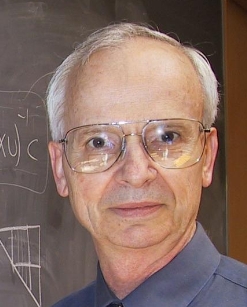 Ernest R. Davidson合作论文数Department of Chemistry, College of Arts & Sciences, University of Washington;Department of Chemistry, The College of Arts + Sciences, Indiana University Bloomington11
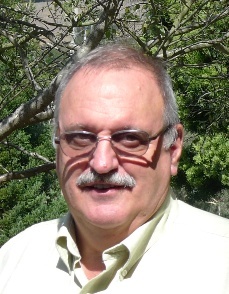 Thomas Nicola Rescigno合作论文数Lawrence Berkeley National Laboratory10Stephen V. Oneil合作论文数9Dean H. Liskow合作论文数8C. P. BASKIN合作论文数7
 Peter Andrew Kollman合作论文数Department of Pharmaceutical Chemistry, University of California, San Francisco5
 Nicholas Wilhelm Winter合作论文数5PK PEARSON合作论文数4Vincent Mckoy合作论文数4
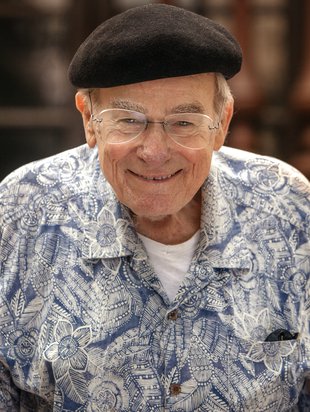 William A. Goddard III合作论文数Division of Chemistry and Chemical Engineering, California Institute of Technology;Division of Engineering and Applied Science, California Institute of Technology;Materials and Process Simulation Center, California Institute of Technology;Center for Materials Simulation and Design, Graduate School of Energy Environment Water Sustainability, KAIST Institute4Gretchen M. Schwenzer合作论文数4BV MCKOY合作论文数4
 Peter Langhoff合作论文数3
 Francis H. Ree合作论文数Physics Department, Lawrence Livermore National Laboratory3C. W. JUN. BAUSCHLICHER合作论文数2r j olness合作论文数2WJ Hunt合作论文数2Kenneth Haber合作论文数2Th Dunning合作论文数2
 David R. Yarkony合作论文数Department of Chemistry, Krieger School of Arts & Sciences, The Johns Hopkins University2Ross Marvin合作论文数2
 William Graham Hoover合作论文数Livermore Laboratory, University of California at Davis2
 C. William McCurdy合作论文数Department of Chemistry, University of California, Davis2
 Robert Lucchese合作论文数Chemical Sciences Division, Lawrence Berkeley National Laboratory2F.J. Rogers合作论文数1BL HORD合作论文数1Stephen V. O'Neil合作论文数1Br Kowalski合作论文数1William J. Hunt合作论文数1
 Paul Bagus合作论文数Department of Chemistry, College of Science, University of North Texas1Daniel Wallach合作论文数INRA Toulouse, INRA1
 Ken Kennedy合作论文数Department of Computer Science, Rice University1
 Barbara Garrison合作论文数Department of Chemistry, Eberly College of Science, Pennsylvania State University1
 Leland Allen合作论文数Princeton University1
 Alexander Dalgarno合作论文数Department of Astronomy, Harvard University;Institute For Theoretical Atomic and Molecular Physics, Harvard University;Center for Astrophysics Harvard & Smithsonian, Harvard University1
 Clifford E. Dykstra合作论文数Department of Chemistry, College of Liberal Arts & Sciences, University of Illinois Urbana-Champaign1
 Stephanie R. Langhoff合作论文数Ames Research Center, National Aeronautics and Space Administration1
 John L. Hennessy (约翰·轩尼诗)合作论文数Department of Electrical Engineering and Computer Science, Stanford University1Wolfgang P. Kraemer合作论文数1Peter K. Pearson合作论文数1Peter a Kollman合作论文数1
 Larry Smarr合作论文数Jacobs School of Engineering, University of California, San Diego;California Institute for Telecommunications and Information Technology1Kenneth S. Haber合作论文数1James H. Meadows合作论文数1M. Van Thiel合作论文数1
 Forrest James Rogers合作论文数Lawrence Livermore National Laboratory1R.F. Hausman合作论文数1




