We revisit a two-temperature Nosé-Hoover wanderer particle embedded in a two-dimensional periodic 2x2 cell with four smooth repulsive corners at (x,y) = (± 1, ± 1) to explore chaos with anisotropic thermostatting. The model employs separate thermostats in the x and y directions, enabling controlled deviations from equilibrium. By integrating the full six-dimensional equations of motion and computing the complete Lyapunov spectrum, we confirm chaos and quantify phase-space contraction with high numerical precision. The total contraction rate, interpreted as entropy production, increases nonlinearly with the thermostat anisotropy, deviating from the quadratic dependence expected from linear-response theory, Λ∝ -δ^2. We compare two fits for Λ as a function of δ= 0.5 -T_y: 1) a power law, Λ∝ -δ^2.44, 2) a quadratic-plus-quartic expansion. While the former captures low-driving behavior slightly better, the latter more accurately describes the strongly driven regime and remains consistent with the equilibrium limit. An empirical linear relation between dissipation and phase-space dimensionality loss is also identified, Λ∝ (D_KY-6) / 3, where D_KY is the approximate Kaplan-Yorke dimension. Our results demonstrate that nonlinear dissipation scaling emerges naturally even in minimal driven systems. Momentum statistics show significant non-Gaussian behavior under strong driving. Despite its dissipative nature, the model remains strictly time-reversible, offering a pedagogically rich example of microscopic reversibility coexisting with macroscopic entropy production.
We revisit a two-temperature Nosé-Hoover wanderer particle embedded in a two-dimensional periodic 2 × 2 cell with four smooth repulsive corners at (x, y) = (±1, ±1) to explore chaos with anisotropic thermostatting. The model employs separate thermostats in the x and y directions, enabling controlled deviations from equilibrium. By integrating the full six-dimensional equations of motion and computing the complete Lyapunov spectrum, we confirm chaos and quantify phase-space contraction from the fully resolved six-dimensional Lyapunov spectrum. The total contraction rate, interpreted as entropy production, increases nonlinearly with the thermostat anisotropy, deviating from the quadratic dependence expected from linear-response theory, Λ ∝ δ2. We analyze two functional forms for the entropy-production rate, Λ(δ) (with δ = 0.5 - Ty): (i) a quadratic-plus-quartic expansion, consistent with linear-response expectations, and (ii) a power law, Λ ∝ δ2.44. While the latter captures the low-driving regime slightly better, the former more accurately describes the strongly driven regime and remains consistent with linear-response theory near equilibrium. An empirical linear relation between dissipation and phase-space dimensionality loss is also identified, Λ ≈ (DKY - 6)/3, where DKY is the approximate Kaplan-Yorke dimension. Momentum statistics show a significant non-Gaussian behavior under strong driving. Despite its dissipative nature, the model remains strictly time-reversible, offering a pedagogically rich example of microscopic reversibility coexisting with macroscopic entropy production.
"Pedagogical derivations for Nosé's dynamics can be developed in two different ways, (i) by starting with a temperature-dependent Hamiltonian in which the variable s scales the time or the mass, or (ii) by requiring that the equations of motion generate the canonical distribution including a Gaussian distribution in the friction coefficient ζ. Nosé's papers follow the former approach. Because the latter approach is not only constructive and simple, but also can be generalized to other forms of the equations of motion, we illustrate it here. We begin by considering the probability density f(q,p,ζ) in an extended phase space which includes ζ as well as all pairs of phase variables q and p. This density f(q,p,ζ) satisfies the conservation of probability (Liouville's Continuity Equation)" (∂ f/∂ t) + ∑ (∂ (q̇ f)/∂ q) + ∑ (∂ (ṗ f)/∂ p) + ∑ (∂ (ζ̇f)/∂ζ) = 0 . The multi-authored “review” motivated our quoting the history of Nosé and Nosé-Hoover mechanics, aptly described on page 31 of Bill's 1986 Molecular Dynamics book, reproduced above.
We analyze the time-reversible mechanics of two irreversible simulation types. The first is a dissipative one-dimensional heat-conducting oscillator exposed to a temperature gradient in a three-dimensional phase space with coordinate q, momentum p, and thermostat control variable ζ. The second type simulates a conservative two-dimensional N-body fluid with 4N phase variables {q,p} undergoing shock compression. Despite the time-reversibility of each of the three oscillator equations and all of the 4N manybody motion equations both types of simulation are irreversible, obeying the Second Law of Thermodynamics. But for different reasons. The irreversible oscillator seeks out an attractive dissipative limit cycle. The likewise irreversible, but thoroughly conservative, Newtonian shockwave eventually generates a reversible near-equilibrium pair of rarefaction fans. Both problem types illustrate interesting features of Lyapunov instability.
Abstract Carnot’s four-part ideal-gas cycle includes both isothermal and adiabatic expansions and compressions. Analyzing this cycle provides the fundamental basis for statistical thermodynamics. We explore the cycle here from a pedagogical view in order to promote understanding of the macroscopic thermodynamic entropy, the state function associated with thermal energy changes. From the alternative microscopic viewpoint the Hamiltonian H(q, p) is the energy and entropy is the (logarithm of the) phase-space volume Ω associated with a macroscopic state. We apply two novel forms of Hamiltonian mechanics to Carnot’s Cycle: [1] Gauss’ isokinetic mechanics for the isothermal segments and [2] Doll’s Tensor mechanics for the isentropic adiabatic segments. We explore the equivalence of the microscopic and macroscopic views of Carnot’s cycle for simple fluids here, beginning with the ideal Knudsen gas and extending the analysis to a prototypical simple fluid.
We consider the practicalities of defining, simulating, and characterizing “Liquids” from a pedagogical standpoint based on atomistic computer simulations. For simplicity and clarity we study two-dimensional systems throughout. In addition to the infinite-ranged Lennard-Jones 12/6 potential we consider two shorter-ranged families of pair potentials. At zero pressure one of them includes just nearest neighbors. The other longer-ranged family includes twelve additional neighbors. We find that these further neighbors can help stabilize the liquid phase. What about liquids? To implement Wikipedia’s definition of liquids as conforming to their container we begin by formulating and imposing smooth-container boundary conditions. To encourage conformation further we add a vertical gravitational field. Gravity helps stabilize the relatively vague liquid-gas interface. Gravity reduces the messiness associated with the curiously-named “spinodal” (tensile) portion of the phase diagram. Our simulations are mainly isothermal. We control the kinetic temperature with Nosé-Hoover thermostating, extracting or injecting heat so as to impose a mean kinetic temperature over time. Our simulations stabilizing density gradients and the temperature provide critical-point estimates fully consistent with previous efforts from free energy and Gibbs ensemble simulations. This agreement validates our approach.
We illustrate an atomistic periodic two-dimensional stationary shear flow, ux = 〈 ẋ 〉 = ǫ̇y, using the simplest possible example, the periodic shear of just two particles ! We use a short-ranged “realistic” pair potential, φ(r < 2) = (2 − r) − 2(2 − r). Many body simulations with it are capable of modelling the gas, liquid, and solid states of matter. A useful mechanics generating steady shear follows from a special (“Kewpie-Doll” ∼ “qp-Doll”) Hamiltonian based on the Hamiltonian coordinates {q} and momenta {p} : H(q, p) ≡ K(p) + Φ(q) + ǫ̇∑ qp. Choosing qp → ypx the resulting motion equations are consistent with steadily shearing periodic boundaries with a strain rate (dux/dy) = ǫ̇. The occasional x coordinate jumps associated with periodic boundary crossings in the y direction provide a Hamiltonian that is a piecewise-continuous function of time. A time-periodic isothermal steady state results when the Hamiltonian motion equations are augmented with a continuously variable thermostat generalizing Shuichi Nosé’s revolutionary ideas from 1984. The resulting distributions of coordinates and momenta are interesting multifractals, with surprising irreversible consequences from strictly time-reversible motion equations.
We illustrate an atomistic periodic two-dimensional stationary shear flow, ux = 〈 ẋ 〉 = ǫ̇y, using the simplest possible example, the periodic shear of just two particles ! We use a short-ranged “realistic” pair potential, φ(r < 2) = (2 − r) − 2(2 − r). Many body simulations with it are capable of modelling the gas, liquid, and solid states of matter. A useful mechanics generating steady shear follows from a special (“Kewpie-Doll” ∼ “qp-Doll”) Hamiltonian based on the Hamiltonian coordinates {q} and momenta {p} : H(q, p) ≡ K(p) + Φ(q) + ǫ̇∑ qp. Choosing qp → ypx the resulting motion equations are consistent with steadily shearing periodic boundaries with a strain rate (dux/dy) = ǫ̇. The occasional x coordinate jumps associated with periodic boundary crossings in the y direction provide a Hamiltonian that is a piecewise-continuous function of time. A time-periodic isothermal steady state results when the Hamiltonian motion equations are augmented with a continuously variable thermostat generalizing Shuichi Nosé’s revolutionary ideas from 1984. The resulting distributions of coordinates and momenta are interesting multifractals, with surprising irreversible consequences from strictly time-reversible motion equations.
An interesting preprint by Puru Gujrati, “Maxwell’s Demon Must Remain Subservient to Clausius’ Statement” [ of the Second Law of Thermodynamics ], traces the development and application of Maxwell’s Demon. He argues against the Demon on thermodynamic grounds. Gujrati introduces and uses his own version of a generalized thermodynamics in his criticism of the Demon. The complexity of his paper and the lack of any accompanying numerical work piqued our curiousity. The internet provides well over two million “hits” on the subject of “Maxwell’s Demon”. There are also hundreds of images of the Demon, superimposed upon a container of gas or liquid. However, there is not so much along the lines of simulations of the Demonic process. Accordingly, we thought it useful to write and execute relatively simple FORTRAN programs designed to implement Maxwell’s low-density model and to develop its replacement with global Nosé-Hoover or local purely-Newtonian thermal controls. These simulations illustrate the entropy decreases associated with all three types of Demons.
Following Berni Alder [1] and Francis Ree [2], Douglas Henderson was the third of Bill's California coworkers from the 1960s to die in 2020. Motivated by Doug's death we undertook better to understand Lyapunov instability and the breaking of time symmetry in continuum and atomistic simulations. Here we have chosen to extend our explorations of an interesting pair of nonequilibrium systems, the steady shockwave and the unsteady rarefaction wave. We eliminate the need for boundary potentials by simulating the collisions of pairs of mirror-images projectiles. The resulting shock and rarefaction structures are respectively the results of the compression and the expansion of simple fluids. Shockwaves resulting from compression have a steady structure while the rarefaction fans resulting from free expansions continually broaden. We model these processes using classical molecular dynamics and Eulerian fluid mechanics in two dimensions. Although molecular dynamics is time-reversible the reversed simulation of a steady shockwave compression soon results in an unsteady rarefaction fan, violating the microscopic time symmetry of the motion equations but in agreement with the predictions of macroscopic Navier-Stokes fluid mechanics. The explanations for these results are an interesting combination of two (irreversible) instabilities, Lyapunov and Navier-Stokes.
This is our current research perspective on models providing insight into statistical mechanics. It is necessarily personal, emphasizing our own interest in simulation as it developed from the National Laboratories' work to the worldwide explosion of computation of today. We contrast the past and present in atomistic simulations, emphasizing those simple models which best achieve reproducibility and promote understanding. Few-body models with pair forces have led to today's "realistic" simulations with billions of atoms and molecules. Rapid advances in computer technology have led to change. Theoretical formalisms have largely been replaced by simulations incorporating ingenious algorithm development. We choose to study particularly simple, yet relevant, models directed toward understanding general principles. Simplicity remains a worthy goal, as does relevance. We discuss hard-particle virial series, melting, thermostatted oscillators with and without heat conduction, chaotic dynamics, fractals, the connection of Lyapunov spectra to thermodynamics, and finally simple linear maps. Along the way we mention directions in which additional modelling could provide more clarity and yet more interesting developments in the future.
This is our current research perspective on models providing insight into statistical mechanics. It is necessarily personal, emphasizing our own interest in simulation as it developed from the National Laboratories' work to the worldwide explosion of computation of today. We contrast the past and present in atomistic simulations, emphasizing those simple models that best achieve reproducibility and promote understanding. Few-body models with pair forces have led to today's "realistic" simulations with billions of atoms and molecules. Rapid advances in computer technology have led to change. Theoretical formalisms have largely been replaced by simulations incorporating ingenious algorithm development. We choose to study particularly simple, yet relevant, models directed toward understanding general principles. Simplicity remains a worthy goal, as does relevance. We discuss hard-particle virial series, melting, thermostatted oscillators with and without heat conduction, chaotic dynamics, fractals, the connection of Lyapunov spectra to thermodynamics, and finally simple linear maps. Along the way, we mention directions in which additional modeling could provide more clarity and yet more interesting developments in the future.
This memoir is dedicated to the late Francis Hayin Ree, a formative influence shaping my work in statistical mechanics. Between 1963 and 1968 we collaborated on nine papers published in the Journal of Chemical Physics. Those dealt with the virial series, cell models, and computer simulation. All of them were directed toward understanding the statistical thermodynamics of simple model systems. Our last joint work is also the most cited, with over 1000 citations, "Melting Transition and Communal Entropy for Hard Spheres", submitted 3 May 1968 and published that October. Here I summarize my own most recent work on compressible time-reversible two-dimensional maps. These simplest of model systems are amenable to computer simulation and are providing stimulating and surprising results.
Deterministic and time-reversible nonequilibrium molecular dynamics simulations typically generate "fractal" [ fractional-dimensional ] phase-space distributions. Because these distributions and their time-reversed twins have zero phase volume, stable attractors "forward in time" and unstable (unobservable) repellors when reversed, these simulations are consistent with the Second Law of Thermodynamics. These same reversibility and stability properties can also be found in compressible Baker Maps, or in their equivalent random walks, motivating their careful study. We illustrate these ideas with three examples: a Cantor-Set Map and two linear compressible Baker Maps, N2$(q,p)$ and N3$(q,p)$. The two Baker Maps' Information dimensions estimated from sequential mappings agree while those from pointwise iteration do not, with the estimates dependent upon details of the approach to the maps' nonequilibrium steady states.
This memoir honors the late Berni Julian Alder, who inspired both of us with his pioneering development of molecular dynamics. Berni's work with Tom Wainwright, described in the 1959 Scientific American[1], brought Bill to interview at Livermore in 1962. Hired by Berni, Bill enjoyed over 40 years' research at the Laboratory. Berni, along with Edward Teller, founded UC's Department of Applied Science in 1963. Their motivation was to attract bright students to use the laboratory's unparalleled research facilities. In 1972 Carol was offered a joint LLNL employee-DAS student appointment at Livermore. Bill, thanks to Berni's efforts, was already a Professor at DAS. Carol became one of Bill's best students. Berni's influence was directly responsible for our physics collaboration and our marriage in 1989. The present work is devoted to two early interests of Berni's, irreversibility and shockwaves. Berni and Tom studied the irreversibility of Boltzmann's "H function" in the early 1950s[2]. Berni called shockwaves the "most irreversible" of hydrodynamic processes[3]. Just this past summer, in simulating shockwaves with time-reversible classical mechanics, we found that reversed Runge-Kutta shockwave simulations yielded nonsteady rarefaction waves, not shocks. Intrigued by this unexpected result we studied the exponential Lyapunov instabilities in both wave types. Besides the Runge-Kutta and Leapfrog algorithms, we developed a precisely-reversible manybody algorithm based on trajectory storing, just changing the velocities' signs to generate the reversed trajectories. Both shocks and rarefactions were precisely reversed. Separate simulations, forward and reversed, provide interesting examples of the Lyapunov-unstable symmetry-breaking models supporting the Second Law of Thermodynamics. We describe promising research directions suggested by this work.
Simple time-reversible systems can generate irreversible flows satisfying the Second Law of Thermodynamics. Maps, and equivalent random walks, can also do this. We study a pair of time-reversible Baker Maps, N2 and N3, which generate dissipativefractal phase-space structures. Steadily decreasing phase-space volumes correspond to the dissipation associated with entropy production. Like three smooth reversible dissipative one-body phase-space flows developed in the 1980s and 1990s our maps generate fractal distributions, but in two dimensions rather than three, simplifying visualization and analyses. The continuity equation, which quantifies phase-volume loss, motivates study of the fractals' reduced “information dimensions”, which were approximated by Kaplan and Yorke in terms of two-dimensional maps' two Lyapunov exponents. The maps studied here generate fractal (fractional dimensional) distributions in their phase spaces. By mapping uniformly dense grids of points, fractal dimensions can be determined by “area-wise” mappings. Beginning with a uniform grid area-wise mapping of the N2 Baker Map provides an information dimension of 1.78969. Alternatively, as many as a trillion iterations, starting from an arbitrary point, gives a smaller “point-wise” dimensionality, 1.741_5. Neither of these precisely determined estimates matches the Kaplan-Yorke conjecture value, 1.7337. In the course of studying these three different approaches to information dimension we developed random walk equivalents to both mappings, which greatly simplifies analyses. We found that for the older N2 Baker map the three approaches all disagree with one another! We later discovered that for the newer N3 Baker mapping the three approaches to information dimension, area-wise, point-wise and Kaplan-Yorke, agree.
The one-dimensional φ 4 Model generalizes a harmonic chain with nearest-neighbor Hooke's-Law interactions by adding quartic potentials tethering each particle to its lattice site.In their studies of this model Kenichiro Aoki and Dimitri Kusnezov emphasized its most interesting feature: because the quartic tethers act to scatter long-wavelength phonons, φ 4 chains exhibit Fourier heat conduction.In his recent Snook-Prize work Aoki also showed that the model can exhibit chaos on the threedimensional energy surface describing a two-body two-spring chain.That surface can include at least two distinct chaotic seas.Aoki pointed out that the model typically exhibits different kinetic temperatures for the two bodies.Evidently few-body φ 4 problems merit more investigation.Accordingly, the 2019 Prizes honoring Ian Snook [five hundred United States dollars cash from the Hoovers and an additional $500 cash from the Institute of Bioorganic Chemistry of the Polish Academy of Sciences and the Poznan Supercomputing and Networking Center] will be awarded to the author(s) of the most interesting work analyzing and discussing few-body φ 4 models from the standpoints of dynamical systems theory and macroscopic thermodynamics, taking into account the model's ability to maintain a steady-state kinetic temperature gradient as well as at least two coexisting chaotic seas in the presence of deterministic chaos.
Some paradoxical aspects of the Nosé and Nosé-Hoover dynamics of 1984 and Dettmann's dynamics of 1996 are elucidated. Phase-space descriptions of thermostated harmonic oscillator dynamics can be simultaneously expanding, incompressible, or contracting, as is described here by a variety of three- and four-dimensional phase-space models. These findings illustrate some surprising consequences when Liouville's continuity equation is applied to Hamiltonian flows.
The \$1000 Ian Snook Prize for 2020 will be awarded to the author(s) of the most interesting paper exploring a pair of relatively simple, but fractal, models of nonequilibrium systems, a dissipative time-reversible Baker Map and an equivalent stochastic random walk. The two-dimensional deterministic, time-reversible, chaotic, fractal, and dissipative Baker map is equivalent to the stochastic one-dimensional random walk model for which three distinct estimates for the information dimension, $\{ \ 0.7897,\ 0.741_5, \ 0.7337 \ \}$ have all been put forward. So far there is no cogent explanation for the differences among them. We describe the three routes to the information dimension, $D_I$: [ 1 ] iterated Cantor-like mappings, [ 2 ] mesh-based analyses of single-point iterations, and [ 3 ] the Kaplan-Yorke Lyapunov dimension, thought by many to be exact for these models. We encourage colleagues to address this Prize Problem by suggesting, testing, and analyzing mechanisms underlying these differing results.
 carol g hoover合作论文数37Carol G. Hoover合作论文数34HA Posch合作论文数33
 William G. Hoover合作论文数Department of Applied Science;University of California at Davis;Lawrence Livermore National Laboratory;Lawrence Livermore National Laboratory, University of California at Davis30Ajc Ladd合作论文数14Wt Ashurst合作论文数13BL Holian合作论文数12
 Harald Alois Posch合作论文数12Oyeon Kum合作论文数Combinatorial and Computational Center;Pohang University of Science and Technology;Combinatorial and Computational Center, Pohang University of Science and Technology10
 Francis H. Ree合作论文数Physics Department, Lawrence Livermore National Laboratory10
 Julien Clinton Sprott合作论文数Physics Department, University of Wisconsin-Madison10r j olness合作论文数8
 Vic Castillo合作论文数7
 Christoph Dellago合作论文数Faculty of Physics, University of Vienna6
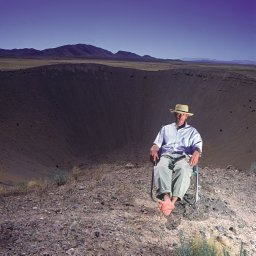 William C. Moss合作论文数Lawrence Livermore National Laboratory6NE HOOVER合作论文数5Ross Marvin合作论文数5a c holt合作论文数4
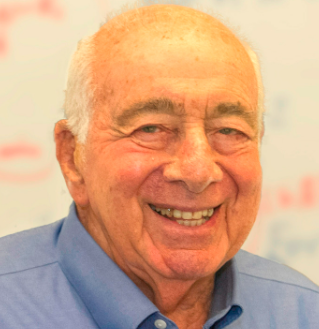 Berni J. Alder合作论文数Lawrence Livermore National Laboratory4Harald a Posch合作论文数4r n keeler合作论文数4Ag Derocco合作论文数3
 Puneet Patra合作论文数Advanced Technology Development Center, Indian Institute of Technology Kharagpur3
 Denis J. Evans合作论文数Research School of Physics and Engineering, Australian National University3
 Siegfried Hess合作论文数Department of Theoretical Physics, Technische Universität Berlin3
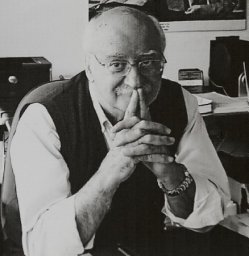 Giovanni Ciccotti合作论文数Dipartimento di Fisica3Richard Grover合作论文数3
 Brad Holian合作论文数3
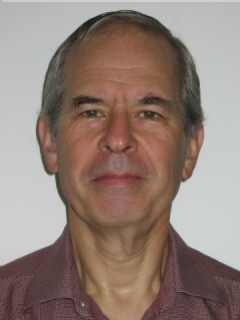 Anthony J. C. Ladd合作论文数Department of Chemical Engineering, University of Florida3Sg Gray合作论文数3F.J. Rogers合作论文数2BL HORD合作论文数2i f stowers合作论文数2Hc Graboske合作论文数2russell e duff合作论文数2anthony j de groot合作论文数2Wh Gust合作论文数2Egd Cohen合作论文数2VN HOOVER合作论文数2Karl W. Kratky合作论文数2Bill Moran合作论文数2kenichiro aoki合作论文数2
 Michel Mareschal合作论文数Faculté des Sciences, Université Libre de Bruxelles2
 Keith Johnson合作论文数Division of Nuclear Medicine and Molecular Imaging, Massachusetts General Hospital;Harvard Medical School2Errol A. Craig合作论文数2
 Karl P Travis合作论文数Department of Materials Science and Engineering, Faculty of Engineering, The University of Sheffield2Charles F. Bender合作论文数2T.G. Pierce合作论文数2D.R. Squire合作论文数2




