High-temperature steam injection is a common means of thermal recovery of thick oil. Although the steam injection boiler currently used for thick oil injection can achieve fast start-stop control, the power consumption of the pump is large, and the boiler control is demanding. Besides, a large amount of fossil fuel is needed to supply the heat required for steam heating. Using solar thermal to realize the transformation of solar energy-molten salt heat energy-steam energy can effectively reduce the burning of fossil fuels and realize clean thermal recovery of thick oil. To ensure the actual demand of thermal recovery of thick oil, it is necessary to determine a reasonable steam evaporation volume and vapor phase fraction. This paper simulates a solar thermal heat exchange system for molten salt-steam based on Aspen Plus. The simulation results show that the heat load and required solar panel area of all heat exchangers rise when the evaporation volume increases. However, the superheater grows most slowly. When the vapor phase fraction at the evaporator outlet rises to 1, there is no phase change heat transfer in the superheater, and its heat load plummets to 230 kW.
Ammonia thermochemical energy storage is based on a reversible reaction and realizes energy storage and utilization by absorbing and releasing heat. Under different energy flow densities, the efficiency of an ammonia reactor composed of multiple ammonia reaction tubes is different. Based on the coupling model of light, heat, and chemical energy of an ammonia decomposition reaction system, taking a 20 MW solar thermal power plant as the research object, this paper proposes a new model of ammonia energy storage system, which places the ammonia decomposition side in a low-pressure environment and the ammonia synthesis side in a high-pressure environment. The effects of different inlet temperatures, inlet flow rates, flow distribution, and energy flow density distribution on the ammonia energy storage system were studied. The results show that the increase of inlet temperature and the decrease of inlet flow rate are beneficial to the improvement of thermal efficiency and exergy efficiency of the system to a certain extent, but when the inlet temperature increases or the inlet flow rate decreases to a certain extent, the efficiency of the system will decline. Under the condition of nonuniform energy flow density and nonuniform inlet flow distribution, more ideal system thermal efficiency and exergy efficiency can be obtained.
The variation of solar direct normal irradiation (DNI) affects the reliability and efficiency of concentrating solar power (CSP) generation. Taking a CSP station in Qinghai Province as the research object, a DNI prediction model based on VMD-WOA-ELM is presented. First, using Variational Mode Decomposition (VMD) to divide DNI into some intrinsic modulus function (IMF) components, then the time domain and frequency domain eigenvalues of each IMF component are extracted to form the eigenvector. Finally, the model uses Extreme Learning Machine (ELM) to recognize the kind of DNI. For solving the poor classification stability caused by ELM, Whale Optimization Algorithm (WOA) is applied to the parameter optimization of ELM to obtain the optimal classification model. By analyzing the actual prediction performance and the corresponding evaluation criteria, the accuracy and effectiveness of the established solar DNI prediction model are obtained.
The heat transfer characteristics of the collector tube is one of the cores of a linear Fresnel reflector-solar thermal power generation system (LFR-CSP). In this paper, the heat transfer model of reflective linear Fresnel single-tube compound parabolic collector (CPC) is established. In light of the normal operating conditions during the day, it is found that the direct normal irradiation (DNI) and loop length exert significant effects on the heat collection and thermal loss performance of the linear Fresnel reflector. With the increase of DNI and unit length, the outlet temperature and heat collection capacity of the collector loop increase significantly. Because of the increase of DNI, the increase of collector heat is higher than that of thermal loss. However, the thermal loss per unit length increases correspondingly with the increase in loop length, and the heat collection efficiency decreases. Ambient temperature and wind velocity are not the main factors affecting the heat collection and thermal loss performance of the linear Fresnel reflector under the prerequisite of a good vacuum degree of the collector tube.
As the low-carbon economy continues to evolve, the energy structure adjustment of using renewable energies to replace fossil fuel energies has become an inevitable trend. To increase the ratio of renewable energies in the electric power system and improve the economic efficiency of power generation systems based on renewables with hydrogen production, in this paper, an operation optimization model of a wind–solar hybrid hydrogen energy storage system is established based on electrochemical energy storage and hydrogen energy storage technology. The adaptive simulated annealing particle swarm algorithm is used to obtain the solution, and the results are compared with the standard particle swarm algorithm. The results show that the day-ahead operation scheme solved by the improved algorithm can save about 28% of the system operating cost throughout the day. The analytical results of the calculation example revealed that the established model had fully considered the actual operational features of devices in the system and could reduce the waste of wind and solar energy by adjusting the electricity purchased from the power grid and the charge and discharge powers of the storage batteries under the mechanism of time-of-use electricity price. The optimization of the day-ahead scheduling of the system achieved the minimization of daily system operation costs while ensuring that the hydrogen-producing power could meet the hydrogen demand.
The parabolic trough heat collection technology was mainly used in the field of high-temperature power generation, and there was less research on the application of medium temperature heat utilization. In view of the huge heat demand in the medium temperature range (120°C-240°C) in the industrial field, trough solar thermal technology for the medium temperature heat energy recovery have unique technical advantages and wide perspective applications. In this study, based on the meteorological resources of Ejina Banner (Inner Mongolia Autonomous Region) and the heat demand, we propose a design for small sized parabolic trough collector, aperture width is 2.55m, focal length is 0.721m, and rim angle is 83°. The optical efficiency of this collector is 77.05% calculated by Monte Carlo ray tracing (MCRT) method, and the heat flux intensity distribution of the collector is simulated by the Soltrace. Finally, the results can provide some support and technical references for the medium temperature application.
The metal-free graphitic carbon nitride (g-C3N4) with a series of merits like low cost, favorable stability, and controllable two-dimensional graphite-like structure, has been extensively studied for photocatalytic H2 evolution. Composite engineering is regarded as one of effective strategies to adjust the kinetics of photogenerated carriers in g-C3N4 for elevating its photocatalytic performance. Herein, the composite system of g-C3N4 with oxynitride LaTiO2N was elaborately constructed for improving photocatalytic H2-evolution performance. With systematical characterizations, the partial cover of g-C3N4 nanosheets on LaTiO2N (LaTiO2N@g-C3N4) was verified and promoted the sufficient contact between g-C3N4 and LaTiO2N, accompanied by the formation of the (oxy)nitride heterojunction. Benefited by the well-matched band structures for g-C3N4 and LaTiO2N, the (oxy)nitride heterojunction strengthened the separation of photogenerated carriers and therefore enhanced the photocatalytic performance of g-C3N4. This work gives more insight in composite engineering on g-C3N4, and also provides feasible guidelines for designing g-C3N4-based photocatalysts towards improving photocatalytic performance.
This paper proposed an optimized day-ahead generation model involving hydrogen-load demand-side response, with an aim to make the operation of an integrated wind-photovoltaic-energy storage hydrogen production system more cost-efficient. Considering the time-of-use electricity pricing plan, demand for hydrogen load, and the intermittency of renewable energy, the model has the ambition to achieve minimum daily cost of operating a hydrogen production system. The model is power-balanced, fit for energy storage devices, and developed through adaptive simulated annealing particle swarm optimization. Analysis results showed that the proposed optimized scheduling model helped avoid the significant purchase of electric power at peak times and reduced the cost of running the hydrogen production system, ensuring that the daily hydrogen energy produced could meet the daily demand for the gas load. This justified how the model and its algorithm were correctly and efficiently applied.
Tube bank wrapped with metal foam is a new compact heat exchanger with high specific surface area. The thermo-hydraulic properties of metal foam is key parameters to determine the structure of the tube bank covered on metal foam. Previous studies focused on the thermal performance of metal foam fully filled in channel, and analyzed the effects of tube bank structure qualitatively. However, the thermo-hydraulic mechanisms of porous and fluid in tube bank need further research. So a 3D numerical simulation was presented to reveal the flow and heat transfer properties of a new tube bank design covered on metal foam. The influences of foam structure parameters on heat transfer are examined. It can be observed that the exterior heat transfer performance is improved with the increasing of Reynolds number. The results indicate that the overall heat transfer rate is more sensitive to the porosity ɛ, whereas the pore density PPI made a complex effects on the thermal performance. The tube bank covering metal-foam with a low porosity and a low pore density offers strong benefits compared to the bare tube bank.
Oil–gas–water multiphase flows are widely used in petrochemical, biochemical, food chemical, mineral engineering and energy engineering. In this paper, the double-ring conductivity probe and the double-helical capacitance probe were extended to the water fraction measurement of oil–gas–water multiphase flow in the vertical pipe. The test pipe section of the multiphase flow of oil–gas–water in the vertical riser was designed. In the experiment, the self-designed double-ring conductivity probe and the corresponding signal processing circuit were used to measure the water fraction in the oil–gas–water three-phase flow. In this paper, the dynamic calibration of oil–gas–water three-phase flow was carried out under the working condition of high water fraction. Under uniform bubbly flow, with the increase of water fraction, the measurement error of the double-ring conductivity probe decreased, which can be controlled within 8% under working conditions with a water fraction of more than 90%. The results of water fraction were performed for different flow patterns in oil–gas–water multiphase flow. Under the bubbly flow pattern, the error reaches the maximum and the error is only related to the water fraction when the water fraction is about 85%. Under the slug flow pattern, the two measurement results of the double-ring conductivity probe and the double-helix capacitance probe were compared. It is found that the double-ring conductivity probe can clearly and accurately reflect the change of the flow pattern in the pipe.
In the thermal recovery project of thick oil, there are high standards for steam temperature and flow rate. The solar thermal steam supply system can convert unstable solar energy into stable and efficient carrier heat, which can be used to transfer heat to low-temperature water to produce high-temperature steam and achieve a clean and low-carbon steam supply. The rated pressure of steam and the split ratio of molten salt in the heating system have a great influence on the demand area and heat load of solar panels. In this paper, a simulation is made on the solar thermal steam supply system based on Aspen Plus. The simulation result shows that the increase in pressure will cause a growth in the area of the photothermal concentrator field but will reduce the area used for photovoltaic panels. At the same time, it reduces the heat load of the evaporator and extends its service life. The split ratio affects the molten salt temperature at the outlet of the superheater and the reheater. When the split ratio increases, the heat transfer temperature difference between the two ends of the superheater heat flow decreases, and the heat transfer temperature difference of the reheater grows bigger. Therefore, the molten salt temperature flowing out of the reheater rises.
In order to explore the mechanism of heat and mass transfer of metal foam absorber based on electrodeposition, the numerical simulation study of metal foam absorbers with different structures was carried out, and the heat transfer model of the coated metal foam tube bundle with a tube spacing of 3D × 1.5D was analyzed and established. Compared with the smooth tube bundle, with the Re number varying from 100 to 1500, the Rext of the tube bundle coated with stainless steel foam decreased from 0.061 K/W to 0.009 K/W, and the thermal resistance ratio outside the tube increased from 2.75 to 4.76. The pressure loss of the tube rose from 1.89 Pa to 80.10 Pa, and the pressure loss outside the tube dropped from 5.15 to 3.12. The overall performance index PEC of the tube increased from 1.59 to 3.26. Compared with rows of staggered tube bundles from 2.5D to 2.2D, the heat transfer coefficient can reach 4621 W/m2/K and the pressure loss is 1.67%.
The flow characteristics of the supercritical fluid in the micro-fin tube is the theoretical basis for the development of heat transfer enhancement and flow resistance reduction in the micro-fin tube. For micro-fin tubes with different fin shapes, this paper considered the physical properties of nitrogen in the supercritical state and adopted the enhanced wall function, reasonable turbulence equations, and control equations, etc., to numerically simulate the flow of nitrogen in a 2 mm micro-fin tube under supercritical pressure. The distribution of velocity field, turbulence and pressure field of supercritical nitrogen in the micro-fin tube was analyzed. The turbulent flow mechanism of the micro-fins was obtained, and it is found that the existence of the viscous bottom layer slows down the inter-costal fluid velocity and increases the frictional resistance during the flow process.
采用室内实验研究管外包覆金属泡沫圆管在紧凑型错列管束中强化传热特性,分析不同金属泡沫材料和表面接触方式对换热的影响,发现管外包覆金属泡沫层换热管束中强制对流换热在总体换热中占据主导地位,新型粉末焊接可大幅度降低管束接触热阻.
With the application of supercritical fluid heat transfer equipment in industrial fields such as solar thermal power generation, chemical industry, aerospace, etc., studying the heat transfer characteristics of supercritical fluid in micro-fin tubes has become a key theoretical basis for the development of micro-fin low-resistance heat transfer enhancement technology. In view of micro-fin tubes with different fin shapes, this paper took into account thermophysical properties of nitrogen under supercritical conditions and completed a numerical simulation study on the heat transfer process of nitrogen in 2 mm micro-fin tubes under supercritical pressure. The temperature field distribution of supercritical nitrogen in the micro-fin tube was analyzed, and the turbulent flow mechanism of the micro-fin was studied. It was found that micro-fin could increase the heat exchange area, destroy the boundary layer, and improve the heat transfer coefficient. This paper took comprehensive heat transfer performance evaluation factor PEC to compare the influence of different fin shapes on heat transfer enhancement performance of the heat exchange unit. It was found that the comprehensive heat transfer factor of the square straight micro-fin tube was about 1.22 times that of the smooth round tube, and PEC of the triangular straight micro tube was about 1.08 times that of the smooth tube. The results suggest that square straight micro-fin tube has significantly superior heat transfer performance than smooth round tube and triangular straight micro-fin tube.
在塔式光热电站运行的过程中,镜场突然失电将会对吸热器的安全造成一定的威胁.基于蒙特卡罗光线追迹法,仿真模拟了50 MW塔式光热电站在运行过程中所有定日镜突然失电后,吸热器受光面及下护板上的热流密度分布随时间的变化情况.与此同时,仿真模拟了镜场中少量定日镜突然失电后,吸热器受光面上的热流密度分布情况.结果表明:在某些时刻及外界条件下,镜场突然失电后的短时间内,吸热器受光面及下护板上的最高热流密度将快速升高,均会超出其允许的最高热流密度;镜场中部分定日镜突然失电后,在较短的时间内,吸热器受光面上的最高热流密度变化幅度较小,但也有一定几率会超出其允许的最高热流密度,因此部分定日镜失电后吸热器的安全也将面临一定的威胁;在实际工程中,应当考虑镜场或部分定日镜突然失电可能带来的危险,同时要采取有效措施(如配置UPS或者其他备用电源、优化控制网络及瞄准策略、提高供电系统安全性等)进行应对.
为了探究电沉积法制备金属泡沫微观孔胞结构对渗透特性的内在作用机理,针对不同结构与材料的金属泡沫完成了空气渗透流动实验.采用基于正五边形宽骨架结构的正十二面体的金属泡沫孔胞模型,建立了金属泡沫半经验渗透模型;分析了金属泡沫内流动阻力的变化规律,获得了包括孔隙率和孔密度等不同微观结构参数下金属泡沫内流体渗透特性.研究结果表明:小流速范围内,金属泡沫内流体流动为Darcy流态,受黏性作用影响;大流速范围内,金属泡沫内流体流动为Forhheimer流态,受惯性作用影响.电沉积金属泡沫内阻力因子的常数项为0.099 5,较粉末烧结金属泡沫内阻力因子的常数项明显增大.提出了基于孔隙率与孔密度的金属泡沫水力直径修正计算模型,与正五边形宽骨架模型预测结果相比误差在±5%以内;获得了单位长度压差的Darcy-Forhheimer型预测公式,预测值与实验值的最大误差在±15%以内,并提出了以孔隙率和水力直径为变量的金属泡沫渗透率K和惯性系数F的预测公式.
The prediction of solar radiation is a hot issue in the field of solar energy and time series data analysis. Due to the rapidly development of photovoltaic (PV), most related works just focus on the Global Horizontal Irradiance (GHI), while the Direct Normal Irradiance (DNI) is more important for another new solar energy technology: solar thermal. The DNI is related to GHI, however, the they are not corresponding one by one. Furthermore, the change rules of DNI is very various in different meteorological conditions. For example, in the cloudy day the DNI is more likely to change sharply than the clear day. Thus, a method to deal with these different weather conditions is needed. This paper proposes a multi-model algorithm to matching this new requirement, by building a complex network, we describe the relationship between the different sample, and then using a community detection method based on modularity optimization, we cluster the samples into different classes. Finally, we deal with these classes by different extreme learning machine models. The experimental result based on the real data proven this multi-model algorithm is useful.
Based on the existing fiber reinforced polymer (FRP) durability research, considering the difference different regions, a multi-factor durability evaluation model for structural reinforcement FRP has been established. Firstly, combined with the result of rapid aging experiments, a benchmark aging model of a single factor is built. Secondly, classifying the various factors according to different geographical environments, and taking the difference between various environmental factors and test conditions into count, the benchmark aging model is revised. Thirdly, it is to make sure the main environmental factors, determine the effect weight of various factors in different areas and a coupling aging model is established through the coupled superposed. Finally, the carbon fiber reinforced polymer (CFRP) coupling aging model is obtained and compared with actual environmental in A area as an example to validate the model. The result that it can ascertain both trends are consistent and be used to guide durable design.
This article presents a program for permanent magnet synchronous motor (PMSM) vector control chip design based on SOPC technology. Microprocessor NIOSII and hardware arithmetic unit such as CORDIC and SVPWM, were all integrated in a FPGA by using bus interconnect and IP reuse technology, so that became a dedicated control chip of PMSM. Using hardware and software co-design methods, the chip was designed on Altera's CycloneIII FPGA, chip design flexibility and use small resource. Finally, combined with the power driver board achieved the dual closed-loop control of PMSM. The results show that system have a good performance, which proved that system can be well controlled by the designed IC.
 Kang Chen合作论文数13
 Huaiwu Peng (彭怀午)合作论文数Power Construction Corporation of China9long wen (文龙)合作论文数8Junfeng Zhang合作论文数3
 Yueshe Wang (王跃社)合作论文数State Key Laboratory of Multiphase Flow in Power Engineering, Xi'an Jiaotong University;School of Energy and Power Engineering, Xi'an Jiaotong University3Baercheng Bawaa合作论文数2Jingxin Ruan合作论文数2Yanlong Zhang合作论文数2
 Qiuyang Zhao合作论文数2Yanglong DUAN (段杨龙)合作论文数2
 Biao Li (李彪)合作论文数School of Aeronautics, Northwestern Polytechnical University2
 Zhang S合作论文数2
 Liang Zhao (赵亮)合作论文数School of Energy and Power Engineering, Xi'an Jiaotong University;State Key Laboratory of Multiphase Flow in Power Engineering, Xi'an Jiaotong University2Kailin Chen合作论文数1Yiming Jin合作论文数1
 Yazhou Zhang (张亚周)合作论文数State Key Laboratory of Multiphase Flow in Power Engineering, School of Advanced Energy, Sun Yat-sen University1Chen Kang (陈康)合作论文数1Wei Liu合作论文数1Shichao Zong合作论文数International Research Center for Renewable Energy (IRCRE),, Xi'an Jiaotong University1Xiao Wang合作论文数1
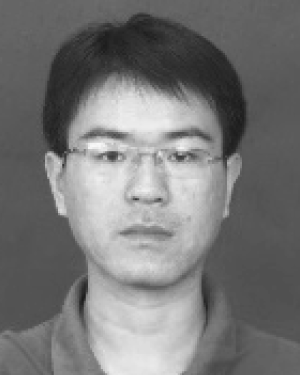 Zhenxin Gao合作论文数Xi'an Jiaotong University(Xi'an Jiaotong University,Xi'an Jiaotong Univ,Xi'an Jiaotong Univ.),Xi An,China1Xiangdong Xie合作论文数1
 Dongjie Liu (刘冬洁)合作论文数School of Chemical Engineering and Technology, Xi'an Jiaotong University1Dongsheng NIU (牛东圣)合作论文数1Bin Xiao合作论文数1Xiao WANG (王晓)合作论文数1WenSheng Li (李文升)合作论文数1
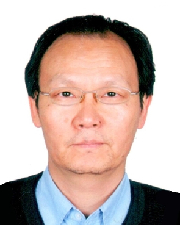 Yongxin Yang (杨勇新)合作论文数Central Research Institute of Building and Construction Co., Ltd, Mcc Croup1
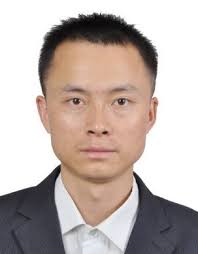 Jinwen Shi (师进文)合作论文数School of Energy and Power Engineering, Xi'an Jiaotong University1
 Yubin Chen (陈玉彬)合作论文数School of Energy and Power Engineering, Xi'an Jiaotong University1Zhi Zhou (周治)合作论文数1
 Lijing Ma (马利静)合作论文数State Key Laboratory of Multiphase Flow in Power Engineering, School of Energy and Power Engineering, Xi'an Jiaotong University1Zeng Yue-Nan (曾岳南)合作论文数1
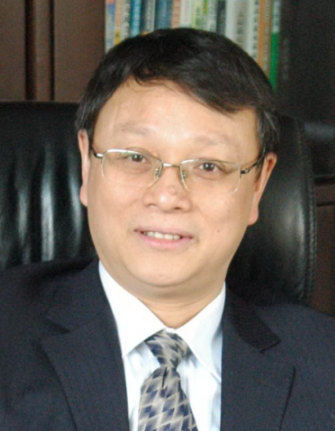 Liejin Guo (郭烈锦)合作论文数State Key Laboratory of Multiphase Flow in Power Engineering, Xi'an Jiaotong University;School of Advanced Energy, Faculty of Engineering, Sun Yat-sen University1Zhi Wu Li合作论文数1
 Qingrui Yue (岳清瑞)合作论文数State Key Laboratory for Advanced Metals and Materials, University of Science and Technology Beijing;Research Institute of Urbanization and Urban Safety, University of Science and Technology Beijing1




