PURPOSE:There are now six anaplastic lymphoma kinase (ALK) tyrosine kinase inhibitors (TKIs) approved for first-line ALK-positive non-small cell lung cancer (NSCLC) therapy, improving survival and quality of life. However, real-world data on treatment outcomes, predictors of discontinuation, and sequencing strategies remain scarce, while direct comparisons between second- and third-generation TKIs are limited. METHODS:This global longitudinal observational study evaluated patients with ALK-positive NSCLC, with data collected via online surveys from September 2022 to April 2025. Treatment patterns, outcomes, and factors associated with time to discontinuation (TTD) were assessed using descriptive statistics and univariable regression. RESULTS:Overall, 1,111 patients from 71 countries were included (64% female; median age at diagnosis 53 years; 28% with a smoking history). Crizotinib was predominantly the first TKI administered, although prescribing patterns shifted over time (crizotinib before 2016, alectinib between 2017 and 2022, and lorlatinib thereafter). After the follow-up period (median of 20.7 months), 60% of patients remained on their initial TKI, with TTD varying significantly across agents. Factors associated with prolonged TTDs included radiotherapy, prior chemotherapy, delayed therapy initiation, and treatment in India (crizotinib) and retirement, prior chemotherapy, and treatment in the United Kingdom (alectinib). Gastroesophageal reflux disease, thyroid disease, TP53 mutations, and ALK V3a/b fusions were associated with a short TTD. Globally, alectinib to lorlatinib was the most common treatment sequence. Discontinuations because of toxicity were the highest with crizotinib and ceritinib and the lowest with lorlatinib and alectinib. CONCLUSION:This multinational registry-based analysis highlights evolving global treatment patterns, supports newer TKIs' effectiveness, and identifies clinical and molecular factors associated with treatment duration.
Myeloid leukemia associated with Down syndrome (ML-DS), as classified by WHO 2016, includes acute myeloid leukemia (AML) and myelodysplasia in children with DS. While ML-DS patients show high sensitivity to cytarabine (Ara-C)-based chemotherapy with better overall survival than non-DS AML patients, relapsed/refractory cases have dismal outcomes. This underscores the need to understand Ara-C-resistance mechanisms and develop effective therapies. The chromosome 21 gene, cystathionine-β-synthase (CBS), is significantly overexpressed in ML-DS cells. Overexpression of CBS leads to increased hydrogen sulfide (H2S) production, which reduces complex IV activity and oxidative phosphorylation (OXPHOS). OXPHOS has been shown to play an important role in Ara-C resistance in non-DS AML. Thus, in this study, we investigated the role of CBS as a regulator of OXPHOS and Ara-C response. We found that Ara-C-resistant ML-DS cells have lower CBS activity. Overexpression of CBS in an Ara-C-resistant ML-DS cell line resulted in increased H2S and Ara-C sensitivity and decreased both complex IV activity and OXPHOS. Knockdown of CBS in an Ara-C-sensitive ML-DS cell line increased OXPHOS and Ara-C resistance. However, complex IV activity decreased and H2S production was unchanged, indicating that CBS regulates OXPHOS through both a H2S-dependent and -independent mechanism. We further demonstrate that targeting both OXPHOS, using ONC213, and apoptosis, using venetoclax, results in synergistic induction of cell death in Ara-C-resistant ML-DS cells. This study identifies CBS as a regulator of OXPHOS and Ara-C response, while the combination of ONC213 and venetoclax offers a promising therapeutic approach for relapsed/refractory ML-DS, addressing key vulnerabilities to improve patient outcomes.
Antibody and IFN-γ responses and co-stimulatory and co-inhibitory marker expressions in mCRPC patients.
A and B. Evaluation of Vβ repertoire. The three distinct patterns were observed for Vβ repertoire in CD3+/IFN-γ+ T cells post IT. Pattern 1) the proportions of Vβ repertoire noticeably higher after IT relative to preIT PBMC (solid black arrows); Pattern 2) the proportions of Vβ repertoire that were marginally higher at mid- and/or post-IT relative to pre-IT PBMC (dashed black arrows); Pattern 3) large proportions of Vβ repertoire were either lower or similar at mid-IT or post-IT relative to preIT PBMC in all four patients tested. PreIT (pretherapy), midIT (preinfusion 5) postIT (1 week post infusion 8 of BATs).
Shows the persistence of anti-CD3 x anti-HER2 bispecific antibody armed activated T cells (HER2 BATs) in the peripheral blood of two out of four patients.
Black race and TLR1-602I SNP associate with stronger responses to TLR1/2 stimulation. A, Supernatant cytokine release separated by Black (n = 15) vs. White (n = 91) for each stimulation normalized to fold mock treatment control in the PRIME study; (*) Mann–Whitney test P < 0.05. B, TLR1-602 genotypes for each patient with sufficient DNA (n = 88 White; n = 15 Black) were tested by PCR-RFLP; percentages of I/I or I/S vs. S/S by race are shown. C, Mean fold mock control cytokine induction by genotype is shown for each stimulus; asterisks indicate significant FDR-corrected unpaired t tests Q < 0.05 (two-tailed). D, Mean fold mock control TLR1/2 induced cytokine induction by genotype for White vs. Black (all I/I or I/S); FDR-adjusted unpaired t test Q < 0.05 vs. White S/S (*) or vs. all other groups (#). E, Heatmaps depict −log (P values) from comparisons in B (cytokine induction by race) or C (cytokine induction by TLR1 SNP status) for each cytokine and treatment. See Supplementary Fig. S6 for extended data.
Co-stimulatory and co-inhibitory marker expression on CD4+ and CD8+ T cells in AA (n=29) and non-AA (n=28).
To evaluate the feasibility and safety of prophylactic donor lymphocyte infusion (DLI) following allogeneic hematopoietic stem cell transplantation (HSCT) to improve survival outcomes in pediatric patients with acute leukemia (AL). Children with AL who received prophylactic DLI transfusion after allogeneic HSCT between October 2015 and October 2024 were retrospectively analyzed. In total, 101 pediatric patients with AL were enrolled in this study, comprising 42 acute lymphoblastic leukemia, 54 acute myeloid leukemia, and five mixed-phenotype acute leukemia cases. The median age at transplantation was 7.52 ± 3.98 years. The median time from HSCT to first DLI was 306.26 days (range 51.00–1016.00). Patients received a median cumulative dose of 5.00 × 10⁷/kg (0.50–36.20). Post-DLI GVHD occurred in 46.53
BACKGROUND:Anaplastic Lymphoma Kinase (ALK)-positive nonsmall cell lung cancer (NSCLC) primarily affects younger, nonsmoking individuals. Tyrosine kinase inhibitors (TKIs) have improved survival. While timely diagnosis and TKI initiation are critical, global data on diagnostic and treatment timelines remain scarce. This study examines key intervals from the first medical visit to diagnosis and treatment, and factors linked to delays. METHODS:The ALK Life Study is a longitudinal observational study of ALK-positive NSCLC patients, with data collected via online surveys from September 2022 to November 2024. Patients were recruited through support groups, newsletters, and oncologist referrals. Descriptive statistics and multivariable regression identified factors influencing timelines. RESULTS:A total of 1288 patients from 71 countries completed the survey. The median age at diagnosis was 52 years, 52% from the U.S., and 28% with a smoking history. For all patients, the median time from first medical visit to diagnosis (DOD) was 45 days (IQR: 16-120). For stage IIIC/IV patients, the median time from diagnosis to TKI treatment (DDT) was 30 days (IQR: 17-49). Older ages at the first visit were linked to shorter DOD, while more symptoms increased DOD. For advanced-stage patients, older age, GERD, and high blood pressure prolonged DDT, while coughing up blood and voice changes shortened it. Recent diagnosis year and residence in Canada were tied to shorter DDT. CONCLUSIONS:Younger age, specific comorbidities, nonspecific symptoms, and geographic factors lengthen intervals to diagnosis and treatment. Raising awareness of ALK-positive NSCLC in younger patients could improve diagnosis timelines and outcomes.
Co-stimulatory and co-inhibitory marker expression on CD4+ and CD8+ T cells in two racial groups. A, No differences in the percentage of CD4+ T cells were observed at baseline or at 10 weeks post-treatment in AA men (n = 29) vs. non-AA men (n = 28). Expression of co-stimulatory receptor ICOS on CD4+ T cells was significantly higher at baseline and at 10 weeks post-treatment (P = 0.0006; P = 0.0027, respectively) in AA men compared to non-AA men. Expression of co-inhibitory receptor BTLA on CD4+ was also significantly higher at baseline (P < 0.0001) in AA men compared to non-AA men. B, The percentage of CD8+ T cells was significantly lower (P = 0.0016) at baseline as well as at 10 weeks post- treatment in AA men compared to non-AA men. Expression of co-stimulatory receptor ICOS on CD8+ T cells was significantly higher at baseline and at 10 weeks post-treatment (P = 0.0023; P = 0.0026, respectively) in AA men vs. non-AA men. Differences between the two racial groups were analyzed by the Mann–Whitney test and P values < 0.0032 were considered as significant in the multiple comparisons sense. The horizontal line in each dot plot marks the median value. Base, baseline; wks, weeks.
 Elisabeth Heath合作论文数Department of Oncology, School of Medicine, Wayne State University;Karmanos Cancer Institute, Wayne State University28
 Lawrence Lum合作论文数University of Texas Southwestern Medical Center26Daryn Smith合作论文数25
 Ulka Vaishampayan合作论文数Rogel Cancer Center, University of Michigan20Brenda Dickow合作论文数18
 Julie L Boerner合作论文数18Amanda Polend合作论文数17Sarah Whitaker合作论文数17Amy Schienschang合作论文数17
 Dana Schalk合作论文数17
 Lance Heilbrun合作论文数Department of Oncology, School of Medicine, Wayne State University;Karmanos Cancer Institute, Wayne State University17Gerold Bepler合作论文数17
 Shirish Gadgeel合作论文数Division of Hematology & Oncology, Department of Internal Medicine, Henry Ford Cancer Institute;Henry Ford Hospital17Hyejeong Jang合作论文数15
 Hwang Clara合作论文数15Cackowski Frank C合作论文数15Seema Sethi合作论文数14
 Guojun Wu合作论文数14Ann G Schwartz合作论文数14Abhinav Deol合作论文数14Melanie P. Smith合作论文数12
 Channing Paller合作论文数12
 Archana Thakur合作论文数Karmanos Cancer Institute, Wayne State University12
 Rouba Ali-Fehmi合作论文数Department of Pathology, School of Medicine, Wayne State University;Department of Pathology, University of Michigan;Center of Global Health Equity, University of Michigan11
 Michele L. Cote合作论文数Department of Epidemiology, Richard M. Fairbanks School of Public Health, Indiana University;Melvin and Bren Simon Comprehensive Cancer Center, Indiana University11
 Antoinette J. Wozniak合作论文数Department of Oncology, Hillman Cancer Center, University of Pittsburgh10
 Dhonghyo Kho合作论文数Department of Life Science, Sogang University9Nakajima Kosei合作论文数9Harazono Yosuke合作论文数9
 Fazlul Sarkar合作论文数Karmanos Cancer Center, Wayne State University9Takashi Yanagawa合作论文数Faculty of Science, Kyushu University9
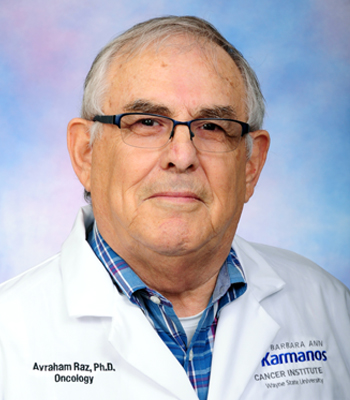 Avraham Raz合作论文数Karmanos Cancer Institute, Department of Pathology, School of Medicine, Wayne State University9Victor Hogan合作论文数9Kimberlee Dobson合作论文数8
 Fanyan Meng (孟凡岩)合作论文数Nanjing Drum Tower Hospital8Gul Zartash合作论文数7
 Daveluy Steven合作论文数7Lois Ayash合作论文数7Muneer H. Abidi合作论文数Karmanos Cancer Institute, Wayne State University7Susan Land合作论文数7Voravit Ratanatharathorn合作论文数7Angela S. Wenzlaff合作论文数7Fred R. Miller合作论文数7Rohit Mehra合作论文数6L POLIN合作论文数6
 Meera Patel合作论文数Imperial Coll London, Hammersmith Hosp6Ruterbusch Julie J合作论文数6Joseph A. Fontana合作论文数6




