The regulation of O2 production by cyanobacteria is critical to understanding the co-evolution of oxygenic photosynthesis (OP) and Earth’s redox landscape. This includes their response to electron donors for competitive anoxygenic photosynthesis, like arsenic. In this work, we assessed the effect of arsenic cycling on photosynthetic activity in a modern cyanobacterial mat thriving beneath an arsenate-rich (∼9-10 µM) water column in the high-altitude central Andes, using biogeochemical and omics approaches. Microsensor measurements and hyperspectral imaging revealed two O2-producing cyanobacterial layers. During the afternoon, OP ceased in the lower, Chl f -dominated layer. Ex-situ measurements revealed that the combination of high light and arsenic induced a prominent rise in local H2O2 concentration, which then coincided with the interruption of OP. Mat incubations suggested that after OP ceased, cyanobacteria transitioned to As(III)-driven anoxygenic photosynthesis using far-red light. Additional incubations and metatranscriptomics on in-situ samples reveal simultaneous As(V) reduction during the day, at sufficiently high rates to supply electron donors for anoxygenic photosynthesis. This study proposes that As(III) can serve as an alternative electron donor for cyanobacterial photosynthesis. It also reveals the crucial role of arsenic in moderating OP, a consequence of the interaction between arsenic and reactive oxygen species under high irradiance. Given the widespread abundance of arsenic in the Precambrian, we further discuss how this regulatory mechanism could have played an important role in the early evolution of OP. ### Competing Interest Statement The authors have declared no competing interest.
Coral reefs are the most biodiverse marine ecosystems, and host a wide range of taxonomic diversity in a complex spatial habitat structure. Existing coral reef survey methods struggle to accurately capture the taxonomic detail within the complex spatial structure of benthic communities. We propose a workflow to leverage underwater hyperspectral transects and two machine learning algorithms to produce dense habitat maps of 1150 m 2 of reefs across the Curaçao coastline. Our multi-method workflow labelled all 500+ million pixels with one of 43 classes at taxonomic family, genus or species level for corals, algae, sponges, or to substrate labels such as sediment, turf algae and cyanobacterial mats. With low annotation effort (2% pixels) and no external data, our workflow enables accurate (Fbeta 87%) survey-scale mapping, with unprecedented thematic and spatial detail. Our assessments of the composition and configuration of the benthic communities of 23 transect showed high consistency. Digitizing the reef habitat structure enables validation and novel analysis of pattern and scale in coral reef ecology. Our dense habitat maps reveal the inadequacies of point sampling methods to accurately describe reef benthic communities.
In many decisions, we are not only uncertain about the predicted outcomes of decision alternatives but also about stakeholder preferences regarding these outcomes. Further information collection may reduce uncertainties, but is costly. We present and apply a framework to identify the most decisive uncertainties and prioritize data collection efforts based on value of information (VoI) sensitivity analysis. Preference uncertainty is usually not explicitly considered in VoI analysis or in standard utility theory. Based on the expected expected utility (EEU) concept, we consider uncertain predictions and preferences jointly in decisions and subsequent VoI analysis. We focus on the expected value of partially perfect information (EVPPI) and adapt a fast, given-data algorithm for estimating this metric. The framework is motivated by complex environmental decision problems and we apply it to a hypothetical multi-criteria decision regarding coral reef management with conflicting stakeholder perspectives. The results show that better understanding of stakeholder positions can be as relevant as improving system understanding. For one perspective, preference model parameters had the highest EVPPI, while for another predictive uncertainties of the reef system attributes were more relevant. For two perspectives, the decision was largely insensitive. By considering predictive and preferential uncertainty on an equal footing in VoI analysis, we open up possibilities to design data collection for decision support processes more efficiently.
Mangrove forests provide valuable ecosystem services to coastal communities across tropical and subtropical regions. Current anthropogenic stressors threaten these ecosystems and urge researchers to create improved monitoring methods for better environmental management. Recent efforts that have focused on automatically quantifying the above-ground biomass using image analysis have found some success on high resolution imagery of mangrove forests that have sparse vegetation. In this study, we focus on stands of mangrove forests with dense vegetation consisting of the endemic Pelliciera rhizophorae and the more widespread Rhizophora mangle mangrove species located in the remote Utría National Park in the Colombian Pacific coast. Our developed workflow used consumer-grade Unoccupied Aerial System (UAS) imagery of the mangrove forests, from which large orthophoto mosaics and digital surface models are built. We apply convolutional neural networks (CNNs) for instance segmentation to accurately delineate (33% instance average precision) individual tree canopies for the Pelliciera rhizophorae species. We also apply CNNs for semantic segmentation to accurately identify (97% precision and 87% recall) the area coverage of the Rhizophora mangle mangrove tree species as well as the area coverage of surrounding mud and water land-cover classes. We provide a novel algorithm for merging predicted instance segmentation tiles of trees to recover tree shapes and sizes in overlapping border regions of tiles. Using the automatically segmented ground areas we interpolate their height from the digital surface model to generate a digital elevation model, significantly reducing the effort for ground pixel selection. Finally, we calculate a canopy height model from the digital surface and elevation models and combine it with the inventory of Pelliciera rhizophorae trees to derive the height of each individual mangrove tree. The resulting inventory of a mangrove forest, with individual P. rhizophorae tree height information, as well as crown shape and size descriptions, enables the use of allometric equations to calculate important monitoring metrics, such as above-ground biomass and carbon stocks.
We present a new approach combining diffusive equilibrium in thin-film gels and spectrophotometric methods to determine the spatial distribution of arsenite, arsenate, and phosphate at submillimeter resolution. The method relies on the simultaneous deployment of three gel probes. Each retrieved gel is exposed to malachite green reagent gels differing in acidity and oxidant addition, leading to green coloration dependent on analyte speciation and concentration. Hyperspectral images of the gels enable mapping the three analytes in the 2.5–20 μM range. This method was applied in a contaminated brook in the Harz mountains, Germany, together with established mapping of dissolved iron. The use of two-dimensional (2D) gel probes was compared to traditional porewater extraction. The gels revealed banded porewater patterns on a mm-scale, which were undetectable using traditional methods. Small-scale correlation analyses of arsenic and iron microstructures in the gels suggested active iron-driven local redox cycling of arsenic. Overall, the results indicate continuous net release of arsenic from contaminant particles and deepen our understanding of arsenate transformation under anaerobic conditions. This study is the first fine-scale 2D characterization of arsenic speciation in porewater and represents a crucial step toward understanding the transfer and redox cycling of arsenic in contaminated sediment/soil ecosystems.
Arsenic is common toxic contaminant, but tracking its mobility through submerged soils is difficult because microscale processes dictate its speciation and affinity to minerals. Analyses on environmental dissolved arsenic (As) species such as arsenate and arsenite currently require highly specialized equipment and large sample volumes. In an effort to unravel arsenic dynamics in sedimentary porewater, a novel, highly sensitive, and field-usable colorimetric assay requiring 100 μL of sample was developed. Two complementary protocols are presented, suitable for sub-micromolar and micromolar ranges. Phosphate is a main interfering substance, but can be separated by measuring phosphate and arsenate under two different acidities. Arsenite is assessed by oxidation of arsenite to arsenate in the low-acidity reagent. Optimization of the protocol and spectral analyses resulted in elimination of various interferences (silicate, iron, sulfide, sulfate), and the assay is applicable across a wide range of salinities and porewater compositions. The new assay was used to study As mobilization processes through the soil of a contaminated brook. Water column sources of arsenic were limited to a modest input by a groundwater source along the flow path. In one of the sites, the arsenite and arsenate porewater profiles showed active iron-driven As redox cycling in the soil, which may play a role in arsenic mobilization and releases arsenite and arsenate into the brook water column. Low arsenic concentrations downstream from the source sites indicated arsenic retention by soil and dilution with additional sources of water. Arsenic is thus retained by the Bossegraben before it merges with larger rivers.
Uncertainties in environmental decisions are large, but resolving them is costly. We provide a framework for value of information (VoI) analysis to identify key predictive uncertainties in a decision model. The approach addresses characteristics that complicate this analysis in environmental management: dependencies in the probability distributions of predictions, trade-offs between multiple objectives, and divergent stakeholder perspectives. For a coral reef fisheries case, we predict ecosystem and fisheries trajectories given different management alternatives with an agent-based model. We evaluate the uncertain predictions with preference models based on utility theory to find optimal alternatives for stakeholders. Using the expected value of partially perfect information (EVPPI), we measure how relevant resolving uncertainty for various decision attributes is. The VoI depends on the stakeholder preferences, but not directly on the width of an attribute’s probability distribution. Our approach helps reduce costs in structured decision-making processes by prioritizing data collection efforts.
We developed and used a microsensor to measure fast (<1 s) dynamics of hydrogen peroxide (H 2 O 2 ) on the polyp tissue of two scleractinian coral species ( Stylophora pistillata and Pocillopora damicornis ) under manipulations of illumination, photosynthesis, and feeding activity. Our real-time tracking of H 2 O 2 concentrations on the coral tissue revealed rapid changes with peaks of up to 60 μM. We observed bursts of H 2 O 2 release, lasting seconds to minutes, with rapid increase and decrease of surficial H 2 O 2 levels at rates up to 15 μM s –1 . We found that the H 2 O 2 levels on the polyp surface are enhanced by oxygenic photosynthesis and feeding, whereas H 2 O 2 bursts occurred randomly, independently from photosynthesis. Feeding resulted in a threefold increase of baseline H 2 O 2 levels and was accompanied by H 2 O 2 bursts, suggesting that the coral host is the source of the bursts. Our study reveals that H 2 O 2 levels at the surface of coral polyps are much higher and more dynamic than previously reported, and that bursts are a regular feature of the H 2 O 2 dynamics in the coral holobiont.
Uncertainties in environmental decisions are large, but resolving them is costly. We provide a framework for value of information (VoI) analysis to identify key predictive uncertainties in a decision model. The approach addresses characteristics that complicate this analysis in environmental management: dependencies in the probability distributions of predictions, trade-offs between multiple objectives, and divergent stakeholder perspectives. For a coral reef fisheries case, we predict ecosystem and fisheries trajectories given different management alternatives with an agent-based model. We evaluate the uncertain predictions with preference models based on utility theory to find optimal alternatives for stakeholders. Using the expected value of partially perfect information (EVPPI), we measure how relevant resolving uncertainty for various decision attributes is. The VoI depends on the stakeholder preferences, but not directly on the width of an attribute’s probability distribution. Our approach helps reduce costs in structured decision-making processes by prioritizing data collection efforts.
Due to their abilities to survive intense radiation and low water availability, hypersaline microbial mats are often suggested to be analogs of potential extraterrestrial life. However, even on Earth, the limitations imposed on microbial processes by saturation-level salinity have rarely been studied in situ .
BackgroundDental plaque biofilms are the causative agents of caries, gingivitis and periodontitis. Both mechanical and chemical strategies are used in routine oral hygiene strategies to reduce plaque build-up. If allowed to mature biofilms can create anoxic microenvironments leading to communities which harbor pathogenic Gram-negative anaerobes. When subjected to high velocity fluid jets and sprays biofilms can be fluidized which disrupts the biofilm structure and allows the more efficient delivery of antimicrobial agents.MethodsTo investigate how such jets may disrupt anoxic niches in the biofilm, we used planar optodes to measure the dissolved oxygen (DO) concentration at the base of in-vitro biofilms grown from human dental saliva and plaque. These biofilms were subject to “shooting” treatments with a commercial high velocity microspray (HVM) device.ResultsHVM treatment resulted in removal of much of the biofilm and a concurrent rapid shift from anoxic to oxic conditions at the base of the surrounding biofilm. We also assessed the impact of HVM treatment on the microbial community by tracking 7 target species by qRT-PCR. There was a general reduction in copy numbers of the universal 16S RNA by approximately 95%, and changes of individual species in the target region ranged from approximately 1 to 4 log reductions.ConclusionWe concluded that high velocity microsprays removed a sufficient amount of biofilm to disrupt the anoxic region at the biofilm-surface interface.
The feedback mechanisms within the “triangle” flow-biofilm-sediment are crucial for a variety of important ecosystem functions within the aquatic habitat. With great progress made in measurement techniques in fluid mechanics as well as microbiology, but also in biomechanical understanding, it is now possible and timely to address “old questions” with new approaches within this triangle research. Nevertheless, setting new high standards in spatial resolution (e.g., measuring small scales relevant to biofilm) or addressing natural conditions (e.g., generating controlled, but fully turbulent flow conditions) brings new challenges. To address these issues, a joint workshop was held in Stuttgart, Germany between June 2018 and February 2019, bringing experts from Germany in these key experimental areas together. The main goals of the workshop were i) to consolidate knowledge and identify knowledge gaps in understanding flow-biofilm-sediment interactions and ii) to perform a pilot experiment to demonstrate how the identified knowledge gaps can be addressed by co-application of cutting-edge methods in the fields of hydraulics, sedimentation engineering, microbial ecology and biochemistry. In the pilot experiment, we applied two different Particle Image Velocimetry (PIV) systems to measure flow field in the vicinity of the biofilm at contrasting flow conditions. Surface roughness of the biofilm was quantified through measurements by laser triangulation system and digital microscopy. This combination allowed showing that flow speed affects time of settlement, growth direction and subsequent topography of biofilm. In turn, the biofilm was found to impact flow pattern leading to significant increase in Reynolds stress. With varying flow regimes, we also observed significant shifts in species composition and diversity at both prokaryotic and eukaryotic level by using modern molecular techniques. The molecular microbiological analyses coupled with biochemical characterization of biofilm suggest that quantities of polymeric substances play a minor role in explaining the mechanisms of attachment and binding. Furthermore, microalgae appeared to play a dominant role in biostabilizing the sediment, with more or less impact according to the particular groups or species involved. Thus, the possibility to monitor by hyperspectral imaging the density, composition and distribution of phototrophic biofilms creates a strong predictor for sediment stability and metabolic activity. Microsensors provided measurements of metabolic activity (photosynthesis, respiration) and allowed for novel observations of potential prey-predator relation. Microsensor measurements could be used together with PIV, hyperspectral imaging and optical coherence tomography (OCT) measurements in analysing the external and internal mass transfer by combining substrate distribution, flow dynamics and biofilm structure. Bringing these tools together for improved understanding of flow-biofilm-sediment interactions and ecosystem functions would be a great research concept for hypothesis building. In reference to the workshop results above, we present a timely update on the current knowledge, research approaches and methodological progress that have been witnessed over the last years, especially relevant to biofilm, hydraulics and fine sediment dynamics. The presentation will be concluded by highlighting the important forefront research lines to be answered within the forthcoming years in the flow-biofilm-sediment triangle.
We report primary production and respiration of Posidonia oceanica meadows determined with the non-invasive aquatic eddy covariance technique. Oxygen fluxes were measured in late spring at an open-water meadow (300 m from shore), at a nearshore meadow (60 m from shore), and at an adjacent sand bed. Despite the oligotrophic environment, the meadows were highly productive and highly autotrophic. Net ecosystem production (54 to 119 mmol m–2 d–1) was about one-half of gross primary production. In adjacent sands, net primary production was a tenth- to a twentieth smaller (4.6 mmol m–2 d–1). Thus, P. oceanica meadows are an oasis of productivity in unproductive surroundings. During the night, dissolved oxygen was depleted in the open-water meadow. This caused a hysteresis where oxygen production in the late afternoon was greater than in the morning at the same irradiance. Therefore, for accurate measurements of diel primary production and respiration in this system, oxygen must be measured within the canopy. Generally, these measurements demonstrate that P. oceanica meadows fix substantially more organic carbon than they respire. This supports the high rate of organic carbon accumulation and export for which the ecosystem is known.
Ice-associated microalgae make a significant seasonal contribution to primary production and biogeochemical cycling in polar regions. However, the distribution of algal cells is driven by strong physicochemical gradients which lead to a degree of microspatial variability in the microbial biomass that is significant, but difficult to quantify. We address this methodological gap by employing a field-deployable hyperspectral scanning and photogrammetric approach to study sea-ice cores. The optical set-up facilitated unsupervised mapping of the vertical and horizontal distribution of phototrophic biomass in sea-ice cores at mm-scale resolution (using chlorophyll a [Chl a] as proxy), and enabled the development of novel spectral indices to be tested against extracted Chl a (R2 ≤ 0.84). The modelled bio-optical relationships were applied to hyperspectral imagery captured both in situ (using an under-ice sliding platform) and ex situ (on the extracted cores) to quantitatively map Chl a in mg m−2 at high-resolution (≤ 2.4 mm). The optical quantification of Chl a on a per-pixel basis represents a step-change in characterising microspatial variation in the distribution of ice-associated algae. This study highlights the need to increase the resolution at which we monitor under-ice biophysical systems, and the emerging capability of hyperspectral imaging technologies to deliver on this research goal.
Biofilm activities and their interactions with physical, chemical and biological processes are of great importance for a variety of ecosystem functions, impacting hydrogeomorphology, water quality and aquatic ecosystem health. Effective management of water bodies requires advancing our understanding of how flow influences biofilm-bound sediment and ecosystem processes and vice-versa. However, research on this triangle of flow-biofilm-sediment is still at its infancy. In this Review, we summarize the current state of the art and methodological approaches in the flow-biofilm-sediment research with an emphasis on biostabilization and fine sediment dynamics mainly in the benthic zone of lotic and lentic environments. Example studies of this three-way interaction across a range of spatial scales from cell (nm - mu m) to patch scale (mm - dm) are highlighted in view of the urgent need for interdisciplinary approaches. As a contribution to the review, we combine a literature survey with results of a pilot experiment that was conducted in the framework of a joint workshop to explore the feasibility of asking interdisciplinary questions. Further, within this workshop various observation and measuring approaches were tested and the quality of the achieved results was evaluated individually and in combination. Accordingly, the paper concludes by highlighting the following research challenges to be considered within the forthcoming years in the triangle of flow-biofilm-sediment: i) Establish a collaborative work among hydraulic and sedimentation engineers as well as ecologists to study mutual goals with appropriate methods. Perform realistic experimental studies to test hypotheses on flow-biofilm-sediment interactions as well as structural and mechanical characteristics of the bed. ii) Consider spatially varying characteristics of flow at the sediment-water interface. Utilize combinations of microsensors and non-intrusive optical methods, such as particle image velocimetry and laser scanner to elucidate the mechanism behind biofilm growth as well as mass and momentum flux exchanges between biofilm and water. Use molecular approaches (DNA, pigments, staining, microscopy) for sophisticated community analyses. Link varying flow regimes to microbial communities (and processes) and fine sediment properties to explore the role of key microbial players and functions in enhancing sediment stability (biostabilization). iii) Link laboratory-scale observations to larger scales relevant for management of water bodies. Conduct field experiments to better understand the complex effects of variable flow and sediment regimes on biostabilization. Employ scalable and informative observation techniques (e.g., hyperspectral imaging, particle tracking) that can support predictions on the functional aspects, such as metabolic activity, bed stability, nutrient fluxes under variable regimes of flow-biofilm-sediment. (C) 2020 Elsevier Ltd. All rights reserved.
This paper describes a large dataset of underwater hyperspectral imagery that can be used by researchers in the domains of computer vision, machine learning, remote sensing, and coral reef ecology. We present the details of underwater data acquisition, processing and curation to create this large dataset of coral reef imagery annotated for habitat mapping. A diver-operated hyperspectral imaging system (HyperDiver) was used to survey 147 transects at 8 coral reef sites around the Caribbean island of Curaçao. The underwater proximal sensing approach produced fine-scale images of the seafloor, with more than 2.2 billion points of detailed optical spectra. Of these, more than 10 million data points have been annotated for habitat descriptors or taxonomic identity with a total of 47 class labels up to genus- and species-levels. In addition to HyperDiver survey data, we also include images and annotations from traditional (color photo) quadrat surveys conducted along 23 of the 147 transects, which enables comparative reef description between two types of reef survey methods. This dataset promises benefits for efforts in classification algorithms, hyperspectral image segmentation and automated habitat mapping.
Abstract. We investigated light, water velocity, and CO2 as drivers of primary production in Mediterranean seagrass (Posidonia oceanica) meadows and neighboring bare sands using the aquatic eddy covariance technique. Study locations included an open-water meadow and a nearshore meadow, the nearshore meadow being exposed to greater hydrodynamic exchange. A third meadow was located at a CO2 vent. We found that, despite the oligotrophic environment, the meadows had a remarkably high metabolic activity, up to 20 times higher than the surrounding sands. They were strongly autotrophic, with net production half of gross primary production. Thus, P. oceanica meadows are oases of productivity in an unproductive environment. Secondly, we found that turbulent oxygen fluxes above the meadow can be significantly higher in the afternoon than in the morning at the same light levels. This hysteresis can be explained by the replenishment of nighttime-depleted oxygen within the meadow during the morning. Oxygen depletion and replenishment within the meadow do not contribute to turbulent O2 flux. The hysteresis disappeared when fluxes were corrected for the O2 storage within the meadow and, consequently, accurate metabolic rate measurements require measurements of meadow oxygen content. We further argue that oxygen-depleted waters in the meadow provide a source of CO2 and inorganic nutrients for fixation, especially in the morning. Contrary to expectation, meadow metabolic activity at the CO2 vent was lower than at the other sites, with negligible net primary production.
 Dirk De Beer合作论文数Microsensor Group, Max Planck Insttute for Marine Microbiology21
 Judith M. Klatt合作论文数Max-Planck Institute for Marine Microbiology7
 Miriam Weber合作论文数HYDRA Marine Sci GmbH6
 Moritz Holtappels合作论文数Max Planck Institute for Marine Microbiology, Bremen, Germany5
 Dirk J. Koopmans合作论文数Department of Marine Sciences, University of Georga5
 Lubos Polerecky合作论文数Max-Planck Institute for Marine Microbiology4
 Andrea Castillejos Sepulveda合作论文数3Fridolin Haag合作论文数Eawag:, Swiss Federal Institute of Aquatic Science and Technology3
 Nils Volkenborn合作论文数Wadden Sea Station Sylt, Alfred Wegener Institute for Polar and Marine Research3Lais Gatti合作论文数2Kristina Terheiden合作论文数2
 Daniel Schürholz合作论文数Max Planck Institute for Marine Microbiology2Carolin F Kerl合作论文数Univ Bayreuth, Bayreuth Ctr Ecol & Environm Res BayCEER, Environm Geochem, D-95440 Bayreuth, Germany2
 Sara Miñarro合作论文数Institute of Environmental Science and Technology (ICTA),, Universitat Autònoma de Barcelona2Kaan Koca合作论文数2
 Gregory Dick合作论文数Department of Earth & Environmental Sciences, University of Michigan School for Environment and Sustainability;Department of Ecology and Evolutionary Biology, College of Literature, Science, and the Arts, University of Michigan;Cooperative Institute for Great Lakes Research2
 Hamilton Trinity L合作论文数Dept Chem & Biochem, Montana State Univ2
 C. Noss合作论文数2
 Grim Sharon合作论文数The Marine Biological Laboratory Woods Hole2
 Michael Wagner合作论文数Division of Microbial Ecology, Centre for Microbiology and Environmental Systems Science, University of Vienna;Aalborg University2
 Ute Risse-Buhl合作论文数Institute of Ecology, Friedrich Schiller University Jena2
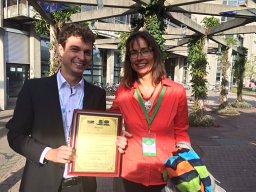 Sabine U Gerbersdorf合作论文数Institute of Hydraulic Engineering, University Stuttgart2Felix Janssen合作论文数Microsensor Group, Max-Planck-Institute for Marine Microbiology2
 Christian Lott合作论文数2
 Sven Uthicke合作论文数Australian Institute of Marine Science2Markus Weitere合作论文数Zoological Institute, University of Cologne2
 Michael Schweikert合作论文数2
 Jennifer L. Macalady合作论文数Department of Geosciences, Pennsylvania State University2Olivier Eiff合作论文数2
 Katharina Fabricius合作论文数Australian Institute of Marine Science2
 Jochen Aberle合作论文数Leichtweiß-Institute for Hydraulic Engineering, Technische Universität Braunschweig2Christine Nims合作论文数1Artur Fink合作论文数1
 Marilyn Theresa Ward合作论文数1Katerina Castrisios合作论文数1Ahmad Rafiuddin Rashid合作论文数1Elisa Merz合作论文数1
 Andreas Greve合作论文数Microsensor Grp, Max Planck Inst Marine Microbiol1
 Federico Agustin Vignale合作论文数Lab Invest Microbiol Lagunas Andinas LIMLA, CONICET1
 Marit van Erk合作论文数1
 Mohammad Alnajjar合作论文数Department of Pharmaceutical Sciences and Pharmaceutics, Applied Science Private University1Juan C. Mejía-Rentería合作论文数Dept Biol, Univ Valle1Dorothea Bender-Champ合作论文数1Paul Färber合作论文数1
 Erin S Gloag合作论文数Department of Biomedical Sciences and Pathobiology, Virginia Maryland College of Veterinary Medicine1
 Emiliano Cimoli合作论文数Discipline Geog & Spatial Sci, Univ Tasmania1
 Fraser Kennedy合作论文数1
 David Abrego合作论文数Natl Marine Sci Ctr, Southern Cross Univ1Alistair Grinham合作论文数School of Civil Engineering, Faculty of Engineering, Architecture and Information Technology, The University of Queensland1




