To address the strong randomness and model inaccuracy in distribution network state perception under high renewable energy penetration, this study proposes a parameter identification method that integrates scenario generation and probabilistic optimal power flow. The method adopts an integrated “generation-optimization-identification” framework: first, multicollinearity reduction conditional variational auto-encoder (MCLRCVAE) and conditional generative adversarial network (CGAN) are jointly employed to generate source-load random scenarios with spatiotemporal correlation. Then, a consistency conditions-guided Bayesian deep neural network (CCGBDNN) performs physics-informed probabilistic optimal power flow analysis, and the probability distributions of operating parameters are reconstructed via the cumulant method and Gram-Charlier series. Experiments demonstrate that the phase angle root mean square error can be as low as 0.12°, the 500-node system converges in only 27 iterations, the power trend fitting coefficient of determination reaches 0.99, and the Kullback-Leibler divergence attains 0.05. The proposed method provides reliable technical support for the safe and economical operation of distribution systems with high proportions of renewable energy.
Efficient large-scale inference of transformer-based large language models (LLMs) remains a fundamental systems challenge, frequently requiring multi-GPU parallelism to meet stringent latency and throughput targets. Conventional tensor parallelism decomposes matrix operations across devices but introduces substantial inter-GPU synchronization, leading to communication bottlenecks and degraded scalability. We propose the Parallel Track (PT) Transformer, a novel architectural paradigm that restructures computation to minimize cross-device dependencies. PT achieves up to a 16x reduction in synchronization operations relative to standard tensor parallelism, while maintaining competitive model quality in our experiments. We integrate PT into two widely adopted LLM serving stacks-Tensor-RT-LLM and vLLM-and report consistent improvements in serving efficiency, including up to 15-30
We introduce Synthetic Bootstrapped Pretraining (SBP), a language model (LM) pretraining procedure that first learns a model of relations between documents from the pretraining dataset and then leverages it to synthesize a vast new corpus for joint training. While the standard pretraining teaches LMs to learn causal correlations among tokens within a single document, it is not designed to efficiently model the rich, learnable inter-document correlations that can potentially lead to better performance. We validate SBP by designing a compute-matched pretraining setup and pretrain a 3B-parameter model on up to 1T tokens from scratch. We find SBP consistently improves upon a strong repetition baseline and delivers a significant fraction of performance improvement attainable by an oracle upper bound with access to 20x more unique data. Qualitative analysis reveals that the synthesized documents go beyond mere paraphrases -- SBP first abstracts a core concept from the seed material and then crafts a new narration on top of it. Besides strong empirical performance, SBP admits a natural Bayesian interpretation: the synthesizer implicitly learns to abstract the latent concepts shared between related documents.
Block-wise sparse attention offers significant efficiency gains for long-context modeling, yet existing methods often suffer from low selection fidelity and cumulative contextual loss by completely discarding unselected blocks. To address these limitations, we introduce Sparse Plus Linear Attention (SPLA), a framework that utilizes a selection metric derived from second-order Taylor expansions to accurately identify relevant blocks for exact attention. Instead of discarding the remaining "long tail," SPLA compresses unselected blocks into a compact recurrent state via a residual linear attention (RLA) module. Crucially, to avoid IO overhead, we derive an optimized subtraction-based formulation for RLA – calculating the residual as the difference between global and selected linear attention – ensuring that unselected blocks are never explicitly accessed during inference. Our experiments demonstrate that SPLA closes the performance gap in continual pretraining, surpassing dense attention models on long-context benchmarks like RULER while maintaining competitive general knowledge and reasoning capabilities.
With the rapid scaling of large language models (LLMs), structured pruning has become a widely used technique to learn efficient, smaller models from larger ones, delivering superior performance compared to training similarly sized models from scratch. In this paper, we move beyond the traditional static pruning approach of determining a fixed pruning mask for a model, and propose a dynamic approach to structured pruning. In our method, the pruning mask is input-dependent and adapts dynamically based on the information described in a user instruction. Our approach, termed "instruction-following pruning", introduces a sparse mask predictor that takes the user instruction as input and dynamically selects the most relevant model parameters for the given task. To identify and activate effective parameters, we jointly optimize the sparse mask predictor and the LLM, leveraging both instruction-following data and the pre-training corpus. Experimental results demonstrate the effectiveness of our approach on a wide range of evaluation benchmarks. For example, our 3B activated model improves over the 3B dense model by 5-8 points of absolute margin on domains such as math and coding, and rivals the performance of a 9B model.
Augmenting the multi-step reasoning abilities of Large Language Models (LLMs) has been a persistent challenge. Recently, verification has shown promise in improving solution consistency by evaluating generated outputs. However, current verification approaches suffer from sampling inefficiencies, requiring a large number of samples to achieve satisfactory performance. Additionally, training an effective verifier often depends on extensive process supervision, which is costly to acquire. In this paper, we address these limitations by introducing a novel verification method based on Twisted Sequential Monte Carlo (TSMC). TSMC sequentially refines its sampling effort to focus exploration on promising candidates, resulting in more efficient generation of high-quality solutions. We apply TSMC to LLMs by estimating the expected future rewards at partial solutions. This approach results in a more straightforward training target that eliminates the need for step-wise human annotations. We empirically demonstrate the advantages of our method across multiple math benchmarks, and also validate our theoretical analysis of both our approach and existing verification methods.
Local-global attention models have recently emerged as compelling alternatives to standard Transformers, promising improvements in both training and inference efficiency. However, the crucial choice of window size presents a Pareto tradeoff: larger windows maintain performance akin to full attention but offer minimal efficiency gains in short-context scenarios, while smaller windows can lead to performance degradation. Current models, such as Gemma2 and Mistral, adopt conservative window sizes (e.g., 4096 out of an 8192 pretraining length) to preserve performance. This work investigates strategies to shift this Pareto frontier, enabling local-global models to achieve efficiency gains even in short-context regimes. Our core motivation is to address the intrinsic limitation of local attention – its complete disregard for tokens outside the defined window. We explore RATTENTION, a variant of local attention integrated with a specialized linear attention mechanism designed to capture information from these out-of-window tokens. Pretraining experiments at the 3B and 12B scales demonstrate that RATTENTION achieves a superior Pareto tradeoff between performance and efficiency. As a sweet spot, RATTENTION with a window size of just 512 consistently matches the performance of full-attention models across diverse settings. Furthermore, the recurrent nature inherent in the linear attention component of RATTENTION contributes to enhanced long-context performance, as validated on the RULER benchmark. Crucially, these improvements do not compromise training efficiency; thanks to a specialized kernel implementation and the reduced window size, RATTENTION maintains training speeds comparable to existing state-of-the-art approaches.
Recent advancements in large language models have intensified the need for efficient and deployable models within limited inference budgets. Structured pruning pipelines have shown promise in token efficiency compared to training target-size models from scratch. In this paper, we advocate incorporating enlarged model pretraining, which is often ignored in previous works, into pruning. We study the enlarge-and-prune pipeline as an integrated system to address two critical questions: whether it is worth pretraining an enlarged model even when the model is never deployed, and how to optimize the entire pipeline for better pruned models. We propose an integrated enlarge-and-prune pipeline, which combines enlarge model training, pruning, and recovery under a single cosine annealing learning rate schedule. This approach is further complemented by a novel iterative structured pruning method for gradual parameter removal. The proposed method helps to mitigate the knowledge loss caused by the rising learning rate in naive enlarge-and-prune pipelines and enable effective redistribution of model capacity among surviving neurons, facilitating smooth compression and enhanced performance. We conduct comprehensive experiments on compressing 2.8B models to 1.3B with up to 2T tokens in pretraining. It demonstrates the integrated approach not only provides insights into the token efficiency of enlarged model pretraining but also achieves superior performance of pruned models.
We present Recurrent Drafter (ReDrafter), an advanced speculative decoding approach that achieves state-of-the-art speedup for large language models (LLMs) inference. The performance gains are driven by three key aspects: (1) leveraging a recurrent neural network (RNN) as the draft model conditioning on LLM's hidden states, (2) applying a dynamic tree attention algorithm over beam search results to eliminate duplicated prefixes in candidate sequences, and (3) training through knowledge distillation from the LLM. ReDrafter accelerates Vicuna inference in MT-Bench by up to 3.5x with a PyTorch implementation on Nvidia H100 GPUs. To demonstrate its practicality in production environments, we integrate ReDrafter into TensorRT-LLM, reaching up to 2.5x speedup on H100 GPUs. We also validated its effectiveness for on-device applications by implementing the approach in MLX and benchmarking performance on Metal GPUs in Apple Silicon chips, achieving up to 2.3x speedup.
In this work, we discuss building performant Multimodal Large Language Models (MLLMs). In particular, we study the importance of various architecture components and data choices. Through careful and comprehensive ablations of the image encoder, the vision language connector, and various pre-training data choices, we identified several crucial design lessons. For example, we demonstrate that for large-scale multimodal pre-training using a careful mix of image-caption, interleaved image-text, and text-only data is crucial for achieving state-of-the-art (SOTA) few-shot results across multiple benchmarks, compared to other published multimodal pre-training results. Further, we show that the image encoder together with image resolution and the image token count has substantial impact, while the vision-language connector design is of comparatively negligible importance. By scaling up the presented recipe, we build MM1, a family of multimodal models, including both dense variants up to 30B and mixture-of-experts (MoE) variants up to 64B, that are SOTA in pre-training metrics and achieve competitive performance after supervised fine-tuning on a range of established multimodal benchmarks. Thanks to large-scale pre-training, MM1 enjoys appealing properties such as enhanced in-context learning, and multi-image reasoning, enabling few-shot chain-of-thought prompting.
End-to-end retrieval models, such as Tree-based Models (TDM) and Deep Retrieval (DR), have attracted a lot of attention, but they cannot handle cold-start and long-tail item recommendation scenarios well. Specifically, DR learns a compact indexing structure, enabling efficient and accurate retrieval for large recommendation systems. However, it is discovered that DR largely fails on retrieving cold-start and long-tail items. This is because DR only utilizes user-item interaction data, which is rare and often noisy for cold-start and long-tail items. Besides, end-to-end retrieval models are unable to make use of the rich item content features. To address this issue while maintaining the efficiency of DR indexing structure, we propose Full Index Deep Retrieval (FIDR) that learns indices for the full corpus items, including cold-start and long-tail items. In addition to the original structure in DR (called User Structure in FIDR) that learns with user-item interaction data (e.g., clicks), we add an Item Structure to embed items directly based on item content features (e.g., categories). With joint efforts of User Structure and Item Structure, FIDR makes cold-start items retrievable and also improves the recommendation quality of long-tail items. To our best knowledge, FIDR is the first to solve the cold-start and long-tail recommendation problem for the end-to-end retrieval models. Through extensive experiments on three real-world datasets, we demonstrate that FIDR can effectively recommend cold-start as well as long-tail items, and largely promote overall recommendation performance without sacrificing inference efficiency. According to the experiments, the recall of FIDR is improved by 8.8%~11.9%, while the inference of FIDR is as efficient as DR.
Federated learning has gained great attention recently as a privacy-enhancing tool to jointly train a machine learning model by multiple parties. As a sub-category, vertical federated learning (vFL) focuses on the scenario where features and labels are split into different parties. The prior work on vFL has mostly studied how to protect label privacy during model training. However, model evaluation in vFL might also lead to potential leakage of private label information. One mitigation strategy is to apply label differential privacy (DP) but it gives bad estimations of the true (non-private) metrics. In this work, we propose two evaluation algorithms that can more accurately compute the widely used AUC (area under curve) metric when using label DP in vFL. Through extensive experiments, we show our algorithms can achieve more accurate AUCs compared to the baselines.
Random-feature-based attention (RFA) is an efficient approximation of softmax attention with linear runtime and space complexity. However, the approximation gap between RFA and conventional softmax attention is not well studied. Built upon previous progress of RFA, we characterize this gap through the lens of control variates and show that RFA can be decomposed into a sum of multiple control variate estimators for each element in the sequence. This new framework reveals that exact softmax attention can be recovered from RFA by manipulating each control variate. Besides, it allows us to develop a more flexible form of control variates, resulting in a novel attention mechanism that significantly reduces the approximation gap while maintaining linear complexity. Extensive experiments demonstrate that our model outperforms state-of-the-art efficient attention mechanisms on both vision and language tasks.
People break up, miscarry, and lose loved ones. Their online streaming and shopping recommendations, however, do not necessarily update, and may serve as unhappy reminders of their loss. When users want to renege on their past actions, they expect the recommender platforms to erase selective data at the model level. Ideally, given any specified user history, the recommender can unwind or "forget", as if the record was not part of training. To that end, this paper focuses on simple but widely deployed bi-linear models for recommendations based on matrix completion. Without incurring the cost of re-training, and without degrading the model unnecessarily, we develop Unlearn-ALS by making a few key modifications to the fine-tuning procedure under Alternating Least Squares optimisation, thus applicable to any bi-linear models regardless of the training procedure. We show that Unlearn-ALS is consistent with retraining without \emph{any} model degradation and exhibits rapid convergence, making it suitable for a large class of existing recommenders.
Many machine learning models for online applications, such as recommender systems, are often trained on data with cyclical properties. These data sequentially arrive from a time-varying distribution that is periodic in time. Existing algorithms either use streaming learning to track a time-varying set of optimal model parameters, yielding a dynamic regret that scales linearly in time; or partition the data of each cycle into multiple segments and train a separate model for eacha pluralistic approach that is computationally and storage-wise expensive. In this paper, we have designed a novel approach to overcome the aforementioned shortcomings. Our method, named "Fourier learning", encodes the periodicity into the model representation using a partial Fourier sequence, and trains the coefficient functions modeled by neural networks. Particularly, we design a Fourier multi-layer perceptron (F-MLP) that can be trained on streaming data with stochastic gradient descent (streaming-SGD), and we derive its convergence guarantees. We demonstrate Fourier learning's better performance with extensive experiments on synthetic and public datasets, as well as on a large-scale recommender system that is updated in real-time, and trained with tens of millions of samples per day.
Split learning is a distributed training framework that allows multiple parties to jointly train a machine learning model over vertically partitioned data (partitioned by attributes). The idea is that only intermediate computation results, rather than private features and labels, are shared between parties so that raw training data remains private. Nevertheless, recent works showed that the plaintext implementation of split learning suffers from severe privacy risks that a semi-honest adversary can easily reconstruct labels. In this work, we propose \textsf{TPSL} (Transcript Private Split Learning), a generic gradient perturbation based split learning framework that provides provable differential privacy guarantee. Differential privacy is enforced on not only the model weights, but also the communicated messages in the distributed computation setting. Our experiments on large-scale real-world datasets demonstrate the robustness and effectiveness of \textsf{TPSL} against label leakage attacks. We also find that \textsf{TPSL} have a better utility-privacy trade-off than baselines.
Vertical federated learning (vFL) has gained much attention and been deployed to solve machine learning problems with data privacy concerns in recent years. However, some recent work demonstrated that vFL is vulnerable to privacy leakage even though only the forward intermediate embedding (rather than raw features) and backpropagated gradients (rather than raw labels) are communicated between the involved participants. As the raw labels often contain highly sensitive information, some recent work has been proposed to prevent the label leakage from the backpropagated gradients effectively in vFL. However, these work only identified and defended the threat of label leakage from the backpropagated gradients. None of these work has paid attention to the problem of label leakage from the intermediate embedding. In this paper, we propose a practical label inference method which can steal private labels effectively from the shared intermediate embedding even though some existing protection methods such as label differential privacy and gradients perturbation are applied. The effectiveness of the label attack is inseparable from the correlation between the intermediate embedding and corresponding private labels. To mitigate the issue of label leakage from the forward embedding, we add an additional optimization goal at the label party to limit the label stealing ability of the adversary by minimizing the distance correlation between the intermediate embedding and corresponding private labels. We conducted massive experiments to demonstrate the effectiveness of our proposed protection methods.
Sampling from a Boltzmann distribution to calculate important macro statistics is one of the central tasks in the study of large atomic and molecular systems. Recently, a one-shot configuration sampler, the Boltzmann generator [Noe et al., 2019], is introduced. Though a Boltzmann generator can directly generate independent metastable states, it lacks the ability to find transition pathways and describe the whole transition process. In this paper, we propose PathFlow that can function as a one-shot generator as well as a transition pathfinder. More specifically, a normalizing flow model is constructed to map the base distribution and linear interpolated path in the latent space to the Boltzmann distribution and a minimum (free) energy path in the configuration space simultaneously. PathFlow can be trained by standard gradient-based optimizers using the proposed gradient estimator with a theoretical guarantee. PathFlow, validated with the extensively studied examples including a synthetic Muller potential and Alanine dipeptide, shows a remarkable performance.
Machine learning has become a promising approach for molecular modeling. Positional quantities, such as interatomic distances and bond angles, play a crucial role in molecule physics. The existing works rely on careful manual design of their representation. To model the complex nonlinearity in predicting molecular properties in an more end-to-end approach, we propose to encode the positional quantities with a learnable embedding that is continuous and differentiable. A regularization technique is employed to encourage embedding smoothness along the physical dimension. We experiment with a variety of molecular property and force field prediction tasks. Improved performance is observed for three different model architectures after plugging in the proposed positional encoding method. In addition, the learned positional encoding allows easier physics-based interpretation. We observe that tasks of similar physics have the similar learned positional encoding.
Two-party split learning is a popular technique for learning a model across feature-partitioned data. In this work, we explore whether it is possible for one party to steal the private label information from the other party during split training, and whether there are methods that can protect against such attacks. Specifically, we first formulate a realistic threat model and propose a privacy loss metric to quantify label leakage in split learning. We then show that there exist two simple yet effective methods within the threat model that can allow one party to accurately recover private ground-truth labels owned by the other party. To combat these attacks, we propose several random perturbation techniques, including $\texttt{Marvell}$, an approach that strategically finds the structure of the noise perturbation by minimizing the amount of label leakage (measured through our quantification metric) of a worst-case adversary. We empirically demonstrate the effectiveness of our protection techniques against the identified attacks, and show that $\texttt{Marvell}$ in particular has improved privacy-utility tradeoffs relative to baseline approaches.
 David M. Blei合作论文数Department of Statistics, Columbia University;Department of Computer Science, Columbia University27
 Xing Xie (谢幸)合作论文数Microsoft Research Asia13
 Weihao Gao (高伟豪)合作论文数Moonshot AI12
 Wei-Ying Ma (马维英)合作论文数Institute for AI Industry Research, Tsinghua University;Hong Kong Institute of AI for Science, City University of Hong Kong;Department of Computer Science, College of Computing, City University of Hong Kong12
 Jiankai Sun合作论文数Pinterest Inc.11
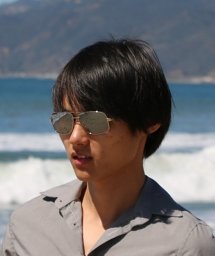 Yuanshun (Kevin) Yao合作论文数Meta GenAI8
 Eric P. Xing合作论文数Computer Science Department, School of Computer Science, Carnegie Mellon University;Mohamed bin Zayed University of Artificial Intelligence;Petuum8
 John Paisley合作论文数Department of Electrical Engineering, Columbia University8
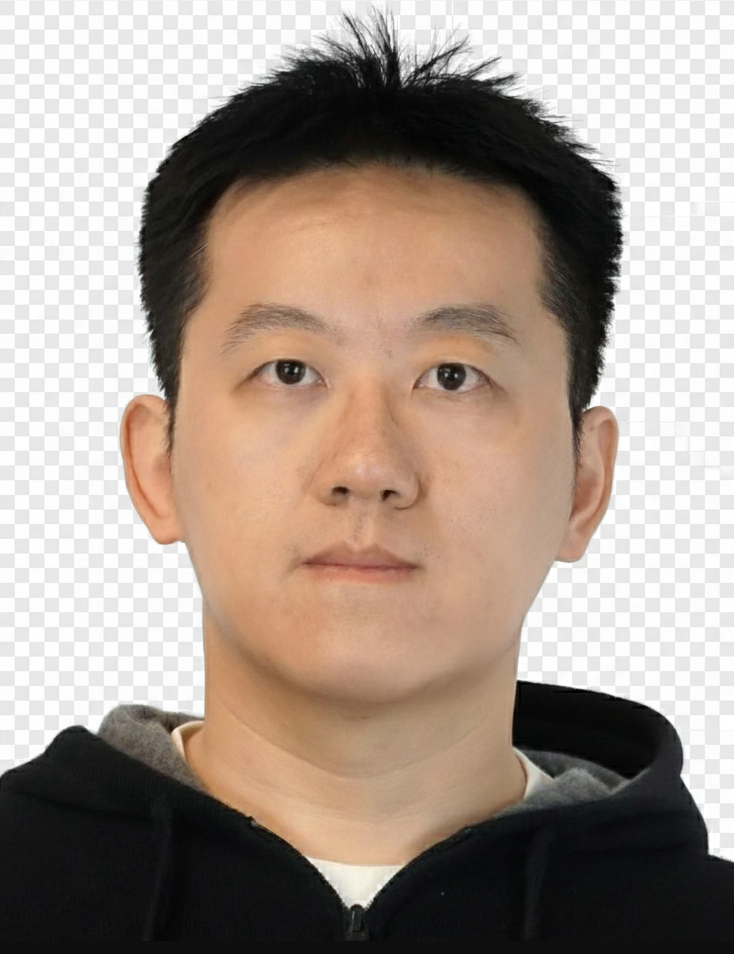 Aonan Zhang合作论文数Apple8
 Denny Zhou合作论文数Google DeepMind7
 Xiaobing Liu (刘小兵)合作论文数ByteDance7
 Xin Yang合作论文数Meta7
 Lihong Li (李力鸿)合作论文数Meta Platforms, Inc.7
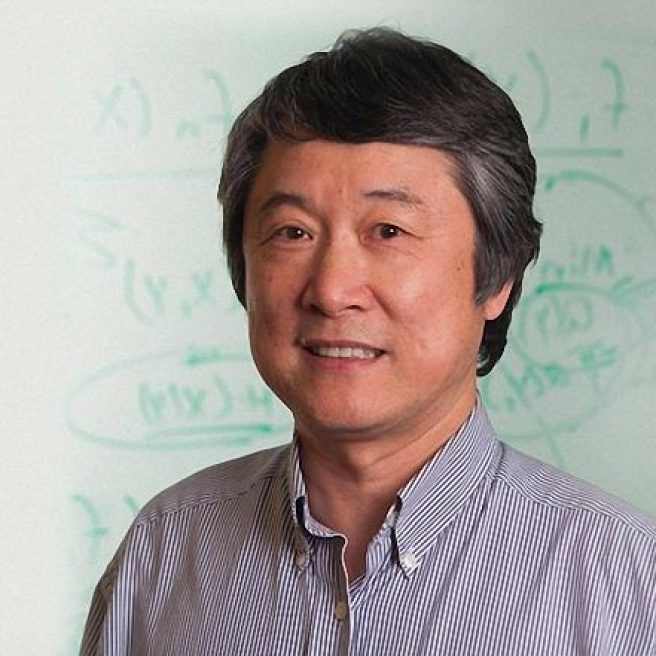 Li Deng合作论文数Department of Electrical and Computer Engineering, University of Washington;Vatic Investments;RIDGE-LANE Limited Partners6
 Ruoming Pang (庞若鸣)合作论文数OpenAI6
 Wenzhi Xiao合作论文数5
 Zhisheng Li (李志生)合作论文数School of Civil And Transportation Engineering, Guangdong University of Technology5
 Junyuan Xie (解浚源)合作论文数千寻智能5
 Tao Lei合作论文数Google Brain5
 Tian Lin合作论文数4
 Jeffrey J Zimmerman合作论文数Veterinary Diagnostic Laboratory, College of Veterinary Medicine, Iowa State University of Science and Technology4Xufa Wang (王煦法)合作论文数中国科学技术大学信息学院计算机系4
 Jiliang Tang合作论文数Department of Computer Science and Engineering, College of Engineering, Michigan State University4
 Bo Thiesson合作论文数Microsoft Research4
 Li-Jia Li合作论文数LiveX AI Inc.4
 Haochen Liu (刘昊宸)合作论文数AI Center of Excellence, Fidelity Investments4Rui Cai合作论文数3Xiangjun Fan合作论文数3Zhirui Wang合作论文数3Kai Jia合作论文数3
 Katherine Ann Heller合作论文数Google Brain3
 Ting Chen合作论文数xAI3
 Tianyi Liu合作论文数School of Industrial and Systems Engineering, Georgia Institute of Technolodgy3
 Awni Hannun合作论文数Machine Learning Research Group, Apple3
 Jianfeng Gao (高剑峰)合作论文数Microsoft Research3
 Patrick Baudisch合作论文数Human Computer Interaction Lab, Hasso Plattner Institute, Potsdam University3
 Nan Du合作论文数OpenAI3Wenyuan Wang合作论文数3
 Fei-Fei Li (李飛飛)合作论文数Computer Science Department, Stanford University;Human-Centered AI Institute, Stanford University3
 Asli Celikyilmaz合作论文数Paul G. Allen School of Computer Science & Engineering, University of Washington;Meta3
 Po-Sen Huang合作论文数Google DeepMind3
 Adam Coates合作论文数Apple3
 Dani Yogatama合作论文数Reka;Department of Computer Science, University of Southern California3
 Willie Neiswanger合作论文数Thomas Lord Department of Computer Science, Viterbi School of Engineering, University of Southern California;School of Advanced Computing, University of Southern California3
 Lingpeng Kong合作论文数Natural Language Processing Group, Department of Computer Science, Faculty of Engineering, The University of Hong Kong3Marlin Hoogland合作论文数2Xingyan Bin合作论文数2Liang Xiang合作论文数2Tom Gunter合作论文数Dept Engn Sci, Univ Oxford2




