This article examines the often-overlooked urban presence of the M & eacute;tis people, one of three Indigenous groups recognized in Canada's 1982 Constitution Act, outside the geographical boundaries of Canada and/or the M & eacute;tis homeland. Focusing instead on the UK, the article centers the dynamic interplay between M & eacute;tis representation within the National Museum of Scotland (NMS) and their historical and contemporary urban presences in Edinburgh. In doing so, we highlight the limitations of the museum's narrative by juxtaposing it with the broader, more dynamic context of M & eacute;tis heritage in Edinburgh beyond the museum, focusing on the power of Metis kinscapes for shaping Metis mobility to 19th century Edinburgh. As such, the article argues for the recognition of M & eacute;tis urban heritage outside of the conventional geographical boundaries of the Metis nation. We conclude by proposing the potential of digital heritage tours to offer a mobile, interactive approach that contrasts with the static displays of the museum, enabling deeper connections to the M & eacute;tis' historical and contemporary urban presences in Edinburgh. (sic)(sic)(sic)(sic)(sic)(sic)(sic)(sic)(sic)(M & eacute;tis, (sic)(sic)(sic)<< 1982 (sic)(sic)(sic)(sic)(sic)>>(sic)(sic)(sic)(sic)(sic)(sic)(sic)(sic)(sic)(sic)(sic)(sic))(sic)(sic)(sic)(sic)(sic)(sic)(sic)(sic)(sic)/(sic)(sic)(sic)(sic)(sic)(sic)(sic)(sic)(sic)(sic)(sic)(sic)(sic)(sic)(sic)(sic)(sic).(sic)(sic)(sic)(sic)(sic)(sic)(sic)(sic), (sic)(sic)(sic)(sic)(sic)(sic)(sic)(sic)(sic)(sic)(sic)(sic) (NMS) (sic)(sic)(sic)(sic)(sic)(sic)(sic)(sic)(sic)(sic)(sic)(sic)(sic)(sic)(sic)(sic)(sic)(sic)(sic)(sic)(sic)(sic)(sic)(sic)(sic)(sic)(sic)(sic)(sic)(sic)(sic).(sic)(sic), (sic)(sic)(sic)(sic)(sic)(sic)(sic)(sic)(sic)(sic)(sic)(sic)(sic)(sic)(sic)(sic)(sic)(sic)(sic)(sic),(sic)(sic)(sic)(sic)(sic)(sic)(sic)(sic)(sic)(sic)(sic)(sic)(sic)(sic), (sic)(sic)(sic)(sic)(sic)(sic)(sic)(sic)(sic)(sic)(sic)(sic), (sic)(sic)(sic)(sic)(sic)(sic)(sic)(sic)(sic)(sic)(sic)(sic) 19 (sic)(sic)(sic)(sic)(sic)(sic)(sic)(sic)(sic)(sic)(sic)(sic)(sic)(sic)(sic)(sic)(sic).(sic)(sic), (sic)(sic)(sic)(sic)(sic)(sic)(sic)(sic)(sic)(sic)(sic)(sic)(sic)(sic)(sic)(sic)(sic)(sic)(sic)(sic)(sic)(sic)(sic)(sic)(sic)(sic)(sic).(sic)(sic), (sic)(sic)(sic)(sic)(sic)(sic)(sic)(sic)(sic)(sic)(sic)(sic)(sic)(sic)(sic)(sic)(sic),(sic)(sic)(sic)(sic)(sic)(sic)(sic)(sic), (sic)(sic)(sic)(sic)(sic)(sic)(sic)(sic)(sic)(sic)(sic)(sic)(sic)(sic)(sic)(sic)(sic), (sic)(sic)(sic)(sic)(sic)(sic)(sic)(sic)(sic)(sic)(sic)(sic)(sic)(sic)(sic)(sic)(sic)(sic)(sic)(sic)(sic)(sic)(sic)(sic)(sic)(sic)(sic)(sic)(sic)(sic)(sic)(sic).
This article explores the recent rise in the use of self-identification as a key element of legitimacy in contemporary claims to Indigeneity. Emphasizing self-identification as a central dynamic of all identity-making in contemporary nation-states, the article argues nonetheless that this element of identity is insufficient for making ethical claims to Indigeneity. Emphasizing instead the importance of ongoing Indigenous relationality (i.e., kinship), it argues that genealogical databases potentially exacerbate the potential to engage in non-relational forms of belonging that undermine Indigenous communities’ and nations’ autonomy in defining the boundaries and contours of their citizenship. I undertake this argument in three broad parts. Part one undertakes a selective discussion of sociologist Stuart Hall’s conceptualization of identity, highlighting what I regard as two relevant elements key to his identity-making framework. Part two then undertakes a brief discussion of Geonpul scholar Aileen Moreton-Robinson’s discussion of white possessiveness as a useful lens for framing the growing self-Indigenization/Pretendianism literature as variegated examples of analyzing its practice; and finally, part three explores the potential of genealogical databases to encourage possessive/non-relational forms of identity-making, what I term here “inert kinship”. The article then concludes with a brief discussion regarding how genealogical databases might be used ethically with respect to claiming Indigenous belonging, and why this is key to the upholding of Indigenous sovereignty.
Over the past four decades, Indigenous political claims "in" Canada have come increasingly to assume a nationalist form. Efforts at instilling a national identity play an abundantly clear role in Indigenous nation (re)building: they hold the potential to concretize internal solidarity, mobilize community to pursue long- term goals, and they aid in overcoming a host of collective action problems. However, for national claims to play such a role, it is necessary that outside groups recognize a community's national identity and accept it as distinct. That is to say, nationhood must be thought about in terms of its occurrence in an (unequally) relational context: claims to a national distinction occur in competition with other claims, in a field of struggle and com-petition in which actors possess varying abilities to enforce/support claims and to have those claims recognized by others. In this regard, the concept of epistemic injustice is especially useful to engage with the differential capacity of communities to claim and enforce national claims unto others. Our analysis, which focuses specifically on the case of the M & eacute;tis, pays particular attention to the widespread misrecognitions that occur when a dominant social group marginalizes M & eacute;tis claims to nationhood. Through this exploration, our article contributes to a better understanding of relational condi-tions overall and the ways in which identity and nationhood can support the process of Indigenous nation building.
There can be little doubt that the creation of NAISA has exerted a fundamental and positive impact on the intellectual growth of Indigenous Studies as a discipline, drawing thousands of predominantly Indigenous scholars from across the globe to its annual meetings. What is less clear, however, is whether NAISA's intellectual growth, particularly in North America, has been matched by an equally robust institutional growth in the discipline. In these contexts, the chapter is laid out in three parts. Beginning with a discussion of the intellectual growth of Indigenous Studies in the NAISA era, the chapter then charts the evolution of Indigenous Studies' institutional growth in North America. Following this, it maps out the contours of how Indigenous Studies units can (continue to) orient ourselves in the future in light of NAISA's powerful presence, concluding with two practical suggestions for how Indigenous Studies programmes, centres, institutes, departments, and faculties can make pragmatic use of NAISA's annual meetings as an opportunity for more formal relationship building for our faculty, staff, and students.
Under Aboriginal educational jurisdiction, Indigenous children have long been successful in education for forty thousand years or more. It is only in the last 200 years of colonisation that Indigenous failure has occurred (Rigney, 2002, p. 74). This literature review is being conducted for Catholic Education Tasmania by researchers from Deakin University and the University of Tasmania seeking solutions to the complex and diverse issues that impact upon Aboriginal and Torres Strait Islander student success. The literature review has two sections: This first section reviews the theoretical underpinnings of Aboriginal and Torres Strait Islander student success at school, and the second section is an annotated bibliography of case studies that illustrate examples of Aboriginal and Torres Strait Islander student success at school. The annotated bibliography includes case studies of Tasmanian examples and examples from elsewhere. In recent times the discipline-specific focus on well-being, literacy and numeracy has turned to interdisciplinary pedagogy approaches that seek to make connections to student-learning across the curriculum. These approaches often have focus on the whole person, and position learning in the context of caring for the individual student and the responsibilities that the school community have to them. Learning of specific skills may come with programs and approaches that do not always foreground this care and responsibility (Doecke & Kostogriz, 2013). This to responsibility and care is clearly embedded in the CET Aboriginal and Torres Strait Islander Policy (2018), setting the agenda for Tasmanian Catholic Schools. The commitment to ‘honouring Aboriginal and Torres Strait Islander people’s unique cultural and spiritual connections and the rich contribution they bring to our schools’, frames Aboriginal and Torres Strait Islander community members as critical resources of cultural knowledge. In affirming the rights of Aboriginal and Torres Strait Islander peoples to maintain languages and cultures and acknowledging their deep cultural associations with the land and water, CET calls for schools: to ensure that [they] simultaneously enable right of Aboriginal and Torres Strait Islander students to enact the curriculum through languages and cultures while providing non-Indigenous students with deeper and more complete education. The deep cultural associations with land and water position Country as an integral part of the curriculum. These deep cultural associations are found in the Aboriginal and Torres Strait Islander Histories and Cultures cross-curriculum priorities of the Australian Curriculum about Country, people and culture, which forms the basis of culturally safe school. The care of and responsibility for students is the foundation of the CET ethos, and upholds the commitment to make schools culturally safe. Cultural safety is more than a checklist approach to inclusion and diversity. It empowers and enables individuals to contribute to their own achievement of positive outcomes and ‘requires that all human beings receive services that take into account all that makes them unique’ (Bin-Sallik, 2003, p. 21). Cultural safety is integral to student well-being, which itself is connected to improvements in student outcome.
In this commentary on Daniels v. Canada, we discuss the cultural power of legal discourse, and more specifically, we argue that the logics that various actors have drawn from Daniels work to marginalize, if not gut completely, policy logics that are based on a respect for Métis peoplehood. In doing so, we analyze one unintended yet predictable outcome of the decision: the growth of new self-declared Métis or Indian groups, such as the Mikinak Tribe of Québec, who see Daniels as an opportunity to capitalize on the perceived benefits of being Indigenous in Canada. We conclude that while Métis inclusion in s.35 of the Constitution Act, 1982 and now in s.91(24) of the Constitution Act, 1867 due to the Daniels decision remains important, these developments should be understood and used, from a policy perspective, as building blocks for affirming Métis nationhood and the self-determining power of the Métis Nation.
In the last two decades, Canada’s brand of colonial recognition politics has fueled several social and cultural changes that have, in turn, produced startling growths in the “Métis population” in Canada. Demographers and policy makers alike have expressed dubiousness about the extent to which “non-demographic factors” (that is, factors other than fertility and mortality) are fueling this growth, a dubiousness expressed in the growing use of “ethnic mobility” to explain population growth. In this article I explore the historical contexts within which the idea of a single Métis population took hold as a statistical technology, the kinds of social and cultural juxtaposition that making use of a single population masks, and the impact single population estimates have on the ability of Métis nation policy actors to fashion evidence-based policy relevant to the concerns of the Métis nation. While the dynamics and the data perused in this article are specific to Canada, they possess broader resonances with other nation-states grappling with their colonial histories and longstanding Indigenous peoples as these dynamics relate to official data dynamics.
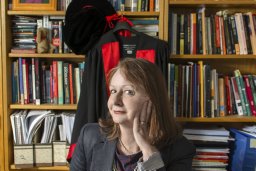 Maggie Walter合作论文数Dept. of Neurology, Ludwig-Maximilians-University Munich Friedrich-Baur-Institute7
 Nick Holt合作论文数University of Alberta4
 Tara-Leigh F Mchugh合作论文数Fac Phys Educ & Recreat, Univ Alberta4
 Adam Gaudry合作论文数2
 Coppola Angela M合作论文数Faculty of Physical Education and Recreation, University of Alberta2Roger Maaka合作论文数2veronica arbon合作论文数1Paddy Meade合作论文数1elizabeth devolder合作论文数1berice anning合作论文数1
 Emily Rudling合作论文数University of Tasmania1Harsha Chandir合作论文数1glenn auld合作论文数Sch Educ, Deakin Univ1Tricia Logan合作论文数1
 Chelsea Gabel合作论文数1
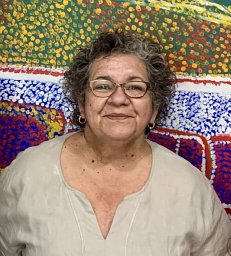 Tracey Bunda合作论文数University of Queensland1
 Lawrence D. Berg合作论文数Department of Community, Culture and Global Studies, Irving K. Barber Faculty of Arts and Social Sciences, The University of British Columbia1
 Jennifer Adese合作论文数Department of Sociology, University of Toronto Mississauga1Wilkinson Ian B合作论文数1Bourassa Carrie合作论文数1
 Tim Corcoran合作论文数Department of Educational Studies, University of Sheffield1Doug Owens合作论文数1Verna J. Kirkness合作论文数1Brenda Macdougall合作论文数1
 Tahu Kukutai合作论文数Institute of Policy Studies;Victoria University of Wellington;Institute of Policy Studies, Victoria University of Wellington1
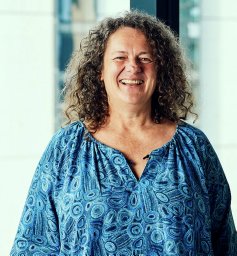 Joanne O’Mara合作论文数1
 Michael R. Evans合作论文数University of Minnesota1
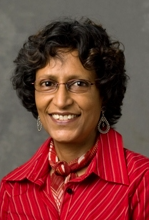 Anita Roychoudhury合作论文数Department of Curriculum, Purdue University1
 Brendan Hokowhitu合作论文数1
 Julianne Moss合作论文数The University of Melbourne1Corinne Jetté合作论文数1




