Crop rotation systems in field vegetables are complex and involve a large number of different crops and management options. Ecological and economic strategies for fertilizer nitrogen (N) must take into account long-term transfer effects in the crop rotation associated with the extraction properties of individual crops and the weather-related matter dynamics in soil. A simulation model was developed to ecological and economic consequences of N-fertilization strategies in organic and conventional vegetable crop rotation with up to 70 to assess crops grown in Europe. New process include routines describe the weather-dependent N-release from humus and crop residues, the two-dimensional root development of plants in row crops, as well as the effects of space and choice subund supra optimal fertilizer application on the market return. The model provides the opportunity to relative effects of alternative crop rotations and fertilizer regimens on N leaching and profit contribution of the company show. Scenarios produced by the model that already makes strict adherence to good agricultural practice, a significant contribution to environmental sustainability, but also have potential for further improvement is virtually cost-neutral present.
A method is presented to model N leaching in crop rotations on a national scale. Representative crop rotations for different regions and soil types are used in the cross-disciplinary, plant, soil, environment & economics model EU-Rotate_N. By comparing contrasting farming systems (organic and conventional) in the UK, their strengths and weaknesses in delivering environmental and economic sustainability can be assessed. Modelling results show that the annual leaching in different horticultural rotations and UK regions, using median weather, is within the range of 13-88 kg N/ha/year for organic and 54-130 kg N /ha/year for conventional. The weighted annual average figures are 39 kg N/ha/year for organic and 81 kg N/ha/year for conventional, respectively. It is concluded that organic horticultural rotations, with a current share of 6.1% already contribute to lower overall N losses from agriculture. However, on a UK national scale, only a large share of organic land use (e.g. >50%) has a large effect on reducing N losses. Similar reductions are also predicted by substantial cuts in conventional N inputs, giving a policy choice if pollution from agriculture steps up further on the political agenda.
BACKGROUND: Organic field-scale vegetables are among the most profitable enterprises in organic farming systems. They are also some of the most nutrient-demanding crops, and many organic arable systems with field-scale vegetables are stockless. Without livestock manure inputs, nutrient supply depends on fertility-building crops, which generate only costs and no income. Different strategies of fertility management were compared on a central England research farm. Fertility management treatments consisted of different lengths of fertility building with green waste compost additions. Outputs and inputs in terms of nutrients and economics were monitored for 31 rotations during 1996-2002.RESULTS: N, P and K rotational nutrient balances, as well as C inputs, showed a negative relationship with rotational gross margins. Variable and allocated fixed costs of fertility building were low, between 2 and 5% of variable costs (0.5-2 pound ha(-1) for 1 kg N ha(-1) supplied to the rotation). The intensity of vegetable cropping in these rotations was moderate (25-40% vegetable crops in the rotation) and balancing of fertility management and economics was possible at this intensity without livestock manure or other permitted fertiliser additions.CONCLUSION: Completely stockless systems (in analogy may be called vegan) are possible in organic vegetable production without compromising on fertility or economics. However, for a higher vegetable-cropping intensity (up to 90%) a more sophisticated mix of short-term fertility-building and N-trapping crops will be needed and such rotations may require further external addition of green waste or livestock manure. (c) 2007 Society of Chemical Industry.
Summary A new computer model (EU-ROTATE_N) has been developed with the aim of improving nitrogen management on all farms across Europe which include fi eld vegetables in their rotations. It brings together aspects of many existing models and contains a number of features to make it applicable to organic producers (e.g. taking account of nitrogen fi xation by legume containing leys, nitrogen conservation by winter cover crops and nitrogen supply by manures and composts). A key feature is the model's ability to simulate economic output and this enables it to be of value to policy makers when considering the impact of new measures to reduce environmental pollution. This paper describes the model and some initial work that has been conducted to evaluate it under UK organic fi eld vegetable systems with contrasting fertility building strategies.
Of all the organic food sectors in the UK, top fruit production is one of the least developed. Despite strong consumer demand and high prices for organic fruit, UK production remains small and 90% of supplies are imported. Current methods of production are unsatisfactory with low yields and erratic quality, with resulting variable economic performance. Pest and disease problems are one of the main reasons for this poor performance, with current varieties being unable to provide sufficient resistance. New varieties and an improved pest and disease management programme, identified as part of a HORTLINK project, offer new hope to the sector. There are now opportunities for the sector to grow and provide greater UK supplies of top fruit, in addition to widening the proven benefits to biodiversity of organic orchards.
Innovation is essential to allow organic vegetable growers to continue to develop in response to a changing market and environment. This paper examines uptake of innovations amongst a group of organic vegetable growers over a period of three years. The study revealed that innovations in a wide range of disciplines were carried out and that both small and large farms were active in pioneering innovations. The drivers behind innovation and the various factors infl uencing uptake and implementation were varied and complex and are discussed here.
UK committed organic consumers are re- ported to be about 23 per cent of consumers and account for 84 per cent of organic sales. This paper compares the committed organic consumer who is also a member of the UK's national charity for organic growing (HDRA), to committed organic consumers in the wider UK population. Broad parallels were found between these two groups of consumers although there were differences in purchasing drivers as envi- ronmental issues were relatively more important to HDRA members than other committed organic con- sumers. There was also a higher prevalence of vege- tarianism and gardening in the HDRA sample. Yet consumer preferences are dynamic and there is per- haps no single, stereotypical, organic consumer. 1
The impacts associated with alternative methods of agricultural production, and the factors that drive their adoption, are critically dependent on the scale at which they are applied. Using organic farming as a case study, this project operating from 2006–2009 in the UK, will undertake an integrated assessment of scale effects by studying matched sets of farms situated in landscapes with high and low concentrations of organic farming. Clusters of organic and conventional farms to work with have been identified in the South West and Midlands region of England.
In the past few years, organic direct sales in the UK have grown rapidly. Direct sales are assumed to have short or distinct marketing chains from farm gate to consumer. This paper begins by outlining some current problems with the widely accepted defi nition of organic direct sales and charts some of their diverse characteristics. It goes on to argue that the mix of organic direct and multi-farm direct sales is so diverse that a greater clarification of terms is necessary in order to progress consumer, policy and research understanding.
Most fresh organic vegetables are produced in intensive rotations, which rely heavily on large inputs of nitrogen to maintain the yield and quality of produce demanded by customers. Field vegetable crops often use nitrogen inefficiently and may leave large residues of nitrogen in the soil after harvest, which can lead to damage to soil, water and air quality. The four-year project EU-ROTATE_N Development of a model-based decision support system to optimize nitrogen use in horticultural crops rotations across Europe aims to reduce some of these problems. The project, led by HRI Wellesbourne, started in January 2003 and involves seven research organizations from countries in northern, central and southern Europe. Work includes the evaluation of the effects of varying levels of N supply on both product quality and farm income for organic and conventional rotations, as well as case studies for the evaluation of agricultural strategies with respect to N losses and economics for vegetable crops in Europe. This paper describes the work carried out at HDRA which focuses on farm economics and organic field vegetable rotations.
The vegetable market is one of the largest sectors within the UK organic food market. This market has grown by 30% p.a. over the last 5 years, although it is now slowing down to a rate of 10-15% p.a. The production of UK organic vegetables increased rapidly from 1999 -2001, as growers responded to economic and policy incentives, and now the UK is 57% self sufficient in organic vegetables. Many new UK farmers have converted to organic production, although this process has involved high costs, largely due to having to take land out of production in the conversion period. However, once converted, farmers have in many cases, experienced overall financial returns that have been comparable or higher than conventional returns, although these good returns are highly dependent on high prices for organic vegetables. In comparison with conventional systems costs of organic vegetable production can be high, especially for organic seeds and for increased casual labour required for hand weeding. The resulting larger workforce, often required for organic vegetable production, can pose new management challenges. In the future, market growth and the numbers of farmers converting, will be slower and any market growth will depend on broadening the customer base, expanding different market channels and increasing home production especially at the beginning and the end of the season, thus enabling a substitution of imports.
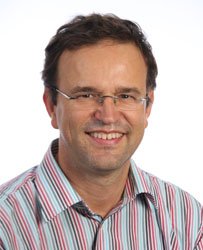 Ulrich Schmutz合作论文数Ryton Organic Gardens17
 Francis Rayns合作论文数Ryton Organic Gardens7
 Clive R. Rahn合作论文数6
 Robert Lillywhite合作论文数University of Warwick6KeFeng Zhang (张可锋)合作论文数4Natalie Geen合作论文数3
 Kristian Thorup-Kristensen合作论文数Department of Plant and Environmental Sciences, University of Copenhagen3Margi Lennartsson合作论文数3Phil Sumption合作论文数3
 Claas Nendel合作论文数Institute of Landscape Systems Analysis, Leibniz Centre for Agricultural Landscape Research3Mark Hesketh合作论文数2
 David Gilchrist合作论文数Department of Plant Pathology, College of Agricultural and Environmental Sciences, University of California, Davis1p sumption合作论文数1Anton Rosenfeld合作论文数1k strohmeyer合作论文数1a m venezia合作论文数1
 Tim Benton合作论文数School of Biology, Faculty of Biological Sciences, University of Leeds1
 Dave Chandler合作论文数School of Life Sciences, Faculty of Science, Engineering and Medicine, The University of Warwick1Carlos Ramos合作论文数1
 Richard Godwin合作论文数Department of Engineering, Harper Adams University;Faculty of Agricultural Engineering, Food Production and Rural Land Use, Cranfield University1L Philipps合作论文数1
 Matthias Fink合作论文数Institute of Vegetable and Ornamental Crops Großbeeren and Erfurt1
 Sigrid Stagl合作论文数School of the Environment;University of Leeds;School of the Environment, University of Leeds1
 Darren Halpin合作论文数1
 Ben B. Davies合作论文数1Brian Ilbery合作论文数Countryside and Community Research Institute, University of Gloucestershire1
 Steven M Sait合作论文数School of Biology, University of Leeds1
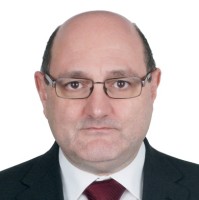 Jose Miguel Baptista Nunes合作论文数VR+Culture Laboratory, School of Information Management, Sun Yat-sen University1
 Damian Maye合作论文数Department of Geography, Coventry University1S. Cubison合作论文数1R Buton合作论文数1Jerry V. Cross合作论文数1William A. Hopkins合作论文数1
 Larry K Brown合作论文数Division of Child and Adolescent Psychiatry, Department of Psychiatry and Human Behavior, The Warren Alpert Medical School, Brown University;Bradley Hospital;Hasbro Children's Hospital1
 Hugh Riley合作论文数1
 Maggie McPherson合作论文数School of Education, University of Leeds1
 Steve Carver合作论文数School of Geography;University of Leeds;School of Geography, University of Leeds1
 Jose Miguel De Paz合作论文数Centro para el Desarrollo de la Agricultura Sostenible-CDAS, Instituto Valenciano de Investigaciones Agrarias-IVIA1Jordi Doltra合作论文数1
 Wyn Grant合作论文数1




