A model has been developed which assesses the economic and environmental performance of crop rotations, in both conventional and organic cropping, for over 70 arable and horticultural crops, and a wide range of growing conditions in Europe. The model, though originally based on the N_ABLE model, has been completely rewritten and contains new routines to simulate root development, the mineralisation and release of nitrogen (N) from soil organic matter and crop residues, and water dynamics in soil. New routines have been added to estimate the effects of sub-optimal rates of N and spacing on the marketable outputs and gross margins. The model provides a mechanism for generating scenarios to represent a range of differing crop and fertiliser management strategies which can be used to evaluate their effects on yield, gross margin and losses of nitrogen through leaching. Such testing has revealed that nitrogen management can be improved and that there is potential to increase gross margins whilst reducing nitrogen losses.
A new model EU-ROTATE_N has been written which enables the assessment of the economic and environmental performance of nitrogen applied to crop rotations in either conventional or organic cropping for a wide range of crops and growing conditions in Europe. The model can simulate root development, the mineralization and release of N from soil organic matter and crop residues, the effect of freezing conditions, and water movement. New routines have also been added to estimate the effects of sub-optimal rates of N and spacing on the marketable outputs and gross margins. Model performance was tested against experimental results and broadly simulated the patterns of crop growth, N response and N losses. The model provides a mechanism for comparing the relative effects of differing cropping and fertilisation practices on yield gross margin and losses of nitrogen through leaching. The running of a number of scenarios has demonstrated that nitrogen management in field vegetable rotations can be improved in Europe by following at least Good Agricultural Practice. The model also provides the potential for suggesting improvements which have a minimal effect on gross margin whilst reducing nitrogen losses.
Crop rotation systems in field vegetables are complex and involve a large number of different crops and management options. Ecological and economic strategies for fertilizer nitrogen (N) must take into account long-term transfer effects in the crop rotation associated with the extraction properties of individual crops and the weather-related matter dynamics in soil. A simulation model was developed to ecological and economic consequences of N-fertilization strategies in organic and conventional vegetable crop rotation with up to 70 to assess crops grown in Europe. New process include routines describe the weather-dependent N-release from humus and crop residues, the two-dimensional root development of plants in row crops, as well as the effects of space and choice subund supra optimal fertilizer application on the market return. The model provides the opportunity to relative effects of alternative crop rotations and fertilizer regimens on N leaching and profit contribution of the company show. Scenarios produced by the model that already makes strict adherence to good agricultural practice, a significant contribution to environmental sustainability, but also have potential for further improvement is virtually cost-neutral present.
When calculating fertiliser recommendation sand nutrient balances, growers and advisers usually do not do site specific measurements but use data from look up tables. Data given by older literature sources, however, do not take into account today's cropping practices. Therefore a databank on nutrient contents of total yields, marketable yields and harvest residues of 22 field vegetable crops is presented. This databank was compiled using results from topical field experiments and from recent literature.
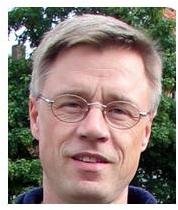 Matthias Fink合作论文数Institute of Vegetable and Ornamental Crops Großbeeren and Erfurt4
 Kristian Thorup-Kristensen合作论文数Department of Plant and Environmental Sciences, University of Copenhagen3
 Clive R. Rahn合作论文数3
 Claas Nendel合作论文数Institute of Landscape Systems Analysis, Leibniz Centre for Agricultural Landscape Research3
 Francis Rayns合作论文数Ryton Organic Gardens3
 Robert Lillywhite合作论文数University of Warwick3
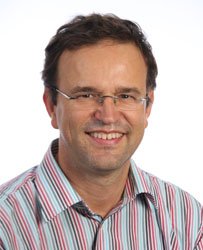 Ulrich Schmutz合作论文数Ryton Organic Gardens3
 Hugh Riley合作论文数3
 Jose Miguel De Paz合作论文数Centro para el Desarrollo de la Agricultura Sostenible-CDAS, Instituto Valenciano de Investigaciones Agrarias-IVIA3Jordi Doltra合作论文数3C. Firth合作论文数2f piro合作论文数2A. Pedersen合作论文数2A. Venezia合作论文数2K. Zhang合作论文数2
 C. Ramos合作论文数2U. Weier合作论文数1Hc Scharpf合作论文数1p j paschold合作论文数1a m venezia合作论文数1KeFeng Zhang (张可锋)合作论文数1Carlos Ramos合作论文数1Chris Firth合作论文数1Carmen Feller合作论文数Institute of Vegetable and Ornamental Crops Großbeeren and Erfurt1Warwick Hri合作论文数1




