Chemie Ingenieur TechnikVolume 85, Issue 6 p. 772-776 InhaltFree Access Inhalt: Chem. Ing. Tech. 6/2013 First published: 23 May 2013 https://doi.org/10.1002/cite.201390048AboutPDF ToolsRequest permissionExport citationAdd to favoritesTrack citation ShareShare Give accessShare full text accessShare full-text accessPlease review our Terms and Conditions of Use and check box below to share full-text version of article.I have read and accept the Wiley Online Library Terms and Conditions of UseShareable LinkUse the link below to share a full-text version of this article with your friends and colleagues. Learn more.Copy URL Share a linkShare onEmailFacebookTwitterLinked InRedditWechat Volume85, Issue6June, 2013Pages 772-776 RelatedInformation
Always a Teacher Elmer Gaden, the founding editor of Biotechnology and Bioengineering, passed away last March (Kirwan et al., 2012). We recently asked several people to reflect upon their relationship with Elmer and provide examples of how he had influenced them. Their remembrances of Elmer can be found below. Prevailing throughout the comments are acknowledgements of Elmer's kindness, his encouraging nature, his breadth of knowledge and passion for history, his candor and directness, and of course his famous wit (Elmer's affectionate description of the seminal textbook, Biochemical Engineering Fundamentals, by Jay Bailey and Dave Ollis as “a sex manual written by two virgins” has to rank among the greatest quips of all time). Elmer also embodied the best attributes of a bygone era, when communication was more personal (if not thoughtful), the community was smaller and less specialized (and defined largely by a single journal), and the field was energized by a sense of excitement that it was about to explode in directions no one could quite foresee. It was perhaps during this formative period of the field's transition that Elmer had his greatest influence, leading by example, and providing steady guidance for the next generation of young leaders anxious to follow in his footsteps. His far-reaching influence, which was manifested in many ways, is clearly evident from the heartfelt recollections of so many influential people in the field. One of my own personal experiences with Elmer continues to impress me as an important life lesson. I was a chemistry major at the University of Vermont (it was a rather remarkable coincidence that my days at UVM overlapped with Elmer's brief tenure there) and was taking a class in military history that was co-taught by Elmer and Mark Stoler, a professor of history. I had no idea at the time that Elmer was widely known as the father of Biochemical Engineering; I knew him only as an expert in military history who could recreate famous battle scenes before my eyes with his colorful, detailed descriptions of events. It was almost as if he had been there. When I told him I would be missing a week of class to visit graduate schools on the West Coast, including chemical engineering programs, he had the look of someone who knew something I didn't, but who knew it would be better to let me discover it myself. “Chemical engineering? That's a great profession,” he told me, “and those are all very good schools. Good luck on your trip.” He was right, of course, but he never let on that he was a giant in the field and one of the people who helped make chemical engineering such a great profession. No false modesty, and not a word to make me feel foolish for not knowing (as I should have) who he was, other than a gifted professor passionate about history. A few years later, when we submitted my first paper from Jay Bailey's group to Elmer Gaden, Editor-in-Chief of Biotechnology and Bioengineering (after Jay had convinced me it was the same Elmer Gaden I already knew), I realized Elmer had taught me more than military history; he had taught me a valuable lesson in humility. Chemical engineering turned out to be my chosen field, and as my career progressed I had the opportunity to encounter Elmer in a number of professional settings. He was, as expected, always very gracious and supportive, and I always likened my initial experience with him, in a context completely removed from biochemical engineering, as something akin to clandestine membership in an exclusive club. When I eventually had the opportunity to assume the reins as Editor-in-Chief of Biotechnology and Bioengineering, it was largely out of admiration for Elmer and the foundation he had created (and my respect for the fine work of his editorial successors, Danny Wang and Terry Papoutsakis) that I was so pleased and flattered to take the job. My last interaction with Elmer was my interview of him at his home in Charlottesville, where I had the chance to talk with him about the origins of the journal, the early days of biotechnology, and his illustrious career (the interview can be found on YouTube). At the end of the interview, Elmer delivered his closing statement in signature fashion: “Period” he exclaimed, “No more wisdom, because that's all the wisdom I have.” But this time I didn't buy it. Elmer always had more than he let on, as I had learned a long time ago. And as always, my conversation with him seemed to end much too soon. Douglas S. Clark Editor-in-Chief Kirwan DJ, Gainer JL, Carta G. 2012. In memoriam—Elmer L. Gaden, Jr. Biotechnol Bioeng 109(8):1887–1888. Elmer Gaden's Support and Encouragement of Young Researchers In his early years (1960s and 70s) as editor of Biotechnology and Bioengineering, Elmer was able to handle all the correspondence associated with the journal on Saturday mornings. This was the pre-computer era; Elmer eschewed the typewriter and wrote back to all authors and reviewers in a beautiful longhand that could only have resulted from having a demanding primary school teacher. He wrote long, encouraging letters to those of us who were submitting their first publications to the journal, often with suggestions for improving the work and additional studies that could be done. He was always kind when reviewers weren't. He created a personal interaction with Biotechnology and Bioengineering that is hard to sustain today in an era of web-based submissions and automated replies. Submitting a manuscript was like writing your name in the reception book by his front door. Harvey W. Blanch Department of Chemical and Biomolecular Engineering University of California Berkeley Elmer as My Mentor and Friend Elmer acted as my mentor when I first became an assistant professor at MIT. He was the person who advised me to do research in the areas of oxygen transfer and recovery of products. These areas were not very crowded and made my entry very much easier. I still remember the scary incident at the 2nd International Biotechnology Symposium in 1968 where he came up to me and said “I am inviting you to present a presentation on scale up tomorrow.” In those days there were no transparencies or computers to make slides. I remember staying up all night changing my old Polaroid 4″ × 5″ slides for my presentation. In this incident I later realized Elmer acted as a Mentor as well as a friend. Daniel I.C. Wang Institute Professor of Chemical Engineering MIT A Microbiologist's Hero of Biochemical Engineering Elmer Gaden was my “hero of biochemical engineering.” As a microbiologist starting out in industry at Merck, it was important for me to appreciate the ability of biochemical engineers to move a microbial process from a flask or small fermentor into a giant industrial tank possibly containing as much as 100,000 gallons of broth. Knowing Elmer Gaden gave me that appreciation. It is interesting that we were both born in Brooklyn, went to high school there, and served in the U.S. Navy during World War II. Also, my first Merck industrial project dealt with penicillin research, as did Elmer's when he collaborated with Merck during his PhD studies at Columbia University. His important findings established the first rational design of agitated and aerated fermentors. It was great to be a colleague of Elmer's and through this relationship, I was able to successfully supervise students at MIT getting their degrees in biochemical engineering. Elmer Gaden was a great man. He gave so much to the area of what I like to think of as “Microbial Engineering,” but he might prefer “Chemical Engineering.” He contributed greatly to students at Columbia University, University of Vermont, and the University of Virginia. He gave his time generously to the American Chemical Society, the American Institute of Chemical Engineers, the National Academy of Sciences, and to all of us in the area of biotechnology. He is a true HERO. Arnold L. Demain Research Institute for Scientists Emeriti (R.I.S.E.) Drew University An Expert in European Military History… In the early days of the conference series “Enzyme Engineering” (Number V, 1979, Henniker, NH, USA) I introduced myself to Elmer Gaden as a representative of the Research Center Juelich (Institute of Biotechnology), Germany. His answer was: “Of course I know Juelich. This was an important place during the Thirty Years' War (1618–1648) in Europe, when Spanish troops besieged (1621/1622) and finally conquered the fortress of Juelich.” I was really impressed by this answer, showing an expert in European military history. Moreover, I was impressed by his generosity, giving me—then an unknown “young boy”—a chance to give a talk. Prof. Dr. Christian Wandrey Research Center Juelich, Institute of Biotechnology Germany The Mentor of My Mentor's Mentor Elmer was always an elder statesman in biochemical engineering for me since my student days. When I was still pursuing my PhD, I subscribed to Biotechnology and Bioengineering and always viewed him as a giant in a field I hoped to enter. In addition to his name popping up when I opened up the journal every month, as a student I knew he was the mentor of my mentor's mentor. When I gave my first talk at the annual meeting of the American Chemical Society, he was in the audience, and my friend told me to watch out. As I was talking, I could not keep my eyes away from him for long. Then, as my talk was wrapping up I saw him nodding his head and I knew I was safe. As I walked off stage and the session was breaking up, he said “Good job, young man,” in his thunderous baritone voice. That was how I got to know him. A couple of summers later in New Hampshire, we were at the Engineering Foundation Conference on Biochemical Engineering. Cell culture was on the verge of taking off as a new manufacturing vehicle for recombinant proteins. Around a table I was having a discussion with a few senior faculty members in our field on whether we should launch another conference on that subject. Taking on such a big task as an assistant professor could be perilous, but, of course, it would be also an important move for the field. I kept hearing cautious remarks from senior colleagues advising me to weigh the risk of overloading myself by taking on the job of initiating another conference on cell culture. Then, in that thunderous baritone voice, I heard again, “Young man, if you want to succeed, be an eager beaver!” I took his advice. The Cell Culture Engineering Conference eventually provided an important forum to help push manufacturing technology for therapeutic proteins forward. The conference is now in its 13th year. Prof. Gaden set the standard for three generations of biochemical engineers. He is indeed a giant in the field of biochemical engineering, but first and foremost he is a mentor. Wei-Shou Hu University of Minnesota A Friend for All Seasons I am deeply indebted to Elmer Gaden, my dear friend and mentor, for his interest and encouragement throughout my entire career. Elmer was my advisor as an undergraduate in chemical engineering at Columbia University. He turned me on to biochemical engineering as a career as an alternative to medicine (my father was a physician). He adopted me and Jane (my wife to be) as part of his huge family of academic children. He arranged my first summer job at General Foods, and took me on as a master's student (Jane was also pursuing a M.S. at Columbia with Elmer's friend Ernest Henley). He encouraged me to go on for a doctorate and insisted that I go elsewhere because as he said I needed to expand my horizon. He arranged a fellowship for me with Marvin Johnson in the Biochemistry Department at the University of Wisconsin. As he told me later, he called Dr. Johnson and told him that “he had a bright boy from Brooklyn who needed some training in biochemistry.” Elmer's excellent reputation in the field was sufficient to guarantee a position for me. No GRE exam or letters of recommendation were needed. He also put in a good word for me with Ed Lightfoot at Wisconsin, so I was able to do a minor in chemical engineering as part of my doctoral program. As graduate students, getting married was a bit turbulent for Jane and me. Elmer's support and encouragement helped us through it, and he was the best man at our wedding. Elmer has always remained a part of our family and Jane and I were thrilled to join the celebration at the National Academy of Engineering when he received the Russ Prize for his lifelong contributions to biochemical engineering. Jerome Schultz University of California, Riverside Generosity and Encouragement Elmer's papers laid the foundation for modern biochemical engineering and I cited and quoted many of those in my own work. Elmer wrote clearly, directly and in a no nonsense manner—a style that has been largely lost in the modern era. Perhaps his most influential contribution was establishing Biotechnology and Bioengineering as a journal. His stewardship of the journal reflected his pragmatic approach and dedication to clear communication and his willingness to encourage and support young engineers. He hand wrote his communications, which often interpreted what the reviewers were saying into more cogent remarks. He really encouraged young people; his purpose was to take good papers and make them excellent papers. He was never dismissive but always considered your comments thoughtfully. Elmer always favored brevity and had a quick wit and tongue. I recall an early EFC conference when a young colleague got up and made a comment that went on a bit longer than necessary. Elmer then remarked, “You just said in a 1,000 words, what I said in three.” Elmer was a civil war historian and a very good one. One time I was visiting the University of Virginia with my family and Elmer invited us over. Elmer found my 12-year-old son reading one of his civil war books. Elmer gave it to him as a present. Elmer was always generous and willing to encourage young people. It is that generous spirit, willingness to encourage others, and maintenance of high standards that I will always remember about Elmer. Michael L. Shuler Cornell University Elmer Gaden and the UK Connection “Elmer Gaden, who was Biotechnology and Bioengineering in these years, was a huge source of encouragement with his handwritten editor's comments of firm but warm guidance”: written by Peter Dunnill and colleagues in an editorial feature (Shamlou PA et al. UCL Biochemical Engineering. 1998. Biotechnol Bioeng 60(5):527–533) of the massive challenges in the 1960s in getting biochemical engineering research to be recognized in the UK and elsewhere. Peter Dunnill, Malcolm Lilly, and Fife Webb were among those in the UK fortunate to have known and benefited from Elmer Gaden's contributions. The legend passed down is that, without Elmer's pioneering spirit, UCL Biochemical Engineering might never have existed. How come? Sitting on my bookshelf for the benefit of aspiring researchers I have, from 1959, the essential forerunner of Biotechnology and Bioengineering, namely parts 1–4 which make up the whole of volume 1 of the Journal of Biochemical and Microbiological Technology and Engineering, editors Crook, Donald, and Gaden. After Crook and Donald (both at UCL) had been repulsed by the University of London Senate bureaucracy when trying to get the biochemical engineering discipline recognized they looked elsewhere and found an ally in Elmer at Columbia who was already establishing the area in the US. Together they turned to the power of publishing to make the breakthrough we all benefit from today. Showing students those issues from over 50 years ago including Elmer's papers on protein purification and on fermentation is a wonderful way to bring to life the legacy of these pioneers and especially Elmer. Mike Hoare Biochemical Engineering UCL Vintage Elmer There was something nice and very human about those days. A bit naive, open, human, and unsophisticated—but aimed directly at pressing practical problems. Elmer could be exasperating, but at the same time lovable. Like my shelties. And like them he always seemed to have had time to listen and talk. Yes, shelties do talk, about truly important things, like how good it is to be alive, and so did Elmer. It was an era of open office doors, lunch meetings about any interesting topic and canoe trips or whatever on the weekends. No passwords and no hiding what we were doing. At least in Elmer's case and mine. We even took time to check on interesting claims by others. There was always of course a back side, like heavy teaching loads and scarce money, but there was very often a sense of duty. When Bob, Warren, and I wrote Transport Phenomena, we did not do it for money. We simply sensed a need and tried as hard as we could to fill it. So did Elmer. Edwin N. Lightfoot University of Wisconsin-Madison Biochemical Engineering Father, His Son, and the Holy Ghost Elmer Gaden was universally hailed as “the Father of Biochemical Engineering,” for which he received many recognitions including the distinguished National Academy of Engineering's Russ Prize in 2009. But, I knew Elmer as a mentor, teacher, and friend. Ernie Henley and I were Elmer's first PhD students beginning in 1950, one year after he returned to Columbia University as an assistant professor from Chas. Pfizer to teach Biochemical Engineering. Ernie and I argued over who was his first student. Elmer would never say. Hence, we three settled on calling ourselves, The Father, Son, and Holy Ghost. That was a personal joke among us. Since Elmer was only three years older than Ernie and me, our relationship was more that of a friend, rather than professor/student. Consequently, we three stayed in relatively close touch until the very end. Elmer had several intense loves besides teaching and Biochemical Engineering. First, there was his wife, Jenny. Next was Civil War History for which his students joined him for tours of many historical sites. (I was privileged to play with his set of nearly 500 Civil War tin soldiers.) And then there was birding. Elmer and Jenny are credited with sighting all three species of Long Island owls in one night. Elmer really struggled in editing the journal Biotechnology and Bioengineering in those early 1958 days. But 25 years later he had established the Journal as THE place to publish Biochemical Engineering research. He always lived life to the fullest. It was a pleasure to have worked for and with Elmer. Art Humphrey Recalling an Evening with Elmer I vividly remember spending an evening with Elmer at an ACS-BIOT division dinner. While chatting during dinner, Elmer and I realized that we had one very important thing in common—our love for the Dodgers. We ended up journeying through Dodger history. Of course, Elmer's history was with “dem bums from Brooklyn” and mine with the team in Los Angeles. I was immediately struck by Elmer's vast knowledge of his beloved team, as well as his own history of growing up in Brooklyn, what he did as a kid, and how he continued to follow the Dodgers after they moved to L.A. OK, none of this had anything to do with biochemical engineering, but to this (at the time) young professor, it had everything to do with our profession. It showed me the personal side of a giant in our field. When I had the honor of receiving the Gaden Award more than a decade later, I began my presentation with Elmer and the Dodgers—two “institutions” that strongly influenced my life. Jonathan S. Dordick Rensselaer Polytechnic Institute A Lasting Influence I knew Elmer extremely well for several reasons. He was the Editor of B&B when I started my career and I published my first papers in B&B. His corresponding letters always had a unique personal touch. I started my academic career in the USA at Columbia University in New York in 1980 and I inherited all of Elmer's labs. Also, even before starting my position as Assistant Professor at Columbia, we talked for hours and he gave me excellent advice. We became excellent friends since we shared similar values, and he advised me during my whole period in the USA, until 1987, and thanks to this wise advice I was promoted to Associate Professor in 1985, after only 5 years. He was clearly the father of Biochemical Engineering in the early 1950s, at Columbia University where he did his PhD working on Agitation in Fermenters (later he published this work: Gaden EL.1961. Aeration and Agitation in Fermentation. Sci Repts Instituto Superiore di Sanita 1:161). Then he became an academic at Columbia University and his first PhD student was Art Humphrey, who worked on Air Sterilization by Fibrous Media (Humphrey AE, Gaden EL. 1955. Ind Eng Chem 47:924). He always chose to work on critical and important problems and supervised his PhD students directly. Thus, he made some of the most important contributions in the third quarter of the 20th Century, and also was the founding editor of B&B, an idea that had originally started with two professors at University College London (UCL), E. M. Crook and M. B. Donald. Amongst his most important contributions was Gaden's classification of fermentations valid until today (Gaden EL. 1955. Chem Ind (Rev) 154–159; Gaden EL. 1959. J Biochem Microbiol Tech Eng 1:413–429). Similarly, the work of his PhD student Edvard Falch, later to become VP of Novo-Nordisk (Falch EA, Gaden EL. 1970. A Multistage Tower Fermenter. Biotechnol Bioeng 12:465–482) and the “classic” work on optimization of the penicillin fermentation (Constantinides A, Spencer JL, Gaden EL. 1970. Optimization of Batch Fermentation Processes. II Optimum Temperature Profiles. Biotechnol Bioeng 12:1081–1098). Elmer always showed a sharp and deep sense of humor and clearly he was a great humanist. As a model for academia and ethics in the profession, he had probably the biggest influence in my early career together with Alan Michaels, Jay Bailey, and Malcolm Lilly. Juan A. Asenjo Department of Chemical and Biotechnology Engineering University of Chile
Chemie Ingenieur TechnikVolume 82, Issue 9 p. 1499-1500 VortragFree Access Reaktionskaskade für die Produktion von 2-Keto-L-Gulonsäure B. Osterath Dr., B. Osterath Dr. Forschungszentrum Jülich GmbH, Institut für Biotechnologie 2, D-52425 Jülich, GermanySearch for more papers by this authorT. Kubitzki Dr., T. Kubitzki Dr. t.kubitzki@fz-juelich.de Forschungszentrum Jülich GmbH, Institut für Biotechnologie 2, D-52425 Jülich, GermanySearch for more papers by this authorC. Wandrey Prof. Dr., C. Wandrey Prof. Dr. Forschungszentrum Jülich GmbH, Institut für Biotechnologie 2, D-52425 Jülich, GermanySearch for more papers by this authorS. Lütz Dr., S. Lütz Dr. Forschungszentrum Jülich GmbH, Institut für Biotechnologie 2, D-52425 Jülich, Germany Novartis Institutes for BioMedical Research, CH-4002 Basel, SwitzerlandSearch for more papers by this author B. Osterath Dr., B. Osterath Dr. Forschungszentrum Jülich GmbH, Institut für Biotechnologie 2, D-52425 Jülich, GermanySearch for more papers by this authorT. Kubitzki Dr., T. Kubitzki Dr. t.kubitzki@fz-juelich.de Forschungszentrum Jülich GmbH, Institut für Biotechnologie 2, D-52425 Jülich, GermanySearch for more papers by this authorC. Wandrey Prof. Dr., C. Wandrey Prof. Dr. Forschungszentrum Jülich GmbH, Institut für Biotechnologie 2, D-52425 Jülich, GermanySearch for more papers by this authorS. Lütz Dr., S. Lütz Dr. Forschungszentrum Jülich GmbH, Institut für Biotechnologie 2, D-52425 Jülich, Germany Novartis Institutes for BioMedical Research, CH-4002 Basel, SwitzerlandSearch for more papers by this author First published: 27 August 2010 https://doi.org/10.1002/cite.201050145Citations: 1AboutPDF ToolsRequest permissionExport citationAdd to favoritesTrack citation ShareShare Give accessShare full text accessShare full-text accessPlease review our Terms and Conditions of Use and check box below to share full-text version of article.I have read and accept the Wiley Online Library Terms and Conditions of UseShareable LinkUse the link below to share a full-text version of this article with your friends and colleagues. Learn more.Copy URL Share a linkShare onFacebookTwitterLinked InRedditWechat No abstract is available for this article.Citing Literature Volume82, Issue9Special Issue: ProcessNet-Jahrestagung 2010 und 28. Jahrestagung der BiotechnologenSeptember, 2010Pages 1499-1500 ReferencesRelatedInformation
The demand for enantiopure substances, e.g. for pharmaceutical applications or fine chemical production, continues to increase. This has led to the development of numerous stereoselective synthesis methods. Nevertheless a large number of chemical syntheses still result in racemic mixtures making a subsequent enantioseparation step necessary and thus are restricted to a maximum yield of 50%. Our work focuses on strategies to overcome this limitation by combining physicochemical separation processes with enzymatic racemization of the unwanted enantiomer in order to produce enantiopure amino acids. This paper deals with the production and characterization of a suitable amino acid racemase with broad substrate specificity (EC 5.1.1.10) from Pseudomonas putida which we cloned into Escherichia coli. Two enzyme lyophilizates of different purity were obtained from which the crude (CL) was sufficient for the racemization of methionine (Met) and the pure (PL) was used for asparagine (Asn). Racemization reactions of D-/L-Asn in H2O and D-/L-Met in 95 vol.% 100 mM KPi-buffer, 5 vol.% methanol (MeOH) at different pH values and temperatures were characterized. The studied range of reaction parameters was chosen in dependency on planned enantioseparation processes. We found increasing Vmax values when temperature was risen stepwise from 20 to 40 °C for both systems and when pH was shifted from 6 to 8 for the Met system. The presented results provide the basis for engineering enzyme-assisted physicochemical enantioseparation processes.
The possibility of using the enzyme (R)-Oxynitrilase in a biphasic lyotropic liquid crystal/dibutylether system has been demonstrated. This reaction system is applicable for the continuous production of (R)-benzaldehydecyanohydrin in a fixed bed reactor. The optical purity was between 94 and 96% ee and independent of the flow rate. The space time yield was maximal (2650 g/(1*d)) at a flow rate of 1.6 ml/min.
Electroenzymatic syntheses combine oxidoreductase-catalysed reactions with electrochemical reactant supply. The use of ionic liquids as performance additives can contribute to overcoming existing limitations of these syntheses. Here, we report on the influence of different water-miscible ionic liquids oil critical parameters such as conductivity, biocatalyst activity and stability or substrate solubility for three typical electroenzymatic syntheses. In these investigations promising ionic liquids were identified and have been used as additives for batch electrolyses on preparative scale for the three electroenzymatic systems. It was possible to improve the space-time-yield for the electrochemical regeneration of NADPH by a factor of three. For an amino acid oxidase catalysed resolution of a methionine racemate with ferrocene-mediated electrochemi-cal regeneration of the enzyme-bound cofactor FAD a 50% increase in space time yield and 140% increase in catalyst utilisation (TTN) were achieved. Furthermore, for the chloroperoxidase-catalysed synthesis of (R)-phenylmethylsulfoxide with electrochemical generation of the required cosubstrate H2O2 the space time yield and the catalyst utilisation were improved by a factor of up to 4.2 depending on the ionic liquids used.
Whole cell biotransformation processes are of special interest for the synthesis of chiral compounds since microorganisms offer some advantages in comparison to chemical catalysts or even isolated enzymes. Due to their internal production of cofactors biotransformation processes using whole cell catalysts can be operated without addition of external cofactors. In this study recombinant Escherichia coli cells were applied as biocatalysts for the reduction of ketones. By the expression of suitable alcohol dehydrogenases (adh) both enantiomeres of chiral alcohols can be produced. The syntheses of enantiopure (R)-3-hydroxybutyrate and (S )-3-hydroxybutyrate were carried out in continuously operated biotransformation processes with membrane retention of the whole cell biocatalysts. Recombinant E. coli expressing adh from Lactobacillus brevis turned out to be stable during biotransformation processes with substrate-coupled cofactor regeneration even when exceedingly high concentration of substrate and cosubstrate were applied. In contrast to that processes with enzyme-coupled cofacor regeneration affects the biocatalyst stability more intensely. For the substrate-coupled approach further investigations deal with the application of in situ acetone removal techniques in whole cell transformation processes. Stripping, pervaporation and extraction with an ionic liquid were applied as strategies for in situ acetone removal. In all cases higher conversion was achieved by overcoming thermodynamic and kinetic limitations. The pervaporation procedure turned out to be the most gentle method of acetone removal which only causes negligible damage to the whole cell biocatalysts. It was also applied for continuously operated biotransformation processes. For the knowledge of whole cell biocatalysts it is desirable to quantify intracellular concentrations of cofactors during a biotransformation process. A new method for quantification of several intracellular metabolites was developed and now transferred to biotransformation processes with recombinant E. coli. The concentrations of intracellular cofactor concentrations were determined during the reduction of methyl acetoacetate and 2,5-hexanedione with substrate-coupled cofactor regeneration by oxidation of 2-propanol. Die praktischen Arbeiten zur vorliegenden Dissertation wurden in der Zeit von August 2004 bis Oktober 2007 am Institut für Biotechnologie 2 im Forschungszentrum Jülich durchgeführt. Ich möchte mich an dieser Stelle bei einer Reihe von Personen bedanken, die mir bei der Anfertigung dieser Arbeit sehr viel Unterstützung geboten haben.
ChemSusChemVolume 1, Issue 8-9 p. 780-781 Interview Biotechnology Will Help Us To Use Renewable Resources More Effectively Christian Wandrey Prof. Dr., Christian Wandrey Prof. Dr. [email protected] Institute of Biotechnology 2, Forschungszentrum Jülich GmbH, D52425 Jülich (Germany), Fax: (+49) 2461-613870Search for more papers by this author Christian Wandrey Prof. Dr., Christian Wandrey Prof. Dr. [email protected] Institute of Biotechnology 2, Forschungszentrum Jülich GmbH, D52425 Jülich (Germany), Fax: (+49) 2461-613870Search for more papers by this author First published: 28 August 2008 https://doi.org/10.1002/cssc.200800118Read the full textAboutPDF ToolsRequest permissionExport citationAdd to favoritesTrack citation ShareShare Give accessShare full text accessShare full-text accessPlease review our Terms and Conditions of Use and check box below to share full-text version of article.I have read and accept the Wiley Online Library Terms and Conditions of UseShareable LinkUse the link below to share a full-text version of this article with your friends and colleagues. Learn more.Copy URL Share a linkShare onFacebookTwitterLinkedInRedditWechat No abstract is available for this article. Volume1, Issue8-9Special Issue: 2nd EuCheMS Chemistry CongressSeptember 1, 2008Pages 780-781 RelatedInformation
A highly selective and sensitive method for identification and quantification of intracellular metabolites involved in central carbon metabolism (including glycolysis, pentose phosphate pathway and tricarboxylic acid cycle) by means of liquid chromatography–tandem quadrupole mass spectrometry (LC–MS/MS) was developed. The volatile ion pair modifier tributylammonium acetate (TBAA) was employed in the mobile phase for simultaneously separation of 29 negatively charged compounds including sugar phosphates, nucleotides, and carboxylic acids on a common C18 reversed-phase column. Method validation results displayed that limits of detection (LODs) calculated according to DIN (German Institute for Standardization) 32645 are mostly below 60nM, only with the exception of pyruvate and malate. The calibration curves showed excellent linearity mainly over three orders of magnitude with correlation coefficients R2>0.9982. This LC–MS/MS method was successfully applied to determine these metabolites in cell extracts of Escherichia coli. Most of the intracellular metabolites were found within the detection range and the relative standard deviations of the measurements were smaller than 5.65% (n=5) for a cell extract sample.
The reduction of methyl acetoacetate was carried out in continuously operated biotransformation processes catalyzed by recombinant Escherichia coli cells expressing an alcohol dehydrogenase from Lactobacillus brevis. Three different cell types were applied as biocatalysts in three different cofactor regeneration approaches. Both processes with enzyme-coupled cofactor regeneration catalyzed by formate dehydrogenase or glucose dehydrogenase are characterized by a rapid deactivation of the biocatalyst. By contrast the processes with substrate-coupled cofactor regeneration by alcohol dehydrogenase catalyzed oxidation of 2-propanol could be run over a period of 7 weeks with exceedingly high substrate and cosubstrate concentrations of up to 2.5 and 2.8molL−1, respectively. Even under these extreme conditions, the applied biocatalyst showed a good stability with only marginal leakage of intracellular cofactors.
Benzaldehyde lyase (BAL; E.C. 4.1.2.38) from Pseudomonas fluorescens Biovar I catalyzes the reversible formation of benzoins from aromatic aldehydes, and, moreover, the coupling of aromatic with aliphatic aldehydes yielding derivatives of (R)-2-hydroxy-1-phenyl- propan-1-one (R)-HPPs), which are important chiral building blocks. In this paper, we report on the development of a reactor system that allows the selective production of substituted (R)-HPP-derivatives. The reaction systems yielding (R)-1-(3-chloro-phenyl)-2-hydroxy- propan-1-one, (R)-2-hydroxy-3-methoxy-1-(4-methoxy-phenyl)-propan-1-one, and (R)-2-hydroxy-3,3-dimethoxy-1-phenyl-propan-1-one were investigated. A kinetic model optimized by batch experiments was developed, for the description of both batch and continuously operated reactors. This model was used to describe the HPP production in a continuously operated enzyme membrane reactor. The reactor type used combines the advantages of high conversion and excellent selectivity with high space-time yields and total turnover numbers of up to ttn=43,000. Products were obtained in high yield on a gram scale.
Whole-cell reduction of (2,5)-hexanedione to yield highly enantiopure (5R)-hydroxyhexane-2-one (enantiomeric excess > 99%) with Lactobacillus kefiri DSM 20587 was investigated. Cell immobilisation with sodium cellulose sulphate was chosen as the most suitable encapsulation matrix, giving an immobilisation yield of 40%. Despite the lowered biocatalytic activity from cell immobilisation, the bioreduction process was vastly improved with the help of reaction engineering techniques (batch to a plug flow reactor set-up). High selectivity (95%) and space-time yield (87 g L-1 day(-1)) were achieved in the plug flow reactor. The biocatalyst remained active (68% residual activity) after 6 days of operation.
Chemie Ingenieur TechnikVolume 78, Issue 9 p. 1162-1163 PlenarvortragFree Access Bio ohne Technik/Technik ohne Bio? – Vom Glanz und Elend der Interdisziplinarität in der Biotechnologie C. Wandrey Prof. Dr. , C. Wandrey Prof. Dr. c.wandrey@fz-juelich.de Institut für Biotechnologie, Forschungszentrum Jülich GmbH, Leo-Brandt-Straße, D-52425 JülichSearch for more papers by this author C. Wandrey Prof. Dr. , C. Wandrey Prof. Dr. c.wandrey@fz-juelich.de Institut für Biotechnologie, Forschungszentrum Jülich GmbH, Leo-Brandt-Straße, D-52425 JülichSearch for more papers by this author First published: 06 September 2006 https://doi.org/10.1002/cite.200650430AboutPDF ToolsRequest permissionExport citationAdd to favoritesTrack citation ShareShare Give accessShare full text accessShare full-text accessPlease review our Terms and Conditions of Use and check box below to share full-text version of article.I have read and accept the Wiley Online Library Terms and Conditions of UseShareable LinkUse the link below to share a full-text version of this article with your friends and colleagues. Learn more.Copy URL Share a linkShare onFacebookTwitterLinked InRedditWechat No abstract is available for this article. Volume78, Issue9Special Issue: GVC/DECHEMA‐Jahrestagungen 2006 mit 24. DECHEMA‐Jahrestagung der BiotechnologenSeptember, 2006Pages 1162-1163 RelatedInformation
Is polymer enlargement of homogeneous catalysts a tedious task? Is not batch operation with homogeneous catalysts the optimum performance point for homogeneous catalysis? Is kinetic modelling relevant to more than academic questions in homogeneous catalysis? Can all answers for a given system be answered satisfactory? In the authors' view, answers to these questions are no, no, yes, and depends. Polymer enlargement allowed the continuous operation of transfer hydrogenation in a chemical membrane reactor with total turnover numbers of up to 2.6 x 10(3) and a space-time yield of 0.58 kg L(-1)d(-1) with an enantiomeric ratio of 26.8 (enantiomeric excess 92.8%) for a conversion level of 80%. This was predicted from simulation conducted with a model from kinetic batch experiments adopted for continuous application. These simulations for the polymer-enlarged and the unmodified catalyst show that achieving comparable performance cannot be obtained by batch operation.
The reaction engineering of benzaldehyde lyase (BAL, E.C. 4.1.2.38) from Pseudomonas fluorescens catalyzing the enantioselective carboligation of benzaldehyde and acetaldehyde yielding (R)-2-hydroxy-1-phenylpropanone (HPP) is presented. Based on kinetic studies a continuous process is developed. The developed bioreactor allows focusing the complex reaction system on the production of HPP with simultaneous discrimination of the undesired benzoin formation. The application of a continuous process in combination with membrane technology enables high space time yields (1120 g L-1 d(-1), ee > 99%) of the product as well as high total turnover numbers of the biocatalyst (mol of product/mol of biocatalyst = 188.000). A kinetic model was developed to simulate the continuously operated reactor and to determine optimal production conditions. The synthesis of (R)-(3-chlorophenyl)-2-hydroxy-1-propanone (1214 g L-1 d(-1), ee = 99%) in the bioreactor demonstrates a broad applicability of the presented reactor concept for the production HPP derivatives.
Membranes have become an integral part of biotechnological processes. They have proved to be useful tools for the retention of biocatalysts in industrial biotransformations. This paper describes the development of membrane reactors and the application of membrane-based processes in biotransformations. Membrane systems for substrate dosing (e.g., aeration), catalyst retention (e.g., ultrafiltration), product separation (e.g., pervaporation), and salt removal (electrodialysis) from solutions are dealt with. The use of membranes in bioelectrochemistry is also discussed.
 Udo Kragl合作论文数57
 Dirk Weuster-Botz合作论文数Department of Chemistry, Technische Universität München28
 Alexander Aivasidis合作论文数Department of Environmental Engineering, Demokritos University of Thrace26Takors Ralf合作论文数23Manfred Biselli合作论文数18Mr Kula合作论文数17
 Durda Vasic-Racki合作论文数Fac Chem Engn & Technol, Univ Zagreb17Maria-Regina Kula合作论文数17Rolf Wichmann合作论文数Institut für Biotechnologie der Kernforschungsanlage Jülich17A. Liese合作论文数16O Ghisalba合作论文数13
 Andreas Liese合作论文数Institute of Technical Biocatalysis, Hamburg University of Technology13
 Karlheinz Drauz合作论文数13
 Andreas Bommarius合作论文数School of Chemical and Biomolecular Engineering, College of Engineering, Georgia Institute of Technology12Werner Hummel合作论文数Industrial Organic Chemistry and Biotechnology, Faculty of Chemistry, Bielefeld University/Institute of Enzymetechnology, Forschungszentrum Jülich10J Thommes合作论文数9Guido Giffels合作论文数9M Biselli合作论文数8Eric G. Berger合作论文数8
 Daniel Gygax合作论文数8Michael Wolberg合作论文数8Wolfgang Leuchtenberger合作论文数7
 Thomas Noll合作论文数Institute of Cell Culture Technology, University of Bielefeld7
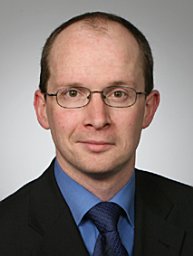 Lasse Greiner合作论文数Institute of Technical and Macromolecular Chemistry, RWTH Aachen University7
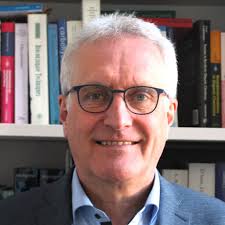 Lothar Elling合作论文数Laboratory for Biomaterials, RWTH Aachen University;Helmholtz Institute for Biomedical Engineering, RWTH Aachen University;Institute of Biotechnology, RWTH Aachen University6Juliane Beliczey合作论文数6
 Burkhard Joksch合作论文数6Holger Paschold合作论文数6Stephan Luetz合作论文数5Michael J. Muller合作论文数5
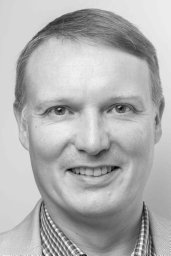 Stephan Lutz合作论文数Forschungszentrum Jülich GmbH Institute of Biotechnology5Uwe Spohn合作论文数5C. Dreisbach合作论文数5Jutta Altenbach-Rehm合作论文数5Thomas Daussmann合作论文数5Klaus Memmert合作论文数4evelyn wolfram合作论文数4U. NIEDERMEYER合作论文数4Marcel Felder合作论文数4M. Gerigk合作论文数4andreas franz合作论文数4S. Schmidt合作论文数4AF BUCKMANN合作论文数4C Born合作论文数4Arnold Matthias合作论文数4
 Aiguo Ji (吉爱国)合作论文数Marine College, Shandong University, Weihai4Erwin Flaschel合作论文数4




