Paradoxical leadership, the integration of leadership behaviors that are seemingly contradictory, but nevertheless interdependent, is becoming increasingly important in today’s complex and turbulent business environments. Despite evidence for the positive consequences of paradoxical leadership, little research has examined how and when leaders can effectively integrate opposing leadership behaviors. Two of the most fundamental paradoxical challenges that leaders face include the need to integrate control and empowerment, as well as reconciling collective rules with followers’ individual needs. In this article, we advance a circadian theory of paradoxical leadership that outlines how leaders can combine episodic thinking with circadian principles to achieve a dynamic equilibrium between the opposing poles of these two leadership paradoxes. Our temporal framework explains how leaders can effectively structure paradoxical leadership episodes that leverage their own and their followers’ circadian processes within a broader framework of situation-driven leadership. In doing so, we contribute to future research by providing a novel circadian perspective on how paradoxical tensions in organizations can be reconciled within the constraints of situational demands.
Social scientists have long been preoccupied with defining and understanding optimal human functioning. Over the past century, pragmatists (James, 1890), needs scholars (Alderfer, 1969; Maslow, 1943), salutogenic theorists (Hobfoll, 1989), and those contemplating the broader meaning of life (Frankl, 1984), have all taken a stab at outlining what it means to live life well. These approaches, however, have faced various critiques, such as not being applicable to the whole spectrum of human experiences (May, 1969), being too tautological (Priem & Butler, 2001; Russell, 2004; Thompson & Cooper, 2001) or reductionist (Geller, 1982), or lacking empirical support (Wahba & Bridwell, 1976). Moreover, to date, no grand theory of human sustainability encompassing ideas from these various streams of thought has emerged. This symposium reaches across disciplines to “broaden our sight,” by applying dynamic energy budget theory (DEBT), a widely validated theory of biology, to understand human sustainability within organizations.
In the current symposium we will address the important topics of chronobiology and sleep in work settings. Chronobiology deals with how humans and many other living organisms synchronize their daily biorhythms with the 24h-light-dark cycle of our planet. Individual differences in synchronization (entrainment) settings have important implications for when people are capable of performing at their very best during the workday. Moreover, we will address sleep — an activity that is controlled by chronobiological processes and that has important implications for performance and employee well-being. By doing so, our symposium aims to stimulate an integrative account of insights from chronobiology and sleep research. We believe that the connection between sleep, chronotype, and work is a compelling area of interdisciplinary research that is of great interest to researchers and practitioners who care about organizational performance and employee well-being. The Chronobiology of Leadership: Review and Implications Presenter: Stefan Volk; U. Of Sydney Presenter: Kevin B. Lowe; U. Of Sydney The Effects of Blue-Light Suppression on Work Presenter: Cristiano L O Guarana; Indiana U. - Kelley School of Business Presenter: Christopher Barnes; U. of Washington Presenter: Wei Jee Ong; U. of Washington The Weary Founder: Sleep Problems, ADHD-Like Tendencies, and Entrepreneurial Intentions Presenter: Brian Gunia; Johns Hopkins U. Presenter: J. Jeffrey Gish; U. of Central Florida Presenter: Mona Mensmann; Warwick Business School The Impact of the Transition to Daylight Saving Time on Sleep and Work Engagement Presenter: Jette Völker; U. of Mannheim Presenter: Franziska Feinäugle; Ulm U. Presenter: Ronald Bledow; Singapore Management U. Presenter: Jana Kühnel; U. of Vienna Social Sleep Lag and Employee’s Well-Being: A Diary Study Presenter: Monika Wiegelmann; U. of Mannheim / Germany Presenter: Sabine Sonnentag; U. of Mannheim
Behavioral Ethics has come to be viewed as a legitimate sub-field of Organizational Behavior only recently. To date, the field has largely focused on a critical but relatively narrow set of dependent variables (dominantly: lying, cheating, and stealing), and a relatively narrow set of methods (lab experiments and survey data using self- or other-reported unethical behavior). Though this work has been crucial in developing our understanding of the psychological processes that underpin specific types of unethical behavior, the application of these findings may not extend to the diverse and wide-ranging set of unethical practices that we, as a society, need to better understand. In this symposium, we focus on ethics at the fringe – the research questions, unethical behaviors, settings, and methodologies that have remained largely neglected by the field. The papers in this symposium examine extreme, relatively rare unethical behaviors, including workplace violence, mass shootings, political scandals, inappropriate prescribing, and illicit workplace romance. The empirical approaches utilize a variety of methodologies, ranging from archival data analysis to natural field experiments. Workplace Violence: A Schema Perspective Presenter: Katherine Ann DeCelles; U. of Toronto Presenter: Nir Halevy; Stanford U. Business as Usual: Consumer Behavior Following Mass Shootings in America Presenter: Lamar Pierce; Washington U. in St. Louis Presenter: Daniel Snow; Oxford U., Saïd Business School Presenter: Dennis Zhang; Washington U. in St. Louis Crossing the Line or Creating the Line: Media Effects in the 2009 British MP Expense Scandal Presenter: Jonathan Nicholas Bundy; Arizona State U. Social Influence and the Initiation and Cessation of Inappropriate Prescribing Presenter: Shu Zhang; Yale School of Management Forbidden Yet Functional: A Self Categorization Model of Illicit Workplace Romance Presenter: Keith Norman Leavitt; Oregon State U. Presenter: Christopher Barnes; U. of Washington
We extend our knowledge of status by drawing on costly signaling theory. We propose that strategic boasts of sleep deprivation, defined as talking about one’s lack of sleep with the intention of enhancing one’s status in the group, are diffuse, costly signals of one’s potential contributions to the group. Integrating gender role theory, we theorize that gender role stereotypes shape how others perceive the individual’s strategic boasts of sleep deprivation based on the boaster’s gender. We test our theory using a combination of experimental designs using working adults in high pressure work environments (Study 1A and Study 1B) and a two-wave panel, multisource field design using workgroups in an international freight-forwarding and logistics firm (Study 2). Our analyses revealed two mechanisms for the indirect effects of strategic boasts of sleep deprivation on status conferral: when the boasters are men, the indirect effect is explained by others’ perceptions that the boaster possesses strength to thrive despite the handicap; when the boasters are women, the indirect effect is explained by others’ perceptions that the boaster sacrifices her own needs for others’ needs. Our research enriches the knowledge of status in a competitive environment by showing the importance of diffuse, costly signals to individuals’ status-striving strategy.
 Trevor Watkins合作论文数Engler Coll Business, West Texas A&M Univ2
 Cristiano L. Guarana合作论文数Department of Management & Entrepreneurship.2
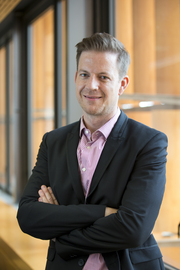 Stefan Volk合作论文数Business School, The University of Sydney2
 David T. Wagner合作论文数1Katherine Ann DeCelles合作论文数1Elijah Wee合作论文数1Shu Zhang合作论文数1
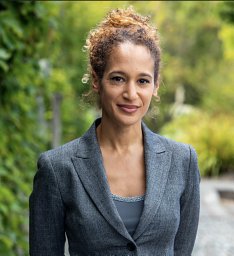 Giselle Elaine Antoine合作论文数Foster Sch Business, Univ Washington1Jette Voelker合作论文数1
 Salvatore Affinito合作论文数Business School, Harvard1
 Casher Belinda合作论文数University of North Carolina at Chapel Hill1
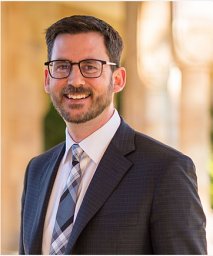 Adam Austen Kay合作论文数UQ Business School, University of Queensland1
 Samantha L Jordan合作论文数G. Brint Ryan College of Business, University of North Texas1
 Dennis J. Zhang合作论文数Olin Business Sch, Washington Univ1
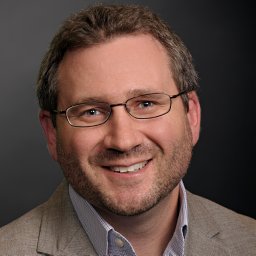 Jonathan Bundy合作论文数Arizona State Univ1Danielle D. King合作论文数1
 Daniel Skarlicki合作论文数Marketing & Behavioural Science Division, Sauder School of Business, The University of British Columbia1
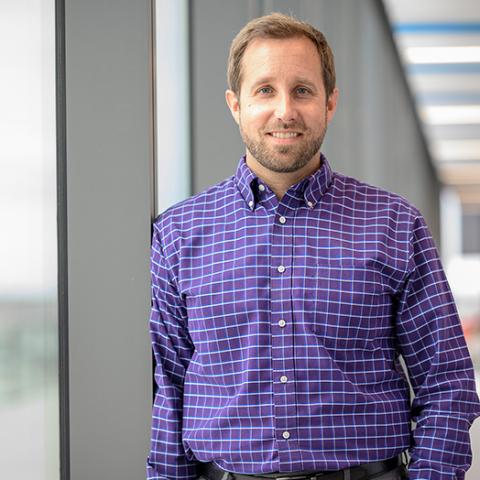 Brian Gunia合作论文数Carey Business School, Johns Hopkins University1
 Celia Moore合作论文数Management and Entrepreneurship, Imperial College Business School, Imperial College London1
 Michael L. Slepian合作论文数Columbia Business School, Columbia University1
 Charles Calderwood合作论文数1
 Huiwen Lian合作论文数Department of Management, Mays Business School, Texas A&M University1
 Michael Christian合作论文数Kenan–Flagler Business School, The University of North Carolina at Chapel Hill1
 Kimberly French合作论文数School of Psychology, College of Sciences, Georgia Institute of Technology1Gündemir Seval合作论文数Department of Psychology, University of Amsterdam;Department of Social and Organizational Psychology, VU University Amsterdam;University of Amsterdam, VU University Amsterdam1
 Andrew Hafenbrack合作论文数Foster School of Business, University of Washington1Rink Floor合作论文数1
 Leavitt Keith N合作论文数oregon state university1
 Yingxin Deng (邓英欣)合作论文数School of Management and Economics, Beijing Institute of Technology1
 Matej Cerne合作论文数1
 Wayne A. Hochwarter合作论文数Management Department, College of Business, Florida State University1
 Miha Skerlavaj合作论文数Acad Unit Management & Org, Univ Ljubljana1
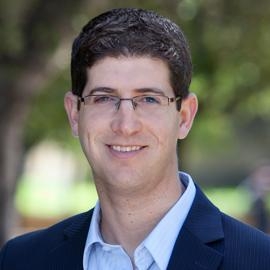 Nir Halevy合作论文数Graduate School of Business, Stanford University1
 Kira Schabram合作论文数Concordia University1
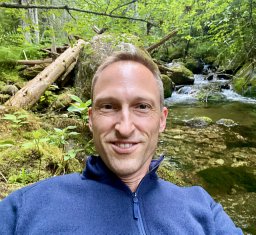 Lamar Pierce合作论文数Olin Business School, Washington University in St. Louis1
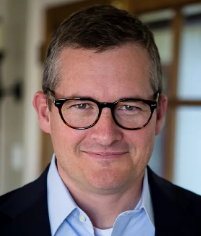 Daniel Snow合作论文数Saïd Business School, University of Oxford;Exeter College, University of Oxford;Analysis Group1




