Chemical looping combustion (CLC) is a novel combustion technology that involves cyclic reduction and oxidation of oxygen storage materials to provide oxygen for the combustion of fuels to CO2 and H2O, whilst giving a pure stream of CO2 suitable for sequestration or utilisation. Here, we report a method for preparing of oxygen storage materials from layered double hydroxides (LDHs) precursors and demonstrate their applications in the CLC process. The LDHs precursor enables homogeneous mixing of elements at the molecular level, giving a high degree of dispersion and high-loading of active metal oxide in the support after calcination. Using a Cu-Al LDH precursor as a prototype, we demonstrate that rational design of oxygen storage materials by material chemistry significantly improved the reactivity and stability in the high temperature redox cycles. We discovered that the presence of sodium-containing species were effective in inhibiting the formation of copper aluminates (CuAl2O4 or CuAlO2) and stabilising the copper phase in an amorphous support over multiple redox cycles. A representative nanostructured Cu-based oxygen storage material derived from the LDH precursor showed stable gaseous O-2 release capacity (similar to 5 wt%), stable oxygen storage capacity (similar to 12 wt%), and stable reaction rates during reversible phase changes between CuO-Cu2O-Cu at high temperatures (800-1000 degrees C). We anticipate that the strategy can be extended to manufacture a variety of metal oxide composites for applications in novel high temperature looping cycles for clean energy production and CO2 capture.
The water gas shift (WGS) reaction was conducted in the presence of two natural and two synthetic CaO-based sorbents. It was shown that such sorbents can affect the WGS in two ways: (i) by catalysis of the reaction and (ii) by altering the equilibrium position by abstraction of CO2 from the gas phase. It was shown that CaO can significantly enhance the production of H, during the WGS reaction; however, a trade-off between the production of H-2 and contamination of the product gas with CO2 (the "CO2 slip") has to be made. It was found that CaO catalyzes the WGS reaction. The carbonation reaction was very close to thermodynamic equilibrium, even at small contact times at 650 degrees C. However, the concentration of H-2 was significantly below that predicted from equilibrium considerations. In our experiments, once the sorbent had been fully carbonated, it was regenerated by heating to release the CO2 so that it Could be reused. In such a cyclic experiment, calcium magnesium acetate, a synthetic sorbent, was the best sorbent tested, albeit only over five cycles of reaction, with respect to the amount of H-2 produced. The other sorbents, especially limestone, revealed a decrease in the production of hydrogen with the number of cycles.
A chemical looping process, which uses a packed bed of the various oxides of iron, has been formulated to produce separate, pure streams of H-2 and CO2 from syngas. The process has the following stages: (1) Reduction of Fe2O3 to Fe0.947O in the syngas from gasifying coal or biomass. This stage generates pure CO2, once the water has been condensed. (2) Subsequent oxidation of Fe0.947O to Fe3O4 using stearn, to simultaneously produce H-2. (3) Further oxidation of Fe3O4 to Fe2O3 using air to return the oxide to step 1. Step 1 was studied here using a Mixture of CO + CO2 + N-2 as the feed to a packed bed of iron oxide particles, while measuring the concentrations of CO and CO2 in the off-gas; step 2 was investigated by passing steam in N-2 through the packed bed and measuring the quantity of H-2 produced. The third step simply involved passing air through the bed. Reduction to Fe, rather than Fe0.947O, in step 1 gave low levels of H-2 in step 2 after 10 cycles of reduction and oxidation and led to the deposition of carbon at lower temperature. Step 3, i.e. reoxidizing the particles in air to Fe2O3, led to no deterioration of the hydrogen yield in step 2 and benefited the process by (i) increasing the heat produced in each redox cycle and (ii) preventing the slip of CO from the bed in step 1. The proposed process is exothermic overall and very usefully generates separate streams of very pure H-2 and CO, without complicated separation units.
 John Dennis合作论文数Interdisciplinary Research Centre, University of Cambridge;School of Technology, University of Cambridge3
 Stuart Scott合作论文数Department of Engineering, University of Cambridge3
 Christoph Müller合作论文数Department of Mechanical and Process Engineering, Eidgenössische Technische Hochschule Zürich2
 Qilei Song合作论文数Department of Chemical Engineering, Faculty of Engineering, Imperial College London1
 Jason P. Cleeton合作论文数1Allan N. Hayhurst合作论文数1
 Easan Sivaniah合作论文数1
 Roberta Pacciani合作论文数Carburos Metálicos, Air Products Group1
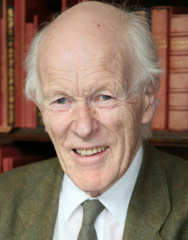 John Davidson合作论文数Department of Chemical Engineering and Biotechnology, University of Cambridge1




