Autonomous spacecraft inspection requires trajectories that satisfy safety and control constraints while enabling the collection of informative measurements about a target spacecraft. Traditional guidance and control methods typically decouple estimation from control, resulting in trajectories that do not explicitly optimize sensing geometry. This work presents a model predictive control (MPC) framework that incorporates estimation covariance in the control objective using a formulation inspired by dual control and covariance steering. The estimation covariance evolves according to a linear Kalman filter, and the measurement model depends on the relative geometry between the agent spacecraft and the target. By embedding the covariance dynamics within the MPC problem, the resulting trajectories account for measurement quality, actively reduce uncertainty, and improve observability in the estimated features of the target. The problem is formulated using relative motion dynamics via the Hill-Clohessy-Wiltshire equations with constraints on control input, relative distance, and terminal maximum covariance. Numerical simulations demonstrate that the proposed framework generates feasible inspection trajectories that actively reduce estimation covariance of points of interest on a target while satisfying input and safety constraints of the agent. A mesh analysis of initial conditions further illustrates how feasibility and the value function of the trajectory depend on the initial conditions and constraint activity.
This work takes a first step towards updating branch-and-bound iterations online for mixed-integer quadratic model predictive control (MIQP MPC) while keeping empirical stability, i.e., stability in simulation, of the closed-loop control system. To be exact, the branch-and-bound iteration limits are adaptively updated after sufficiently many MPC control updates. The adaptive update law is a Hybrid Lyapunov-like function and a branch-and-bound algorithm is proposed for clear analysis of the adaptive update law. Simulations verify the efficacy of the adaptive update law to reduce branch-and-bound iterations and maintain empirical stability of the feedback system for the controlled bouncing ball and minimum thrust spacecraft rendezvous problems.
Multi-agent systems are increasingly applied in space missions, including distributed space systems, resilient constellations, and autonomous rendezvous and docking operations. A critical emerging application is collaborative spacecraft servicing, which encompasses on-orbit maintenance, space debris removal, and swarm-based satellite repositioning. These missions involve servicing spacecraft interacting with malfunctioning or defunct spacecraft under challenging conditions, such as limited state information, measurement inaccuracies, and erratic target behaviors. Existing approaches often rely on assumptions of full state knowledge or single-integrator dynamics, which are impractical for real-world applications involving second-order spacecraft dynamics. This work addresses these challenges by developing a distributed state estimation and tracking framework that requires only relative position measurements and operates under partial state information. A novel ρ-filter is introduced to reconstruct unknown states using locally available information, and a Lyapunov-based deep neural network adaptive controller is developed that adaptively compensates for uncertainties stemming from unknown spacecraft dynamics. To ensure the collaborative spacecraft regulation problem is well-posed, a trackability condition is defined. A Lyapunov-based stability analysis is provided to ensure exponential convergence of errors in state estimation and spacecraft regulation to a neighborhood of the origin under the trackability condition. The developed method eliminates the need for expensive velocity sensors or extensive pre-training, offering a practical and robust solution for spacecraft servicing in complex, dynamic environments.
This paper compares the required fuel usage for forced and unforced motion of a chaser satellite engaged in Rendezvous, Proximity Operations, and Docking (RPOD) maneuvers. Improved RPOD models are vital, particularly as the space industry expands and demands for improved fuel efficiency, cost effectiveness, and mission life span increase. This paper specifically examines the Clohessy- Wiltshire (CW) Equations and the extent of model mismatch by comparing pre- dicted trajectories from this model with a more computationally complex, higher fidelity RPOD model. This paper assesses several test cases of similar mission parameters, in each case comparing natural motion circumnavigation (NMC) with comparable forced motion circumnavigation. The Guidance, Navigation, and Con- trol (GNC) impulse maneuvers required to maintain the supposedly zero fuel CW trajectories is representative of the extent of CW model mismatch. This paper demonstrates that unforced motions are not inherently more fuel efficient than forced motions, thus permitting extended orbital operations given the higher fuel efficiency.
This work demonstrates the existence of computational dynamics that evolve temporally when executing Model Predictive Control (MPC). These computational dynamics represent metrics such as CPU usage and power which are consumed by processors when performing the on-board calculations. The metrics, when observed temporally, appear to have dynamics that are asymptotically stable and perturbed when MPC is executed, demonstrating something akin to an input-output relationship. In particular, these magnitude of impact is driven by non-traditional inputs from the optimizations mathematical formulation, such as horizon length, to the solver parameters, such as stopping criteria. This work in particular focuses the analysis on spacecraft Rendezvous and Proximity Operations (RPO) where computation is limited, and demonstrates analytically the existence of these computational dynamics.
This paper experimentally validates the invariant-set motion planner (ISMP) for the spacecraft attitude motion planning problem. Three novel results are presented that enable the experimental implementation: i) a method for gridding quaternions from the keep-in cone, ii) a method for scaling the invariant sets to enforce angular velocity constraints, and iii) a method for scaling the sets used by the ISMP to ensure their positive invariance despite this torque constraint. The ISMP is experimentally validated through three experimental scenarios. In the first scenario, the spacecraft must perform a re-orientation maneuver that caused it to move toward a keep-out cone. The ISMP manages the momentum of the spacecraft to prevent it from overshooting into the keep-out cone. In the second scenario, the spacecraft performs a slalom maneuver to avoid a pair of keep-out cones. The ISMP must reverse the momentum of the spacecraft to transition from avoiding the first keep-out cone to the second. The final scenario is an unrealistically difficult scenario designed to stress-test the capabilities of the ISMP where the spacecraft must escape from a maze of keep-out cones. These results demonstrate the ability of the ISMP to control the spacecraft attitude while enforcing state and input constraints.
In this work, an optimal spacecraft maneuver planner is developed for rest-to-rest attitude transfers using single gimbal control moment gyroscopes (CMGs). In contrast to conventional optimization approaches developed using simplified dynamical models, this work examines the optimal performance and unique control strategies available to a variable speed CMG array under comprehensive physical models for its dynamics and power consumption. This formulation employs a dynamical model which preserves the array’s (conservative) momentum exchange dynamics, a power model directly tracking the usage of the individual CMG motors, and typical operational safety constraints on input saturation, angular velocity, and camera exclusion cones. On average, the optimal control strategies produced under this comprehensive formulation present a 35% reduction in mean required electrical energy and a 44% reduction in maneuver time over the classic singularity robust (SR) control law. These improvements are observed to correlate with several specific control behaviors. To extend these improvements to practical spacecraft design restrictions, suggestions on how to reproduce these behaviors using existing feedback control methods are provided.
This paper couples satellite guidance & navigation to improve awareness during Rendezvous and Proximity Operations (RPO). The methodology employs an optimization that fuses the guidance priority of minimizing fuel with the navigation priority of reducing perceived error, all while achieving mission objectives and safety constraints. This is demonstrated to be particularly beneficial in the case when angles-only-navigation is used, overcoming the range-ambiguity problem by utilizing small amounts of fuel. The technique showcases that there is coupling between guidance and navigation that can be exploited, despite classical results on separation principal.
Space weather can affect satellite mission performance, especially during space weather events where particle intensity increases drastically, inducing anomalies in subsystems such as sensors or in introducing unaccountable dynamics. In this work, an autonomous Satellite Control System (SCS) operational autonomous mode selection has been proposed to mitigate the effects of a space weather event, before, while, and after it has happened. Modeled as a disturbance to the system, at each time-iteration, the most effective mode will be selected to ensure the safety of the spacecraft, while mitigating the impact on the mission as much as possible.
In this paper, rigid body static optimization is investigated on the Riemannian manifold of rigid body motion groups. This manifold, which is also a matrix manifold, provides a framework to formulate translational and rotational motions of the body, while considering any coupling between those motions, and uses members of the special orthogonal group (3) to represent the rotation. Hence, it is called the special Euclidean group (3) . Formalism of rigid body motion on (3) does not fall victim to singularity or non-uniqueness issues associated with attitude parameterization sets. Benefiting from Riemannian matrix manifolds and their metrics, a generic framework for unconstrained static optimization and a customizable framework for constrained static optimization are proposed that build a foundation for dynamic optimization of rigid body motions on (3) and its tangent bundle. The study of Riemannian manifolds from the perspective of rigid body motion introduced here provides an accurate tool for optimization of rigid body motions, avoiding any biases that could otherwise occur in rotational motion representation if attitude parameterization sets were used.
Electromagnetically driven attitude control devices could be the key to reducing mechanical disturbances, mass, and volume requirements for fuel reserves on satellites. Enabled by the low temperature of space, superconductivity can be leveraged to sustain a current through a conductor for effectively no power cost. The electrons moving through the conductor as a result of the current contribute to the angular momentum of the satellite, allowing the control of the satellite's attitude as a function of applied voltage without mechanically interacting subsystems or chemical propellant. Although the scarcity of experimental data on superconductive quantum dynamics in space reduces the confidence in the assumptions and models presented, the theory and results developed in this paper suggest that further testing of the proposed concept could lead to an electromagnetic solution to attitude control.
This tutorial paper discusses the rising need for safe and constrained spacecraft Rendezvous, Proximity Operations, and Docking (RPOD). This class of problems brings with it i) a unique set of equations of motion, ii) a variety of constraints and objectives that are specialized to RPOD, and iii) a number of traditional and current Guidance, Navigation, and Control (GNC) considerations. There are strong connections between the work done in RPOD and a variety of other research domains that have synergistically aided in pushing forward the state-of-the-art. This tutorial paper discusses the above, provides an entry point into the field of spacecraft RPOD, and highlights a selection of open problems that still exist in the field.
In this work, we develop a numerically tractable trajectory optimization problem for rest-to-rest attitude transfers with CMG-driven spacecraft. First, we adapt a specialized dynamical model which avoids many of the numerical challenges (singularities) introduced by common dynamical approximations. To formulate and solve our specialized trajectory optimization problem, we design a locally stabilizing Linear Quadratic (LQ) regulator on the system's configuration manifold then lift it into the ambient state space to produce suitable terminal and running LQ cost functionals. Finally, we examine the performance benefits and drawbacks of solutions to this optimization problem via the PRONTO solver and find significant improvements in maneuver time, terminal state accuracy, and total control effort. This analysis also highlights a critical shortcoming for objective functions which penalize only the norm of the control input rather than electrical power usage.
This paper considers a satellite inspection mission where the deputy satellite is required to remain a fixed distance away from the chief satellite. This constraint on the deputy's state is modeled as the surface of a sphere. Finding minimum energy solutions to travel from one point to another point on the sphere requires solving a nonconvex optimal control problem. Various novel suboptimal algorithms are proposed that can guarantee a feasible solution. These algorithms are benchmarked by optimal values obtained via a global continuation method, and their computational performance is analyzed in a statistical setting.
A methodology is developed to use convex optimization for finding the propellant-optimal finite-thrust trajectory of a spacecraft to inject into a specified natural-motion circumnavigation (NMC) orbit around another spacecraft. The problem is nonconvex. A philosophically new perspective is introduced to take advantage of modern convex optimization. Through a novel analysis the NMC problem is shown to be equivalent to a two-dimensional constrained optimization problem. This conceptually simpler interpretation enables two numerical approaches to be investigated, one based on convex relaxation and the other linearization-projection. It is established that while each approach is able to lead to the solution to the NMC-injection problem in a subset of the possible cases, their domains of applicability complement each other to cover all possible cases. A hybrid algorithm is designed that combines the strengths of the two approaches and enables the application of convex optimization to solve the NMC-injection problem in all cases where the solution exists, without the need for any user-supplied parameters or initial guesses. The effectiveness of the hybrid algorithm is demonstrated in finding the numerical solutions to the NMC problem reliably and rapidly.
We propose a method for open-loop stochastic optimal control of LTI systems based on Taylor approximations of quantile functions. This approach enables efficient computation of quantile functions that arise in chance constrained reformulations. We are motivated by multi-vehicle planning problems for LTI systems with norm-based collision avoidance constraints, and polytopic feasibility constraints. Respectively, these constraints can be posed as reverse-convex and convex chance constraints that are affine in the control and disturbance. We show for constraints of this form, piecewise affine approximations of the quantile function can be embedded in a difference-of-convex program that enables use of conic solvers. We demonstrate our method for multi-satellite coordination with Gaussian and Cauchy disturbances, and provide a comparison with particle control.
This letter adapts the invariant-set motion-planner for safe spacecraft attitude control. The invariant-set motion-planner is a motion-planning algorithm that uses the positive-invariant sets of the closed-loop dynamics to find a constraint admissible path to a desired target through an obstacle filled environment. We use the invariant-set motion-planner to plan a sequence of reference quaternion waypoints that safely guides the spacecraft attitude around keep-out cones to a desired orientation. Our main contribution is the use of parametric optimization to derive a computationally efficient method solving the non-convex safety certification optimization problem. The computational efficiency of our safety certification is demonstrated in a numerical example.
This paper introduces an optimal trajectory planner for spacecraft rest-to-rest attitude transfers subject to input saturation, angular velocity, and nonconvex exclusion cone constraints. The proposed solution adapts the Projection-Operator-Based Newton's Method for Trajectory Optimization (PRONTO) to address the nonlinearity of the unit quaternion manifold. The system constraints are then handled using a modified interior point method designed to remain applicable when an intermediate solution estimate is infeasible. Through an extensive numerical study, the proposed solution is compared with a state-of-the-art commercial solver, its computational efficiency is demonstrated, and its unique ability to provide feasible intermediate solutions is highlighted. These results strongly indicate PRONTO as a suitable real-time optimal maneuver planner for spacecraft attitude control.
 Ilya Kolmanovsky合作论文数Department of Aerospace Engineering, College of Engineering, University of Michigan Ann Arbor24
 Frederick A. Leve合作论文数17
 Anouck Girard合作论文数Department of Aerospace Engineering, College of Engineering, University of Michigan-Ann Arbor10
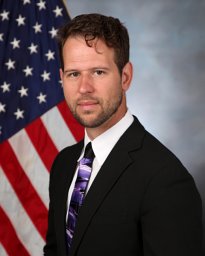 Sean Phillips合作论文数8
 Gregory R. Frey合作论文数Dept Aerosp Engn, Univ Michigan6Morgan Baldwin合作论文数5
 Xudong Chen合作论文数System and Control Lab, The Preston M. Green Department of Electrical & Systems Engineering, McKelvey School of Engineering, Washington University in St. Louis4
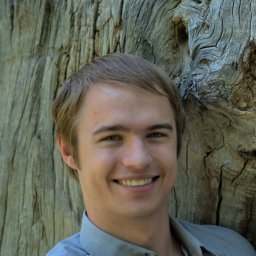 Thomas L. Dearing合作论文数Elect Comp & Energy Engn ECEE Dept, Univ Colorado4
 Marco M. Nicotra合作论文数4
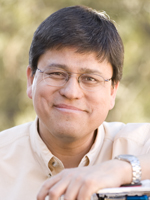 Rafael Fierro合作论文数Department of Electrical and Computer Engineering, University of New Mexico4Shawn Priore合作论文数3
 Richard L. Sutherland合作论文数3
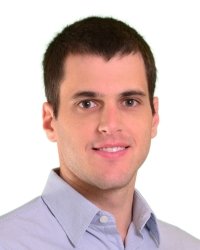 Avishai Weiss合作论文数3
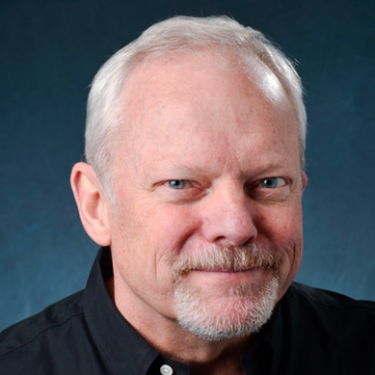 John Hauser合作论文数Electrical, Computer & Energy Engineering, College of Engineering & Applied Science, University of Colorado Boulder3
 Meeko Oishi合作论文数Department of Electrical and Computer Engineering, School of Engineering, University of New Mexico;Center for Biomedical Engineering, University of New Mexico3Joseph Kloeppel合作论文数2
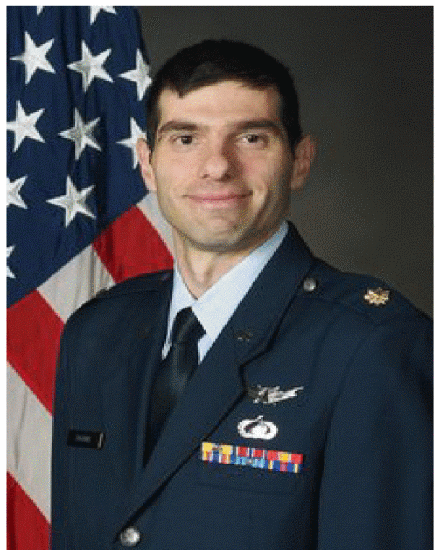 Costantinos Zagaris合作论文数Department of Aeronautics & Astronautics, Air Force Institute of Technology2molly flynn合作论文数2
 Richard Scott Erwin合作论文数Erwin Aerospace LLC;Air Force Research Laboratory2
 Emanuele Garone合作论文数Dipartimento di Elettronica, Informatica e Sistemistica, Università degli Studi della Calabria2
 Claus Danielson合作论文数2
 Brennan McCann合作论文数1Anonto Zaman合作论文数1Berning Jr. Andrew W.合作论文数1Jean Pierre合作论文数1
 Faraz Abed Azad合作论文数1
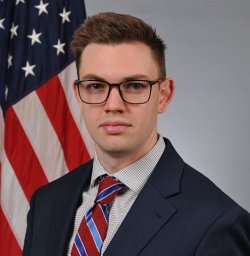 Alexander A. Soderlund合作论文数Space Vehicles Directorate, Air Force Research Laboratory1
 Vignesh Sivaramakrishnan合作论文数Elect & Comp Engn, Univ New Mexico1
 Omkar Sudhir Patil合作论文数Department of Mechanical and Aerospace Engineering, University of Florida1
 Robert A. E. Zidek合作论文数Toyota Res Inst, Ann Arbor, MI 48105 USA1
 Nathaniel T Woodford合作论文数Mechanical and Aerospace Engineering Department, Utah State University1
 Bryce Doerr合作论文数Univ Minnesota, Dept Aerosp Engn & Mech, Minneapolis, MN 55455 USA1
 Matthew W. Harris合作论文数Department of Mechanical and Aerospace Engineering, Utah State University1
 Nan Li合作论文数School of Automotive Studies, Tongji University1
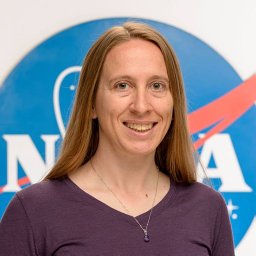 Dawn Hustig Schultz合作论文数University of California Santa Cruz1
 Jewison, Chris合作论文数1
 Ryan James Caverly合作论文数1
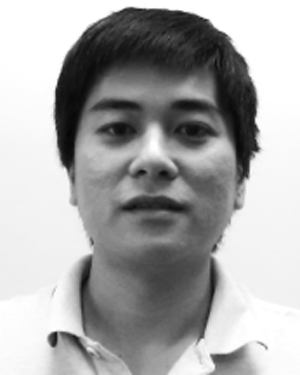 Chau Ton合作论文数1
 Morad Nazari合作论文数Dept Aerosp & Mech Engn, Univ Arizona1
 Abraham P. Vinod合作论文数Department of Electrical Engineering, Indian Institute of Technology Madras;c;Department of Electrical Engineering, Indian Institute of Technology Madras1
 Adams Richard J合作论文数Department of Physiology, Development and Neuroscience, University of Cambridge1
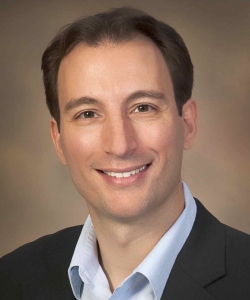 Ricardo G. Sanfelice合作论文数Department of Electrical and Computer Engineering, University of California Santa Cruz1
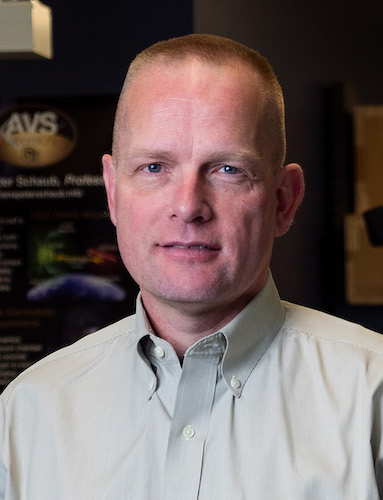 Hanspeter Schaub合作论文数Department of Ann and H.J. Smead Aerospace Engineering Sciences, College of Engineering and Applied Science, University of Colorado Boulder1
 Alberto Bemporad合作论文数IMT School for Advanced Studies Lucca;ODYS S.r.l.1
 Michael D. Devore合作论文数1
 Warren Dixon合作论文数Department of Mechanical and Aerospace Engineering,University of Florida1
 Andrew T. Harris合作论文数School of Chemical and Biomolecular Engineering, University of Sydney1
 Richard Linares合作论文数1
 William R. Dunham合作论文数Biophysics Research Division, University of Michigan1




