A methodology is developed to use convex optimization for finding the propellant-optimal finite-thrust trajectory of a spacecraft to inject into a specified natural-motion circumnavigation (NMC) orbit around another spacecraft. The problem is nonconvex. A philosophically new perspective is introduced to take advantage of modern convex optimization. Through a novel analysis the NMC problem is shown to be equivalent to a two-dimensional constrained optimization problem. This conceptually simpler interpretation enables two numerical approaches to be investigated, one based on convex relaxation and the other linearization-projection. It is established that while each approach is able to lead to the solution to the NMC-injection problem in a subset of the possible cases, their domains of applicability complement each other to cover all possible cases. A hybrid algorithm is designed that combines the strengths of the two approaches and enables the application of convex optimization to solve the NMC-injection problem in all cases where the solution exists, without the need for any user-supplied parameters or initial guesses. The effectiveness of the hybrid algorithm is demonstrated in finding the numerical solutions to the NMC problem reliably and rapidly.
This article presents techniques for updating models of dynamical systems using probabilistic techniques based on measured real-world data collected from the physical systems those models represent. Complex cyber-physical systems are often characterized by epistemic and aleatoric random uncertainty. Traditionally, uncertainty quantification, propagation, and analysis has been conducted using Monte Carlo simulation; however, Monte Carlo simulations often incur a high computational cost, are time consuming, and are slow to converge. Moreover, even after dedicating the time and computational resources to perform exhaustive Monte Carlo analysis, comprehensive coverage of the uncertainty space is not assured, and reasoning over the simulation results incurs significant additional burdens due to the massive amount of data typically involved. Recently, generalized polynomial chaos (gPC) has been advocated by many researchers in the uncertainty quantification community as a way of addressing these limitations. That work has largely focused on the forward problem of computing probabilistic representations of system response in gPC form. Research into the inverse problem, that of adjusting the gPC form to better match real-world measurements, has been lacking. This paper addresses that question, casting it as a problem in Bayesian inference. The technique is illustrated on both a simple spring-mass-damper system and a more realistic tiltrotor aircraft. Demonstrations are performed using the community edition of AURA, a family of Matlab/Simulink toolboxes for gPC modeling.
This paper presents a runtime assurance (RTA) framework for an unmanned aerospace application. RTA systems hold the promise of protecting feedback systems that contain advanced or experimental elements that cannot be completely tested at design time to their required levels of assurance. This inability of fully trusting such advanced systems is due to their inherent complexity and that current analysis, verification, and validation protocols cannot address such complexity. The necessary structure of RTA frameworks for multilevel interacting feedback systems is investigated. A challenge problem is constructed for a fleet of unmanned aircraft systems performing complex missions. The complete study involves integrating RTA systems for the inner-loop control, outer-loop guidance, vehicle flight management, and runtime mission planning elements. The RTA interactions between these feedback levels are explored in this effort. General required RTA checks are presented and the critical reversionary switching conditions defined. More detailed system design is presented for the outer-loop guidance feedback level.
Since the emergence of the commodity-priced, small-sized Microsoft Kinect™ sensor, 3D object pose estimation has become prevalent in many applications across a wide variety of disciplines. However, because most current methods require a hard assignment between a measurement point cloud and a given CAD model point cloud for alignment, accurate pose estimation is limited to a small range of sensor noise and resolution, and CAD model precision. This paper therefore presents a MLE algorithm that achieves a statistically optimal global maximum likelihood on the surface of the continuous 6D pose domain by soft assigning all measurement points to all model points. The accuracy in estimation of orientation and position of the MLE algorithm is then compared to a variant of the ICP method that accounts for an anisotropie Gaussian measurement noise distribution. It is finally shown through a series of simulated measurement point clouds and depth images that MLE outperforms the ICP variant, and achieves a monotonie increase in performance with an increase in either points on target or CAD model precision.
The stochastic error characteristics of the Kinect sensing device are presented for each axis direction. Depth (z) directional error is measured using a flat surface, and horizontal (x) and vertical (y) errors are measured using a novel 3D checkerboard. Results show that the stochastic nature of the Kinect measurement error is affected mostly by the depth at which the object being sensed is located, though radial factors must be considered, as well. Measurement and statistics-based models are presented for the stochastic error in each axis direction, which are based on the location and depth value of empirical data measured for each pixel across the entire field of view. The resulting models are compared against existing Kinect error models, and through these comparisons, the proposed model is shown to be a more sophisticated and precise characterization of the Kinect error distributions.
Noise characteristics for the Microsoft Kinect sensor are presented. Horizontal (x) and vertical (y) stochastic noise are measured using a novel 3D checker board. Results show that the noise is affected mostly by the depth at which the object is sensed and by the radial distance from the center of the field of view. Measurement-based models for the noise in horizontal and vertical axes are presented. The proposed model is compared against existing models in literature and shows better results by considering the horizontal and vertical location of the depth measurement.
The development of a more unified theory of automatic target recognition (ATR) has received considerable attention over the last several years from individual researchers, working groups, and workshops. One of the major benefits expected to accrue from such a theory is an ability to analytically derive performance metrics that accurately predict real-world behavior. Numerous sources of uncertainty affect the actual performance of an ATR system, so direct calculation has been limited in practice to a few special cases because of the practical difficulties of manipulating arbitrary probability distributions over high dimensional spaces. This paper introduces an alternative approach for evaluating ATR performance based on a generalization of Norbert Wiener's polynomial chaos theory. Through this theory, random quantities are expressed not in terms of joint distribution functions but as convergent orthogonal series over a shared random basis. This form can be used to represent any finite-variance distribution and can greatly simplify the propagation of uncertainties through complex systems and algorithms. The paper presents an overview of the relevant theory and, as an example application, a discussion of how it can be applied to model the distribution of position errors from target tracking algorithms.
This paper illustrates an approach to sequential hypothesis testing designed not to minimize the amount of data collected but to reduce the overall amount of processing required, while still guaranteeing pre-specified conditional probabilities of error. The approach is potentially useful when sensor data are plentiful but time and processing capability are constrained. The approach gradually reduces the number of target hypotheses under consideration as more sensor data are processed, proportionally allocating time and processing resources to the most likely target classes. The approach is demonstrated on a multi-class ladar-based target recognition problem and compared with uniform-computation tests.
: This document is the final report for research on ATR Center RASER Grant FA8650-07-1-1113. The objective of this project was to expand the capabilities of model-based assisted/automated target recognition (ATR) systems by explicitly accommodating variation in shape and reflectance across elements of a broad target class. Work is set in the context of three-dimensional point-cloud data sets, such as LADAR or other structured light methods, and builds off a data representation model that represents measurement uncertainty probabilistically. Under this data model, the likelihood that a particular target gave rise to an observed point cloud can be computed using a collection of numerical integrations over the surface of a model of a target. Selection of the target with the largest likelihood then yields the classification result with the minimum probability of error (MPE) that can be achieved using a given sample of observed points. Our focus is on the study of anytime ATR algorithms, which are structured to support classification result queries that are placed at unknown, arbitrary times. A naive anytime algorithm based on the MPE decision rule can be defined in terms of round-robin calculations of likelihoods for observed points.
: Our work focused on design and implementations guidelines for ATR systems that must adapt to time-varying resource constraints. The goal is to have systems that can dynamically change based on the availability of time, number of processors, communication bandwidth, and system architecture including access to remote databases. The systems should have nearly optimal performance given the resources available. One set of designs proposed is based on hierarchical data and processing models and on-line performance evaluation. The hierarchical models are based on information-theoretic considerations, a fundamental basis that is unique to our approach.
Considerable attention has recently been focused on laser radar (ladar) systems for surveillance applications, because of the richness inherent in the three-dimensional data they collect. Several research groups have looked into the ability to exploit ladar data in automatic or assisted target recognition systems. Designers of practical ladar recognition systems must have answers to very fundamental questions related to the quality and quantity of data required, the fidelity of target models used by the algorithm, and the effects of incorporating prior knowledge. This paper presents implementation guidelines derived from a simulation-based analysis of many such factors that can affect classification accuracy, including measurement noise and corresponding noise model accuracy, number of measured points on target, target model accuracy, target pose error, prior information, and target occlusion. The study includes data from eight vehicles, including seven civilian automobiles of similar size and shape, chosen specifically to result in a "hard" classification problem. Data are simulated under three hypothetical scenarios: 1) a pole-mounted ladar system for monitoring traffic through an intersection; 2) a low-flying helicopter-born ladar system for law enforcement applications; and 3) a low-altitude unmanned aerial vehicle (UAV) for military surveillance applications.
In this article, we describe a new approach to compare the power of different tests for normality. This approach provides the researcher with a practical tool for evaluating which test at their disposal is the most appropriate for their sampling problem. Using the Johnson systems of distribution, we estimate the power of a test for normality for any mean, variance, skewness, and kurtosis. Using this characterization and an innovative graphical representation, we validate our method by comparing three well-known tests for normality: the Pearson χ2 test, the Kolmogorov–Smirnov test, and the D'Agostino–Pearson K 2 test. We obtain such comparison for a broad range of skewness, kurtosis, and sample sizes. We demonstrate that the D'Agostino–Pearson test gives greater power than the others against most of the alternative distributions and at most sample sizes. We also find that the Pearson χ2 test gives greater power than Kolmogorov–Smirnov against most of the alternative distributions for sample sizes between 18 and 330.
We report on a the design of a video surveillance system designed for rapid deployment on devices with limited computation and communication capability. The system employs a new video encoding algorithm specifically designed for surveillance of moving objects in a slowly changing environment. The prototype system is deployed on a mixed Linux network, with video streams originating from desktop, laptop, and Intel PXA25S-based embedded devices. Low computational demand and high compression rates are achieved by segmenting foreground objects from the background and streaming only meta-information and compressed imagery representing the foreground. Rapid deployment and seamless monitoring are provided through a web-based interface that manages multiple geographic regions and the cameras they contain, camera addresses, motion detection alerts, and video streams.
This paper illustrates a statistical model-based approach to the problem of target detection in a cluttered scene from long-wave infrared images, accommodating both unknown range to the target, unknown target location in the image, and unknown gain control settings on the imaging device. The philosophical perspective adopted emphasizes an iterative process of model creation and refinement and subsequent evaluation. The overarching theme is on the clear statement of all assumptions regarding the relationships between ground truth and corresponding imagery, the assurance that each admits quantifiable refutation, and the opportunity costs associated with their adoption for a particular problem.
Shape measurements form powerful features for recognizing objects, and many imaging modalities produce three-dimensional shape information. Stereo-photogrammetric techniques have been extensively developed, and many researchers have looked at related techniques such as shape from motion, shape from accommodation, and shape from shading. Recently, considerable attention has focused on laser radar systems for imaging distant objects, such as automobiles from an airborne platform, and on laser-based active stereo imaging for close-range objects, such as part scanners for automated inspection. Each use of these laser imagers generally results in a range image, an array of distance measurements as a function of direction. For multi-look data or data fused from multiple sensors, we may more generally treat the data as a 3D point-cloud, an unordered collection of 3D points measured from the surface of the scene. This paper presents a general approach to object recognition in the presence of significant clutter, that is suitable for application to a wide range of 3D imaging systems. The approach relies on a probabilistic framework relating 3D point-cloud data and the objects from which they are measured. Through this framework a minimum probability of error recognition algorithm is derived that accounts for both obscuring and nonobscuring clutter, and that accommodates arbitrary (range and cross-range) measurement errors. The algorithm is applied to a problem of target recognition from actual 3D point-cloud data measured in the laboratory from scale models of civilian automobiles. Noisy 3D measurements are used to train models of the automobiles, and these models are used to classify the automobiles when present in a scene containing natural and man-made clutter.
This paper reports on the design and development of a database system capable of collection, storage, and sharing of infertility research data, specifically non-surgical fertility treatments, excluding in vitro fertilization techniques (non-IVF)1 for researchers at the University of Virginia's Department of Obstetrics and Gynecology (UVA OBGYN). The created system is used to study the effectiveness of different fertilization treatment methods, and ultimately improve infertility medical practice. In addition, the design aspects of this system are an important initial step towards the standardization of medical research records, in any hospital and clinic, regardless of medical specialty. The presented system design requirements emphasize database modularity, data distribution, and compliance with HIPAA regulations
We derive approximate expressions for the probability of error in a two-class hypothesis testing problem in which the two hypotheses are characterized by zero-mean complex Gaussian distributions. These error expressions are given in terms of the moments of the test statistic employed and we derive these moments for both the likelihood ratio test, appropriate when class densities are known, and the generalized likelihood ratio test, appropriate when class densities must be estimated from training data. These moments are functions of class distribution parameters which are generally unknown so we develop unbiased moment estimators in terms of the training data. With these, accurate estimates of probability of error can be calculated quickly for both the optimal and plug-in rules from available training data. We present a detailed example of the behavior of these estimators and demonstrate their application to common pattern recognition problems, which include quantifying the incremental value of larger training data collections, evaluating relative geometry in data fusion from multiple sensors, and selecting a good subset of available features.
We derive a pair of algorithms, one optimal and the other approximate, for recognizing three-dimensional objects from a collection of points chosen from their surface according to some probabilistic mechanism. The measurements are assumed to be noisy, and the measured location of a given point is translated according to a noise probability distribution. Distributions governing surface point selection and measurement noise can take a variety of forms depending upon the particular measurement scenario. At one extreme, each measurement is assumed to yield values restricted to a one-dimensional ray, a special case commonly adopted in the literature. At the other extreme, measured points are chosen uniformly from the object's surface, and the noise distribution is spherically symmetric, a worst-case scenario that involves no prior information about the measurements. We apply these two algorithms to shape recognition problems involving simple geometrical objects, and examine their relative behavior using a combination of analytical derivation and Monte Carlo simulation. We show that the approximate algorithm can be far simpler to compute, and its performance is competitive with the optimal algorithm when noise levels are relatively low. We show the existence of a critical noise level, beyond which the approximate algorithm exhibits catastrophic failure. (c) 2005 Society of Photo-Optical Instrumentation Engineers.
The widespread need within corporate information systems (IS) divisions to migrate large quantities of data between data stores has spawned a family of commercial products, which are commonly referred to as extract-transform-load (ETL) tools. The focus of this paper is the development of engineering trade studies to be used for ETL tool evaluation. This approach: (1) Identifies selection criteria that are essential in the evaluation of an ETL tool, (2) Develops scenarios that examine each criterion, and (3) Develops quantitative measures useful for evaluating the various aspects of ETL usage. This approach generates replicable evaluation methods that can be used and modified by companies to address their own ETL product needs. With the results generated through such evaluations, companies will be able to make informed decisions and choose the best ETL tool for their purposes.
 Joseph a Osullivan合作论文数Electrical and Systems Engineering Department16
 Peter A. Beling合作论文数Department of Systems and Information Engineering6
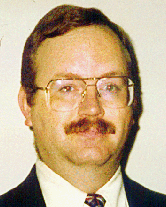 Roger D. Chamberlain合作论文数Department of Computer Science and Engineering, McKelvey School of Engineering, Washington University in St. Louis4
 Irwin Reyes合作论文数Int Comp Sci Inst, Berkeley, CA 94704 USA3xin zhou合作论文数3
 Barry M. Horowitz合作论文数University of Virginia3Lee J. Montagnino合作论文数3
 Mark Franklin合作论文数Washington University3Na Schmid合作论文数2
 Choo, B.合作论文数Dept. of Syst. & Inf. Eng., Univ. of Virginia;c;Dept. of Syst. & Inf. Eng., Univ. of Virginia2Vikas Kedia合作论文数2J. A. O'Sullivan合作论文数1Ma Franklin合作论文数1alec bateman合作论文数1jared cooper合作论文数1Adam Reed合作论文数1benjamin walthall合作论文数1
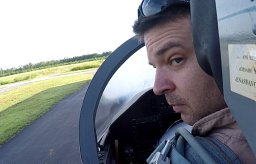 Nathan D. Richards合作论文数Barron Associates, Inc.1
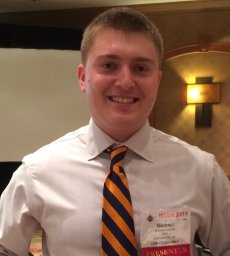 Michael Joshua Landau合作论文数Department of Systems and Information Engineering, University of Virginia1Alice Chan合作论文数1Shageer, H.M.合作论文数1Han, R.J.合作论文数1Corcoran, M.K.合作论文数1Belcher, J.K.合作论文数1Lee, D.合作论文数1Hwang, M.合作论文数1Hoon, S.合作论文数1Henry, S.合作论文数1Lindgren, G.合作论文数1Fang, J.合作论文数1Adhikari, S.合作论文数1Christopher Petersen合作论文数1
 Aaron Lanterman合作论文数School of Electrical and Computer Engineering, College of Engineering, Georgia Institute of Technology1
 Zhou Xin J合作论文数Canc Ctr Dept Genet, Univ Texas MD Anderson1
 Adams Richard J合作论文数Department of Physiology, Development and Neuroscience, University of Cambridge1
 Michael I. Miller合作论文数Department of Biomedical Engineering, Johns Hopkins University1George L. Engel合作论文数1Washington University合作论文数1
 Ping Lu合作论文数Department of Aerospace Engineering, College of Engineering, San Diego State University1
 Donald E. Brown合作论文数Translation Health Institute of Virginia, University of Virginia;Data Science Institute, University of Virginia;School of Engineering and Applied Science, University of Virginia1Michael S. Landau合作论文数and Veteran’s Affairs Medical Center, University of Pittsburgh1
 Lisa Pastore合作论文数1
 John Schierman合作论文数1
 Samuel H. Huddleston合作论文数University of Virginia1
 Marc D Breton合作论文数Diabetes Technology Center, University of Virginia Health System1
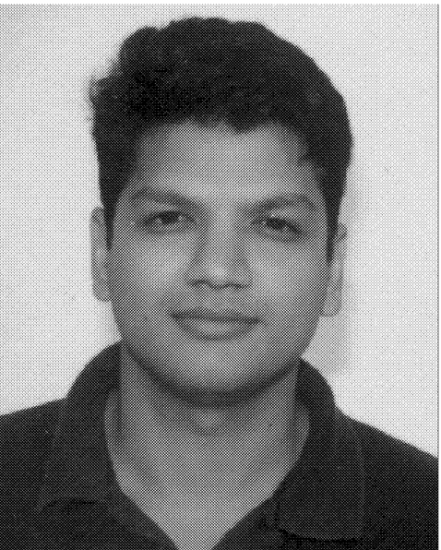 V. Kedia合作论文数1




