Detecting shielded special nuclear material, such as nuclear explosives, is a difficult challenge pursued by non-proliferation, anti-terrorism, and nuclear security programs worldwide. Interrogation with intense fast-neutron pulses is a promising method to characterize concealed nuclear material rapidly but is limited by suitable source availability and proven instrumentation. In this study we have pioneered a demonstration of such an interrogation method using a high-intensity, short-pulse, laser-driven neutron source that offers potential benefits compared to conventional neutron sources. The measurement results reported here represent the first experimental demonstration of this interrogation approach on enriched uranium items and demonstrate the feasibility of a precise measurement using realistic nuclear materials, representative of field scenarios, even with just a single laser-driven neutron pulse. Bright pulsed sources can overcome the nuisance background of items with strong internal neutron sources, improving analytical power, while single-shot assay is attractive in high-throughput situations where time is at a premium. The science and technology of this type of neutron production is developing rapidly, and we anticipate that practical mobile interrogation systems will become available based on the detection concepts demonstrated here to meet the growing measurement needs.
Precise characterization of experimental radiation flow is required to validate the high energy density physics models, numerical methods, and codes that are used to simulate radiation-hydrodynamics phenomena such as thermal radiation transport in stochastic media. The Cassio code is used to simulate thermal radiation flow through inhomogeneous, stochastic-media-foam configurations containing optically thick clumps dispersed within an optically thin background aerogel. Cassio can model small inhomogeneous problems directly, but most problems require approximations to meet computer limitations on run-times and memory usage. Various examples of these approximations are methods that produce, in one calculation, an ensemble-averaged solution and associated standard deviation; reduced spatial dimensionality with approximate geometries; and full material homogenization with no geometric detail. Cassio simulations are used to design experiments at the OMEGA-60 Laser Facility that can measure the radiation flow using the spatially resolved COAX absorption spectroscopy diagnostic. The experimental platforms flow radiation through foam targets ranging from a background-only aerogel, to a single configuration of a specified stochastic medium, to a fully homogenized foam of the background and clump materials. Under constant total clump mass, larger clumps (here, larger than 10 μm diameter) will mix more slowly with the background such that the bulk radiation flow is faster than it would be in a fully homogenized material. The COAX platform can be used to infer temperature and density profiles in both the background material and clumps, simultaneously, and therefore to differentiate radiation flow in a range of stochastic and homogeneous media.
Aerogels have been exploited in targets for inertial confinement fusion (ICF) and other high-energy-density physics (HEDP) experiments for decades, dating back to the earliest experiments in those fields. Aerogels are ubiquitous in this realm of research and serve many roles in the experiments that utilize them. The combination of diverse properties and compositional flexibility achieved with aerogels is the reason for this: tunable density; mesoporosity (which ensures homogeneity at length scales of microns and greater); availability of a wide range of compositions; amenability to doping, machining, and casting; and being otherwise chemically and structurally versatile. In this chapter, we discuss the various organic and inorganic aerogel materials that have been used and the roles in which they have served ICF and HEDP experiments. In addition to aerogels, we will describe some other related low-density materials that, while perhaps not strictly considered aerogels, are still quite useful and commonly used in ICF/HEDP targets.
The COAX platform has been used in numerous experiments to study radiation flow from a laser-driven halfraum down a low-density SiO2 foam laden with Ti, Sc, or V as spectroscopic dopants. These experiments, conducted first at OMEGA-60 and transitioning to NIF, utilize 1-D space-resolving absorption spectroscopy to characterize the radiation flow temperature to within +8eV and density within +11mg/cc. Parallel point-projection radiography measurements capture the development of the transonic and subsonic shock, and the combination strongly constrains radiation hydrodynamics simulations. This presentation will overview our body of work in this area and advertise applications to laboratory astrophysics, materials studies, and ICF.
Inertial confinement fusion (ICF) implosions involve highly coupled physics and complex hydrodynamics that are challenging to model computationally. Due to the sensitivity of such implosions to small features, detailed simulations require accurate accounting of the geometry and dimensionality of the initial conditions, including capsule defects and engineering features such as fill tubes used to insert gas into the capsule, yet this is computationally prohibitive. It is therefore difficult to evaluate whether discrepancies between the simulation and experiment arise from inadequate fidelity to the capsule geometry and drive conditions, uncertainties in physical data used by simulations, or inadequate physics. We present results from detailed high-resolution three-dimensional simulations of ICF implosions performed as part of the MARBLE campaign on the National Ignition Facility [Albright et al., Phys. Plasmas 29, 022702 (2022)]. These experiments are foam-filled separated-reactant experiments, where deuterons reside in the foam and tritons reside in the capsule gas fill and deuterium–tritium (DT) fusion reactions only occur in the presence of mixing between these materials. Material mixing in these experiments is primarily seeded by shock interaction with the complex geometry of the foam and gas fill, which induces the Richtmyer–Meshkov instability. We compare results for experiments with two different gas fills (ArT and HT), which lead to significant differences in the hydrodynamic and thermodynamic developments of the materials in the implosion. Our simulation results show generally good agreement with experiments and demonstrate a substantial impact of hydrodynamic flows on measured ion temperatures. The results suggest that viscosity, which was not included in our simulations, is the most important unmodeled physics and qualitatively explains the few discrepancies between the simulation and experiment. The results also suggest that the hydrodynamic treatment of shocks is inadequate to predict the heating and yield produced during shock flash, when the shock converges at the center of the implosion. Alternatively, underestimation of the level of radiative preheat from the shock front could explain many of the differences between the experiment and simulation. Nevertheless, simulations are able to reproduce many experimental observables within the level of experimental reproducibility, including most yields, time-resolved X-ray self-emission images, and an increase in burn-weighted ion temperature and neutron down-scattered ratio in the line of sight that includes a jet seeded by the glue spot that joins capsule hemispheres.
In inertial confinement fusion (ICF), deuterium-tritium (DT) fuel is brought to densities and temperatures where fusion ignition occurs. Mix of ablator material into the fuel may prevent ignition by diluting and cooling the fuel. MARBLE experiments at the National Ignition Facility (NIF) provide new insight into how mix affects thermonuclear burn. These experiments use laser-driven capsules containing deuterated plastic foam and tritium gas. Embedded within the foam are voids of known sizes and locations, which control the degree of heterogeneity of the fuel. Initially, the reactants are separated, with tritium concentrated in the voids and deuterium in the foam. During the implosion, mix occurs, leading to DT fusion reactions in the mixed region. Here we show that by measuring ratios of DT and deuterium-deuterium (DD) neutron yields for different macropore sizes and gas compositions, effects of mix heterogeneity on thermonuclear burn may be quantified and understood for the first time.
Air impermeability has been observed in low-density aerogel and cryogel materials, which has led to a series of experiments to investigate the feasibility of an air buoyant vacuum vessel, as well as the fabrication and testing of sub-buoyant prototypes. Bulk samples of silica aerogel were shown to isolate vacuum from ambient air for several hours with optimal vacuum isolation occurring at a density of approximately 85 mg cm−3. It was demonstrated using polyimide aerogel and cryogel materials that the ability of these foam materials to provide an air impermeable layer between vacuum and atmosphere, in spite of being comprised of mostly void space, is related to material stiffness. It is hypothesized that this behavior is due to local deformation of the random nanostructure of the material. Spherical shell vacuum vessels were produced using the polyimide cryogel, and less than 133 Pa vacuum containment was demonstrated under active pumping. In order to approach the non-buoyant to buoyant transition for these vacuum vessels, a polyimide composite was produced using helical fibers for which preliminary mechanical testing was performed.
The Marble campaign on the National Ignition Facility investigates the effect of heterogeneous mix on thermonuclear burn for comparison to a probability distribution function (PDF) burn model. Marble utilizes plastic capsules filled with deuterated plastic foam and a fill gas containing tritium. As the capsules implode, the deuterium in the foam mixes with the tritium gas, and DT neutrons are produced as the shocks compress and heat the mixture. The yield of DT neutrons is dependent on the uniformity of the mix, with more heterogeneous mix producing fewer neutrons. In Marble, the heterogeneity of the mix is controlled by varying the diameter of voids introduced into the foam. The first NIF Marble campaign has been executed in which the Marble capsules were indirectly driven with a single strong shock using NIF hohlraums. The experiments produce a low-convergence, high-ion-temperature implosion. The ratio of DT to DD neutron yield is largely consistent with uniform atomic mix for fine-pore foam, and increases slightly with void diameter, contrary to 1D simulations using the PDF burn model. Recent 3D high-resolution simulations of similar experiments performed on the Omega Laser Facility suggest an explanation.
Predicting and matching radiation wave propagation with computational models has proven difficult. Information provided by experiments studying radiation flow has been limited when only radiation breakout is measured. We have developed the COAX (co-axial) diagnostic platform to provide spatial temperature profiles of a radiation wave through low density foams as a more detailed constraint for simulations. COAX uses a standard, laser-driven OMEGA-60 halfraum to drive radiation down a titanium-laden silicon oxide foam. Point projection X-ray absorption spectroscopy perpendicular to the radiation flow measures the spatial profile of titanium ionization. The spectroscopic measurement utilizes a broadband capsule backlighter. Imaging and streak spectroscopy are used to characterize the size and spectrum of this source. Radiography provides an additional constraint by capturing the developing shock as the radiation flow becomes subsonic. The DANTE diagnostic is used to measure the halfraum temperature. We provide a spectroscopic analysis of COAX data to determine temperature, and we describe experimental sources of uncertainty. The temperature is obtained by comparison to multi-temperature synthetic spectra post-processed from radiation-hydrodynamics simulations. Quantitative comparison between data and synthetic spectra generated from temperature profiles at relevant simulation times enable determination of a peak temperature of 114 +/- 8 eV at 265 +/- 22.4 mu m from the halfraum. This represents an improvement over the temperature uncertainties of previous radiation flow experiments. Further refinements to the spectroscopic analysis could achieve +/- 4 eV. The combination between space-resolved spectroscopy and radiography enables us to determine the distance from the halfraum of both the radiation front and the shock front at the time of measurement. For the example shown in this paper the radiation front position is 600-630 mu m at 3.43 +/- 0.16 ns and the shock front position is 633 mu m at 3.3 +/- 0.24 ns.
The Marble experimental platform at the National Ignition Facility (NIF) was developed to quantify the influence of heterogeneous mix on fusion burn. The platform utilizes a plastic capsule filled with a deuterated plastic foam of controlled coarseness, with tritium gas filling the voids in the foam. The capsule implosion is driven with x rays generated in an NIF Hohlraum in which the time-dependent symmetry of the implosion can be controlled via dynamic beam phasing. Importantly, the Hohlraum drive conditions can be understood via integrated 2D radiation-hydrodynamic simulations, and capsule implosions can be reliably calculated. After several years of development and experimentation, the NIF Marble platform has become successful and has produced important experimental results. The experimental results, which will be presented in a future publication by the LANL Marble team, provide the first definitive examination of the influence of heterogeneous mix on thermonuclear burn.
Measuring gamma rays emitted from nuclear reactions gives insight into their nuclear structure. Notably, there are several nuclear reactions that produce gamma rays at ∼1 MeV-3 MeV energies such as T(4He, γ)7Li, 4He(3He, γ)7Be, and 12C(p, γ)13N, which may solve questions lingering about big-bang nucleosynthesis and stellar nucleosynthesis. To observe 1 MeV-3 MeV gamma rays in an inertial confinement fusion system, a new style of the Cherenkov detector was developed using aerogel and fused silica as a Cherenkov medium. Utilizing the OMEGA laser facility, both aerogel and fused silica media were compared with the existing gas-medium Cherenkov detector to validate the concept. Gamma ray measurements from high yield inertial confinement fusion implosions (deuterium-tritium and deuterium-3He) demonstrated that aerogel and fused silica were viable Cherenkov media, paving the way for a potential optimized detector to make these cross section measurements on OMEGA or the National Ignition Facility.
Bijels are used to develop a new class of ultralight hierarchically porous aerogels exhibiting multimodal porosity across multiple length scales. Through in situ functionalization of a particle-laden liquid interface wherein binary liquid pairs are kinetically trapped out of equilibrium through interfacial jamming, monolithic and freestanding carbon electrodes are produced with prescribed bulk densities down to approximate to 2 mg cm(-3). Exemplary electrokinetic experiments indicate that the bicontinuity of the pore structure is essential for enhancing transport to and from the active electrode surfaces, demonstrating that these materials possess a superior ability to accumulate and transport charge when compared to analogous systems with restricted pore connectivity and fluid throughput. This approach offers a new synthetic route to bicontinuous and hierarchical aerogel materials with nested multimodal porosities. The flexibility of this scheme can address critical issues related to transport-limited behaviors that arise in many technological fields, ranging from energy and catalysis research to remediation and sensing applications.
The MARBLE project is a novel inertial confinement fusion platform for studying the development of atomic mixing and temperature equilibration in inertial confinement fusion implosions and their impact on thermonuclear burn. Experiments involve the laser-driven implosion of capsules filled with deuterated engineered foams whose pores are filled with a gaseous mixture of hydrogen and tritium. By varying the size of the foam pores, we can study the timescale of the development of atomic mix relative to the development of thermal equilibrium between species. In contrast, previous separated reactant experiments have only provided information on the total amount of mix mass. We report on the series of MARBLE experiments [first reported in Haines et al., Nat. Commun. 11, 544 (2020)] performed on the University of Rochester's OMEGA laser facility and detailed and highly resolved three-dimensional radiation-hydrodynamic simulations of the implosions. In both the experimental and simulation results, we observe that the reactants do not achieve thermal equilibrium during the course of the implosion except in atomically mixed regions—i.e., that atomic mixing develops faster than thermal equilibration between species. The results suggest that ion temperature variations in the mixture are at least as important as reactant concentration variations for determining the fusion reaction rates.
One of the great challenges of inertial confinement fusion and high energy density experiments is understanding the effects of mix on thermonuclear burn. The MARBLE campaign, conceived at Los Alamos National Laboratory, aims to gather new insights into this issue by utilizing unique target capsules containing polymer foams of variable pore sizes, tunable over an order of magnitude. Such capsules allow the degree of initial heterogeneity to be controlled experimentally for the first time. Here, we describe the various characterization efforts used to gain understanding of the chemical structure and behavior of the foam. Previous experiments were not sensitive to foam physical properties, and the MARBLE platform has aided in the development of techniques to measure foam properties such as deuterium content, density variation, hydrogen adsorption, and pore size and volume distribution.
In article number 1908383, Matthew N. Lee and co-workers create a new class of ultralight carbon aerogels using bicontinuous interfacially jammed emulsion gels (bijels) as interfacial scaffolds. These hierarchically porous materials exist as an interconnected network of hollow particles and show enhanced electrochemical performance when compared to emulsion-templated structures and purely nanoporous specimens. These results open up the use of bijels for new generations of aerogel materials.
The injection and mixing of contaminant mass into the fuel in inertial confinement fusion (ICF) implosions is a primary factor preventing ignition. ICF experiments have recently achieved an alpha-heating regime, in which fusion self-heating is the dominant source of yield, by reducing the susceptibility of implosions to instabilities that inject this mass. We report the results of unique separated reactants implosion experiments studying pre-mixed contaminant as well as detailed high-resolution three-dimensional simulations that are in good agreement with experiments. At conditions relevant to mixing regions in high-yield implosions, we observe persistent chunks of contaminant that do not achieve thermal equilibrium with the fuel throughout the burn phase. The assumption of thermal equilibrium is made in nearly all computational ICF modeling and methods used to infer levels of contaminant from experiments. We estimate that these methods may underestimate the amount of contaminant by a factor of two or more.
 Derek Schmidt合作论文数Los Alamos National Laboratory24
 Brian M. Patterson合作论文数Los Alamos National Laboratory24
 D. C. Gautier合作论文数Los Alamos National Laboratory22
 Randall B. Randolph合作论文数22
 John A. Oertel合作论文数los alamos national laboratory20Juan C. Fernandez合作论文数Los Alamos National Laboratory18
 Brian J. Albright合作论文数Primary Physics Group, X Theoretical Design Division, Los Alamos National Laboratory18Bjorn Hegelich合作论文数17
 K. A. DeFriend Obrey合作论文数17
 Andrew Barron合作论文数Department of Chemistry, Rice University;Faculty of Science and Engineering, Swansea University16
 Sasi Palaniyappan合作论文数Los Alamos National Laboratory16Rahul Shah合作论文数15
 Lin Yin合作论文数Los Alamos Natl Lab13
 Murphy, T.J.合作论文数Lawrence Livermore Nat. Lab.;c;Lawrence Livermore Nat. Lab.13
 Yongho Kim合作论文数13Santiago-Cordoba Miguel合作论文数Materials Research Institute, The Pennsylvania State University12Joseph Smidt合作论文数12
 Tana Cardenas Morrow合作论文数11
 Juan G. Duque合作论文数Department of Chemical and Biomolecular Engineering, and The Smalley Institute for Nanoscale Science and Technology Rice University11
 Michael R. Douglas合作论文数Center of Mathematical Sciences and Applications, Harvard University10
 Brian M. Haines合作论文数10
 Rick Olson合作论文数10
 Andrea Favalli合作论文数Los Alamos National Laboratory9
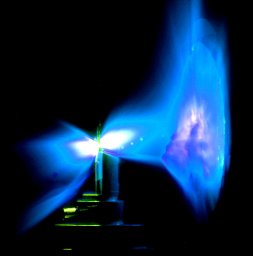 Deppert O合作论文数Institut für Kernphysik, Technische Universität Darmstadt9
 Katerina Falk合作论文数Los Alamos National Laboratory9
 Markus Roth合作论文数Fachbereich Physik, Technische Universitat Darmstadt9
 D. Jung合作论文数Fakultät f. Physik, Ludwig-Maximilians-Universität München9M. N. Lee合作论文数8F. Fierro合作论文数8Lee Matthew N合作论文数8
 Stephen K. Doorn合作论文数Center for Integrated Nanotechnologies, Los Alamos National Laboratory8Paul Bradley合作论文数Los Alamos National Laboratory8
 Glen Wurden合作论文数Los Alamos National Laboratory8
 Robert P. Johnson合作论文数Physical & Biological Sciences Division, Physics Department, University of California, Santa Cruz;Santa Cruz Institute for Particle Physics, University of California, Santa Cruz8
 N. Guler合作论文数Old Dominion University8Erik L. Vold合作论文数8Andrew M. Dattelbaum合作论文数8
 R. Roycroft合作论文数Los Alamos Natl Lab7
 Marius Schollmeier合作论文数Institut fur Kernphysik;Technische Universit;Institut fur Kernphysik, Technische Universit7Lynne Goodwin合作论文数Joint Genome Institute7
 Matthias Geissel合作论文数Institut für Angewandte Physik, Technishe Universität Darmstadt7J. L. Tybo合作论文数6M. A. Gunderson合作论文数6John J. Allen合作论文数6P M Kozlowski合作论文数6T Shimada合作论文数6
 Gilliss Dyer合作论文数SLAC Natl Accelerator Lab, Linac Coherent Light Source6
 Frank Edward Merrill合作论文数Los Alamos Nat. Lab.;c;Los Alamos Nat. Lab.6Gautam Gupta合作论文数Los Alamos Natl Lab, Ctr Integrated Nanotechnol, Los Alamos, NM 87545 USA6




