OBJECTIVE: Social media outlets such as Instagram have recently become a popular tool for medical professionals to disseminate medical information to a large public audience. In this study, we identify the top neurosurgery influencers on Instagram and analyze trends between content type, audience interaction, and user engagement. -METHODS: A list of neurosurgeon Instagram profiles based on the number of followers, user engagement, and average interaction were compiled. Outcome variables such as the numbers of followers, likes, comments, hash-tags, caption words, user engagement, and average user activity were collected and analyzed. The most recent 30 posts from each included profile were stratified into cat-egories on the basis of type of content.-RESULTS: A total of 73 neurologic surgeon "influencer" Instagram profiles met our inclusion and exclusion criteria (67 male [91.8%]; 6 female [8.2%]). Of the most recent 30 posts for each influencer, clinical and professional posts represented the majority (67.4%), while lifestyle and patient posts made up 30.3% and 2.3%, respectively. In comparison to the rest of the field (n = 43), the 30 profiles with the most followers had a significantly higher average inter-action (418.77 vs. 126.79; P < 0.001), number of uploads (578.87 vs. 184.58; P = 0.004), average number of likes given in the top posts (770.71 vs. 2150.40; P< 0.001), average posts per week (2.40 vs. 1.12; P = 0.041), and average posts per month (9.91 vs. 4.02.; P = 0.015). -CONCLUSIONS: Neurosurgeon influencers on Instagram post content that predominantly features educational and academic subject matter. Post content regarding the in-dividual's personal life or extracurricular activities made up a lesser portion of content, and there were few posts categorized as patient testimonials.
Dimitrios Zambakis was an acclaimed physician at his time, most recognized for his work on leprosy. He theorized that leprosy was a hereditary disease, receiving many awards for his work including the Cholera Medal of Honour (1854), Château-Villard Prize from the Faculty of Medicine in Paris (1898), The Montyon Prize, and the title of Pasha. However, his theory was routinely argued against and was later proven to be invalid. Leprosy is regarded as a contagious disease spread by contact and is not hereditary. The last name appears to be spelled in various ways (Zambakis, Zambaco). For this paper, “Dimitrios Zambakis” will be used.
Background: The coracoclavicular joint (CCJ) is an anomalous articulation between the surfaces of the inferior clavicle and superior coracoid and its etiology is controversial. Reportedly, symptomatic patients demonstrate significant functional limitations including shoulder abduction loss and potential for brachial plexus compression and impingement.Purpose: To determine the prevalence of CCJ across age, gender and ethnicity, and to identify clinically useful morphological characteristics.Methods: 2,724 subjects with intact clavicles and scapulae from the Hamann-Todd Osteological Collection were evaluated for the presence of CCJ. Logistic regression was used to determine the effect of age, height, gender, and race on prevalence of CCJ. 354 clavicles with CCJ were measured for size and location of the CCJ facet.Results: CCJ was observed in 9% of subjects. CCJ was more prevalent in African-Americans (12%) than Caucasian-Americans (6%) (p < 0.001) and more prevalent in females (11%) than males (8%) (p = 0.055). Facet location along clavicle length was consistent (average 25%, range 15–35%). But, facet location along clavicle width varied (average 60%, range 10–90%), with males having a more posterior location. For every 10-year increase in age, facet elevation (p = 0.001) and surface area (p < 0.001) increased.Conclusions: CCJ prevalence was 9% in our large osseous population, found more commonly in African-Americans and females. Facet location is predictable with respect to clavicle length, but less so along clavicle width. The clavicular facet may develop at some point in life and continue to grow in size after its appearance.Clinical Relevance: Presence of a CCJ represents a potential overlooked source of anterior shoulder pain and supracoracoid impingement. Epidemiologic and morphological characteristics presented in our study can aid in the identification, clinical understanding, and surgical excision of a symptomatic CCJ. Level of Evidence: Level IV.
The lingual nerve is a branch of the posterior trunk of the mandibular nerve. It provides sensation and taste to the ipsilateral anterior two-thirds of the tongue. Posttraumatic neuropathy of the lingual nerve can be chronic and debilitating long after the inciting trauma. In this operative video, the authors describe a novel technique for the treatment of lingual nerve neuropathy with neuromodulation. They present a case of a 69-year-old female with posttraumatic lingual nerve neuropathy after left molar extraction. The patient reported 95% symptom improvement after the procedure. This video demonstrates the feasibility of lingual nerve neuromodulation. The video can be found here: https://youtu.be/l-CKP8-8eqk
Acute injury of the trigeminal nerve or its branches can result in posttraumatic trigeminal neuropathy (PTTN). Affected patients suffer from chronic debilitating symptoms long after they have recovered from the inciting trauma. Symptoms vary but usually consist of paresthesia, allodynia, dysesthesia, hyperalgesia, or a combination of these symptoms. PTTN of the trigeminal nerve can result from a variety of traumas, including iatrogenic injury from various dental and maxillofacial procedures. Treatments include medications, pulsed radiofrequency modulation, and microsurgical repair. Although trigeminal nerve stimulation has been reported for trigeminal neuropathy, V3 implantation is often avoided because of an elevated migration risk secondary to mandibular motion, and lingual nerve implantation has not been documented. Here, the authors report on a patient who suffered from refractory PTTN despite multiple alternative treatments. He elected to undergo novel placement of a lingual nerve stimulator for neuromodulation therapy. To the best of the authors' knowledge, this is the first documented case of lingual nerve stimulator implantation for lingual neuropathy, a technique for potentially reducing the risk of electrode migration.
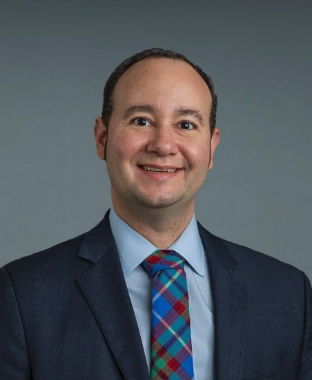 Antonios Mammis合作论文数Department of Neurosurgery, NYU Grossman School of Medicine4
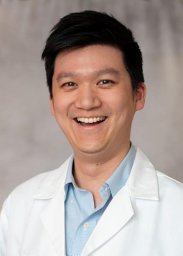 Kevin Zhao合作论文数New Jersey Medical School3
 Paskhover Boris合作论文数3
 Daniel J. Valdivia合作论文数1Lee M Sasala合作论文数1Shana Miskovsky合作论文数1Alejandro Pando合作论文数1
 Aron Kandinov合作论文数1Max Ward合作论文数1
 Jason Ina合作论文数Division of Pediatric Orthopaedics.1
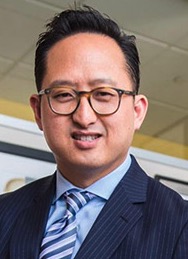 James K. Liu合作论文数New Jersey Medical School, Rutgers, The State University of New Jersey/Saint Barnabas Medical Center/Saint Clare's Health/University Hospital1
 Harlow Ethan R合作论文数Beth Israel Deaconess Medical Center, Harvard Medical School1




