This paper presents the Bluefin SandShark micro Autonomous Underwater Vehicle (AUV), a low-logistics platform designed to encourage broader use of AUVs and reduce the timeline for new technology development. The AUV architecture includes a standardized tail section containing the necessary hardware and software for basic functionality, while reserving over half of its available volume for a user-defined payload in the forward section. Payload development is encouraged via open interfaces and a software architecture designed for the developer. The micro-AUV is also suited to multi-vehicle missions, and use-cases requiring a low-cost or expendable AUV.
A confluence of technologies is changing the manner in which we approach the use of Autonomous Underwater VehiclesAutonomous Underwater Vehicle (AUV) (AUVs) in the marine environment. In this paper we review the role of several of these technologies and the way interactions between them will now enable the use of adaptive methodologies for mapping and exploring the underwater environment. We focus primarily on imaging sensors but these methodologies are widely applicable for other types of sensing modalities as well. We look at the role of acoustic telemetry, multi-hop underwater data transmission, in-situ machine learning techniques, and mapping in highly dynamic environments such as under sea ice. In addition, we discuss the role of "hobby" robotics for surface and aerial vehiclesAerial vehicles in the marine environment.
As analysis of imagery and other science data plays a greater role in mission execution, there is an increasing need for autonomous marine vehicles to transmit these data to the surface. Communicating imagery and full-resolution sensor readings to surface observers remains a significant challenge. Yet, without access to the data acquired by an unmanned underwater vehicle (UUV), surface operators cannot fully understand the mission state of a vehicle. This paper presents an architecture capable of multihop communication across a network of underwater acoustic relays. In concert with an abstracted physical layer, CAPTURE provides an end-to-end networking solution for communicating science data from autonomous marine vehicles. Automatically selected imagery, SONAR, and time-series sensor data are progressively transmitted across multiple hops to surface operators. To incorporate human feedback, data are transmitted as a sequence of gradually improving data "previews." Operators can request arbitrarily high-quality refinement of any resource, up to an error-free reconstruction. The results of three diverse field trials on SeaBED, OceanServer, and Bluefin AUVs, with drastically different software architectures, are also presented.
Satellites have documented trends in Antarctic sea-ice extent and its variability for decades, but estimating sea-ice thickness in the Antarctic from remote sensing data remains challenging. In situ observations needed for validation of remote sensing data and sea-ice models are limited; most have been restricted to a few point measurements on selected ice floes, or to visual shipboard estimates. Here we present three-dimensional (3D) floe-scale maps of sea-ice draft for ten floes, compiled from two springtime expeditions by an autonomous underwater vehicle to the near-coastal regions of the Weddell, Bellingshausen, and Wilkes Land sectors of Antarctica. Mean drafts range from 1.4 to 5.5 m, with maxima up to 16 m. We also find that, on average, 76% of the ice volume is deformed ice. Our surveys indicate that the floes are much thicker and more deformed than reported by most drilling and ship-based measurements of Antarctic sea ice. We suggest that thick ice in the near-coastal and interior pack may be under-represented in existing in situ assessments of Antarctic sea ice and hence, on average, Antarctic sea ice may be thicker than previously thought.
A new methodology for coincident floe‐scale measurements of the surface elevation, snow depth, and ice draft (the thickness below the water line) of Antarctic sea ice has been demonstrated during two recent research voyages: the Australian‐led Sea Ice Physics and Ecosystem Experiment II (SIPEX II) to East Antarctica in September–November 2012 and the United Kingdom–led Ice Mass Balance in the Bellingshausen Sea (ICEBell) voyage to the Weddell and Bellingshausen Seas in November 2010 (Figure 1a).
Abstract : Without access to data acquired by autonomous marine vehicles, surface operators cannot fully understand the state of a mission. Communicating imagery and high-resolution sensor readings to surface observers remains a challenge -- as a result, telemetry from free-roaming autonomous marine vehicles remains limited to 'heartbeat' status messages with minimal data available until recovery. Long-distance communication may require relaying data across multiple acoustic hops between vehicles, yet fixed infrastructure is not always appropriate. I propose mechanisms for interactive, progressive communication of data across multiple acoustic hops. These mechanisms include wavelet-based embedded coding methods, and a novel image compression scheme based on texture classification and synthesis. I then present CAPTURE, a telemetry architecture that employs advances in delay tolerant networking to enable progressive transmission of data, including imagery, across multiple acoustic hops. Specific design considerations include highcost vehicle nodes with persistent storage and significant computation, and human surface operators . CAPTURE provides an end-to-end software solution for communicating science data from AUVs. Automatically selected imagery and time-series data are progressively transmitted across multiple hops . Human feedback is incorporated by allowing operators to request arbitrarily higher resolution versions of data. These components are demonstrated through field trials.
To ensure we’re all singing from the same hymn sheet, let’s start by defining a web application. Broadly speaking, a web application is an application that is accessed over a network, generally the Internet or an intranet. Web applications typically are built with a server-side technology (like .NET, PHP, Python, or Rails) and use HTML, CSS, and JavaScript to render the application in a browser.
As we saw in the exercises at the end of Chapter 1, it’s all about the semantics. The mistaken idea of choosing our markup solely for its presentation, as epitomized by-based layouts and spacer.gifs, has been thoroughly shown the door by the «standardista» movement. Instead, our rallying cry is «.»
Beginning HTML5 and CSS3 is your introduction to the new features and elements of HTML5all the leaner, cleaner, and more efficient code youve hoped for is available now with HTML5, along with some new tools that will allow you to create more meaningful and richer content. For everyone involved in web design, this book also introduces the new structural integrity and styling flexibility of CSS 3which means better-looking pages and smarter content in your website projects. For all forward-looking web professionals who want to start enjoying and deploying the new HTML5 and CSS3 features right away, this book provides you with an in-depth look at the new capabilitiesincluding audio and videothat are new to web standards. Youll learn about the new HTML5 structural sections, plus HTML5 and CSS3 layouts. Youll also discover why some people think HTML5 is going to be a Flash killer, when you see how to create transitions and animations with these new technologies. So get ahead in your web development through the practical, step-by-step approaches offered to you in Beginning HTML5 and CSS3. What youll learn Cutting-edge web development techniques with HTML5 and CSS3 The new features of HTML5 and how to work with HTML5 and CSS3 The new web standards being implemented by all the major web browsers How to work with the new HTML5 structural sections How to create HTML5 and CSS3 layouts How to create transitions and animations without using Flash New web typography solutions A new vision of web development with HTML5 and CSS3 Who this book is for This book is for web developers and anyone involved in web design who wants to embrace the new web standards and cutting-edge features of HTML5 and CSS3. With a practical, accessible approach, this book is for anyone who wants to push their websites forwards with the latest technologies. Table of Contents HTML5: Now, Not 2022 Your First Plunge Into HTML5 New Structural Elements A Richer Approach to Content Markup Rich Media Paving the Way for Web Applications CSS3Here and Now Keeping Your Markup Slim Using CSS3 Selectors A Layout for Every Occasion Improving Web Typography Putting CSS3 Properties to Work Transforms, Transitions, and Animation The Future of CSS
We examine the problem of utilizing an autonomous underwater vehicle (AUV) to collect data from an underwater sensor network. The sensors in the network are equipped with acoustic modems that provide noisy, range-limited communication. The AUV must plan a path that maximizes the information collected while minimizing travel time or fuel expenditure. We propose AUV path planning methods that extend algorithms for variants of the Traveling Salesperson Problem (TSP). While executing a path, the AUV can improve performance by communicating with multiple nodes in the network at once. Such multi-node communication requires a scheduling protocol that is robust to channel variations and interference. To this end, we examine two multiple access protocols for the underwater data collection scenario, one based on deterministic access and another based on random access. We compare the proposed algorithms to baseline strategies through simulated experiments that utilize models derived from experimental test data. Our results demonstrate that properly designed communication models and scheduling protocols are essential for choosing the appropriate path planning algorithms for data collection.
Congratulations, you've reached Chapter 1! Your journey through the evolution of the Web is about to begin. This chapter establishes the basic principles. Its focus, along with the rest of the first half of this book, is mostly HTML5. We'll cover how HTML5 came about, what problems it aims to solve, what design principles have guided its development, and what new features it brings to the table. We'll also debunk some HTML5 myths. We'll start off, however, by looking at the basic tenets we follow in our web development work, why standards are so important, and why we should strive to make our markup universally accessible and well crafted.
Congratulations! You’ve reached the second part of the book. The first half focused on the importance of building a solid, structural foundation in HTML, creating a semantic layer upon which to build. We’ve introduced you to HTML5, the next generation of markup for the Web, and we’ve highlighted the benefits HTML5 has to offer, including some of the great new APIs and a large number of new, semantic elements that will ensure your web pages are just that extra bit future-friendly.
 Hanumant Singh合作论文数Electrical and Computer Engineering, College of Engineering, Northeastern University18
 Richard Clark合作论文数15Divya Manian合作论文数15Oli Studholme合作论文数15
 Clayton Kunz合作论文数Department of Applied Ocean Physics and Engineering13
 Michael Jakuba合作论文数Woods Hole Oceanographic Institution10Taichi Sato合作论文数6
 Timothy Shank合作论文数Institute of Marine and Coastal Sciences, Rutgers University6Robert A. Sohn合作论文数Department of Marine Geology and Geophysics, Woods Hole Oceanographic Institution6
 Susan Humphris合作论文数Department of Geology and Geophysics, Woods Hole Oceanographic Institution6Ko-Ichi Nakamura合作论文数5
 Ryan M. Eustice合作论文数Department of Mechanical Engineering, University of Michigan;Department of Electrical Engineering & Computer Science, University of Michigan;Toyota Research Institute5Claire Willis合作论文数Univ Birmingham, Coll Med & Dent Sci, Inst Immunol & Immunotherapy, Birmingham, W Midlands, England4Christopher Roman合作论文数University of Rhode Island4
 George S. Alexopoulos合作论文数Department of Psychiatry, Weill Cornell Medical College, Cornell University;Graduate School of Medical Sciences, Weill Cornell Medicine, Cornell University4
 Kiosses Dimitris N合作论文数Weill Cornell Med, Weill Cornell Inst Geriatr Psychiat4
 Peter Winsor合作论文数School of Fisheries and Ocean Sciences, University of Alaska Fairbanks4Vera Schlindwein合作论文数Institute for Polar and Marine Research4Michael Mancuso合作论文数4Elisabeth Helmke合作论文数4
 Bengt Liljebladh合作论文数Goteborg University4H. N. Edmonds合作论文数4C. Pontbriand合作论文数3R. Reves-Sohn合作论文数3
 Jeremy Wilkinson合作论文数3Ted Maksym合作论文数3
 Richard Camilli合作论文数Woods Hole Oceanographic Institution3Lucia Upchurch合作论文数3
 Peter Kimball合作论文数University of Illinois at Chicago3
 Milica Stojanovic合作论文数Department of Electrical and Computer Engineering, College of Engineering, Northeastern University;Department of Bioengineering, College of Engineering, Northeastern University;Woods Hole Oceanographic Institution;AUV Laboratory, Massachusetts Institute of Technology3V Rice合作论文数2john w bailey合作论文数2Maria Tausenfreund合作论文数2Ulf Hedman合作论文数2Sibel Klimstra合作论文数2
 Qarabaqi, P.合作论文数Dept. of Electr. & Comput. Eng., Northeastern Univ.;c2Martin Jakobsson合作论文数2
 Gaurav Sukhatme合作论文数Thomas Lord Department of Computer Science, Viterbi School of Engineering, University of Southern California;Robotic Embedded Systems Laboratory, University of Southern California;Amazon2
 Suzanne Craft合作论文数2
 Urbashi Mitra合作论文数Ming Hsieh Department of Electrical and Computer Engineering, Viterbi School of Engineering, University of Southern California;Thomas Lord Department of Computer Science, Viterbi School of Engineering, University of Southern California2
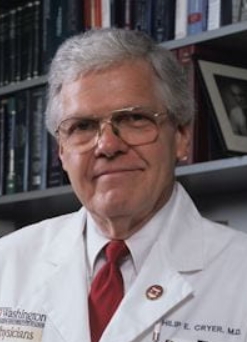 Philip E. Cryer合作论文数Division of Endocrinology, Metabolism & Lipid Research, John T. Milliken Department of Internal Medicine, School of Medicine, Washington University in St. Louis2
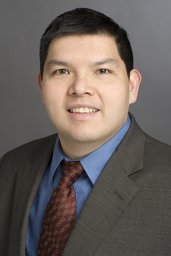 Shanchieh Jay Yang合作论文数Rochester Institute of Technology2
 Franz Hover合作论文数Departments of Ocean and Mechanical Engineering, Massachusetts Institute of Technology2
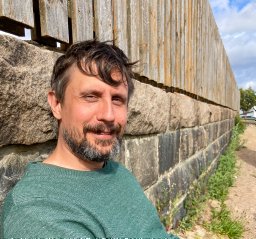 Christian Stranne合作论文数Goteborg University2
 Sunav Choudhary合作论文数2Shelley Cooke合作论文数2
 Hansi A. Singh合作论文数2
 Adam Soule合作论文数2Julia Linder合作论文数2




