Submitted for the MAR16 Meeting of The American Physical Society Monte Carlo and Exact Diagonalization of Copper (II) Trimer Spin Frustrated Systems1 HAILEY X. EGIDO-BETANCOURT, LEONARD W. TER HAAR, CHRISTOPHER N. VARNEY, University of West Florida — We discuss the use and importance of trimer-based systems because of the spin frustration that may arise within extended lattices comprised of trimers. The possible intraand inter-trimer exchange pathways they posses due to interconnections are evaluated using density functional theory (DFT) to identify the optimal structures that may be used in designing extended lattices. As example, trinuclear Cu 3 cores with each pair of copper atoms bridged by carboxylate ligands have three-fold symmetry. As trimers these structures have the potential to be modeled as a frustrated quantum spin-1/2 system. To analyze the magnetic ground state and topological properties, we utilize exact diagonalization on small clusters and compare with Monte Carlo simulations for a range of system sizes. 1Research reported in this abstract was supported by UWF NIH MARC U-STAR 1T34GM110517-01. Hailey Egido-Betancourt University of West Florida Date submitted: 06 Nov 2015 Electronic form version 1.4
It was recently proposed to use the stray magnetic fields of superconducting vortex lattices to trap ultracold atoms for building quantum emulators.This calls for new methods for engineering and manipulating of the vortex states.One of the possible routes utilizes type-1.5 superconducting layered systems with multi-scale inter-vortex interactions.In order to explore the possible vortex states that can be engineered, we present two phase diagrams of phenomenological vortex matter models with multi-scale inter-vortex interactions featuring several attractive and repulsive length scales.The phase diagrams exhibit a plethora of phases, including conventional 2D lattice phases, five stripe phases, dimer, trimer, and tetramer phases, void phases, and stable low-temperature disordered phases.The transitions between these states can be controlled by the value of an applied external field.
The recent proposal of Romero-Isart et al. [Phys. Rev. Lett. 111, 145304 (2013)] to utilize the vortex lattice phases of superconducting materials to prepare a lattice for ultracold-atom-based quantum emulators raises the need to create and control vortex lattices of different symmetries. Here we propose a mechanism by which honeycomb, hexagonal, square, and kagome vortex lattices could be created in superconducting systems with multiscale intervortex interactions. Multiple scales of the intervortex interaction can be created and controlled in layered systems made of different superconducting materials or with differing interlayer spacings.
We demonstrate, by considering the triangular lattice spin-1/2 Heisenberg model, that Monte Carlo sampling of skeleton Feynman diagrams within the fermionization framework offers a universal first-principles tool for strongly correlated lattice quantum systems. We observe the fermionic sign blessing--cancellation of higher order diagrams leading to a finite convergence radius of the series. We calculate the magnetic susceptibility of the triangular-lattice quantum antiferromagnet in the correlated paramagnet regime and reveal a surprisingly accurate microscopic correspondence with its classical counterpart at all accessible temperatures. The extrapolation of the observed relation to zero temperature suggests the absence of the magnetic order in the ground state. We critically examine the implications of this unusual scenario.
We demonstrate the formation of hierarchical structures in two-dimensional systems with multiple length scales in the inter-particle interaction. These include states such as clusters of clusters, concentric rings, clusters inside a ring, and stripes in a cluster. We propose to realize such systems in vortex matter (where a vortex is mapped onto a particle with multi-scale interactions) in layered superconducting systems with varying inter-layer thicknesses and different layer materials.
Using fermionic representation of spin degrees of freedom within the Popov-Fedotov approach, we develop an algorithm for Monte Carlo sampling of skeleton Feynman diagrams for Heisenberg-type models. Our scheme works without modifications for any dimension of space, lattice geometry, and interaction range, i.e., it is suitable for dealing with frustrated magnetic systems at finite temperature. As a practical application, we compute uniform magnetic susceptibility of the antiferromagnetic Heisenberg model on the triangular lattice and compare our results with the best available high-temperature expansions. We also report results for the momentum dependence of the static magnetic susceptibility throughout the Brillouin zone.
We demonstrate formation of hierarchical structures in two-dimensional systems with multiple length scales in the inter-particle interaction. These include states such as clusters of clusters, concentric rings, clusters inside a ring, and stripes in a cluster. We propose to realize such systems in vortex matter (where a vortex is mapped onto a particle with multi-scale interactions) in layered superconducting systems with varying inter-layer thicknesses and different layer materials.
Using exact diagonalization calculations, we investigate the ground-state phase diagram of the hard-core Bose-Hubbard-Haldane model on the honeycomb lattice. This allows us to probe the stability of the Bose-metal phase proposed in Varney et al (2011 Phys. Rev. Lett. 107 077201), against various changes in the originally studied Hamiltonian.
 Victor Galitski合作论文数Department of Physics, College of Computer, Mathematical, and Natural Sciences, University of Maryland;Joint Quantum Institute, University of Maryland11
 Kai Sun合作论文数College of Literature, Science, and the Arts, University of Michigan-Ann Arbor10
 Marcos Rigol合作论文数Department of Physics, Eberly College of Science, Pennsylvania State University10
 Richard T. Scalettar合作论文数Department of Physics and Astronomy, University of California, Davis9
 Egor Babaev合作论文数Department for Theoretical Physics, KTH Royal Institute of Technology6
 Hans Fangohr合作论文数School of Engineering, Faculty of Engineering and Physical Sciences, University of Southampton5
 Mark Jarrell合作论文数Department of Physics & Astronomy, College of Science, Louisiana State University4Simone Chiesa合作论文数4
 Boris Svistunov合作论文数Department of Physics, College of Natural Sciences, University of Massachusetts Amherst4Wang Qing-Ze合作论文数Department of Physics, The Pennsylvania State University3
 Oleg Starykh合作论文数Department of Physics and Astronomy, University of Utah3Spencer Leeper合作论文数2
 Qingyou Meng合作论文数Dept Phys, Univ Massachusetts2
 Aaron Wade合作论文数2
 Warren E. Pickett合作论文数Department of Physics and Astronomy, University of California, Davis2
 Sellin Karl A H合作论文数2
 Hikmat Bc合作论文数2
 Zhaojun Bai合作论文数Department of Computer Science, University of California, Davis campus2
 Nikolay Prokofiev合作论文数Department of Physics, College of Natural Sciences, University of Massachusetts Amherst2
 Che-Rung Lee合作论文数National Tsing Hua University2
 S. Kulagin合作论文数Institute for Nuclear Research, the Academy of Sciences of Russia2Alexandru Macridin合作论文数University of Cincinnati2
 Helen A. Craig合作论文数American River College2Ed D'Azevedo合作论文数1Justin A. Williams合作论文数1Ryan Lashley合作论文数1Hailey X. Egido-Betancourt合作论文数1Twymun Safford合作论文数1
 Bethany Campbell合作论文数San Diego State University1Leonard W. ter Haar合作论文数1Thomas Goldstein合作论文数Univ Massachusetts, Dept Phys, Amherst, MA 01003 USA1David J. Smith合作论文数1Chandra Prayaga合作论文数1
 Meng Cheng (程蒙)合作论文数Department of Physics, Yale University1
 Khatami Ehsan合作论文数Dept Phys & Astron, San Jose State Univ1
 David C. Smith合作论文数Medical School, University of Michigan;Rogel Cancer Center, University of Michigan1
 V. G. Rousseau合作论文数Universiteit1
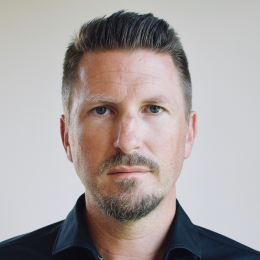 Thomas Maier合作论文数Department of Physics and Astronomy, University of Tennessee;Computational Science and Engineering Division, Center For Nanophase Materials Sciences, Oak Ridge National Laboratory1
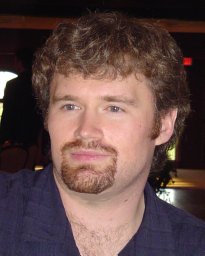 Brian Moritz合作论文数Division of Materials Science, SLAC National Accelerator Laboratory, Stanford Institute for Materials and Energy Sciences, Stanford University;Theory Institute for Materials and Energy Spectroscopies, Stanford University;University of North Dakota1
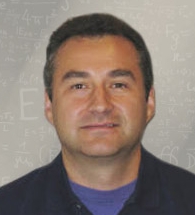 Sergej Savrasov合作论文数Department of Physics, University of California, Davis1
 Karen Tomko合作论文数Department of Research and Development, Ohio Supercomputer Center1




