We present the theory of the longitudinal spin Seebeck effect between a Heisenberg spin-1/2 chain and a conductor. The effect consists of the generation of a spin current across the spin chain-conductor interface in response to the temperature difference between the two systems. In this setup, the current is given by the convolution of the local spin susceptibilities of the spin chain and the conductor. We find the spin current to be fully controlled, both in the magnitude and the sign, by the backscattering interaction between spinons, fractionalized spin excitations of the Heisenberg chain. In particular, it vanishes when the spinons form a non-interacting spinon gas. Our analytical results for the local spin susceptibility at the open end of the spin chain are in excellent agreement with numerical DMRG simulations.
We design a lattice model of a "mixed" U(1) gauge field coupled to fermions with a flavor chemical potential and solve it with large-scale determinant quantum Monte Carlo simulations, For zero flavor chemical potential, the model realizes three-dimensional quantum electrodynamics (QED_3) which has been argued to describe the ground state and low-energy excitations of the Dirac spin liquid phase of quantum antiferromagnets. At finite flavor chemical potential, corresponding to a Zeeman field perturbing the Dirac spin liquid, we find a "chiral flux" phase which is characterized by the generation of a finite mean emergent gauge flux and, accordingly, the formation of relativistic Landau levels for the Dirac fermions. In this state, the U(1)_m magnetic symmetry is spontaneously broken, leading to a gapless free photon mode which, due to spin-flux-attachment, is observable in the longitudinal spin structure factor. We numerically compute longitudinal and transverse spin structure factors which match our continuum and lattice mean-field theory predictions. In a different region of the phase diagram, strong fluctuations of the emergent gauge field give rise to an antiferromagnetically ordered state with gapped Dirac fermions coexisting with a deconfined gauge field. We also find an interesting intermediate phase where the chiral flux phase and the antiferromagnetic phase coexist. We argue that our results pave the way to testable predictions for magnetized Dirac spin liquids in frustrated quantum antiferromagnets.
We investigate collective spin excitations of graphene electrons with short-ranged interactions and subject to the external Zeeman magnetic field. We find that in addition to the familiar Silin spin wave, a collective spin -flip excitation that reduces to the uniform precession when the wave's momentum approaches zero, the magnetized graphene supports another collective mode visible in the transverse spin susceptibility: a collective spin-current mode. Unlike the Silin wave, this mode is not dictated by the spin-rotational symmetry but rather owns its existence to the pseudospin structure of the graphene lattice. We find the collective excitation to become sharply defined in a finite interval of the wave's momenta, the range of which is determined by the interaction and the magnetization.
We use a hydrodynamic approach to investigate dynamic spin susceptibility of the antiferromagnetic spin-$1/2$ Heisenberg chain with a uniform Dzyaloshinskii-Moriya (DM) interaction in the presence of an external magnetic field. We find that transverse (with respect to the magnetic field) spin susceptibility harbors two (respectively, three) spin excitation modes when the magnetic field is parallel (respectively, orthogonal) to the DM axis. In all cases, the marginally irrelevant backscattering interaction between the spinons creates a finite energy splitting between optical branches of excitations at $k = 0$. Additionally, for the orthogonal geometry, the two lower spin branches exhibit avoided crossing at finite momentum which is determined by the total magnetic field (the sum of the external and internal molecular fields) acting on spinons. Our approximate analytical calculations compare well with numerical results obtained using matrix-product-state (MPS) techniques. Physical consequences of our findings for the electron spin resonance experiments are discussed in detail.
Novel phenomena in magnetically intercalated graphite have been the subject of much research, pioneered and promoted by M. S. and G. Dresselhaus and many others in the 1980s. Among the most enigmatic findings of that era was the dramatic, roller-coaster-like behavior of the magnetoresistivity in a EuC6 compound, in which magnetic Eu2+ ions form a triangular lattice that is commensurate to graphite honeycomb planes. In this study, we provide a long-awaited microscopic explanation of this behavior, demonstrating that the resistivity of EuC6 is dominated by spin excitations in Eu planes and their highly nontrivial evolution with the magnetic field. Together with our theoretical analysis, the present study showcases the power of the synthetic 2D materials as a source of potentially significant insights into the nature of exotic spin excitations.
We report experimental verification of the recently predicted collective modes of spinons, stabilized by backscattering interaction, in a model quantum spin chain material. We exploit the unique geometry of uniform Dzyaloshinskii-Moriya interactions in K_{2}CuSO_{4}Br_{2} to measure the interaction-induced splitting between the two components of the electron spin resonance (ESR) response doublet. From that we directly determine the magnitude of the "marginally irrelevant" backscattering interaction between spinons for the first time.
We use a hydrodynamic approach to investigate dynamic spin susceptibility of the antiferromagnetic spin-1/2 Heisenberg chain with a uniform Dzyaloshinskii-Moriya (DM) interaction in the presence of an external magnetic field. We find that transverse (with respect to the magnetic field) spin susceptibility harbors two (respectively, three) spin excitation modes when the magnetic field is parallel (respectively, orthogonal) to the DM axis. In all cases, the marginally irrelevant backscattering interaction between the spinons creates a finite energy splitting between optical branches of excitations at k = 0. Additionally, for the orthogonal geometry, the two lower spin branches exhibit avoided crossing at finite momentum which is determined by the total magnetic field (the sum of the external and internal molecular fields) acting on spinons. Our approximate analytical calculations compare well with numerical results obtained using matrix-product-state (MPS) techniques. Physical consequences of our findings for the electron spin resonance experiments are discussed in detail.
We investigate the amplitude (Higgs) mode associated with longitudinal fluctuations of the order parameter at the continuous spontaneous symmetry breaking phase transition. In quantum magnets, due to the fast decay of the amplitude mode into low-energy Goldstone excitations, direct observation of this mode represents a challenging task. By focusing on a quasi-one-dimensional geometry, we circumvent the difficulty and investigate the amplitude mode in a system of weakly coupled spin chains with the help of quantum Monte Carlo simulations, stochastic analytic continuation, and a chain-mean field approach combined with a mapping to the field-theoretic sine-Gordon model. The amplitude mode is observed to emerge in the longitudinal spin susceptibility in the presence of a weak symmetry-breaking staggered field. A conventional measure of the amplitude mode in higher dimensions, the singlet bond mode, is found to appear at a lower than the amplitude mode frequency. We identify these two excitations with the second (first) breather of the sine-Gordon theory, correspondingly. In contrast to higher-dimensional systems, the amplitude and bond order fluctuations are found to carry significant spectral weight in the quasi-1D limit.
We study the transverse dynamical spin susceptibility of the two-dimensional U(1) spinon Fermi-surface spin liquid in a small applied Zeeman field. We show that both short-range interactions, present in a generic Fermi liquid, as well as gauge fluctuations, characteristic of the U(1) spin liquid, qualitatively change the result based on the frequently assumed noninteracting spinon approximation. The short-range part of the interaction lead to a collective ``spinon spin wave'' mode, which splits off from the two-spinon continuum at a small momentum and disperses downward. Gauge fluctuations renormalize the susceptibility, providing nonzero power-law weight in the region outside the spinon continuum and giving the spin wave a finite lifetime, which scales as momentum squared. We also study the effect of Dzyaloshinskii-Moriya anisotropy on the zero momentum susceptibility, which is measured in electron spin resonance (ESR), and obtain a resonance linewidth linear in temperature and varying as ${B}^{2/3}$ with magnetic field $B$ at low temperatures. Our results form the basis for a theory of inelastic neutron scattering, ESR, and resonant inelastic x-ray scattering studies of this quantum spin-liquid state.
We propose and investigate a simple one-dimensional model for a single-channel quantum wire hosting electrons that interact repulsively and are subject to a significant spin-orbit interaction. We show that an external Zeeman magnetic field, applied at the right angle to the Rashba spin-orbit axis, drives the wire into a correlated spin-density wave state with gapped spin and gapless charge excitations. By computing the ground-state degeneracies of the model with either (anti)periodic or open boundary conditions, we conclude that the correlated spin-density state realizes a gapless symmetry-protected topological phase, as the ground state is unique in the ring geometry while it is twofold degenerate in the wire with open boundaries. Microscopically the twofold degeneracy is found to be protected by the conservation of the magnetization parity. Open boundaries induce localized zero-energy (midgap) states which are described, at the special Luther-Emery point of the model, by Majorana fermions. We find that spin densities at the open ends of the wire exhibit unusual long-ranged correlations despite the fact that all correlations in the bulk of the wire decay in a power-law or exponential fashion. Our study exposes the crucial importance of the long-ranged string operator needed to implement the correct commutation relations between spin densities at different points in the wire. Along the way we rederive the low-energy theory of Galilean-invariant electron systems in terms of current operators.
We study the transverse dynamical susceptibility of an antiferromagnetic spin-1/2 chain in the presence of a longitudinal Zeeman field. In the low magnetization regime in the gapless phase, we show that the marginally irrelevant backscattering interaction between the spinons creates a nonzero gap between two branches of excitations at small momentum. We further demonstrate how this gap varies upon introducing a second neighbor antiferromagnetic interaction, vanishing in the limit of a noninteracting "spinon gas." In the high magnetization regime, as the Zeeman field approaches the saturation value, we uncover the appearance of two-magnon bound states in the transverse susceptibility. This bound state feature generalizes the one arising from string states in the Bethe ansatz solution of the integrable case. Our results are based on numerically accurate, unbiased matrix-product-state techniques as well as analytic approximations.
We study the transverse dynamical spin susceptibility of the two dimensional U(1) Fermi surface spin liquid in a small applied Zeeman field. We show that both short-range interactions, present in a generic Fermi liquid, as well as gauge fluctuations, characteristic of the U(1) spin liquid, qualitatively change the result based on the frequently assumed non-interacting approximation. Short-range interaction leads to a new collective mode: a spinon spin which splits off from the two-spinon continuum at small momentum and disperses downward. Gauge fluctuations renormalize the susceptibility, providing non-zero power law weight in the region outside the continuum and giving the spin wave a finite lifetime, which scales as momentum squared. We also study the effect of Dzyaloshinskii-Moriya anisotropy on the zero momentum susceptibility, which is measured in electron spin resonance (ESR), and obtain a resonance linewidth linear in temperature and varying as $B^{2/3}$ with magnetic field $B$ at low temperature. Our results form the basis for a theory of inelastic neutrons scattering, ESR, and resonant inelastic x-ray scattering (RIXS) studies of this quantum spin liquid state.
We study the superconducting transition in a two-dimensional electron gas with strong Rashba spin-orbit coupling. We assume low electron density, such that only the majority spin band participates in the transition. We show that the superconducting transition follows either the Bose-Einstein condensation (BEC), or the Bardeen-Cooper-Schrieffer (BCS) scenarios, depending on the position of the chemical potential with respect to the bottom of the majority band, and the strength of the Coulomb repulsion between electrons. Hence, the BEC-BCS crossover in this system can be driven either by the change in the chemical potential, or the distance to a gate.
We describe electron spin resonance in a quantum spin liquid with significant spin-orbit coupling. We find that the resonance directly probes spinon continuum, which makes it an efficient and informative probe of exotic excitations of the spin liquid. Specifically, we consider spinon resonance of three different spinon mean-field Hamiltonians, obtained with the help of projective symmetry group analysis, which model a putative quantum spin liquid state of the triangular rare-earth antiferromagnet YbMgGaO_{4}. The band of absorption is found to be very broad and exhibit strong van Hove singularities of single spinon spectrum as well as pronounced polarization dependence.
 Leon Balents合作论文数Kavli Institute for Theoretical Physics, University of California, Santa Barbara30
 Rajiv Singh合作论文数Department of Physics and Astronomy, University of California, Davis11
 Andrey Chubukov合作论文数William I. Fine Theoretical Physics Institute, School of Physics and Astronomy, College of Science and Engineering, University of Minnesota;Department of Physics, University of Minnesota10
 Suhas Gangadharaiah合作论文数8
 Anders W. Sandvik合作论文数Department of Physics, Boston University6
 Ren-Bo Wang合作论文数Dept Phys & Astron, Univ Utah5
 Jason F. Alicea合作论文数The Division of Physics, Mathematics and Astronomy, California Institute of Technology;Institute for Quantum Information and Matter, California Institute of Technology5Sun Jianmin合作论文数Lund Univ5
 Keselman Anna合作论文数Department of Condensed Matter Physics, Weizmann Institute of Science5
 Subir Sachdev合作论文数Department of Physics, Harvard University;Perimeter Institute for Theoretical Physics5AF BARABANOV合作论文数4
 Akira Furusaki合作论文数Condensed Matter Theory Laboratory, RIKEN4
 Jiang Hong-Chen合作论文数Kavli Institute for Theoretical Physics, University of California4
 Dmitrii Maslov合作论文数Department of Physics, College of Liberal Arts and Sciences, University of Florida4
 Eugene Mishchenko合作论文数Department of Physics and Astronomy, University of Utah4
 K. Yu. Povarov合作论文数4P. J. Freitas合作论文数3hyejin ju合作论文数3
 Wei Zhu (朱伟)合作论文数School of Science, Westlake University3
 Jin Wen合作论文数Department of Physics and Astronomy, University of Utah3
 Cristian D. Batista合作论文数Department of Physics & Astronomy, College of Arts & Sciences, The University of Tennessee, Knoxville3
 Zhentao Wang (汪臻涛)合作论文数School of Physics, Zhejiang University3Ru Chen合作论文数3
 Christopher Varney合作论文数Physics Department;University of California , Davis3
 Dima Pesin合作论文数Department of Physics;University of Washington;Department of Physics, University of Washington3
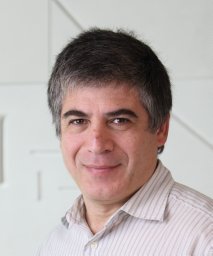 Alexander Abanov合作论文数Department of Physics and Astronomy, College of Arts and Sciences, Stony Brook University3
 Boris Svistunov合作论文数Department of Physics, College of Natural Sciences, University of Massachusetts Amherst3
 Masanori Kohno合作论文数3A. Ya. Shapiro合作论文数2S. V. Petrov合作论文数2LA MAKSIMOV合作论文数2chang xian he ye (昌仙 河野)合作论文数2christian griset合作论文数2shane head合作论文数2
 Ethan Lake合作论文数Dept Phys & Astron, Univ Utah2
 Zi Yang Meng合作论文数Department of Physics, Faculty of Science, The University of Hong Kong2
 Leonid Glazman合作论文数Department of Physics, Yale University2
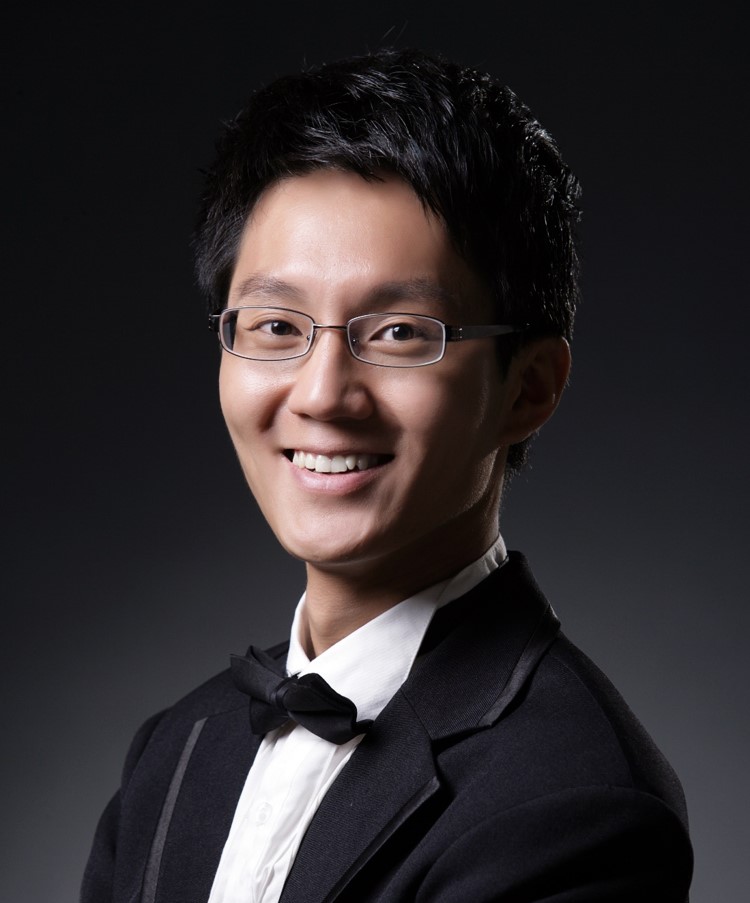 Shou-Shu Gong (龚寿书)合作论文数Great Bay University2
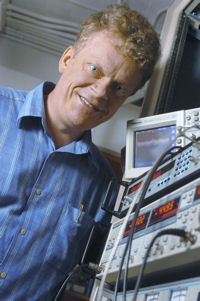 Alex I Smirnov合作论文数Kostroma State Technological University Russia2
 Donna Sheng (盛冬宁)合作论文数Department of Physics & Astronomy, College of Science & Mathematics, California State University, Northridge2
 Kun Yang (杨昆)合作论文数Department of Physics, College of Arts and Sciences, Florida State University2Mikhail E Raikh合作论文数2
 Zhihao Hao合作论文数Department of Physics and Key Laboratory of Atomic and Molecular Nanoscience (Ministry of Education),, Tsinghua University2
 Andreas Schnyder合作论文数Department of Quantum Many-Body Theory, Max Planck Institute for Solid State Research2
 Oleg Tchernyshyov合作论文数William H. Miller III Department of Physics and Astronomy, Krieger School of Arts & Sciences, Johns Hopkins University2
 Nikolay Prokofiev合作论文数Department of Physics, College of Natural Sciences, University of Massachusetts Amherst2
 S. Kulagin合作论文数Institute for Nuclear Research, the Academy of Sciences of Russia2
 Adrian Feiguin合作论文数Department of Physics, College of Science, Northeastern University2
 Hosho Katsura合作论文数Department of Physics, University of Tokyo2




