This chapter contains sections titled: 7.1 Introduction, 7.2 Swarm Robotics and the Swarm-bots, 7.3 Experiments, 7.4 Discussion, Note, References
In an issue of the Wireless World magazine, back in 1945, A. C. Clarke on a letter to the editor wrote " However, I would like to close by mentioning a possibility of the remote future-perhaps half a century ahead... Three repeater stations, twelve degrees apart in the correct orbit, could give television and microwave coverage to the entire planet. " These words envisioned, before the space era even started, the now overcrowded geostationary orbit, while also introducing one of the most lucrative commercial applications of the space business: telecommunications. It is worth noting in this context, how this early space mission concept made use of multiple satellites to achieve its goal. Twenty years later, the space era actually begun with the successful launch of the Russian satellite Sputnik I. In the following years, many missions have been proposed, designed and realized that make use of multiple satellites, probes, planetary rovers, robots or, in general, of what can be called " space agents " to underline the connection to multi-agent-systems research. The European Space Agency (ESA) mission named Cluster II, currently orbiting around our planet, is made of four identical satellites that need to accurately fly in a tetrahedron formation during part of their orbit. This particular geometry allows for the determination of three-dimensional and time-varying phenomena related to the Earth's magnetic field. Several satellite constellations, among which the currently active GPS, Globastar and Iridium, but also the planned European Galileo and Swarm constellation are formed of many identical spacecrafts (up to 50) that achieve a common overall objective thanks to complex orbital and communication strategies. The Teledesic innovative and ambitious project (involving contributions from Bill Gates and Paul Allen, but canceled in 2001) considered, at a certain point, to employ 840 active identical satellites orbiting around the Earth
The innovative contribution of this collaborative project between the University of Plymouth Robotics groups and the ESA Advanced Concepts Team was to successfully test the hypothesis that the island model paradigm permits the autonomous design of complex controllers for Mars rover robots, for navigation and active vision strategies, thus overcoming some of the current limitations of evolutionary robotics.
This article investigates the possibility to classify images according to their subjective interest by looking at recorded EEG signals. We classify subjects’ EEG recordings while they are shown images in a rapid serial visualization (RSVP) task. Our protocol is essentially derived from the well-known ‘oddball paradigm’. Our exerimental methodology focusses on maximum usability of the device. We show promising results obtained with a simple ‘wearable’ 4-node setup; we evaluate the accuracy that can be obtained under such experimental conditions, and quantify the effect of image-display speed in this context.
In evolutionary robotics, as in the animal world, performing a task which is beneficial to the entire group demands the coordination of different individuals. Whenever time-dependent dynamic allocation of roles is needed and individual roles are not pre-defined, coordination can often be hard to achieve. In this paper, we study the evolution of role allocation and self-assembling strategies in a group of two homogeneous robots.We show how robot coordination and individual choices (who will grip whom) can be successfully restated in terms of anti-coordination problems, showing how conventional game theoretical tools can be used in the interpretation and design of evolutionary outcomes in collective robotics. Moreover, we highlight and discuss striking similarities between the way our physical robots allocate roles and the way animals solve conflicts. Arguably, these similarities suggest that evolutionary robotics may offer apart from automatic controller design for autonomous robots a viable alternative for the study of biological phenomena.
Autonomous decision making modules in computer vision application allow recognition and classification of different objects, persons, and events in images and video sequences and also make it possible to classify different sensor readings (e.g. images) according to their scientific saliencies. In this paper, we propose a new approach to create the training set for these algorithms by retrieving salient images using electroencephalogram (EEG) and brain computer interface (BCI) and rapid image presentation. To this end, two groups of subjects, namely, expert and novice subjects were asked to participate in our experiments. We show that a relatively high retrieval accuracy can be achieved for most of the subjects. Furthermore, to assess the impact of expertise on the retrieval process, we study their EEG signals separately and show that there is a clear difference in their brainwaves while observing salient images.
Space missions are often equipped with several high definition sensors that can autonomously collect a potentially enormous amount of data. The bottleneck in retrieving these often precious datasets is the onboard data storing capability and the communication bandwidth, which limit the amount of data that can be sent back to Earth. In this paper, we propose a method based on the analysis of brain electrical activity to identify the scientific interest of experts towards a given image in a large set of images. Such a method can be used to efficiently create an abundant training set (images and whether they are scientifically interesting) with a considerably faster image presentation rate that can go beyond expert consciousness, with less interrogation time for experts and relatively high performance.
This technical report will detail the activities of the Curiosity Cloning project conducted at Dublin City University (DCU) in conjunction with the Advanced Concepts Team (ACT), funded through the European Space Agencies (ESA) Ariadna scheme. The primary objective of this project was the utilization of a cheap, commodity Electroencephalography (EEG) device which has only four nodes, to the application of ‘oddball’ style, visual RSVP experiments. During this project we determined that it was indeed possible to employ such a device which captured sufficient information so that discriminative classifiers were able to be constructed, which for a given subject, were able to classify the subject’s stimuli response into either oddball or non-oddball events, at speeds of up to 50 milliseconds per image. Furthermore, in this project we pushed beyond the binary class distinction of oddball versus non-oddball, and introduced a third type, the non-obvious oddball. This class of oddball was designed such that it enabled the capture of data from an ‘expert’ subject, as to what they found ‘interesting’ in a series of presented stimuli. Our experiments demonstrate that there is some applicability to this, and warrants continued investigation.
Current methods used to address the problem of autonomous navigation in planetary rovers rely on computationally expensive algorithms and elaborate 3D sensing strategies. This paper presents a low complexity alternative based on an evolved neural controller using continuous-value infrared sensors. A unified framework is presented for developing such controllers in virtual planetary rovers, utilising the latest advances in parallel optimisation by way of island model evolution. Preliminary results are presented demonstrating that this approach is capable of producing successful navigation and obstacle avoidance behaviours, showing that equivalent or better results can be achieved relative to traditional genetic algorithms.
We here approach the problem of designing a controller for automatic rendezvous and docking (AR&D). As a first step towards a fully reactive neurocontroller (based on state feedback), an artificial neural network is trained offline by a fitness based genetic algorithm to fulfill the docking task. Its performance using one specific docking case, with fixed initial and boundary conditions, is compared to a numerical solution of the corresponding optimal control problem. The concept of a “stop-neuron” is introduced here to the neurocontroller for the first time to co-evolve the time taken to achieve the desired docking position.
This presentation showed work we have done on using Brain Computer Interfaces to detect scientific curiosity in images. The equipment used by the group from EPFL Lausanne was a full 32-node EEG while the CLARITY group from DCU used a home-built 4-channel EEG analyser with total cost less than €1,000. Results indicate that the P300 ERP is a positive indicator of curiosity, especially in experts.
Objective function landscape approximation methods in evolutionary optimisation can be a beneficial technique, since they replace part of the calls to the original, often computationally expensive objective function, with calls to a faster and computationally cheaper function approximator, such as a polynomial or an artificial neural network. Moreover, in some cases, the approximate model smoothens rough fitness landscapes, facilitating the stochastic search. In this paper, we apply a neural network-based approximation technique to spacecraft interplanetary trajectory problems. These multimodal problems, recently introduced in the global optimisation community, can be very complex and characterised by the prevalence of many local optima and, in the worst cases, a heavy computation load involved with the calculation of the objective value of a given input vector. We perform the first steps to integrate an approximated model into a trajectory optimisation process, building a hybrid system where both the original trajectory model and the approximated model are carefully used in the optimisation process without degrading the quality of the final trajectory found.
The parallelization of evolutionary computation tasks using a coarse-grained approach can be efficiently achieved using the island migration model. Strongly influenced by the theory of punctuated equilibria, such a scheme guarantees an efficient exchange of genetic material between niches, not only accelerating but also improving the evolutionary process. We study the island model computational paradigm in relation to the evolutionary robotics methodology. We let populations of robots evolve in different islands of an archipelago and exchange individuals along allowed migration paths. We show, for the test-case selected, how the exchange of genetic material coming from different islands improves the overall design efficiency and speed, effectively taking advantage of a parallel computing environment to improve the methodology of evolutionary robotics, often criticized for its computational cost.
We propose an asynchronous island-model algorithm distribution framework and test the popular Differential Evolution algorithm performance when a few processors are available. We confirm that the island-model introduces the possibility of creating new algorithms consistently going beyond the performances of parallel Differential Evolution multi starts. Moreover, we suggest that using heterogeneous strategies along different islands consistently reaches the reliability and performance of the best of the strategies involved, thus alleviating the problem of algorithm selection. We base our conclusions on experiments performed on high dimensional standard test problems (Rosenbrock 100, Rastrigin 300, Lennard Jones 10 atoms), but also, remarkably, on complex spacecraft interplanetary trajectory optimisation test problems (Messenger, Cassini, GTOC1). Spacecraft trajectory global optimisation problems have been recently proposed as hard benchmark problems for continuous global optimisation. High computational resources needed to tackle these type of problems make them an ideal playground for the development and testing of high performance computing algorithms based on multiple processor availability.
This research work illustrates an approach to the design of controllers for self-assembling robots in which the self-assembly is initiated and regulated by perceptual cues that are brought forth by the physical robots through their dynamical interactions. More specifically, we present a homogeneous control system that can achieve assembly between two modules (two fully autonomous robots) of a mobile self-reconfigurable system without a priori introduced behavioral or morphological heterogeneities. The controllers are dynamic neural networks evolved in simulation that directly control all the actuators of the two robots. The neurocontrollers cause the dynamic specialization of the robots by allocating roles between them based solely on their interaction. We show that the best evolved controller proves to be successful when tested on a real hardware platform, the swarm-bot. The performance achieved is similar to the one achieved by existing modular or behavior-based approaches, also due to the effect of an emergent recovery mechanism that was neither explicitly rewarded by the fitness function, nor observed during the evolutionary simulation. Our results suggest that direct access to the orientations or intentions of the other agents is not a necessary condition for robot coordination: Our robots coordinate without direct or explicit communication, contrary to what is assumed by most research works in collective robotics. This work also contributes to strengthening the evidence that evolutionary robotics is a design methodology that can tackle real-world tasks demanding fine sensory-motor coordination.
Event-related potentials (ERPs) are indicators of brain activity related to cognitive processes. They can be detected from EEG signals and thus constitute an attractive non-invasive option to study cognitive information processing. The P300 wave is probably the most celebrated example of an event-related potential and it is classically studied in connection to the odd-ball paradigm experimental protocol, able to consistently provoke the brain wave. We propose the use of P300 detection to identify the scientific interest in a large set of images and train a computer with machine learning algorithms using the subject’s responses to the stimuli as the training data set. As a first step, we here describe a number of experiments designed to relate the P300 brain wave to the cognitive processes related to placing a scientific judgment on a picture and to study the number of images per seconds that can be processed by such a system.
This article describes a simulation model in which artificial evolution is used to design homogeneous control structures and adaptive communication protocols for a group of three autonomous simulated robots. The agents are required to cooperate in order to approach a light source while avoiding collisions. The robots are morphologically different: Two of them are equipped with infrared sensors, one with light sensors. Thus, the two morphologically identical robots should take care of obstacle avoidance; the other one should take care of phototaxis. Since all of the agents can emit and perceive sound, the group's coordination of actions is based on acoustic communication. The results of this study are a proof of concept: They show that dynamic artificial neural networks can be successfully synthesized by artificial evolution to design the neural mechanisms required to underpin the behavioral strategies and adaptive communication capabilities demanded by this task. Postevaluation analyses unveil operational aspects of the best evolved behavior. Our results suggest that the building blocks and the evolutionary machinery detailed in the article should be considered in future research work dealing with the design of homogeneous controllers for groups of heterogeneous cooperating and communicating robots.
In this thesis, we use evolutionary robotics techniques to automatically design and synthesisebehaviour for groups of simulated and real robots. Our contribution will be onthe design of non-trivial individual and collective behaviour; decisions about solitary orsocial behaviour will be temporal and they will be interdependent with communicativeacts. In particular, we study time-based decision-making in a social context: how theexperiences of robots unfold in time and how these experiences influence their interactionwith the rest of the group. We propose three experiments based on non-trivial real-worldcooperative scenarios. First, we study social cooperative categorisation; signalling andcommunication evolve in a task where the cooperation among robots is not a priori required.The communication and categorisation skills of the robots are co-evolved fromscratch, and the emerging time-dependent individual and social behaviour are successfullytested on real robots. Second, we show on real hardware evidence of the success of evolvedneuro-controllers when controlling two autonomous robots that have to grip each other(autonomously self-assemble). Our experiment constitutes the first fully evolved approachon such a task that requires sophisticated and fine sensory-motor coordination, and ithighlights the minimal conditions to achieve assembly in autonomous robots by reducingthe assumptions a priori made by the experimenter to a functional minimum. Third, wepresent the first work in the literature to deal with the design of homogeneous controlmechanisms for morphologically heterogeneous robots, that is, robots that do not sharethe same hardware characteristics. We show how artificial evolution designs individualbehaviours and communication protocols that allow the cooperation between robots ofdifferent types, by using dynamical neural networks that specialise on-line, depending onthe nature of the morphology of each robot. The experiments briefly described abovecontribute to the advancement of the state of the art in evolving neuro-controllers forcollective robotics both from an application-oriented, engineering point of view, as well asfrom a more theoretical point of view.
 Marco Dorigo合作论文数IRIDIA Universite Libre de Bruxelles18
 Elio Tuci合作论文数Faculty of Computer Science, University of Namur17
 Dario Izzo合作论文数Advanced Concepts Team, European Space Agency14
 Vito Trianni合作论文数Institute of Cognitive Sciences and Technologies, Italian National Research Council12
 Marek Rucinski合作论文数Advanced Concepts Team;European Space and Technology;Advanced Concepts Team, European Space and Technology6
 Anders Lyhne Christensen合作论文数Instituto de Telecomunicações, Instituto Universitário de Lisboa (ISCTE-IUL)5
 Graham Healy合作论文数Centre for Sensor Web;Dublin City University;Centre for Sensor Web, Dublin City University5
 Touradj Ebrahimi合作论文数Swiss Federal Institute of Technology in Lausanne5
 Peter Wilkins合作论文数Centre For Digital Video Processing, Dublin City University4
 Alan Smeaton合作论文数Insight SFI Research Centre for Data Analytics, Dublin City University4
 Ashkan Yazdani合作论文数4
 Federico Vicentini合作论文数Robotics Lab, Politecnico di Milano3
 Barry L Bentley合作论文数Cardiff School of Technologies, Cardiff Metropolitan University;Collaboration for the Advancement of Sustainable Medical Innovation, University College London;Cardiff Metropolitan University, University College London2
 Jean-Marc Vesin合作论文数Electrical Engineering Section, School of Engineering, École Polytechnique Fédérale de Lausanne;ETH Zurich2
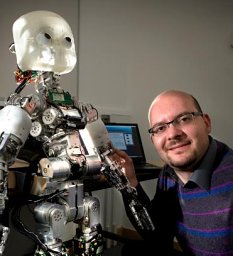 Davide Marocco合作论文数Institute of Cognitive Science and Technologies2Universite Libre De Bruxelles合作论文数2
 Angelo Cangelosi合作论文数Department of Computer Science, University of Manchester2
 Stefano Nolfi合作论文数Institute of Cognitive Sciences and Technologies, National Research Council2Tobias Seidl合作论文数Advanced Concepts Team;European Space Agency;Advanced Concepts Team, European Space Agency2Thomas Halva Labella合作论文数Applied Sciences, 2001 a€” 2007 (expected)2Shervin Nouyan合作论文数2
 Roderich Groß合作论文数Natural Robotics Lab, The University of Sheffield2
 Martin Peniak合作论文数2Francesco Biscani合作论文数2
 Luis Correia合作论文数LabMAg, Computer Science Department, University of Lisbon, Portugal1
 Jean-Louis Deneubourg合作论文数Faculté des Sciences, Université Libre de Bruxelles1
 Francisco Correia Dos Santos合作论文数INESC-ID;Department of Computer Science and Engineering, Instituto Superior Tecnico1Rossini, L.合作论文数1
 Gianluca Baldassarre合作论文数1Thien M. Ha合作论文数University of Berne1
 Dario Floreano合作论文数Laboratory of Intelligent Systems, Swiss Federal Institute of Technology Lausanne1
 Lu'Is F. Simoes合作论文数1
 Rita Almeida Ribeiro合作论文数1
 Luca Maria Gambardella合作论文数Facoltà di Scienze Informatiche, Università della Svizzera Italiana;The Robotics Lab, Dalle Molle Institute for Artificial Intelligence, Università della Svizzera Italiana;Artificialy SA1
 Frédéric Dufaux合作论文数Division of Telecom and Networking, Laboratoire des Signaux et Systèmes, Centre National de la Recherche Scientifique;Université Paris-Saclay1
 Jürgen 'Juxi' Leitner合作论文数QUT Centre for Robotics, LYRO Robotics1Michael Bonani合作论文数Autonomous Systems Lab, École Polytechnique Fédérale de Lausanne1
 Christina Cruz合作论文数Centre for Ecology, Evolution and Environmental Changes, University of Lisbon;Department of Plant Biology, Faculty of Sciences, University of Lisbon1Rehan O'Grady合作论文数Cryptosphere Systems AG1
 Francesco Mondada合作论文数Laboratoire de Syst??mes Robotiques;EPFL - IPR - STI1




