We present BARAKA, a new hybrid simulator for Sensor and Actor Networks (SANETs). This tool provides integrated simulation of communication networks and robotic aspects. It allows the complete modelling of co-operation issues in SANETs including the performance evaluation of either robot actions or networking aspects while considering mutual impact. This hybrid simulation enables new potentials in the evaluation of algorithms developed for communication and co-operation in SANETs. Previously, evaluations in this context were accomplished separately. On the one hand, network simulation helps to measure the efficiency of routing or medium access. On the other hand, robot simulators are used to evaluate the physical movements. Using two different simulators might introduce inconsistent results, and might make the transfer on real hardware harder. With the development of methods and techniques for co-operation in SANETs, the need for integrated evaluation environment increased. To compensate this demand, we developed BARAKA.
Robot foraging, a frequently used test application for collective robotics, consists in a group of robots retrieving a set of opportunely defined objects to a target location. A commonly observed experimental result is that the retrieving efficiency of the group of robots, measured for example as the number of units retrieved by a robot in a given time interval, tends to decrease with increasing group sizes. In this paper we describe a biology inspired method for tuning the number of foraging robots in order to improve the group efficiency. As a result of our experiments, in which robots use only locally available information and do not communicate with each other, we observe self-organised task allocation. This task allocation is effective in exploiting mechanical differences among the robots inducing specialisation in the robots activities.
In this thesis, we examine algorithms for the division of labour in a group of robot. The algorithms make no use of direct communication. Instead, they are based only on the interactions among the robots and between the group and the environment.Division of labour is the mechanism that decides how many robots shall be used to perform a task. The efficiency of the group of robots depends in fact on the number of robots involved in a task. If too few robots are used to achieve a task, they might not be successful or might perform poorly. If too many robots are used, it might be a waste of resources. The number of robots to use might be decided a priori by the system designer. More interestingly, the group of robots might autonomously select how many and which robots to use. In this thesis, we study algorithms of the latter type.The robotic literature offers already some solutions, but most of them use a form of direct communication between agents. Direct, or explicit, communication between the robots is usually considered a necessary condition for co-ordination. Recent studies have questioned this assumption. The claim is based on observations of animal colonies, e.g., ants and termites. They can effectively co-operate without directly communicating, but using indirect forms of communication like stigmergy. Because they do not rely on communication, such colonies show robust behaviours at group level, a condition that one wishes also for groups of robots. Algorithms for robot co-ordination without direct communication have been proposed in the last few years. They are interesting not only because they are a stimulating intellectual challenge, but also because they address a situation that might likely occur when using robots for real-world out-door applications. Unfortunately, they are still poorly studied.This thesis helps the understanding and the development of such algorithms. We start from a specific case to learn its characteristics. Then we improve our understandings through comparisons with other solutions, and finally we port everything into another domain.We first study an algorithm for division of labour that was inspired by ants' foraging. We test the algorithm in an application similar to ants' foraging: prey retrieval. We prove that the model used for ants' foraging can be effective also in real conditions. Our analysis allows us to understand the underlying mechanisms of the division of labour and to define some way of measuring it.Using this knowledge, we continue by comparing the ant-inspired algorithm with similar solutions that can be found in the literature and by assessing their differences. In performing these comparisons, we take care of using a formal methodology that allows us to spare resources. Namely, we use concepts of experiment design to reduce the number of experiments with real robots, without losing significance in the results.Finally, we apply and port what we previously learnt into another application: Sensor/Actor Networks (SANETs). We develop an architecture for division of labour that is based on the same mechanisms as the ants' foraging model. Although the individuals in the SANET can communicate, the communication channel might be overloaded. Therefore, the agents of a SANET shall be able to co-ordinate without accessing the communication channel.
Software deployment and updating of deployed code is a critical topic in the area of wireless sensor networks (WSN). Reasons are unreliable network connectivity, resource limitations of devices, and energy restrictions in general. Consequently, software deployment has to be performed with great care otherwise resources might be wasted or nodes become unavailable due to failed updates. The overall objective for software management in sensor networks is to enable a robust and efficient way to build deployable software images that take into account all the needs from application requirements to node-specific resource restrictions. In this article, we outline the current state-of-the-art for software management in WSN and (network-based) sensor network (re-)programming. We provide insights into three different approaches enabling a more comprehensive management of WSN while challenging the robustness and efficiency of software configurations and reprogramming. Additionally, we outline research challenges in the area of software management and sensor network operation.
We present BARAKA, a new simulator for SANETs. The evaluation of algorithms developed for communication and co-operation in this context is usually accomplished separately. On the one hand, network simulation helps to measure the efficiency of routing or medium access. On the other hand, robot simulators are used to evaluate the physical movements. Using two different simulators might introduce inconsistent results, and might make the transfer on real hardware harder. With the development of methods and techniques for co-operation in Sensor/Actuator Networks (SANETs), the need for integrated evaluation increased. To compensate this demand, we developed BARAKA. This tool provides integrated simulation of communication networks and robotic aspects. Thus, it allows the complete modelling of co-operation issues in SANETs including the performance evaluation of either robot actions or networking aspects while considering mutual impact.
Task allocation is an effective solution for resource management in Sensor and Actuator Networks. Optimal strategies lead to a reduction of individuals working on the same task and, therefore, to decreased interferences among them. We are currently studying a probabilistic task allocation algorithm inspired by the behaviour observed in animal colonies. In this paper, we introduce our ongoing work (the simulation model and algorithmic details), and a list of open issues that can be used as a basis for discussions.
Division of labour is one of the possible strategies to efficiently exploit the resources of autonomous systems. It is also a phenomenon often observed in animal systems. We show an architecture that implements division of labour in sensor/actuator networks. The way the nodes take their decisions is inspired by ants' foraging behaviour. The preliminary results show that the architecture and the bio-inspired mechanism successfully induce self-organised division of labour in the network. The experiments were run in simulation. We developed a new type of simulator for this purpose. Key features of our work are cross-layer design and exploitation if inter-node interactions. No explicit negotiation between the agents takes place
Keywords: swarm-bots ; self-assembling ; robotics ; microengineering ; [MOBOTS] Reference LSRO-CHAPTER-2006-002 Record created on 2006-06-30, modified on 2017-05-10
In this article, we analyze the behavior of a group of robots involved in an object retrieval task. The robots' control system is inspired by a model of ants' foraging. This model emphasizes the role of learning in the individual. Individuals adapt to the environment using only locally available information. We show that a simple parameter adaptation is an effective way to improve the efficiency of the group and that it brings forth division of labor between the members of the group. Moreover, robots that are best at retrieving have a higher probability of becoming active retrievers. This selection of the best members does not use any explicit representation of individual capabilities. We analyze this system and point out its strengths and its weaknesses.
This paper provides an overview of the SWARM-BOTS project, a robotic project sponsored by the Future and Emerging Technologies program of the European Commission. The paper illustrates the goals of the project, the robot prototype and the 3D simulator we built. It also reports on the results of experimental work in which distributed adaptive controllers are used to control a group of real, or simulated, robots so that they perform a variety of tasks which require cooperation and coordination.
In this paper, we introduce a self-assembling and self-organizing artifact, called a swarm-bot, composed of a swarm of s-bots, mobile robots with the ability to connect to and to disconnect from each other. We discuss the challenges involved in controlling a swarm-bot and address the problem of synthesizing controllers for the swarm-bot using artificial evolution. Specifically, we study aggregation and coordinated motion of the swarm-bot using a physics-based simulation of the system. Experiments, using a simplified simulation model of the s-bots, show that evolution can discover simple but effective controllers for both the aggregation and the coordinated motion of the swarm-bot. Analysis of the evolved controllers shows that they have properties of scalability, that is, they continue to be effective for larger group sizes, and of generality, that is, they produce similar behaviors for configurations different from those they were originally evolved for. The portability of the evolved controllers to real s-bots is tested using a detailed simulation model which has been validated against the real s-bots in a companion paper in this same special issue.
Communication is often required for coordination of collective behaviours. Social insects like ants, termites or bees make use of different forms of communication, which can be roughly classified in three classes: indirect (stigmergic) communication, direct interaction and direct communication. The use of stigmergic communication is predominant in social insects (e.g., the pheromone trails in ants), but also direct interactions (e.g., antennation in ants) and direct communication can be observed (e.g., the waggle dance of honey bee workers). Direct communication may be beneficial when a fast reaction is expected, as for instance, when a danger is detected and countermeasures must be taken. This is the case of hole avoidance, the task studied in this paper: a group of self-assembled robots – called swarm-bot – coordinately explores an arena containing holes, avoiding to fall into them. In particular, we study the use of direct communication in order to achieve a reaction to the detection of a hole faster than with the sole use of direct interactions through physical links. We rely on artificial evolution for the synthesis of neural network controllers, showing that evolving behaviours that make use of direct communication is more effective than exploiting direct interactions only.
Prey retrieval, also known as foraging, is a widely used test application for Multi Robot Systems (MRS). The task consists in searching for objects spread in the environment and in bringing them to a specific place called nest or home. Scientific issues usually concern efficient exploration, mapping, communication among agents, task coordination and allocation, and conflict resolution. In particular, conflicts prevent the performance of foraging (i.e. the number of items retrieved) from growing linearly with the number of robots. Collisions among robots or two robots that try to move an object but in different directions are examples of conflicts. From an energetic point of view, conflicts can be seen as energy that is lost during the retrieval. Several works in the literature investigate how the control system of each agent or some form of middle/long range communication can improve performance. In this work, we study a different approach to conflict resolution based only on information locally available to each robot. We show that it is possible to reduce conflicts by adapting for each robot the probability to leave the nest according to previous successes or failures. We derive an estimator of the efficiency of the system and show that this form of adaptation improves it. Efficiency increases through the allocation of tasks among members of the team and the exploitation of their individual abilities.
In this paper, we study aggregation in a swarm of simple robots, called s − bots, having the capability to self-organize and self-assemble to form a robotic system, called a swarm − bot. The aggregation process, observed in many biological systems, is of fundamental importance since it is the prerequisite for other forms of cooperation that involve self-organization and self-assembling. We consider the problem of defining the control system for the swarm − bot using artificial evolution. The results obtained in a simulated 3D environment are presented and analyzed. They show that artificial evolution, exploiting the complex interactions among s − bots and between s − bots and the environment, is able to produce simple but general solutions to the aggregation problem.
We introduce a new robotic system, called swarm-bot. The system consists of a swarm of mobile robots with the ability to connect to/disconnect from each other to self-assemble into different kinds of structures. First, we describe our vision and the goals of the project. Then we present preliminary results on the formation of patterns obtained from a grid-world simulation of the system.
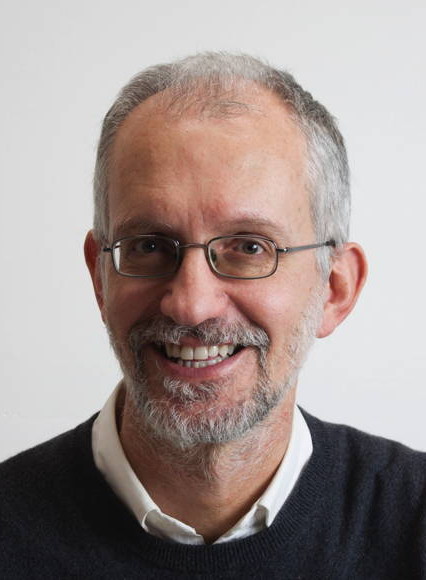 Marco Dorigo合作论文数IRIDIA Universite Libre de Bruxelles10
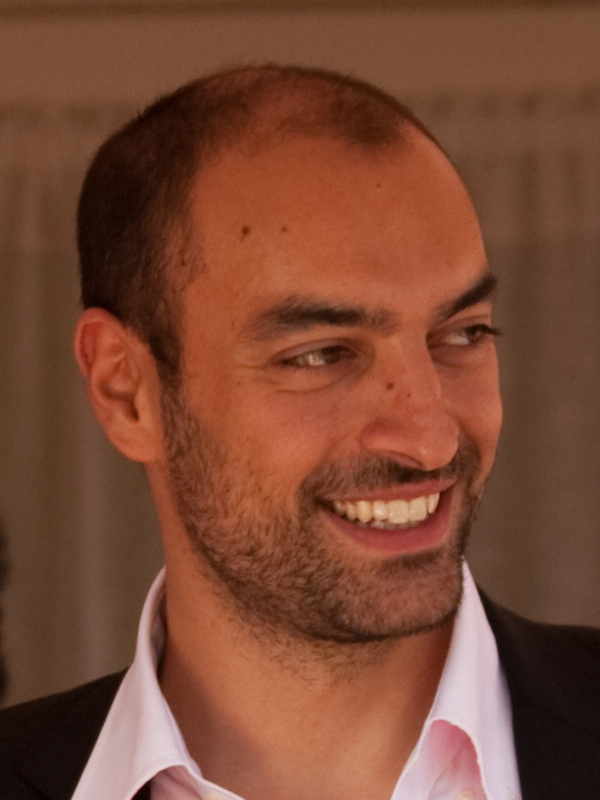 Vito Trianni合作论文数Institute of Cognitive Sciences and Technologies, Italian National Research Council7
 Jean-Louis Deneubourg合作论文数Faculté des Sciences, Université Libre de Bruxelles6
 Roderich Groß合作论文数Natural Robotics Lab, The University of Sheffield5
 Erol Sahin合作论文数Kovan Research Lab, Department of Computer Engineering, Middle East Technical University4
 Falko Dressler合作论文数School of Electrical Engineering and Computer Science, Technische Universität Berlin3
 Gianluca Baldassarre合作论文数2
 Dario Floreano合作论文数Laboratory of Intelligent Systems, Swiss Federal Institute of Technology Lausanne2
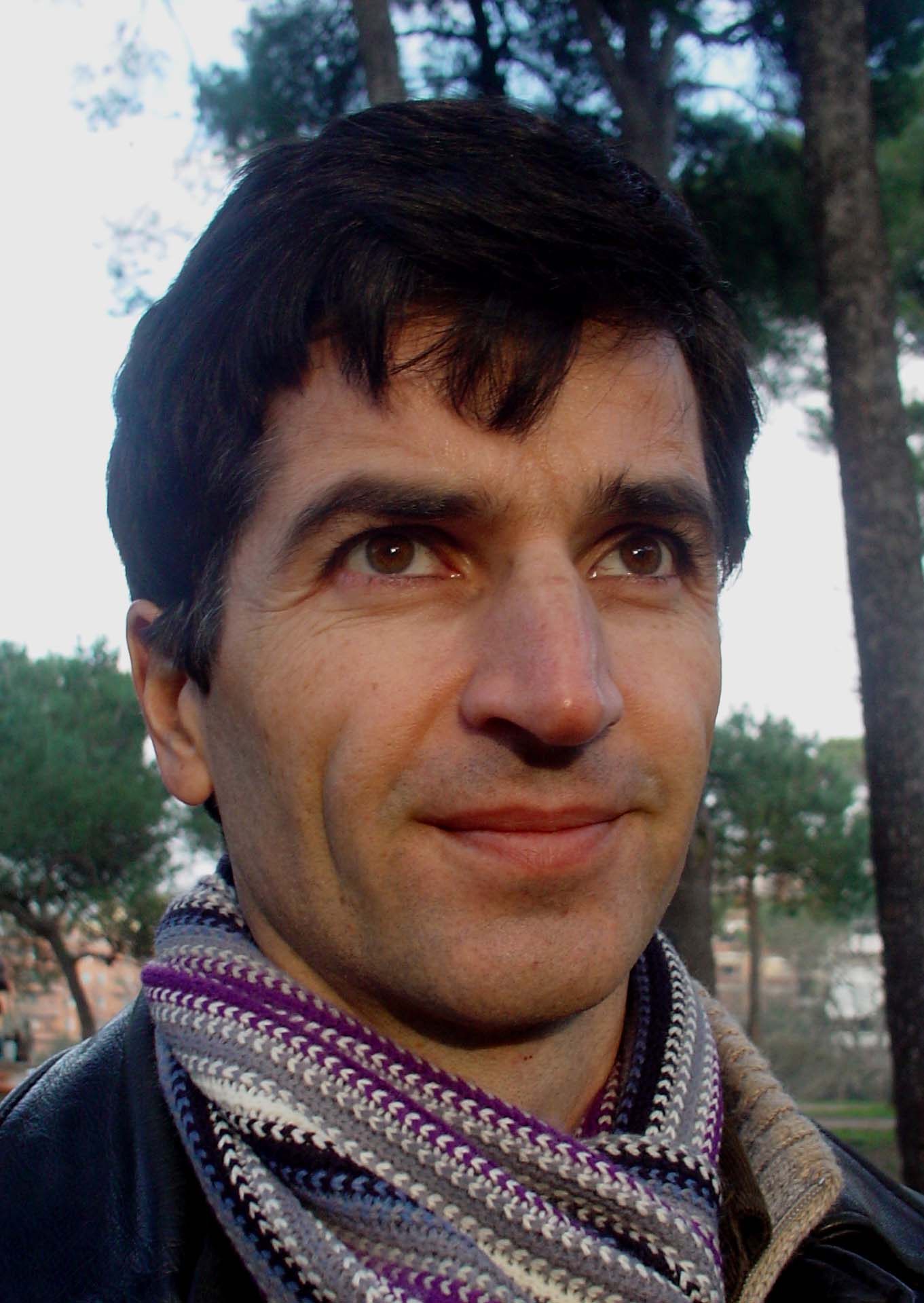 Stefano Nolfi合作论文数Institute of Cognitive Sciences and Technologies, National Research Council2
 Christos Ampatzis合作论文数2Shervin Nouyan合作论文数2Isabel Dietrich合作论文数2
 Luca Maria Gambardella合作论文数Facoltà di Scienze Informatiche, Università della Svizzera Italiana;The Robotics Lab, Dalle Molle Institute for Artificial Intelligence, Università della Svizzera Italiana;Artificialy SA2
 Elio Tuci合作论文数Faculty of Computer Science, University of Namur2
 Francesco Mondada合作论文数Laboratoire de Syst??mes Robotiques;EPFL - IPR - STI2Gerhard Fuchs合作论文数1Wolfgang Schroeder-Preikschat合作论文数Professorship of Computer Science 4 (Distributed Systems and Operating System) at the Friedrich-Alexander University Erlangen-Nuremberg.1Meik Felser合作论文数1
 Rüdiger Kapitza合作论文数Department Informatik, Technische Fakultät, Friedrich-Alexander-Universität Erlangen-Nürnberg;Dfinity1Michael Bonani合作论文数Autonomous Systems Lab, École Polytechnique Fédérale de Lausanne1Rehan O'Grady合作论文数Cryptosphere Systems AG1




