The interfacial heat resistance of carbon fiber reinforced polyether ketone ketone (CF/PEKK) composites plays a critical role in their high-temperature applications. In this study, polyetherimide (PEI), polysulfone (PSF) and polyethersulfone (PES) resins were selected as sizing agents for carbon fibers to investigate their effects on the interfacial heat resistance of CF/PEKK composites. Results show that all three sizing resins possess high thermal stability suitable for CF/PEKK composite processing and effectively enhance the interfacial shear strength (IFSS). PEI resin exhibited the best compatibility with the PEKK matrix. The PEI-sized CF/PEKK composites achieved the highest interfacial properties, with an IFSS value of 100.5 MPa, representing a 26.6 % improvement over desized composites. Analysis of interfacial heat resistance further revealed that composites modified with 1 wt% PEI retained the highest IFSS of 74.4 MPa at 140 degrees C, which is 31.7 % higher than that of desized composites under the same conditions. This enhancement primarily stems from the good compatibility and high heat resistance, which simultaneously improve the interfacial adhesion strength and thermal stability of CF/PEKK composites. These advantages help broaden the application prospects of CF/PEKK composites in high-temperature environments.
Abstract Hybrid continuous discontinuous carbon fiber reinforced thermoplastic structures enable complex geometries but may warp during cooling due to residual stresses and thermal expansion mismatch between laminate and injection molded regions. We develop a sequential multiscale thermo-mechanical simulation framework. A non-isothermal injection molding simulation predicts temperature and residual stress fields. The fields are mapped onto a global FE model with transversely isotropic laminate and isotropic discontinuous domains. A coupled temperature displacement analysis computes the warpage of three representative structures. Simulation results show that higher mold and preheating temperatures reduce warpage, whereas higher injection pressure increases it. The framework guides process window selection.
The interfacial bonding performance between carbon fibers and the resin matrix is a critical factor limiting the performance optimization of carbon fiber reinforced polymer composites. This work utilizes Fe3+ as the iron source and fumaric acid as the organic ligand to construct the precursor of iron-based metal-organic framework (MIL-88-A) through in situ growth on carbon fiber surfaces. Subsequently, the grafting of magnetic Fe3O4 nanoparticles onto carbon fiber surfaces was accomplished via a pyrolytic treatment. These modified carbon fiber reinforced epoxy composites were then fabricated using vacuum-assisted resin infusion (VARI). The results indicate that the interfacial shear strength (IFSS) and interlaminar shear strength (ILSS) of the Fe3O4 nanoparticle-modified CF/EP composites reached 106.4 MPa and 68.8 MPa, respectively, representing significant improvements of 63.7% and 48.9% compared to those of the desized carbon fiber composites. This enhancement can be attributed to the fact that the magnetic Fe3O4 nanoparticles not only improved the wettability between the carbon fiber surface and the epoxy resin but also increased the surface roughness of the fibers, thereby enhancing mechanical interlocking and stress transfer efficiency in the interfacial region. Meanwhile, owing to the presence of magnetic Fe3O4 nanoparticles, the CF/EP composites exhibit outstanding electromagnetic shielding performance with an average shielding effectiveness of 47.1 dB in the X-band. This study offers new design insights for improving the interfacial properties of carbon fiber-reinforced polymer (CFRP) composites and expanding their multifunctional applications.
Structural supercapacitors employing carbon fiber (CF)-based electrodes offer simultaneous load-bearing capability and energy storage, making them highly attractive for portable electronics and electric vehicles. However, the inherently low specific surface area of as-received CF significantly restricts the electrochemical performance of such devices. In this work, vertical carbon nanosheets (VCN) were grown on the CF surface, followed by the introduction of heteroatom-doped porous carbon (HDPC) derived from polyphosphazene with the assistance of a biomass-derived binder, forming a novel CF-based electrode through a synergistic modification strategy. Structural supercapacitors were subsequently assembled using the co-modified CF electrodes, a separator, and a homogeneous polymer electrolyte, and their electrochemical and mechanical properties were systematically evaluated. The results demonstrate that the specific surface area and electrochemical activity of the activated carbon materials modified (CF)-based electrode were significantly enhanced, yielding a maximum areal capacitance of 146.0 mF cm(-2) of structural supercapacitors. Meanwhile, the fabricated structural super-capacitor exhibits a flexural strength of 21.2 MPa and a flexural modulus of 1.6 GPa. Notably, the incorporation of biomass materials as a binder provides a sustainable and effective pathway for developing high-performance structural supercapacitors.
High-performance microwave absorbers are essential for mitigating electromagnetic interference. Herein, hollow Fe3O4 particles coated with N, P co-doped carbon shells (Fe3O4@NP-C) were synthesized via a solvothermal process followed by annealing. The resulting Fe3O4@NP-C composites exhibit enhanced microwave absorption, achieving a minimum reflection loss (RL min) of-69.6 dB at 10.24 GHz with a matching thickness of 8.6 mm and an effective absorption bandwidth (EAB) of 3.04 GHz. The improved performance originates from the synergistic coupling between the magnetic loss of Fe3O4 and the dielectric loss of the N, P co-doped carbon shell. Meanwhile, the hollow core-shell structure introduces abundant interfaces and internal cavities, promoting multiple reflections and interfacial polarization, which prolong electromagnetic wave propagation and enhance energy dissipation. These results demonstrate the crucial role of synergistic magnetic-dielectric loss and interfacial polarization in enhancing microwave absorption, providing deeper insight into the underlying attenuation mechanisms in Fe3O4/carbon composites.
Predicting the flow-induced fiber deformation that limits the double-belt press (DBP) lamination of organosheets is critical for manufacturing high-performance composites. This work develops a dual-mechanism squeeze flow model that explicitly couples macroscopic squeeze flow with mesoscopic resin percolation, and an associated predictive framework, including a power-law criterion for instability initiation and a dimensionless Instability Index, to quantify the resulting fiber deformation. The developed squeeze flow model is validated against laboratory-scale experiments, and the Instability Index shows a strong positive correlation (, ) with measured fiber deformation in industrial-scale trials covering temperatures of 230 degrees C-270 degrees C, belt speeds of 2-6 mm/s and roller gaps of 2.0-2.4 mm. Furthermore, the influence of DBP process parameters, such as temperature, belt speed, and roll gap, on the mechanical properties of the final organosheets is analyzed, associating the observed non-monotonic trends with the fiber instability predicted by the framework. This validated framework provides a quantitative and practical tool for DBP process optimization, offering physical insight into process dependent instability and enabling high precision forming process simulation and performance control.
Although poised to be key strategic materials for achieving lightweight and recyclable solutions, the full potential of fiber reinforced thermoplastics hinges on advanced fiber-matrix interphase research. Yet, multiscale simulations linking molecular architectures to macroscale responses remain critically fragmented. We addresses this gap by systematically deconstructing the fundamental interphase physics, spanning thermodynamic wetting, reptation-mediated interdiffusion, confined heterogeneous crystallization, and hygrothermal degradation. Next, we elucidate the bottom-up assembly of chemically specific interphases via atomistic and coarse-grained modeling, leveraging resolution-bridging protocols to derive robust interfacial constitutive laws. Integrating these with mesoscale frameworks captures morphological heterogeneity, establishing a predictive link to macroscopic composite performance. Crucially, bridging fundamental interfacial science and structural engineering, we detail how process-dependent interphase properties dictate hybrid failure modes and architecture-mediated responses. This underscores the imperative of an Integrated Computational Materials Engineering framework for processing-aware structural design. To overcome data scarcity and ill-posed scale-bridging problems, we highlight Physics-Guided Machine Learning and inverse strategies. Coupling Bayesian uncertainty quantification with scalable data infrastructures accelerates interphase-centered design. Ultimately, we outline a comprehensive roadmap fusing physics-based and data-driven paradigms to realize closed-loop, processing-aware digital twins for next-generation FRTPs.
Understanding interfacial bonding strength formation mechanisms in overmolded hybrid composites is critical for designing high-performance structural components, as bond integrity governs overall structural performance. This work investigates interfacial bonding mechanisms of overmolded thermoplastic composites. An approach integrating experiments with a predictive framework incorporating crystallization kinetics into fusion bonding theory was employed. The results reveal that interfacial strength is governed by two coupled mechanisms: multi-scale mechanical interlocking and polymer healing with crystallization effects, which are influenced by material, surface, process, and geometric parameters. Framework validation demonstrated the critical role of polymer healing with crystallization effects in thermally driven phenomena. Furthermore, integrated analysis of simulation and experimental results revealed that for geometrically complex parts, macro-scale pressure-induced mechanical interlocking can be the dominant mechanism compared to molecular-level healing. This study provides mechanistic insight and a validated numerical tool for the design and optimization of overmolded thermoplastic composites.
Addressing the lack of high fidelity mechanism-informed models for pivotal electrochemical oxidation modification step of the inert carbonized carbon fiber surface, both the pristine and anodic oxidized PAN-derived industrial high strength carbon fiber modeling frameworks with refined internal structures are constructed for better surface molecular engineering regulations and furnishing the composites interface with more sophisticated building blocks. The internal chemical structure transitions for the carbon fiber surface layer are deduced considering the charge transfer in redox reactions, oxidation pathways driven by nascent deprotonation/oxygen-insertion active groups under the acidic or alkaline medium as well as organic named reactions. The proposed mechanism-integrated anodic oxidized carbon fiber surface model, based on the functionality of the desized T700 carbon fibers, as well as oxidative etching kinetics for the crystalline and the amorphous CF region, successfully reproduces the site-matching reactions and partitioned intercalation etching (SMR-PIE) attributes. The computational results of spontaneous sub-nanometer grooving morphology patterns after functionalization rearrangement, specific surface areas and the polar/non polar surface energy densities from intrinsic thermodynamics definitions are reconciled with reported experimental values.
Conceptual design of mechanisms is a crucial part of achieving product innovation as mechanisms perform the transmission and transformation of specific motions in the machine. However, existing approaches for automated synthesis of mechanisms are either inefficient or prone to a loss of optimal solutions. To fill this gap, a systematic online decision-making method using Thompson Sampling (TS) based Monte Carlo Tree Search (MCTS) for automated conceptual design of mechanisms is proposed. The functional transformation relationships between inputs and outputs of the intended mechanism system are used to determine combinatorial patterns. Then, a functional representation model is constructed based on the combination rules of motion features and the inference relationships of function elements to represent a range of primitive mechanisms as fundamental building blocks. Finally, the optimal action selection strategy based on TS is applied into MCTS to develop Dirichlet based Monte Carlo Tree Search (D-MCTS) algorithm for searching mechanism building blocks. In addition, the conceptual design of the beat-up mechanism as well as the stitching and feeding mechanism are conducted to validate the feasibility of the proposed approach. Compared with specialized heuristics, D-MCTS achieves higher efficiency in finding the best combination of mechanism building blocks. Compared with other common algorithms, D-MCTS can always avoid the local optima trap to find the global optimal solution without any necessary hyper-parameter tuning. The proposed method exhibits a more balanced performance in exploration and exploitation, which provides better solutions for mechanism synthesis of given requirements.
The occurrence of process-induced deformations of composites laminates is challenging for assembly accuracy and may lead to a service life reduction of parts. However, it can be obviously mitigated through different optimization strategies on the basis of the accurate curing process simulation. In this study, a stacking sequence optimization strategy is proposed and applied to multi-layer thick asymmetric laminates. The shapes of deformed laminate plates are experimentally investigated in virtue of the three-dimensional coordinate measuring machine. The thermo-chemical-mechanical behaviors of plates are first verified through the comparisons of model predicted and experimental process-induced deformations. Then the nonlinear control formula achieved through the regression model is proposed for the direct relationship between stacking sequences and process-induced deformations. Finally, the required solutions are generated by solving the control formula. With the comparisons between the average deformations before and after optimizations, it is found that the magnitudes of deformations are significantly reduced, especially when the unoptimizated deformations are large.
Chemical grafting is commonly employed to functionalize carbon fiber (CF) surface to enhance the interfacial properties of CF reinforced polymer composites (CFRP) by forming a robust interface. However, an overly rigid interface layer can result in relatively poor interface toughness. To balance interfacial strength and toughness, this paper proposes an effective method to simultaneously strengthen and toughen the interface of CF/epoxy composites by grafting branched polyethyleneimine (PEI) on CF surface using hexachlorophosphazene (HCCP) as active intermediate, which features a rigid ring structure and six active P-Cl groups. The introduction of PEI provided a large number of amine and imine groups on CF surfaces, which were contributive to improving surface wettability and reactivity of CF, thus resulting in strong chemical bonding between CF and epoxy matrix. Additionally, the long and flexible molecular skeleton of PEI constructed a rigid-flexible composite interface, which could effectively reduce stress concentration and absorb impact energy. After surface modification with PEI, the interfacial shear strength and fracture toughness of CF/epoxy composite were increased to 89.9 MPa and 200.3 J m-2, by 64.3% and 149.7%, respectively, in compared with desized CF reinforced epoxy composites.Highlights A rigid-flexible interface was constructed between CF and epoxy resin. The interfacial strength and toughness of CFRP were synergistically improved. IFSS and interfacial toughness increased by 64.3% and 149.7%, respectively. A rigid-flexible interface for CF/epoxy composite was constructed by grafting flexible PEI onto carbon fiber surface using HCCP with rigid ring structure as active intermediate, which improved interfacial adhesion and toughness synergistically. image
Hierarchical QM/MD/FEM/EMF modeling and simulation strategies have been employed for structural descriptors and stiffness matrices of precursor-inherited sheath-core carbon fiber layers.
Carbon fiber (CF) is inert to dyes or pigments, thus its products usually exhibit a drab black and unexciting look. The bio-inspired structural coloration may provide a dye-free method to color CF. Herein, inspired by the interference colors of the insect's wing, a dye-free structural coloration method is proposed to color CF. A layer of poly(cyclotriphosphazene-co-4,4′-oxydianiline) film is assembled on the CF surface by in situ polymerization under a mild reaction condition, creating vivid colors based on thin film interference. Moreover, the structural color shows excellent thermal durability due to the good thermo‑oxygen stability of NP heterocycles and cross-linked networks in coloration film. Furthermore, the tensile strength of colored CF and the interfacial adhesion between colored CF and resin are also synergistically improved by 17.1% and 48.7%, respectively, because of the sturdiness and surface chemical activity of coloration film. In brief, the colored CF may have potential in designing and preparing new structural and functional composites.
The collision forces generated by clearance in the cam pair lead to poor dynamic performance and undesirable vibrations of cam mechanisms. Existing approaches improve the dynamic characteristics through optimizing the contact parameters of the cam joint elements. However, adjusting these parameters may exceed the limits of a specified material since the material properties vary discretely from one to another. To fill this gap, a dynamic characteristics optimization method using non-uniform rational B-spline (NURBS) and reiforcement learning (RL) is proposed for cam mechanisms with clearance joints. A NURBS curve is used to reconstruct the cam profile whose shape can be locally changed by the weighting factors of corresponding control points. Then, the nonlinear dynamics equations of the cam mechanism with clearance joint are established to solve the output acceleration a_c and the joint’s contact force F_c . Finally, a RL agent is trained to learn the optimal policy for the weighting factors to minimize the mean vibrations of a_c and F_c . In addition, dynamics optimization of a beat-up mechanism considering cam clearance joint is conducted to validate the adaptability and reliability of the proposed approach. The results show that the mean vibrations of a_c and F_c are respectively decreased by 46.7
在能源危机与生态环境持续恶化的大背景下,开发先进储能技术成为各国竞相研究的重点.将碳纤维作为多功能结构电极与聚合物电解质复合,制备兼具储能与结构承载的复合材料结构超级电容器(Structural supercapacitor composites,SSC),有望满足现代装备对高效储能与轻量化结构的双重需求,在新能源汽车、航空航天等领域具有广泛应用前景.碳纤维电极是SSC的重要组件,承担着富集电荷与力学承载的双重任务,应具有高比表面积、优良的力学性能及树脂电解质浸润能力.然而常规碳纤维表面光滑,比表面积小,化学惰性大,不利于电荷的存储及树脂电解质的浸润,限制了高性能SSC的制备与应用,必须对其进行表面改性处理.本文介绍了SSC用碳纤维电极材料的研究现状,重点阐述了刻蚀活化改性、碳基活性材料修饰、纳米金属化合物活性材料修饰、聚苯胺修饰等改性方法,总结了不同碳纤维电极制备方法对SSC储能及力学性能的影响行为与机制,归纳了各自优缺点,并展望了SSC用碳纤维电极研制面临的挑战及发展趋势.
综述了热塑性复合材料热压-注塑一体成型在制件界面性能方面的研究进展,简要介绍了该种成型工艺不同于传统热塑性复合材料成型工艺的原理及其优势,指出良好的异质结构界面是发挥热压-注塑一体成型制件优势的关键,同时详细介绍了材料体系、工艺参数、界面结晶效应以及界面结合机制对热压-注塑一体成型制件界面性能的影响.最后总结了热压-注塑一体成型复合材料界面性能优化改善的方法以及目前研究存在的问题,并对未来发展趋势进行了展望.
Existing hot stamping simulations are performed at the macroscopic scale, making optimizing process parameters for a new composite system time-consuming. This paper develops a dual-scale three-dimensional thermos-viscoelastic model based on a numerical homogenization approach to accurately predict the structural deformation of thermoplastic composite laminates during hot stamping. The viscoelastic homogenization model is developed on representative volume elements using temperature-dependent viscoelastic parameters determined from thermo-mechanical tests. The effective properties of the composites are identified from the homogenization results, which are then combined with the experimentally measured thermal behavior into a numerical model of the hot stamping process. The developed model is validated by the agreement between the finite element homogenization results and the predictions made using the determined parameters. The simulated warpage of the molded part also agrees well with the experimental measurements. The developed dual-scale model can be used to predict the effective thermomechanical properties of composites. Moreover, it can also be integrated into numerical tools for structural design and process optimization of thermoplastic composites.
The recycling of carbon fiber (CF) reinforced bio-based degradable epoxy resin composites is of great significance for resource saving, environment protection and sustainable development of economy and society. Resin transfer molding (RTM) has been recognized as one of the most promising processes to manufacture CF Reinforced polymeric composites cost-effectively. The bio-based diglycidyl ether pentaerythritol vanillin diacetal (DEPVD) epoxy resin used in this study is an epoxy resin that can be degradable under mild conditions. And its CF composites were prepared by the RTM process using DDS as a curing agent and low viscosity bisphenol A-E51 epoxy resin as a diluent. The chemical rheological properties, curing behavior, thermal stability, dynamic viscoelasticity and mechanical properties of DDS-E51-DDS epoxy resin were investigated. It is found that the increase of DEPVD content is beneficial to improve the mechanical properties, T-g and solid residue after thermal degradation of DEPVD-E51-DDS epoxy resin. Moreover, the effects of DEPVD content in epoxy resin on the mechanical properties of CF/DEPVD-E51-DDS composites were evaluated. When the DEPVD content is 70%, the tensile and flexural strength of CF/EPVD-E51-DDS composites are 1649.4 MPa and 1207.4 MPa, respectively. The degradability and mechanism of CF/DEPVD-E51-DDS composites were further investigated. CF/DEPVD-E51-DDS composites containing 70% DEPVD have excellent degradability, and the recycled CFs exhibit comparable mechanical properties to the virgin CFs, which demonstrates a novel way to recover the high-quality of used CFs.
 Yingdan Zhu (祝颖丹)合作论文数Ningbo Institute of Industrial Technology, Chinese Academy of Sciences76
 Dong Liu (刘东)合作论文数中国科学院大学宁波材料所56
 Haibing Xu (徐海兵)合作论文数中国科学院大学宁波材料所46
 Gang Chen (陈刚)合作论文数中国科学院宁波材料技术与工程研究所42
 Mingda Chen (陈明达)合作论文数中国科学院大学宁波材料所17
 Xinyu Fan合作论文数Chinese Academy of Sciences, Chinese Academy of Sciences17Pengcheng Shi合作论文数11Xiaoqing Zhang合作论文数11JunLong Liu (刘俊龙)合作论文数10
 Dongxi Lv合作论文数9Youqiang Yao合作论文数8
 Hongzhou Li (李红周)合作论文数中国科学院宁波材料技术与工程研究所8
 Guangbin Cai合作论文数6
 Xiang Chen (陈想)合作论文数College of Computer Science and Technology, Zhejiang University;College of Computer Science, Zhejiang University;School of Computer Science and Technology, Zhejiang University6Xiaotuo Li合作论文数5
 Xiaofei Wu合作论文数5Liping Yu (于丽萍)合作论文数5Qin Yongli合作论文数4Jiangping Ding合作论文数4Yunyun Ma合作论文数4Shijie Qi合作论文数4
 Imran Ali合作论文数Dept Mech Mechatron & Mfg Engn, Univ Engn & Technol Lahore4LiYan Tu (涂丽艳)合作论文数4
 Lingyu Yue合作论文数Lab Multiscale Mech, Polytech Montreal3Hongli Jia合作论文数3Dong Liao (廖栋)合作论文数3Yipeng Zhang (张翼鹏)合作论文数3
 Jinyue Dai (代金月)合作论文数University of Chinese Academy of Sciences;Ningbo Institute of Materials Technology & Engineering, Chinese Academy of Sciences2
 Chao Li合作论文数2
 Yue Zhao合作论文数2Qitao Guo合作论文数2XIAO Zhiqiao (肖志乔)合作论文数2WEI Jun (韦君)合作论文数2Yue ZHAO (赵岳)合作论文数2Junfeng Hu合作论文数2YuBin Zhang (张育斌)合作论文数2DeGang Zhao (赵德刚)合作论文数2
 Juan Li合作论文数Cixi Institute of Biomedical Engineering, Ningbo Institute of Material Technology & Engineering, Chinese Academy of Sciences2Xinyao Lin合作论文数2
 David Hui合作论文数Composite Material Research Laboratory, University of New Orleans2
 Ling Liu (刘玲)合作论文数School of Materials Science & Engineering, Beijing Institute of Technology2Chunyin Ruan (阮春寅)合作论文数2
 Wenqing Liu (刘文庆)合作论文数School of Materials Science and Engineering, Shanghai University2
 Yanpeng Wei (魏延鹏)合作论文数Institute of Mechanics, Chinese Academy of Sciences2
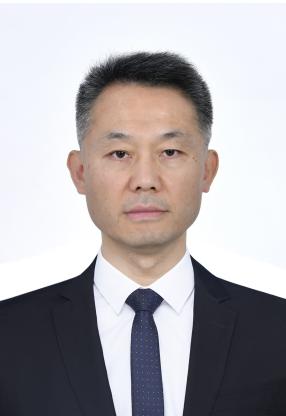 Wuxiang Zhang (张武翔)合作论文数School of Mechanical Engineering & Automation, Beihang University2
 Shirley Zhiqi Shen合作论文数CSIRO Mfg2axel herrmann合作论文数1
 Jun Chen合作论文数1Leilei Song合作论文数1




