In the IceCube Neutrino Observatory, a signal of astrophysical neutrinos is obscured by backgrounds from atmospheric neutrinos and muons produced in cosmic-ray interactions. IceCube event selections used to isolate the astrophysical neutrino signal often focus on the morphology of the light patterns recorded by the detector. The analyses presented here use the new IceCube Enhanced Starting Track Event Selection (ESTES), which identifies events likely generated by muon-neutrino interactions within the detector geometry, focusing on neutrino energies of 1-500 TeV with a median angular resolution of 1.4 degrees. Selecting for starting-track events filters out not only the atmospheric-muon background but also the atmospheric-neutrino background in the southern sky. This improves IceCube's muon-neutrino sensitivity to southern-sky neutrino sources, especially for Galactic sources that are not expected to produce a substantial flux of neutrinos above 100 TeV. In this work, the ESTES sample was applied for the first time to search for astrophysical sources of neutrinos, including a search for diffuse neutrino emission from the Galactic plane. No significant excesses were identified from any of the analyses; however, constraining limits are set on the hadronic emission from TeV gamma-ray Galactic plane objects and models of the diffuse Galactic plane neutrino flux.
The KM3NeT observatory detected the most energetic neutrino candidate ever observed, with an energy between 72 PeV and 2.6 EeV at the 90% confidence level. The observed neutrino is likely of cosmic origin. In this article, it is investigated if the neutrino could have been produced within the Milky Way. Considering the low fluxes of the Galactic diffuse emission at these energies, the lack of a nearby potential Galactic particle accelerator in the direction of the event, and the difficulty of accelerating particles to such high energies in Galactic systems, we conclude that if the event is indeed cosmic, it is most likely of extragalactic origin.
Abstract We present a comprehensive study of deep‐sea bioluminescent organisms in the Cascadia Basin, Northeast Pacific Ocean, based on four years (2020–2023) of in situ measurements using STRings for Absorption length in Water instruments. Analysis of over 1.3 million camera images and continuous photomultiplier tube recordings revealed that bioluminescent activity at depths of 2.0–2.6 km is driven by mechanical stimulation from tidal currents, with emission rates showing strong periodicity across quaddiurnal, semidiurnal, and diurnal scales. Machine‐learning‐assisted chromatic characterization of emission peaks identified a taxonomic composition primarily consisting of blue‐emitting organisms (470–500 nm), likely including glass squid (Leachia lemur) and various planktonic species, alongside a non‐negligible population of yellow‐green emitters (5̃65 nm) tentatively associated with tomopteris polychaete worms. We quantified an effective organism abundance of , a value consistent with earlier indirect assessments but here confirmed through long‐term, direct observation. These findings establish a baseline for the biological optical background in the Cascadia Basin, providing critical parameters for the design and background‐modeling of large‐scale neutrino telescopes such as Pacific Ocean Neutrino Experiment (P‐ONE).
We analyzed the 7.92 × 10 ^11 cosmic-ray-induced muon events collected by the IceCube Neutrino Observatory from 2011 May 13, when the fully constructed experiment started to take data, to 2023 May 12. This data set provides an up-to-date cosmic-ray arrival direction distribution in the Southern Hemisphere with unprecedented statistical accuracy covering more than a full period length of a solar cycle. Improvements in Monte Carlo event simulation and better handling of year-to-year differences in data processing significantly reduce systematic uncertainties below the level of statistical fluctuations compared to the previously published results. We confirm the observation of a change in the angular structure of the cosmic-ray anisotropy between 10 TeV and 1 PeV, more specifically in the 100–300 TeV energy range. For the first time, we analyzed the angular power spectrum at different energies. The observed variations of the power spectra with energy suggest relatively reduced large-scale features at high energy compared to those of medium and small scales. The large volume of data enhances the statistical significance at higher energies, up to the PeV scale, and smaller angular scales, down to approximately 6° compared to previous findings.
KM3NeT/ORCA is an underwater neutrino telescope under construction in the Mediterranean Sea. Its primary scientific goal is to measure the atmospheric neutrino oscillation parameters and to determine the neutrino mass ordering. ORCA can constrain the oscillation parameters $\Delta m^{2}_{31}$ and $\theta_{23}$ by reconstructing the arrival direction and energy of multi-GeV neutrinos crossing the Earth. Searches for deviations from the Standard Model of particle physics in the forward scattering of neutrinos inside Earth matter, produced by Non-Standard Interactions, can be conducted by investigating distortions of the standard oscillation pattern of neutrinos of all flavours. This work reports on the results of the search for non-standard neutrino interactions using the first six detection units of ORCA and 433 kton-years of exposure. No significant deviation from standard interactions was found in a sample of 5828 events reconstructed in the 1 GeV$-$1 TeV energy range. The flavour structure of the non-standard coupling was constrained at 90\% confidence level to be $|\varepsilon_{\mu\tau} | \leq 5.4 \times 10^{-3}$, $|\varepsilon_{e\tau} | \leq 7.4 \times 10^{-2}$, $|\varepsilon_{e\mu} | \leq 5.6 \times 10^{-2}$ and $-0.015 \leq \varepsilon_{\tau\tau} - \varepsilon_{\mu\mu} \leq 0.017$. The results are comparable to the current most stringent limits placed on the parameters by other experiments.
While the sources of the diffuse astrophysical neutrino flux detected by the IceCube Neutrino Observatory are still largely unknown, one of the promising methods to improve our understanding of them is investigating the potential temporal and spatial correlations between neutrino alerts and the electromagnetic radiation from blazars. We report on the multiwavelength target-of-opportunity observations of the blazar B3 2247+381, taken in response to an IceCube multiplet alert for a cluster of muon neutrino events compatible with the source location between 2022 May 20 and 2022 November 10. B3 2247+381 was not detected with VERITAS during this time period. The source was found to be in a low-flux state in the optical, ultraviolet, and gamma-ray bands for the time interval corresponding to the neutrino event, but was detected in the hard X-ray band with NuSTAR during this period. We find the multiwavelength spectral energy distribution is described well using a simple one-zone leptonic synchrotron self-Compton radiation model. Moreover, assuming the neutrinos originate from hadronic processes within the jet, the neutrino flux would be accompanied by a photon flux from the cascade emission, and the integrated photon flux required in such a case would significantly exceed the total multiwavelength fluxes and the VERITAS upper limits presented here. The lack of flaring activity observed with VERITAS, combined with the low multiwavelength flux levels, as well as the significance of the neutrino excess being at a 3 σ level (uncorrected for trials), makes B3 2247+381 an unlikely source of the IceCube multiplet. We conclude that the neutrino excess is likely a background fluctuation.
We report a search for high-energy astrophysical neutrino multiplets, detections of multiple neutrino clusters in the same direction within 30 days, based on an analysis of 11.4 yr of IceCube data. A new search method optimized for transient neutrino emission with a monthly timescale is employed, providing a higher sensitivity to neutrino fluxes. This result is sensitive to neutrino transient emission, reaching per-flavor flux of approximately 1 0 − 10 erg cm − 2 s − 1 from the Northern Sky in the energy range E ≳ 50 TeV. The number of doublets and triplets identified in this search is compatible with the atmospheric background hypothesis, which leads us to set limits on the nature of neutrino transient sources with emission timescales of one month.
 Alexander Kappes合作论文数358
 Timo Karg合作论文数339
 Olga Botner合作论文数Department of Physics and Astronomy, Uppsala University328D. Grant合作论文数Dept Phys & Astron, Univ Alabama325D. J. Koskinen合作论文数325S. Hickford合作论文数325Chad Finley合作论文数325David Berley合作论文数324
 Erik Blaufuss合作论文数Department of Physics, University of Maryland323
 Paolo Desiati合作论文数Department of Physics, University of Wisconsin323
 Hermann Kolanoski合作论文数Humboldt-Universität zu Berlin;Deutsches Elektronen-Synchrotron322Lisa Gerhardt合作论文数322
 Segev BenZvi合作论文数Department of Physics and Astronomy, School of Arts & Sciences, University of Rochester321
 A. R. Fazely合作论文数321
 J. L. Kelley合作论文数Rhein Westfal TH Aachen320
 Joanna Kiryluk合作论文数Department of Physics and Astronomy, College of Arts and Sciences, Stony Brook University317
 Steven W. Barwick合作论文数Department of Physics and Astronomy, School of Physical Sciences, University of California, Irvine316G. C. Hill合作论文数315R Curtis Bay合作论文数314T. Deyoung合作论文数309
 Anna Franckowiak合作论文数Fakultät für Physik und Astronomie, Ruhr-Universität Bochum303
 Xinhua Bai合作论文数Department of Physics, South Dakota School of Mines and Technology298M. Kauer合作论文数297
 James J. Beatty合作论文数Department of Physics, College of Arts and Sciences, The Ohio State University;NASA290
 Doug Cowen合作论文数Department of Physics, Eberly College of Science, The Pennsylvania State University288T. Ehrhardt合作论文数286
 Teresa Montaruli合作论文数Wisconsin Icecube Particle Astrophysics Center, University of Wisconsin - Madison;Département de Physique Nucléaire et Corpusculaire, Faculté des Sciences, Université de Genève;Gran Sasso Science Institute279
 Karen Andeen合作论文数Department of Physics, Klingler College of Arts & Sciences, Marquette University276Jürgen Braun合作论文数272
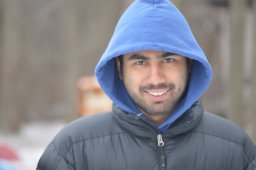 Ramesh Koirala合作论文数Iowa State Univ, Phys & Astron, Ames, IA USA267
 S. Toscano合作论文数267F. Lauber合作论文数262C. De Clercq合作论文数259
 Jose Alberto Aguilar合作论文数Facultad de Ciencias Toluca, Universidad Autonoma del Estado de Mexico Instituto Literario 100 Toluca259
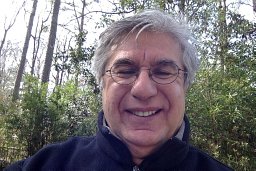 G. S. Japaridze合作论文数Oskar Klein Ctr, Stockholm Univ257J. Becker Tjus合作论文数257Hallgren A.合作论文数256K. Rawlins合作论文数256
 Kelly Ann Meagher合作论文数256Thorsten Stezelberger合作论文数256
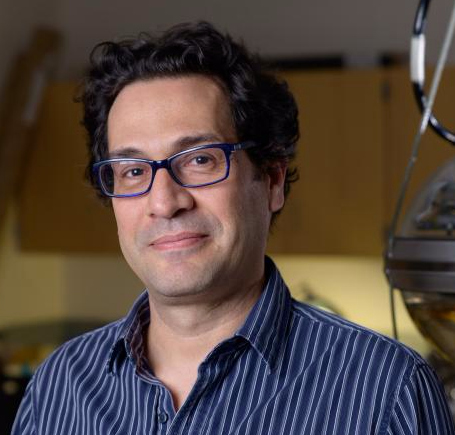 Ignacio Taboada合作论文数School of Physics, College of Sciences, Georgia Institute of Technology;Center for Relativistic Astrophysics, Georgia Institute of Technology256
 W. Kang合作论文数Inst Astroparticle Phys, Karlsruhe Inst Technol255
 Wolfgang Rhode合作论文数Lamarr Institute for Machine Learning and Artificial Intelligence;Technische Universität Dortmund255
 Glenn Spiczak合作论文数Dept Phys, Univ Wisconsin254
 Elisa Resconi合作论文数Department of Physik, School of Natural Sciences, Technical University of Munich254S. Seunarine合作论文数254J. P. Yanez合作论文数Dept Phys, Univ Alberta253
 Francis Halzen合作论文数Department of Physics, University of Wisconsin-Madison;Wisconsin IceCube Particle Astrophysics Center, University of Wisconsin-Madison253
 David Seckel合作论文数Department of Physics and Astronomy, College of Arts & Sciences, University of Delaware253




