TRANSFORMING EXECUTIVE AND PROFESSIONAL DEVELOPMENT BY HIGHER EDUCATION THROUGH GENERATIVE AI-BASED PEDAGOGY
APPLYING GENERATIVE AI TO FACILITATE CLASS ORCHESTRATION WITH TECHNOLOGY: CHATGPT AND NEARPOD FOR SEMINAR ACTIVITIES
Within inclusivity change initiatives, conversations around microaggressions are a key element in seeking behavioural change. This exemplar use of GenAI is focused on authoring a conversational role play simulation. Prompts draw on the extensive literature of microaggressions. The underlying scenario is a podcast where the author and chatbot co-design the role play. The study involved a novice in GenAI simultaneously learning prompt engineering which would generate realistic role played conversation. A core finding was that GenAI can produce a conversational style realistic enough to deploy in higher education inclusivity workshops, and whose subject matter content is satisfactory. The chatbot proposed four benefits of a role play simulation, which are drawn on to frame the critical reflection. An important conclusion was that the GenAI process could valuably facilitate shifting from a subject expert academic being sole author, to co-design involving both those with experience of microaggressions, as well as potential staff and student workshop participants.
STUDENT USE OF INTERACTIVE TECHNOLOGY IN LARGE FACE-TO-FACE LECTURES POST-PANDEMIC – ISSUES AND OPPORTUNITIES
The purpose - to discuss higher education as beacons of epistemological transdisciplinarity, contributing with methodological developments in the domains of their concern, to address problems of practical and ecological significance in today’s societies. Most significantly discuss relationships of decolonisation. Design/methodology/approach - Discussion of higher education relationships with external institutions, active stakeholders and local communities, review of sustainable development with the wider environment and inclusive justice focused on relationships within the university. Findings-originality - Discussions show that universities should be more than centres for the development of disciplinary knowledge; they should be beacons of epistemological transdisciplinarity, contributing with methodological developments in the domains of their concern, to address problems of practical and ecological significance in today’s societies. Research limitations - This paper offers conceptual discussion of relationships, however it does not explore in practice higher education processes for the creation of purposes and the necessary changes towards decolonisation. These clarifications require managing reflexive interactions, which were beyond the scope of this research.
In relation to induction there have been valuable innovations in the wider university, also nationally and internationally, but there has been insufficient human resource both to research these and then adapt to a specific context. The current study is to enhance induction week for business management with special focuses on student engagement and inclusion. The study adapts existing viable solutions as well as proposes new answers geared to equity, accessibility and exclusivity. One of the main aims of the study is to draw directly on the interest and experiences of students, explicitly as co-creators for induction, redesigning structure and activities. Consultations with student representatives and the Student Union are also conducted. By involving students in the process (Bovill et al [1] ), opportunities and challenges arise from the co-design approach, and these are addressed here..
Urban open spaces of local natural environments can promote the health and well-being of both ecosystems and humans, and the management of the urban spaces can benefit from knowledge of individuals’/citizens’ perceptions of such environments. However, such knowledge is scarce and contemporary inquiries are often limited to cognitive observations and focused on built environmental elements rather than encouraged to recognize and communicate comprehensive perceptions. This paper investigates whether arts-based methods can facilitate recognition and understanding perceptions of urban open spaces. Two arts-based methods were used to capture perceptions: drifting, which is a walking method, and theatrical images, which is a still image method and three reflective methods to recognize and communicate the perceptions. The results show related sensations and perceptions enabled by arts-based methods comparing them to a sticker map method. The main findings were perceptions, which included information about human–environment interaction, about relations to other people and about ‘sense of place’ in urban open spaces. The hitherto unidentified perceptions about urban open space were associations, metaphors and memories. The methods used offer initial practical implications for future use.
This chapter stems from the convergence of two independent efforts to develop and research pedagogy which can prepare individuals to enact with high responsibility and creativity in complex situations. The main design questions are: How does a human being cope with complexity and uncertainty to take care, in different domains and contexts, of the human activity system for which he/she is responsible? And what transformations to the traditional business education programmes are necessary to meet this challenge? The shared long-term aim is to change the traditional curriculum by expanding the boundaries of our understanding of problem situations as a human activity in which technical matters intertwine with belief, desires and emotions. Our findings are drawn from a primarily qualitative study of the pedagogical design and outcomes of the interdisciplinary Masters in Innovation, Creativity and Leadership (MICL) launched at City, University of London in 2010. We focus on the lived experience of the students, especially the first cohort to complete the final module, Creativity and the Creative Industries (CCI); and relate our analysis to the CLEHES process, a strategy of learning developed by García De la Cerda et al. (2018). Building on the work of Beer (1994), Maturana and Varela (1987) and Espejo (1996), García and his collaborators configure CLEHES as a nurturing technology to enhance enactive management which treats humans and organisations as activity systems with six ontological dimensions: body (cuerpo in Spanish), language, emotion, history, eros and silence (García De la Cerda and Saavedra Ulloa 2006; García De la Cerda and Orellana Muermann 2008; García De la Cerda 2009; García De la Cerda and Laulié Cerda 2010; García De la Cerda and Saavedra Ulloa 2016; García De la Cerda 2017; García De la Cerda et al. 2018). CLEHES involves three strategies of observation (García De la Cerda et al. 2018): We conclude that there is considerable potential in further exploring the six ontological dimensions, O Technology and CLEHES (García De la Cerda et al. 2018) to better understand the necessary conditions for arts-based HE pedagogy in management and professional education.
Beyond Text - Learning through Arts-Based Research; Focuses on learning through arts-based research as a practice of social justice through which we can reimagine, interrupt, insist and resist as we engage collectively to better understand and rethink social, organisational and societal issues. The result of a multi-year and international research project. 3 tables, 31 b/w illus.
Three types of hybrid space intersect in this paper. 1. A pedagogy evolved since 2015 through in-depth collaboration between two university disciplines: art/design and business 2. A focus on interweaving physical materiality of making artful objects, with shaping mental processes relating to personal and organisational change 3. In 2020, adapting a format centred on collaborative physical materiality into a shared experience activated wholly online. The method combines paper-folding and zines, making it widely accessible. It has been evolved in workshops internationally for a range of participants including chief executives and undergraduate students. The paper draws on substantial research documentation.
This is a case study of how art/design and business educators collaborated to develop an innovative pedagogic method. Thinkers on management and leadership have been inspired by art-based approaches for centuries. Over the past 20 years management thinking and education has opened up more and more to applying co-design art-based hybrid learning methods. In parallel, the art/design school had been researching processes to make art-based methods accessible to the public generally, including social, community and school contexts, to stimulate creativity and imagination, and support critically both everyday and complex problems (Thomas, 2018) At an international conference on innovative approaches to knowledge creation, the business and art/design colleagues connected each others' approaches and started to collaborate and evolve zines (multi-page diy paper formats; Piepmeier, 2008) for supporting the formation of leaders. Our context is VUCA (volatility, uncertainty, complexity and ambiguity). Senior executives with polished social skills often find it surprisingly difficult to make essential time and space for authentic personal reflection to address VUCA (McGilchrist, 2009). The initial starting point of our collaboration was the focus on designed artefacts within innovation process workshops to enhance reflection. The collaboration evolved through the EU Erasmus-funded project (Beyond Text, 2019), drawing input from the transnational perspectives of its contributors. Beyond Text artists, educators, and professionals contributed to developing the zine approach and additional refinement was done within the two-year Arts Council England (Boosting Resilience, 2019) project working collaboratively with leaders in arts organisations of all sizes. Zines provide a playful and accessible methodology. Through testing and iteration, the individual self-published zine encourages participants to acknowledge and explore their mental processes. Leaders tell us that the folding and crafting process firstly allowed them to articulate fragments of thought that had been compressed through accumulation and patterning. Secondly, it then opened up inquiry through the act of moving paper to allow possibly new understandings or at least new positionings of the elements contained. A simple, lo-fi technology such as folded paper can be: . Personal/Self-reflection . Portable/Three-dimensional . Private/secret . Art-based and Artful without needing to be artistic Supporting and coaching leaders, including chief executives, we evolved zines as both a stimulus to reflection, as well as a physical space to articulate the reflection. The zine format is a bounded but symbolic space to address complexity and ambiguity. Each zine can map and record uncertainties within conflict negotiation, especially the role emotion plays in that. Zines helped leaders find relationships out of random placements; and connect elements previously disconnected to make sense of a situation. The zines as evolved in this collaboration have achieved refection through conscious making, with the zine as a piece of artwork, however humble, able to address complexity and ambiguity, without at times even needing words. They demonstrate the transformational potential of creativity across disciplines. We hope that these cross-disciplinary experiences working with reflective zines will extend collective understanding and stimulate debate on the role of arts-based methods across widely diverse social, educational, and enterprise contexts.
This paper presents a format from the creative arts, refocused for application in management studies, as a method to enhance and support the development of strategic thinking. It involves the application of multi-page paper constructions (zines) within facilitated sessions to enhance imaginative strategic thinking by both management learners and practitioners. It draws on a longitudinal case study of the six-phase evolution of affordances of a zine as a method for reflective, creative and connected thinking. The focus moves from purely personal private reflections to the possibility of deploying zines for collective reflection and action. Specific examples are provided of zine workshops and events. Strategic thinking relates to volatility, uncertainty, complexity and ambiguity (VUCA). The affordances of zines relating to tangibility, efficiency and mental processes appear well-suited to a VUCA context. The paper concludes with reflections on the nature of multi-disciplinary and trans-disciplinary collaborations such as this one.
This study outlines a multi-year collaboration journey between academics in two widely disparate disciplines: art/design and business/management. Eventually this culminated in co-designing and co-developing a folded paper zine, and related processes, to improve private reflective practice, particularly of managers and students of management. This zine co-design journey was articulated through the lens of Schumpeter's hybridity perspective 'new combinations', in the context of transdisciplinarity. As both commercial and social organisations face increasing complexity and uncertainty, the rationally oriented tools developed for planning and decision-making in more stable times need to be augmented by those which assume or even welcome ambiguity and not-knowing. This creates an opportunity to draw on art-based methods such as zines, given that the arts acknowledge, value and address such uncertainty.
Thinking by Making: Applying the zine method for management learning is a research publication outlining a combined method from the graphic arts with management training in an edition of 55 sets consisting of a foldout pack containing four inserts, including two zine templates. I developed the method with my research collaborator Professor Clive Holtham of the Business School, University of London for the Arts of Management Symposium at University of Basilicata, Matera. We did a second iteration for a workshop session with Management students at the University of Basilicata, Potenza. The aim of the two workshops was to weave together our academic abstracts and theories with participatory and making activities involving the design response of the zine as a means for self-reflection and to improve communication. The publication contains findings from the sessions along with methodology and templates. Published by University of the Arts London. Printed by Calverts London by risograph printing. ISBN 978-1-906908-63-8
Abstract This article examines the modest state of reflective practice in management education despite the increasing need for approaches that challenge the traditional overemphasis on rational tools and techniques. Business communication and business writing in UK management education generally take a very conventional approach to genre. As an antidote, emphasis is laid here on the use of journaling in business education including the lecturers actually doing it themselves routinely. This article includes as a worked example the creation of a journal at a Genre workshop in Middleport Pottery.
This paper firstly addresses why innovative learning approaches are needed for 21st century leadership education in the arts and cultural sector, then moves on to a case study of how such approaches are being implemented in practice, in the Boosting Resilience project. The approaches taken here are characterised as involving a multi-disciplinary consortium of delivery partners; the use of constructivist pedagogy that draws on arts-based methods of delivery; a participatory and agile learning design process; and the incorporation of on-going evaluation activities, that are woven in to the process of design. The paper concludes with some discussion regarding the potential generalisability of approaches such as those employed on the Boosting Resilience project to arts and cultural leadership education more broadly.
The Masters in Innovation, Creativity and Leadership (the MICL) is an innovative, radically interdisciplinary and highly successful programme that is offered as part of the portfolio of Management Masters courses at Cass Business School in the UK. In this paper, we argue that while the world is increasingly Volatile, Uncertain, Complex and Ambiguous (VUCA), educational responses to this have been surprisingly limited. We note the parallel development of interest in interdisciplinary activity, particularly in relation to higher education, and then describe the MICL as an interdisciplinary management education programme developed against the background of an increasingly VUCA world. We describe the aims and structure of the MICL programme, as well as some of the methods employed to assist staff and students with adopting our interdisciplinary approach. Finally, we present some quantitative data on outcomes for students after completing the programme, as well as some qualitative data relating to the first cohort of students, that lead us to believe that the MICL programme provides a strong foundation on the basis of which students can survive and thrive in a world of increasingly dramatic change and complexity.
 Martin Rich合作论文数20
 Nigel Courtney合作论文数15
 Ann Palmer Brown合作论文数8leona norris合作论文数7Victoria Ward合作论文数6
 Allan Owens合作论文数5
 Angela Dove合作论文数5Doug Stace合作论文数4
 Anne Passila合作论文数2Maike Bohn合作论文数2
 Claus Nygaard合作论文数Learning Lab, CBS2Joseph Lampel合作论文数Division of Innovation Management and Policy, School of Alliance Manchester Business, Faculty of Humanities, The University of Manchester/Manchester Institute of Innovation Research, School of Alliance Manchester Business, Faculty of Humanities, The University of Manchester2Jessica Iacono合作论文数2Ashok Tiwari合作论文数2Chris Hendry合作论文数2Steve Mouzon合作论文数1Laurence Qamar合作论文数1
 Sari Suomalainen合作论文数1
 Nexhat Kapidani合作论文数Administration for Maritime Safety and Port Management1Uma Patel合作论文数City, University of London1
 Sanja Bauk合作论文数Fac. of Maritime Studies, Montenegro Univ.;c;Fac. of Maritime Studies, Montenegro Univ.1
 ManMohan S Sodhi合作论文数Cass Business School, City, University of London1
 Fran Ackermann合作论文数Department of Management Science;University of Strathclyde;Department of Management Science, University of Strathclyde1
 David Bawden合作论文数Department of Library and Information Science, School of Mathematics, Computer Science and Engineering, City University of London/University of Ljubljana1
 Anke Schmeink合作论文数Institute for Theoretical Information Technology, RWTH Aachen University1
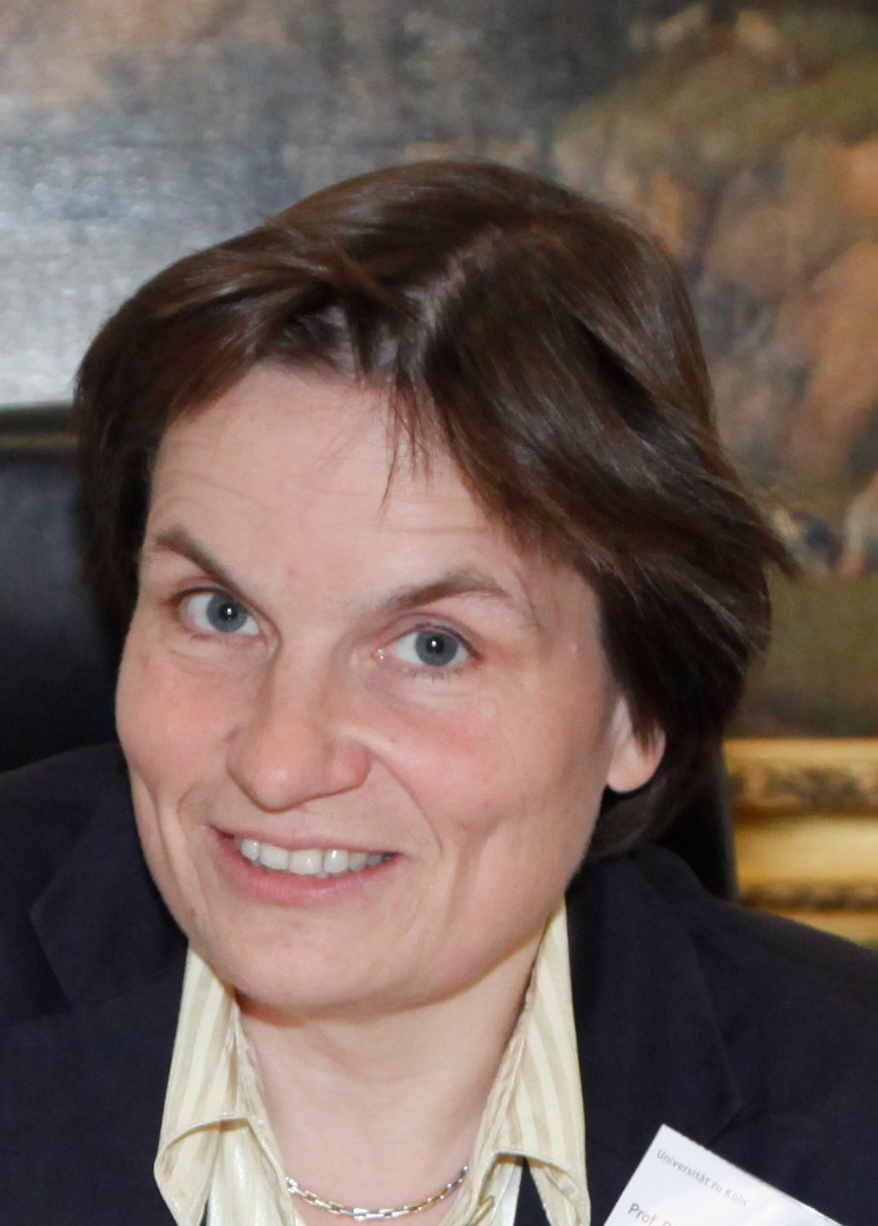 Claudia Loebbecke合作论文数Faculty of Management, Economics and Social Sciences, University of Cologne;Department of Media and Technology Management, University of Cologne1
 Sara V Jones合作论文数City University London1Mark D’Cruz合作论文数1Stephanie Colton合作论文数1
 Helena Kahiluoto合作论文数Agricultural Research Centre of Finland1
 Joe S Valacich合作论文数Eller College of Management, University of Arizona1M. J. D'Cruz合作论文数1Jaroslav Pokorn合作论文数1Ian Martin合作论文数1Klaus Wölcken合作论文数1
 Robert Melville合作论文数1
 Niels Bjorn-Andersen合作论文数Department of Digitalization, Copenhagen Business School1R. R. Melville合作论文数1
 Raul Espejo合作论文数Organisation for Systems and Cybernetics, Syncho Ltd1Osvaldo García De La Cerda合作论文数1
 Gert-Jan de Vreede合作论文数School of Business, Stevens Institute of Technology1
 Gawesh Jawaheer合作论文数Imperial College London1
 Helmut Krcmar合作论文数School of Management, Technical University of Munich;Faculty of Informatics, Technical University of Munich1Aidan Prior合作论文数1




