The later stages of Earth's transition to a permanently oxygenated atmosphere during the Great Oxidation Event (GOE; ∼2.43–2.06 Ga) is commonly linked with the suggestion of an "oxygen overshoot" during the ∼2.22–2.06 Ga Lomagundi Event (LE), which represents Earth's most pronounced and longest-lived positive carbon isotope excursion. However, the magnitude and extent of atmosphere-ocean oxygenation and implications for the biosphere during this critical period in Earth's history remain poorly constrained. Here, we present nitrogen (N), selenium (Se), and carbon (C) isotope data, as well as bio-essential element concentrations, for Paleoproterozoic marine shales deposited during the LE. The data provide evidence for a highly productive and well-oxygenated photic zone, with both inner and outer-shelf marine environments characterized by nitrate- and Se oxyanion-replete conditions. However, the redoxcline subsequently encroached back onto the inner shelf during global-scale deoxygenation of the atmosphere-ocean system at the end of the LE, leading to locally enhanced water column denitrification and quantitative reduction of selenium oxyanions. We propose that nitrate-replete conditions associated with fully oxygenated continental shelf settings were a common feature during the LE, but nitrification was not sufficiently widespread for the aerobic nitrogen cycle to impact the isotopic composition of the global ocean N inventory. Placed in the context of Earth's broader oxygenation history, our findings indicate that O2 levels in the atmosphere-ocean system were likely much lower than modern concentrations. Early Paleoproterozoic biogeochemical cycles were thus far less advanced than after Neoproterozoic oxygenation.
Recent discoveries of significant variations in stable K isotope ratios (41K/39K or δ41K) among various terrestrial samples indicate that K isotopes can be a novel tracer for the global K cycle, but a key observation that seawater δ41K is ∼0.6‰ higher than the bulk silicate Earth remains unexplained. An unconstrained component critical to this puzzle is hydrothermal systems that represent both a major K source and sink in the ocean. Here we report δ41K results on mid-ocean ridge (MOR) hydrothermal fluids from the Gorda Ridge and ∼9°N East Pacific Rise (EPR), including time-series samples that recorded major perturbations in fluid chemistry induced by a local volcanic eruption. Fluid δ41K values range from -0.46‰ to -0.15‰, falling between those of fresh basalts and seawater. δ41K values of “time-zero” fluids collected shortly after the volcanic eruption are shifted towards the seawater value, followed by a return to pre-eruption values within ∼2 years. Fluid δ41K variations are largely influenced by water–rock interactions, but they cannot be solely explained by simple mixing of seawater and K leached from basalts at high temperatures. Instead, these data imply small but significant isotope fractionation that enriches heavy K isotopes in basalts, likely caused by low-temperature alteration during the recharge stage of hydrothermal circulation. Our results preclude MOR hydrothermal systems as the cause for the heavy δ41K value of seawater. Using fluid δ41K data and K isotope fractionation constrained here for hydrothermal systems, a K mass-balance model implies a critical role for a marine sedimentary sink, possibly authigenic clay formation, in the global K cycle. Also, applying the K isotope fractionation constrained here to the published δ41K data from ophiolites shows the possibility for significantly lower seawater δ41K during the Ordovician, which can be explained by enhanced reverse weathering in response to distinct climate and tectonics at that time.
An improved understanding of the potassium (K) cycle in soil-plant systems is scientifically and economically significant, but the conventional research based on K concentration measurements has several known limitations. The recent advent of high-precision stable K isotope analysis (reported as delta K-41 values can facilitate the use of both stable K isotope labeling and mass-dependent isotopic fractionation in studying the K nutrient cycle, including K fertilizer utilization, and plant-soil interactions. As a proof of concept, we conducted a pot study to quantify the uptake of K fertilizer by corn. Three groups of treatment (50, 100, 200 mg K kg(-1) soil) were conducted using soils premixed with different amounts of K-41-labeled fertilizer. A control group used the same soil without fertilizer treatment. Aboveground shoots and soils were sampled and analyzed after similar to 6 weeks. The control group showed preferential uptake of light K isotopes by corn with an estimated mass-dependent fractionation of similar to-0.37 parts per thousand (+/- 0.23 parts per thousand) in K-41/K-39 between the shoot and soil. In fertilized experiments using an enriched K-41 tracer, delta K-41 data unambiguously quantifies fertilizer-derived K in corn shoots, yielding apparent fertilizer recovery efficiency of 59-81%. In comparison, the K concentration-based method underestimated fertilizer utilization at low K treatment and overestimated fertilizer utilization at high K treatment because it cannot distinguish different K sources whose relative contributions to the bioavailable K pool in the soil can vary in response to plant-soil interactions. Our study demonstrates the potential of stable K isotopes in improving the understanding of the K cycle in soil-plant systems.
Potassium (K) is primarily hosted in silicates, in particular clays, stable K isotopes ( 41 K/ 39 K or δ 41 K) are therefore promising tracers for silicate weathering. One of the novel discoveries resulting from recent advance in high-precision stable K isotope analysis is that the δ 41 K value of seawater is ~0.6‰ higher than that of the bulk silicate Earth. This difference has important bearing on the global K cycle and the intimately linked global carbon cycle, but its exact cause remains unknown. Formation of secondary clays during continental weathering is considered to increase δ 41 K values of river waters, but existing data seem to suggest that the riverine input is unlikely to fully explain the ~0.6‰ difference. Other processes such as authigenic clay formation and cation-exchange with clay minerals in the ocean are postulated to have played important roles. Testing these hypotheses and unambiguous interpretation of field δ 41 K data require detailed knowledge on K isotope fractionation between solutions and clay minerals. We conducted controlled experiments to constrain K isotope fractionation between aqueous K and representative clay minerals, including kaolinite, smectites (montmorillonite and nontronite), and illite. Three types of experimental techniques were used for each clay at circumneutral pH and room temperature. Products including solutions, K extracted from clays, and residues were analyzed. The first technique is the conventional exchange experiment where parallel reactors with identical quantities of K solution and clay were sampled at different reaction time over a period of ~1 month. The second technique involved repeated reaction of the same KCl solution with several batches of fresh clay, with each cycle removing ~50% K from the solution. This method amplifies the effect of K isotope fractionation, so small fractionation could
Modern and ancient lacustrine carbonate build‐ups provide uniquely sensitive sedimentary and geochemical records for understanding the interaction between tectonics, past climates, and local and regional scale basin hydrology. Large (metre to decametre), well‐developed carbonate mounds in the Green River Formation have long been recognized along the margins of an Eocene lake, known as Lake Gosiute. However, their mode of origin and significance with respect to palaeohydrology remain controversial. Here, new sedimentological, Sr isotope data and structural evidence show that significant spring discharge led to the formation of a decametre size complex of shoreline carbonate mounds in the upper Wilkins Peak Member of the Green River Formation at Little Mesa and adjacent areas in the Bridger Basin, Wyoming, USA. Sedimentological evidence indicates that spring discharge was predominantly subaqueous but was, at times, also subaerial, which produced tufa cascades and micro‐rimstone dam structures. The 87Sr/86Sr ratios measured from these subaerial spring deposits are less radiogenic (87Sr/86Sr = 0.71040 to 0.71101) than contemporaneous palaeolake carbonates (87Sr/86Sr = 0.71195 to 0.71561) because their parent groundwaters likely interacted with less‐radiogenic Palaeozoic carbonate. Calcite‐cemented sandstone cones and spires (87Sr/86Sr = 0.71037 to 0.71057) in the Wasatch Formation directly below the spring deposits suggest that groundwaters derived from Palaeozoic carbonates preferentially flowed along thrust faults. These results imply that high spring discharge coincided with lake high stands of the upper Wilkins Peak Member, suggesting that recharge at the north‐west margin of the Bridger Basin contributed to Lake Gosiute’s water budget and lowered the salinity of an underfilled, evaporative lake basin. The findings of this study provide criteria for the recognition of groundwater discharge in palaeolake systems which may lead to the discovery of palaeospring systems in other ancient lake deposits.
Tufa in the Little Mesa area of the northern Bridger Basin has been interpreted to record carbonate deposition via subaqueous and subaerial springs emanating near the shoreline of Eocene Lake Gosiute. Sedimentary facies record an overall transgression, culminating with mound structures that reach up to 9 m in height and 40 m in diameter. Mounds exhibit a strong positive, linear covariance between delta C-13 and delta O-18, defining a slope of similar to 1. Similar trends occur in many other paleolake deposits, where they are interpreted to reflect changes in evaporation, atmospheric CO2 exchange, and organic matter burial. However, delta C-13 and delta O-18 in this study also covary strongly with Sr-87/Sr-86, a new finding that is inconsistent with previously proposed mechanisms. We conclude that Little Mesa isotopic trends reflect mixing of groundwater with low Sr-87/Sr-86, delta O-18 and delta C-13 and lake water with opposite characteristics. Low Sr-87/Sr-86 in groundwater likely resulted from interaction with marine carbonate strata within the Sevier fold and thrust belt to the west, whereas drainage from Precambrian-cored uplifts that bounded Lake Gosiute to the north, east, and south was responsible for higher lake water ratios. Little Mesa carbonate facies are all less radiogenic than any time-equivalent facies near the center of the basin, implying horizontal and vertical gradients in Lake Gosiute Sr-87/Sr-86. Previous studies have shown that the lowest Sr-87/Sr-86 in basin center deposits correspond to lake highstands. Results of this study support the hypothesis that climatic modulation of surface runoff and spring emanations from the Sevier belt were principally responsible for precessional-scale expansions and contractions of Lake Gosiute. More broadly, groundwater discharge may represent an important but underappreciated contributor to covariance between Sr-87/Sr-86 ratios, delta C-13 and delta O-18 in closed paleolake systems.
Previous work has shown that about 10% of total clay-bound Fe(III) in unaltered nontronite NAu-1 is bioreducible, although it remains unclear how much of the bioreducible Fe pool persists after repeated oscillations between anoxic and oxic conditions. Here, we report on results from an experiment where we monitored the abundance of bioreducible Fe(III) in NAu-1 over three consecutive redox cycles using chemical extractions and Fe isotope analysis to document the changes in the nature and extent of Fe atom exchange. During each cycle, NAu-1 was reduced biotically by Shewanella oneidensis MR-1 and then re-oxidized abiotically by O-2 via aeration. By the third reduction period (RP3), the bacteria were only able to reduce 5.7% of the total clay Fe, that is, 40% less than during the first reduction period (RP1). The decrease in bioreducible Fe(III) is attributed to preferential reductive dissolution of Fe(III) from the finest clay particles. Extrapolation of the observed trend implies that, once the reducible Fe of the finest clay particles is removed, around 4% of the total Fe of the clay remains permanently redox-active, presumably as Fe atoms within the octahedral mineral structure that are accessible to the bacteria. The proposed particle size-dependent evolution of bioreducible Fe(III) from RP1 to RP3 is supported by the observed increasing crystalline domain size, preferential Fe dissolution from the smallest aggregates, and decreasing Fe isotope fractionation factors between aqueous Fe(II) and structural Fe(III) and between solid-bound Fe(II) and structural Fe(III). Our results imply that, in redox dynamic environments, the fraction of insoluble clay-bound Fe that is potentially renewable for use by Fe-reducing bacteria is a function of the evolving size distribution of the clay particles. (C) 2021 Elsevier Ltd. All rights reserved.
The Fe isotope system is used in a variety of Earth and planetary science fields, including high- and low-temperature applications. We have a significant understanding of the controls on Fe isotope fractionation and rates of Fe isotope exchange between different Fe-bearing species. Various studies have characterized Fe isotope fractionation factors and isotope exchange kinetics by empirical methods, including experimental studies and analysis of well-characterized natural samples.
Dissimilatory iron reduction (DIR) plays an essential role in biogeochemical Fe cycling in anoxic environments. At near-neutral pH, in both biotic and abiotic systems, aqueous Fe(II) (Fe(II)(aq)) interacts with reactive ferric (hydr)oxides via electron transfer and atom exchange that is catalyzed by large amounts of sorbed Fe(II). This may result in substantial Fe isotope exchange, which, at equilibrium, produces up to a similar to 4 parts per thousand Fe-56/Fe-54 fractionation between coexisting oxide/hydroxide and Fe(II)(aq), depending on mineralogy. The role of biology in such systems has been interpreted to lie in the production of Fe (II) rather than a specific "vital" effect, such as enzymatic and kinetic processes. Under acidic abiotic conditions, however, the lack of sorbed Fe(II) generates little Fe isotope exchange, and, by extension, it has been expected that little exchange would occur during DIR at low pH if sorbed Fe(II) is the key component for catalyzing isotopic exchange. In this study, we explored the extent and mechanism of Fe isotope exchange between Fe(II)(aq) and ferric hydroxides (ferrihydrite and goethite), including determination of the Fe-56/Fe-54 fractionations during DIR by Acidianus strain DS80 at pH similar to 3.0 and 80 degrees C, over 19 days of incubation. Significant Fe(III) reduction occurred for both minerals along with large changes in Fe isotope compositions for Fe(II)(aq), indicating Fe isotope exchange. Solid-phase extractions using HCl confirmed a lack of sorbed Fe(II), which suggests that a mechanism other than sorption is required to catalyze Fe isotope exchange during DIR at low pH. Reactive Fe(III) (Fe(III)(reac)) extracted from the mineral surface allowed for the calculation of the Fe pools that underwent isotopic exchange. A total of similar to 20% of goethite and similar to 60% of ferrihydrite underwent isotopic exchange over 19 days. For goethite from biotic experiments, we calculate a Fe(III)(reac)-Fe(II)(aq) fractionation factor of 1.57 +/- 0.52%, which is larger than the abiotic equilibrium fractionation factor (similar to 0.73 parts per thousand at 80 degrees C). This result is consistent with previous work on DIR of goethite at neutral pH, where a fractionation factor larger than equilibrium was interpreted to reflect an isotopically distinct "distorted surface layer" of goethite produced during exchange with Fe(II)(aq). In contrast to goethite, the difference between the Fe(III)(reac)-Fe(II)(aq) fractionation factor for ferrihydrite from our biotic reactors (2.91 +/- 0.40 parts per thousand) and the abiotic equilibrium fractionation factor (similar to 2.28 parts per thousand at 80 degrees C, under silica-free conditions) is smaller. Ultimately, the contrast in the extent of Fe isotope exchange between biotic and abiotic experiments emphasizes the importance of biology in promoting Fe isotope exchange in acidic systems. We speculate that the unique role of biology at low pH in catalyzing Fe isotope exchange, not seen in equivalent abiotic systems, must lie in the transport of electrons to the ferric hydroxide surface that produces Fe(II) atoms in situ. This suggests that isotopic exchange occurs on an atom-by-atom basis as Fe(III) is reduced to Fe(II), followed by the release of Fe(II) into solution. This study demonstrates that significant variations in Fe isotope compositions may be uniquely produced in acidic environments where microbial Fe cycling occurs via DIR, compared to minor isotopic variations observed previously in acidic abiotic systems. (C) 2020 Elsevier Ltd. All rights reserved.
Much of Chap. 5 focused on the fluid envelope of various surface environments in the modern Earth, where Fe redox changes, organic complexation, and mineral precipitation produce large changes in Fe isotope compositions of fluids and minerals. As we step into the ancient Earth, we lose the ability to measure fluids directly, yet the fluid envelope remained a key component of the Fe biogeochemical cycle in Earth's past, especially in an anoxic Earth when large quantities of $$ {\text{Fe}}_{{\,\,\,\,{\text{aq}}}}^{ 2+ } $$ existed in the oceans.
Nucleosynthetic production of Fe in massive AGB stars (and in supernovae) generated five Fe isotopes, namely 54Fe, 56Fe, 57Fe, 58Fe, and 60Fe, with long enough half-lives to be extant during the formation of the Solar System.
The relatively large isotopic fractionations found for all stable isotope systems at low temperatures has attracted extensive interest in low-temperature environments, and stable Fe isotopes are no exception. The organization of this chapter starts with the continents, addressing weathering and soil-formation processes. We then move to terrestrial rivers and groundwater systems, followed by discussion of redox-stratified water bodies and their sediments, including lakes and the Black Sea. Next, we focus on modern marine sediments, which record extensive Fe biogeochemical cycling and authigenic mineral formation that is key to understanding the modern marine Fe budget.
This book provides a comprehensive summary of research to date in the field of stable iron isotope geochemistry, provides a detailed history and state-of-the-art summary about analytical methods to determine Fe-isotope ratios, and discusses analytical and sample prospects
The Nconga Formation of the Mesoarchean (~2.96–2.84 Ga) Mozaan Group of the Pongola Supergroup of southern Africa contains the world’s oldest known granular iron formation. Three dimensional reconstructions of the granules using micro-focus X-ray computed tomography reveal that these granules are microstromatolites coated by magnetite and calcite, and can therefore be classified as oncoids. The reconstructions also show damage to the granule coatings caused by sedimentary transport during formation of the granules and eventual deposition as density currents. The detailed, three dimensional morphology of the granules in conjunction with previously published geochemical and isotope data indicate a biogenic origin for iron precipitation around chert granules on the shallow shelf of one of the oldest supracratonic environments on Earth almost three billion years ago. It broadens our understanding of biologically-mediated iron precipitation during the Archean by illustrating that it took place on the shallow marine shelf coevally with deeper water, below-wave base iron precipitation in micritic iron formations.
 Brian L. Beard合作论文数DEPARTMENT OF GEOLOGY AND GEOPHYSICS;UNIVERSITY OF WISCONSIN-MADISON;DEPARTMENT OF GEOLOGY AND GEOPHYSICS, UNIVERSITY OF WISCONSIN-MADISON227
 Eric E. Roden (Eric Roden)合作论文数Department of Geoscience, University of Wisconsin-Madison34
 John W. Valley合作论文数Department of Geoscience, The University of Wisconsin–Madison21
 Brad S. Singer合作论文数Department of Geoscience, University of Wisconsin-Madison18
 Andrew Czaja合作论文数Department of Earth and Space Sciences and Institute of Geophysics and Planetary Physics (Center for the Study of Evolution and the Origin of Life),, University of California17
 Weiqiang Li (李伟强)合作论文数School of Earth Sciences and Engineering, Nanjing University15Lukas Baumgartner合作论文数Institute of Earth Sciences, Faculty of Geosciences and Environment, University of Lausanne15
 Brian Jicha合作论文数Department of Geoscience, University of Wisconsin-Madison14
 Alan R. Carroll合作论文数Department of Geology and Geophysics;University of Wisconsin-Madison;Department of Geology and Geophysics, University of Wisconsin-Madison13
 Michelle M. Scherer合作论文数Department of Civil and Environmental Engineering, College of Engineering, University of Iowa12
 Lingling Wu合作论文数12Nancy J. Mahlen合作论文数12Nicolas J. Beukes合作论文数12
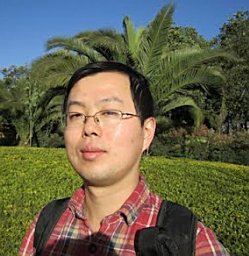 Xinyuan Zheng (郑新源)合作论文数Dept Earth & Environm Sci, Univ Minnesota Twin Cities11Aaron M. Satkoski合作论文数11Michael J. Spicuzza合作论文数Department of Geology and Geophysics, University of Wisconsin10
 Thiruchelvi R Reddy合作论文数Department of Geoscience, University of Wisconsin–Madison9
 Adriana Heimann Rios合作论文数Department of Geological and Atmospheric Sciences, Iowa State University9
 Levi Gordon Medaris合作论文数9Thomas J. Lapen合作论文数9Bryce L. Winter合作论文数9T. J. Lapen合作论文数7
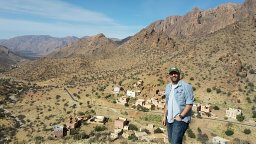 M'bark Baddouh合作论文数Dept Geosci, Univ Wisconsin7
 Steven B Shirey合作论文数Earth and Planets Laboratory, Carnegie Institution for Science7
 Hiroshi Ohmoto合作论文数Department of Geosciences, College of Earth and Mineral Sciences, Pennsylvania State University7
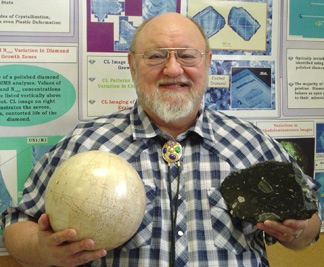 Lawrence A. Taylor合作论文数Department of Earth and Planetary Sciences, The University of Tennessee7
 Robert M. Handler合作论文数Department of Civil and Environmental Engineering, University of Iowa7
 Laurel B. Goodwin合作论文数Department of Geology, Arizona State University7
 Andrew J Frierdich合作论文数Department of Civil and Environmental Engineering and Center of Advanced Materials for the Purification of Water with Systems, University of Illinois at Urbana-Champaign7randolph t williams合作论文数Corresponding author. Present address: Department of Geoscience, University of Wisconsin – Madison, 1215 W. Dayton St., Madison, WI 53706, USA. Tel.: +1 937 417 9688.6
 Ken Nealson合作论文数Impossible Mining6
 Stefan Weyer合作论文数Institut für Mineralogie, Universität Frankfurt6Rene Wiesli合作论文数6
 Peter S. Mozley合作论文数Department of Earth and Environmental Science, New Mexico Tech6
 Jens Gutzmer合作论文数Helmholtz Institute Freiberg for Resource Technology, Helmholtz-Zentrum Dresden-Rossendorf6
 Ronald C. Schott合作论文数Department of Geology and Geophysics, University of Wisconsin-Madison6s skora合作论文数5
 Smeaton Christina M合作论文数Great Lakes Institute for Environmental Research, University of Windsor5
 Kevin Rosso合作论文数Physical Sciences Division for Geochemistry, Pacific Northwest National Laboratory;Center for Understanding Subsurface Signals and Permeability, Pacific Northwest National Laboratory5
 Bingjie Shi合作论文数China University of Geosciences, China University of Geosciences5Percak-Dennett Elizabeth M合作论文数5
 Philippe Van Cappellen合作论文数Department of Earth & Environmental Sciences, Centre for Environmental and Information Technology, University of Waterloo;Department of Biology, University of Waterloo5
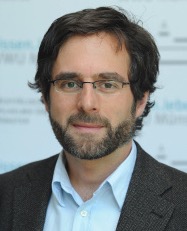 Erik Scherer合作论文数Institut für Mineralogie, University of Münster5
 Silke Severmann合作论文数Department of Earth Sciences, University of California-Riverside5
 Huifang Xu合作论文数Department of Geoscience, University of Wisconsin–Madison5Karin M. Barovich合作论文数School of Earth and Environmental Sciences;University of Adelaide;School of Earth and Environmental Sciences, University of Adelaide5B. R. Jicha合作论文数4Garret L. Hart合作论文数4xy zheng合作论文数4




