Quality-Diversity (QD) optimization is a paradigm that seeks to discover a large collection of solutions that are both high-performing and behaviorally diverse. While the representative PGA-MAP-Elites algorithm enhances exploration by integrating Genetic Algorithm (GA) and Policy Gradient (PG) operators, it encounters several critical bottlenecks: the constrained exploration range of GA mutation, the dilution of high-value samples during PG training, and computational inefficiencies resulting from rigid operator allocation ratios. To address these challenges, this paper proposes Ada-HOME, an Adaptive Heterogeneous Operator-allocated MAP-Elites algorithm. At the bottom level of the algorithm, the search operators are reconstructed: a discrete gene crossover mechanism is introduced into the GA operator to facilitate the leapfrog recombination of elite individuals, thereby boosting divergent exploration; meanwhile, a dual experience replay buffer is incorporated into the PG operator to prevent the rapid loss of high-quality exploration data and accelerate directional convergence. At the top level of the algorithm, the high-level operator scheduling process is modeled as a Multi-Armed Bandit (MAB) decision problem, enabling the adaptive adjustment of allocation ratios through a reward mechanism based on successful sample generation. Experimental results across six standard benchmarks demonstrate that Ada-HOME overcomes the efficiency bottlenecks of the baseline algorithm with static allocation, exhibiting superior optimization performance.
The LLM-DPM Workshop investigates the transformative impact of Large Language Models (LLMs) and Explainable AI (XAI) on Data and Process Management. With organizations facing growing dependence on intricate data-driven workflows, there is an urgent demand for systems that prioritize not only efficiency but also transparency, reliability, and equity. This workshop serves as a dedicated platform to explore the convergence of LLMs, process mining, and database technologies, tackling critical issues such as enhancing data integrity, refining query understanding, forecasting process outcomes, and optimizing system performance. Featuring technical discussions, keynote speeches, and collaborative panels, LLM-DPM seeks to bridge the gap between academic research and industry applications, inspiring innovative approaches and advancing the creation of accountable, AI-powered solutions for process management challenges.
Thanks to the in context learning abilities of LLMs, building a text classifier without access to labeled data is easier than ever. However, for more complex tasks than simple classification, the difficulties remain. One such task is hierarchical segmentation where a model needs to break down an input document in an hierarchy of segments each annotated with a label from a taxonomy of classes. The long input documents, the large input class taxonomies as well as the increased number of outputs make the problem challenging to solve with a single LLM call. While hierarchical segmentation is amenable to splitting in smaller more manageable tasks, there is a huge design space of such approaches making the process tedious and time consuming. To reduce the amount of ad hoc exploration and implementation, we propose the first framework for hierarchical text segmentation using LLMs. The key idea behind our framework is that hierarchical segmentation can be viewed as a join between document and taxonomy. Inspired by join operator design, we propose two highly configurable hierarchical segmentation algorithms based on index and merge sort joins. Our experiments highlight the existence of trade offs across algorithms and their configurations, indicating that machine learning engineers may benefit from quickly exploring the design space using our framework.
Large Language Models (LLMs) are increasingly integrated into enterprise platforms, requiring business users to write prompts despite the lack of prompt engineering expertise. Although these users possess domain knowledge, they struggle to translate their intentions into effective prompts and often overlook established practices such as including few-shot examples. We present Prompt Editor, a human-in-the-loop system that assists users in writing high-quality prompts by leveraging an organization's existing corpus of prompts to both initialize and refine user-created prompts. At its core, Prompt Editor leverages a taxonomy of prompt segment types learned from an organization's existing collection of prompts. This supports the segmentation of prompts and feedback generation process. We demonstrate Prompt Editor with a hypothetical LLM-based enterprise platform that extracts structured data from unstructured text. Attendees can interact with the demo to experience first-hand how Prompt Editor supports prompt writing.
The swift advancement in the scales and capabilities of Large Language Models (LLMs) positions them as promising tools for a variety of downstream tasks. In addition to the pursuit of better performance and the avoidance of violent feedback on a certain prompt, to ensure the responsibility of the LLM, much attention is drawn to the robustness of LLMs. However, existing evaluation methods mostly rely on traditional question answering datasets with predefined supervised labels, which do not align with the superior generation capabilities of contemporary LLMs. To address this issue, we propose a novel rational evaluation approach that leverages pre-trained reward models as diagnostic tools to evaluate the longer conversation generated from more challenging open questions by LLMs, which we refer to as the Reward Model for Reasonable Robustness Evaluation (TREvaL). Longer conversations manifest the comprehensive grasp of language models in terms of their proficiency in understanding questions, a capability not entirely encompassed by individual words or letters, which may exhibit oversimplification and inherent biases. Our extensive empirical experiments demonstrate that TREvaL provides an innovative method for evaluating the robustness of an LLM. Furthermore, our results demonstrate that LLMs frequently exhibit vulnerability to word-level perturbations that are commonplace in daily language usage. Notably, we are surprised to discover that robustness tends to decrease as fine-tuning (SFT and RLHF) is conducted. The code of TREval is available in https://github.com/Harry-mic/TREvaL.
Multi-Task Learning (MTL) models have shown their robustness, effectiveness, and efficiency for transferring learned knowledge across tasks. In real industrial applications such as web content classification, multiple classification tasks are predicted from the same input text such as a web article. However, at the serving time, the existing multitask transformer models such as prompt or adaptor based approaches need to conduct N forward passes for N tasks with O(N) computation cost. To tackle this problem, we propose a scalable method that can achieve stronger performance with close to O(1) computation cost via only one forward pass. To illustrate real application usage, we release a multitask dataset on news topic and style classification. Our experiments show that our proposed method outperforms strong baselines on both the GLUE benchmark and our news dataset. Our code and dataset are publicly available at https://bit.ly/mtop-code.
State-of-the-art models in natural language processing rely on separate rigid subword tokenization algorithms, which limit their generalization ability and adaptation to new settings. In this paper, we propose a new model inductive bias that learns a subword tokenization end-to-end as part of the model. To this end, we introduce a soft gradient-based subword tokenization module (GBST) that automatically learns latent subword representations from characters in a data-driven fashion. Concretely, GBST enumerates candidate subword blocks and learns to score them in a position-wise fashion using a block scoring network. We additionally introduce Charformer, a deep Transformer model that integrates GBST and operates on the byte level. Via extensive experiments on English GLUE, multilingual, and noisy text datasets, we show that Charformer outperforms a series of competitive byte-level baselines while generally performing on par and sometimes outperforming subword-based models. Additionally, Charformer is fast, improving the speed of both vanilla byte-level and subword-level Transformers by 28%-100% while maintaining competitive quality. We believe this work paves the way for highly performant token-free models that are trained completely end-to-end.
Self-supervised pre-training recently demonstrates success on large-scale multimodal data, and state-of-the-art contrastive learning methods often enforce the feature consistency from cross-modality inputs, such as video/audio or video/text pairs. Despite its convenience to formulate and leverage in practice, such cross-modality alignment (CMA) is only a weak and noisy supervision, since two modalities can be semantically misaligned even they are temporally aligned. For example, even in the commonly adopted instructional videos, a speaker can sometimes refer to something that is not visually present in the current frame; and the semantic misalignment would only be more unpredictable for the raw videos from the internet. We conjecture that might cause conflicts and biases among modalities, and may hence prohibit CMA from scaling up to training with larger and more heterogeneous data. This paper first verifies our conjecture by observing that, even in the latest VATT pre-training using only instructional videos, there exist strong gradient conflicts between different CMA losses within the same video, audio, text triplet, indicating them as the noisy source of supervision. We then propose to harmonize such gradients, via two techniques: (i) cross-modality gradient realignment: modifying different CMA loss gradients for each sample triplet, so that their gradient directions are more aligned; and (ii) gradient-based curriculum learning: leveraging the gradient conflict information on an indicator of sample noisiness, to develop a curriculum learning strategy to prioritize training on less noisy sample triplets. Applying those techniques to pre-training VATT on the HowTo100M dataset, we consistently improve its performance on different downstream tasks. Moreover, we are able to scale VATT pre-training to more complicated non-narrative Youtube8M dataset to further improve the state-of-the-arts.
Relational tables on the Web store a vast amount of knowledge. Owing to the wealth of such tables, there has been tremendous progress on a variety of tasks in the area of table understanding. However, existing work generally relies on heavily-engineered task-specific features and model architectures. In this paper, we present TURL, a novel framework that introduces the pre-training/fine-tuning paradigm to relational Web tables. During pre-training, our framework learns deep contextualized representations on relational tables in an unsupervised manner. Its universal model design with pre-trained representations can be applied to a wide range of tasks with minimal task-specific fine-tuning. Specifically, we propose a structure-aware Transformer encoder to model the row-column structure of relational tables, and present a new Masked Entity Recovery (MER) objective for pre-training to capture the semantics and knowledge in large-scale unlabeled data. We systematically evaluate TURL with a benchmark consisting of 6 different tasks for table understanding (e.g., relation extraction, cell filling). We show that TURL generalizes well to all tasks and substantially outperforms existing methods in almost all instances.
This is the dataset used for pre-training in "ReasonBERT: Pre-trained to Reason with Distant Supervision", EMNLP'21. There are two files: sentence_pairs_for_pretrain_no_tokenization.tar.gz -> Contain only sentences as evidence, Text-only table_pairs_for_pretrain_no_tokenization.tar.gz -> At least one piece of evidence is a table, Hybrid The data is chunked into multiple tar files for easy loading. We use WebDataset, a PyTorch Dataset (IterableDataset) implementation providing efficient sequential/streaming data access. For pre-training code, or if you have any questions, please check our GitHub repo https://github.com/sunlab-osu/ReasonBERT Below is a sample code snippet to load the data import webdataset as wds # path to the uncompressed files, should be a directory with a set of tar files url = './sentence_multi_pairs_for_pretrain_no_tokenization/{000000...000763}.tar' dataset = ( wds.Dataset(url) .shuffle(1000) # cache 1000 samples and shuffle .decode() .to_tuple("json") .batched(20) # group every 20 examples into a batch ) # Please see the documentation for WebDataset for more details about how to use it as dataloader for Pytorch # You can also iterate through all examples and dump them with your preferred data format Below we show how the data is organized with two examples. Text-only {'s1_text': 'Sils is a municipality in the comarca of Selva, in Catalonia, Spain.', # query sentence 's1_all_links': { 'Sils,_Girona': [[0, 4]], 'municipality': [[10, 22]], 'Comarques_of_Catalonia': [[30, 37]], 'Selva': [[41, 46]], 'Catalonia': [[51, 60]] }, # list of entities and their mentions in the sentence (start, end location) 'pairs': [ # other sentences that share common entity pair with the query, group by shared entity pairs { 'pair': ['Comarques_of_Catalonia', 'Selva'], # the common entity pair 's1_pair_locs': [[[30, 37]], [[41, 46]]], # mention of the entity pair in the query 's2s': [ # list of other sentences that contain the common entity pair, or evidence { 'md5': '2777e32bddd6ec414f0bc7a0b7fea331', 'text': 'Selva is a coastal comarque (county) in Catalonia, Spain, located between the mountain range known as the Serralada Transversal or Puigsacalm and the Costa Brava (part of the Mediterranean coast). Unusually, it is divided between the provinces of Girona and Barcelona, with Fogars de la Selva being part of Barcelona province and all other municipalities falling inside Girona province. Also unusually, its capital, Santa Coloma de Farners, is no longer among its larger municipalities, with the coastal towns of Blanes and Lloret de Mar having far surpassed it in size.', 's_loc': [0, 27], # in addition to the sentence containing the common entity pair, we also keep its surrounding context. 's_loc' is the start/end location of the actual evidence sentence 'pair_locs': [ # mentions of the entity pair in the evidence [[19, 27]], # mentions of entity 1 [[0, 5], [288, 293]] # mentions of entity 2 ], 'all_links': { 'Selva': [[0, 5], [288, 293]], 'Comarques_of_Catalonia': [[19, 27]], 'Catalonia': [[40, 49]] } } ,...] # there are multiple evidence sentences }, ,...] # there are multiple entity pairs in the query } Hybrid {'s1_text': 'The 2006 Major League Baseball All-Star Game was the 77th playing of the midseason exhibition baseball game between the all-stars of the American League (AL) and National League (NL), the two leagues comprising Major League Baseball.', 's1_all_links': {...}, # same as text-only 'sentence_pairs': [{'pair': ..., 's1_pair_locs': ..., 's2s': [...]}], # same as text-only 'table_pairs': [ 'tid': 'Major_League_Baseball-1', 'text':[ ['World Series Records', 'World Series Records', ...], ['Team', 'Number of Series won', ...], ['St. Louis Cardinals (NL)', '11', ...], ...] # table content, list of rows 'index':[ [[0, 0], [0, 1], ...], [[1, 0], [1, 1], ...], ...] # index of each cell [row_id, col_id]. we keep only a table snippet, but the index here is from the original table. 'value_ranks':[ [0, 0, ...], [0, 0, ...], [0, 10, ...], ...] # if the cell contain numeric value/date, this is its rank ordered from small to large, follow TAPAS 'value_inv_ranks': [], # inverse rank 'all_links':{ 'St._Louis_Cardinals': { '2': [ [[2, 0], [0, 19]], # [[row_id, col_id], [start, end]] ] # list of mentions in the second row, the key is row_id }, 'CARDINAL:11': {'2': [[[2, 1], [0, 2]]], '8': [[[8, 3], [0, 2]]]}, } 'name': '', # table name, if exists 'pairs': { 'pair': ['American_League', 'National_League'], 's1_pair_locs': [[[137, 152]], [[162, 177]]], # mention in the query 'table_pair_locs': { '17': [ # mention of entity pair in row 17 [ [[17, 0], [3, 18]], [[17, 1], [3, 18]], [[17, 2], [3, 18]], [[17, 3], [3, 18]] ], # mention of the first entity [ [[17, 0], [21, 36]], [[17, 1], [21, 36]], ] # mention of the second entity ] } } ] }
A large majority of American adults get at least some of their news from the Internet. Even though many online news products have the goal of informing their users about the news, they lack scalable and reliable tools for measuring how well they are achieving this goal, and therefore have to resort to noisy proxy metrics (e.g., click-through rates or reading time) to track their performance. As a first step towards measuring news informedness at a scale, we study the problem of quiz-style multiple-choice question generation, which may be used to survey users about their knowledge of recent news. In particular, we formulate the problem as two sequence-to-sequence tasks: question-answer generation (QAG) and distractor, or incorrect answer, generation (DG). We introduce NewsQuizQA, the first dataset intended for quiz-style question-answer generation, containing 20K human written question-answer pairs from 5K news article summaries. Using this dataset, we propose a series of novel techniques for applying large pre-trained Transformer encoder-decoder models, namely PEGASUS and T5, to the tasks of question-answer generation and distractor generation. We show that our models outperform strong baselines using both automated metrics and human raters. We provide a case study of running weekly quizzes on real-world users via the Google Surveys platform over the course of two months. We found that users generally found the automatically generated questions to be educational and enjoyable. Finally, to serve the research community, we are releasing the NewsQuizQA dataset.
We aim to renew interest in a particular multi-document summarization (MDS) task which we call AgreeSum: agreement-oriented multi-document summarization. Given a cluster of articles, the goal is to provide abstractive summaries that represent information common and faithful to all input articles. Given the lack of existing datasets, we create a dataset for AgreeSum, and provide annotations on article-summary entailment relations for a subset of the clusters in the dataset. We aim to create strong baselines for the task by applying the top-performing pretrained single-document summarization model PEGASUS onto AgreeSum, leveraging both annotated clusters by supervised losses, and unannotated clusters by T5-based entailment-related and language-related losses. Compared to other baselines, both automatic evaluation and human evaluation show better article-summary and cluster-summary entailment in generated summaries. On a separate note, we hope that our article-summary entailment annotations contribute to the community's effort in improving abstractive summarization faithfulness.
We present ReasonBert, a pre-training method that augments language models with the ability to reason over long-range relations and multiple, possibly hybrid contexts. Unlike existing pre-training methods that only harvest learning signals from local contexts of naturally occurring texts, we propose a generalized notion of distant supervision to automatically connect multiple pieces of text and tables to create pre-training examples that require long-range reasoning. Different types of reasoning are simulated, including intersecting multiple pieces of evidence, bridging from one piece of evidence to another, and detecting unanswerable cases. We conduct a comprehensive evaluation on a variety of extractive question answering datasets ranging from single-hop to multi-hop and from text-only to table-only to hybrid that require various reasoning capabilities and show that ReasonBert achieves remarkable improvement over an array of strong baselines. Few-shot experiments further demonstrate that our pre-training method substantially improves sample efficiency.
Pre-trained text encoders such as BERT and its variants have recently achieved state-of-the-art performances on many NLP tasks. While being effective, these pre-training methods typically demand massive computation resources. To accelerate pre-training, ELECTRA trains a discriminator that predicts whether each input token is replaced by a generator. However, this new task, as a binary classification, is less semantically informative. In this study, we present a new text encoder pre-training method that improves ELECTRA based on multi-task learning. Specifically, we train the discriminator to simultaneously detect replaced tokens and select original tokens from candidate sets. We further develop two techniques to effectively combine all pre-training tasks: (1) using attention-based networks for task-specific heads, and (2) sharing bottom layers of the generator and the discriminator. Extensive experiments on GLUE and SQuAD datasets demonstrate both the effectiveness and the efficiency of our proposed method.
Effectively modeling text-rich fresh content such as news articles at document-level is a challenging problem. To ensure a content-based model generalize well to a broad range of applications, it is critical to have a training dataset that is large beyond the scale of human labels while achieving desired quality. In this work, we address those two challenges by proposing a novel approach to mine semantically-relevant fresh documents, and their topic labels, with little human supervision. Meanwhile, we design a multitask model called NewsEmbed that alternatively trains a contrastive learning with a multi-label classification to derive a universal document encoder. We show that the proposed approach can provide billions of high quality organic training examples and can be naturally extended to multilingual setting where texts in different languages are encoded in the same semantic space. We experimentally demonstrate NewsEmbed's competitive performance across multiple natural language understanding tasks, both supervised and unsupervised.
In today’s news deluge, it can often be overwhelming to understand the significance of a news article or verify the facts within. One approach to address this challenge is to identify relevant data so that crucial statistics or facts can be highlighted for the user to easily digest, and thus improve the user’s comprehension of the news story in a larger context. In this paper, we look toward structured tables on the Web, especially the high quality data tables from Wikipedia, to assist in news understanding. Specifically, we aim to automatically find tables related to a news article. For that, we leverage the content and entities extracted from news articles and their matching tables to fine-tune a Bidirectional Transformers (BERT) model. The resulting model is, therefore, an encoder tailored for article-to-table match. To find the matching tables for a given news article, the fine-tuned BERT model encodes each table in the corpus and the news article into their respective embedding vectors. The tables with the highest cosine similarities to the news article in this new representation space are considered the possible matches. Comprehensive experimental analyses show that the new approach significantly outperforms the baselines over a large, weakly-labeled, dataset obtained from Web click logs as well as a small, crowdsourced, evaluation set. Specifically, our approach achieves near 90% accuracy@5 as opposed to baselines varying between 30% and 64%.
Poorly supported stories can be told based on data by cherry-picking the data points included. While such stories may be technically accurate, they are misleading. In this paper, we build a system for detecting cherry-picking, with a focus on trendlines extracted from temporal data. We define a support metric for detecting such trendlines. Given a dataset and a statement made based on a trendline, we compute a support score that indicates how cherry-picked it is. Studying different types of trendlines and formalizing terms, we propose efficient and effective algorithms for computing the support measure. We also study the problem of discovering the most supported statements. Besides theoretical analysis, we conduct extensive experiments on real-world data, that demonstrate the validity of our proposed techniques.
In this paper, we introduce the NER dataset from CLUE organization (CLUENER2020), a well-defined fine-grained dataset for named entity recognition in Chinese. CLUENER2020 contains 10 categories. Apart from common labels like person, organization, and location, it contains more diverse categories. It is more challenging than current other Chinese NER datasets and could better reflect real-world applications. For comparison, we implement several state-of-the-art baselines as sequence labeling tasks and report human performance, as well as its analysis. To facilitate future work on fine-grained NER for Chinese, we release our dataset, baselines, and leader-board.
Recommended Citation Ittycheriah, Abraham; Lingad, Alyssa; Merritt, Anne; Yu, Cong; Machowski, Jan; Cheung, Kinton; Sugimoto, Maki; Costa, Renato da; Montgomery-Taylor, Sarah; Varia, Shaan; Sharad, Shekhar; Datta, Srayan; Kedzierska, Tetiana; and Wu, You, "Automatic Detection of Gaps in Availability of Authoritative Online Content", Technical Disclosure Commons, (December 08, 2020) https://www.tdcommons.org/dpubs_series/3857
 Sihem Amer-Yahia合作论文数Laboratoire d’Informatique de Grenoble;Centre National de Recherche Scientifique25
 H. V. Jagadish合作论文数Michigan Institute for Data & AI in Society, University of Michigan20
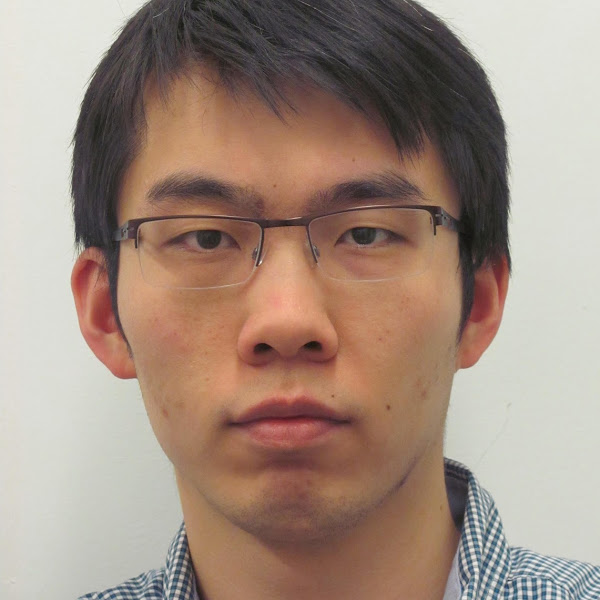 You (Will) Wu合作论文数Google18
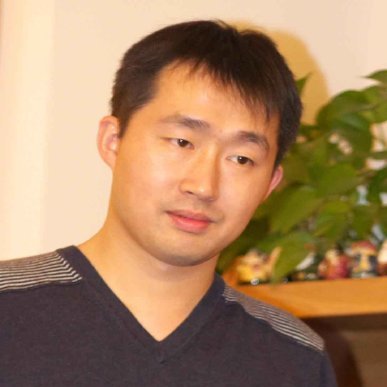 Chengkai Li (李成锴)合作论文数Department of Computer Science and Engineering, University of Texas at Arlington17
 Jun Yang (杨俊)合作论文数Department of Computer Science, Duke University15
 Laks V.S. Lakshmanan合作论文数Department of Computer Science, University of British Columbia12
 Gautam Das合作论文数Computer Science and Engineering Department, College of Engineering, University of Texas at Arlington9
 Alon Halevy合作论文数Amazon Web Services9
 Philip Bohannon合作论文数Yahoo! Research9
 Xuezhi Wang合作论文数7
 Flip Korn合作论文数Google Research7
 Divesh Srivastava合作论文数AT&T Chief Data Office6
 Saravanan Thirumuruganathan合作论文数Mohamed bin Zayed University of Artificial Intelligence6
 Jialu Liu合作论文数Google Research6
 Denilson Barbosa合作论文数Department of Computing Science, Faculty of Science, University of Alberta5
 Jayant Madhavan合作论文数Google Inc.5
 Anish Das Sarma合作论文数ClearList Inc.;Airbnb5
 Mahashweta Das合作论文数Hewlett Packard Labs5
 Pankaj K. Agarwal合作论文数Department of Computer Science, Trinity College of Arts & Sciences, Duke University5
 Hongrae Lee合作论文数Google5
 Simon Baumgartner合作论文数4
 Ádám Dániel Lelkes合作论文数4
 Alyssa Lees合作论文数Google Research;Jigsaw4
 Fei Wu合作论文数Uber4
 Raghu Ramakrishnan合作论文数Microsoft4
 Eugene Wu合作论文数Department of Computer Science, The Fu Foundation School of Engineering and Applied Science, Columbia University;Data, Agents, and Processes Lab, Columbia University4
 Julia Stoyanovich合作论文数Department of Computer Science and Engineering, Tandon School of Engineering, New York University;Center for Data Science, New York University4
 Senjuti Basu Roy合作论文数Department of Computer Science, New Jersey Institute of Technology;Center for Big Data, New Jersey Institute of Technology4
 Arnab Nandi合作论文数Department of Computer Science and Engineering, College of Engineering, The Ohio State University4
 Jiawei Han (韩家炜)合作论文数Siebel School of Computing and Data Science, The Grainger College of Engineering, University of Illinois Urbana-Champaign4
 Stelios Paparizos合作论文数Microsoft Research4Boulos Harb合作论文数Instagram4
 Naeemul Hassan合作论文数University Texas at Arlington4Andrew Nierman合作论文数Porch4Adriane Chapman合作论文数3Liang Xu合作论文数3Tian Yin (田引)合作论文数3bill adair合作论文数3Saehan Jo合作论文数Cornell University3
 Xu Chu合作论文数Workday3
 Tianqi Liu合作论文数Google DeepMind3
 Jiaming Shen合作论文数Google DeepMind3
 Sergei Vassilvitskii合作论文数Google Research3
 Vinh Q. Tran合作论文数Google3
 Xiaonan Li合作论文数3
 Lucian Popa合作论文数IBM Almaden Research Center3
 Torsten Grust合作论文数Department of Computer Science, Universität Tübingen3
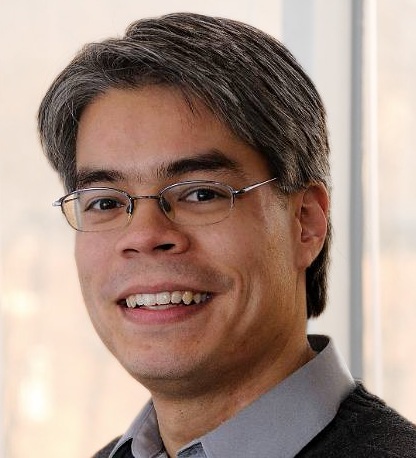 Zachary G. Ives合作论文数Computer & Information Science Department, School of Engineering and Applied Science, University of Pennsylvania3
 Fatma Ozcan合作论文数Google3