Shifting the relationship between science and decision making is a key challenge for sustainable development. We conducted a two-part behavioural study linked to the preparation of the Kenya Agroforestry Strategy. Two virtual workshops followed a data visualisation preference survey of 174 technical officers to compare the influence of a peer-led and a facilitated workshop on inclusive, evidence-based decision making. A post-workshop survey, facilitator or observer reports, coded transcriptions of group discussions, root causes capturing social actor perspectives, and strategy content were analysed. Results from the visualisation preference survey indicate that most respondents preferred more straightforward displays like tables and bar charts over the more complex ridge and box plots. Limited exposure to diverse visualisation formats calls for capacity development and innovative ways to share data in multiple formats. Engaging scientists in co-production processes allows more complex data to be accessed and understood by decision makers. Triangulation across diverse data sources associated with the workshops indicates facilitated groups had greater inclusion of participants and better integrated scientific and social actor perspectives in the strategies they developed. The importance of skilled facilitators and engagement processes are therefore highlighted. Small workshop sample sizes and complex interactions indicate that further studies are needed to validate our findings, but the results of this study provide valuable insights for knowledge translation and social learning as part of co-production to support inclusive, evidence-based decision making in agricultural and environmental policy processes.
Sustainable agricultural intensification (SAI) has the potential to increase food security without detrimental effects on ecosystem services. However, adoption of SAI practices across sub-Saharan Africa has not reached transformational numbers to date. It is often hampered by lack of context-specific practices, sub-optimal understanding of tradeoffs and synergies among stakeholders, and lack of approaches that bring diverse evidence sources together with stakeholders to collectively tackle complex problems. In this study, we asked three interconnected questions: (i) What is the accessibility and use of evidence for SAI decision making; (ii) What tools could enhance access and interaction with evidence for tradeoff analysis; and (iii) Which stakeholders must be included? This study employed a range of research and engagement methods including surveys, stakeholder analysis, participatory trade-off assessments and co-design of decision dashboards to better support evidence-based decision making in Zambia, Tanzania and Ethiopia. At the inception, SAI evidence was accessible and used by less than half of the decision makers across the three countries and online dashboards hold promise to enhance access. Many of the stakeholders working on SAI were not collaborating and tradeoff analysis was an under-utilized tool. Structured engagement across multiple stakeholder groups with evidence is critical.
• The African pastoral farming system consists of livestock and drylands cropbased production that supports an agricultural population of 38 million people of whom 13.4 million in sub-Saharan Africa are extremely poor. • Human population growth has resulted in low per capita livestock and land resources, and while the farming system has options to develop agriculture, further demographic expansion will exacerbate degradation and inequality. • While there is potential for agricultural development, e.g. through intensification and greater market orientation, such development needs to take into account pastoral peoples’ access rights to resources and minimize trade-offs with current land and water users. • Effective drought management, a key to the success of pastoralism, relies on multiple resource management strategies and community interactions. Therefore, there is a need for policies that strengthen the resilience of agriculture and pastoralists livelihoods through, e.g. support to livestock mobility, agricultural insurance, sustainable land and water management as well as monetary and legal support for effective implementation. • Interventions that strengthen opportunities for a future outside agriculture, such as education and job creation, are needed for those living in chronic poverty.
Key messages The African pastoral farming system consists of livestock and drylands crop-based production that supports an agricultural population of 38 million people of whom 13.4 million in sub-Saharan Africa are extremely poor. Human population growth has resulted in low per capita livestock and land resources, and while the farming system has options to develop agriculture, further demographic expansion will exacerbate degradation and inequality. While there is potential for agricultural development, e.g. through intensification and greater market orientation, such development needs to take into account pastoral peoples' access rights to resources and minimize trade-offs with current land and water users. Effective drought management, a key to the success of pastoralism, relies on multiple resource management strategies and community interactions. Therefore, there is a need for policies that strengthen the resilience of agriculture and pastoralists livelihoods through, e.g. support to livestock mobility, agricultural insurance, sustainable land and water management as well as monetary and legal support for effective implementation. Interventions that strengthen opportunities for a future outside agriculture, such as education and job creation, are needed for those living in chronic poverty.
Land degradation impacts the health and livelihoods of about 1.5 billion people worldwide. Given that the state of the environment and food security are strongly interlinked in tropical landscapes, the increasing need for land for food production, urbanization and other uses poses several threats to sustainability in the long term. This paper demonstrates the integration of land and soil health maps with socioeconomic datasets into an online, open-access platform called the Resilience Diagnostic and Decision Support Tool for Turkana County in Kenya, using the Stakeholder Approach to Risk Informed and Evidence Based Decision Making (SHARED) methodology. The paper highlights the utility of spatial assessments of soil organic carbon (SOC) for monitoring land degradation neutrality (LDN) compliance, understanding the drivers of SOC dynamics and inclusion of these in stakeholder decision-making. The main objectives of this paper were to (1) demonstrate the application of a systematic approach for land health assessments, including spatial mapping of soil organic carbon; (2) show an operational interdisciplinary framework for assessing ecosystem health and (3) showcase the application of evidence-based tools for stakeholder engagement using the SHARED approach. Through the approaches and tools presented, the paper addresses the increasing need for more integrated approaches when assessing and managing ecosystem health to meet the targets of the 2030 Agenda, including Sustainable Development Goal (SDG) 15.3. In addition to systematic and reliable biophysical and socioeconomic assessments, stakeholder engagement with evidence is crucial to support such integrated approaches.
Land degradation impacts the health and livelihoods of about 1.5 billion people worldwide. Given that the state of the environment and food security are strongly interlinked in tropical landscapes, the increasing need for land for food production, urbanization and other uses pose several threats to sustainability in the long term. There is increasing recognition that more integrated approaches to ecosystem health assessments are needed to meet the targets of the 2030 Agenda, including SDG 15.3. In addition to systematic and reliable biophysical and socioeconomic assessments, stakeholder engagement with evidence is crucial. This paper demonstrated the integration of land and soil health maps with socio-economic datasets into an online, open-access the Resilience Diagnostic and Decision Support Tool using the SHARED approach in Kenya. This highlights the utility spatial assessments of SOC for monitoring of LDN compliance, understanding the drivers of SOC dynamics, and inclusion in stakeholder decision-making. The main objectives of this paper were to: 1) demonstrate the application of a systematic approach for land health assessments, including spatial mapping of soil organic carbon; 2) demonstrate the operationalization of interdisciplinary framework for assessing ecosystem health; and 3) showcase the application of evidence-based tools for stakeholder engagement using the SHARED approach.
Fire and overgrazing reduce aboveground biomass, leading to land degradation and potential impacts on soil organic carbon (SOC) and total nitrogen (TN) dynamics. However, empirical data are lacking on how prescribed burning and livestock exclusion impact SOC in the long-term. Here we analyse the effects of 19 years of prescribed annual burning and livestock exclusion on tree density, SOC and TN concentrations in the Sudanian savanna ecoregion at two sites (Tiogo and Laba) in Burkina Faso. Results revealed that neither livestock exclusion nor prescribed burning had significant impact on SOC and TN concentrations. The results at both sites indicate that 19 years of livestock and fire exclusion did not result in a significant increase in tree density compared to grazing and annual prescribed burning. The overall mean (± SEM) of SOC stocks in the 0–50 cm depth increment in the unburnt (53.5 ± 4.7 Mg C ha−1) and annually burnt (56.4 ± 4.3 Mg C ha−1) plots at Tiogo were not statistically different. Similarly, at Laba there was no significant difference between the corresponding figures in the unburnt (37.9 ± 2.6 Mg ha−1) and in the annually burnt plots (38.6 ± 1.9 Mg ha−1). Increases in belowground inputs from root turnover may have countered changes in aboveground biomass, resulting in no net change in SOC and TN. We conclude that, contrary to our expectation and current policy recommendations, restricting burning or grazing did not result in increase in SOC stocks in this dry savanna ecosystem.
Contributing Authors (in Alphabetical Order): Ermias Betemariam (ICRAF), Richard Biwott (DFBA), Douglas Bwire (ICRAF), Sabrina Chesterman (ICRAF), Jeanne Coulibaly (ICRAF), Todd Crane (ILRI), Deborah Duveskog (FAO), Lisa Fuchs (ICRAF), Margaret Gatonye (AAK), Sika Gbegbelegbe (CIMMYT), Jeske van de Gevel (Bioversity), Daniel Gichuhi (KENAFF), Cyrus Githunguri (KALRO), Inger Haugsgjerd (UNEP), Daewood Idenya (Government Nandi Subcounty), Christine Jost (ICRAF), Jackson Kibenei (EADD), Moses Karanja, (EADD/ICRAF), Steven Karania (KALRO), Kaisa Karttunen (FAO), Anthony Kibe (Egerton University), Josephine Kirui (ICRAF), Shadrack Kipkemoi (ASDSP), Patti Kristjanson (CCAFS, ICRAF), Joyce Kweyu (Land O Lakes), Christine Lamanna (ICRAF), Miyuki Iliama (ICRAF), Oscar Masika (ICRAF), Bernard Mbogo (CARE), Beatrice Mnede (WorldVision), Joseph Mumu (ALF), Matthew Murhor (EADD), Jonathan Muriuki (ICRAF), Morgan Mutoko (FAO), Kenda Mwenja (GIZ), Caroline Mwongera (CIAT), Sylvia Nanjekho (ICRAF), Peterson Njeru (KALRO), Peter Malomba (Kenya Cookstoves Association), Constance Neely (ICRAF), Mary Njenga (ICRAF), Mary Njuguna (Egerton University), Lydia Nyambura (CARE), Noelle O'Brien (DFID), Barrack Okoba (FAO), Michael Okumu (CCU MALF), Michael Okumu (CCU-MALF), Bethuel Omolo (Fisheries), Patrick Ooro (KALRO), Carolyn Opio (FAO), Joab Osumba (FAO), John Recha (CCAFS), Janie Rioux (FAO), Todd Rosenstock (ICRAF), Joan Sang (World Vision), Rael Taiy (Egerton University), Emmanuel Wachiye (Vi Agroforestry), Nasirembe Wanjala (Egerton University), Leigh Winowiecki (CIAT)
 Sabrina Chesterman合作论文数8
 Mieke Bourne合作论文数5
 Jean Steiner合作论文数Department of Agronomy, Kansas State University4
 Philip Thornton合作论文数International Livestock Research Institute4
 Polly Joanna Ericksen合作论文数International Livestock Research Institute4Tor-Gunnar Vagen合作论文数3Sikhalazo Dube合作论文数3Philip Osano合作论文数3
 Winowiecki Leigh合作论文数World Agroforestry Centre (ICRAF), Nairobi, Kenya3
 Anton Vrieling合作论文数Department of Natural Resources, Faculty of Geo-information Science and Earth Observation, University of Twente3
 Jan De Leeuw合作论文数Department of Statistics, University of California, Los Angeles3
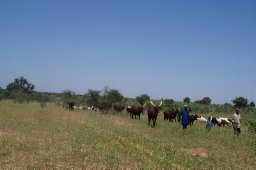 Augustine A. Ayantunde合作论文数ILRI, International Livestock Research Institute (ILRI),3
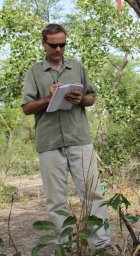 Niall P Hanan合作论文数Natural Resources and Environment Laboratory, Colorado State University3
 Mohammed Said合作论文数Department of Resource Surveys and Remote Sensing, PO Box 47146 Nairobi, Kenya3
 Keith Duncan Shepherd合作论文数3
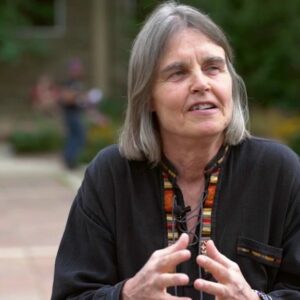 Robin Reid合作论文数Department of Ecosystem Science and Sustainability, Warner College of Natural Resources, Colorado State University3
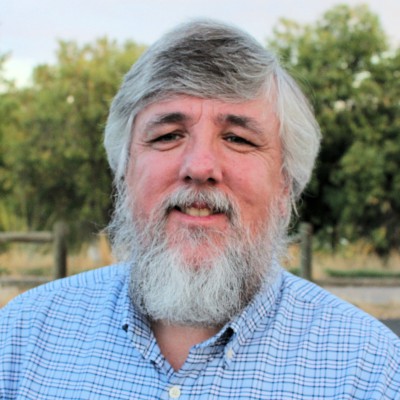 Randall Boone合作论文数Department of Ecosystem Science and Sustainability, Colorado State University;Natural Resource Ecology Laboratory, Colorado State University3
 Carla Roncoli合作论文数University of Georgia3Carlos Perez合作论文数2J. Kirui合作论文数2Keith D. Shepherd合作论文数2Stephen Williams合作论文数2
 Christine Nkatha Magaju合作论文数2
 Mathew Mpanda合作论文数Natural Resources Section, EU Delegation to Tanzania2Jonathan Davies合作论文数2Jorge Rubiano合作论文数Centro Internacional de Agricultura Tropical;Universidad Nacional ( UNAL );International Water Management Institute;International Water Management Institute, Universidad Nacional ( UNAL )2
 Christian Valentin合作论文数Institut de Recherche pour le Développement2
 Henry Neufeldt合作论文数Earth System Science – Climate Change Group, Wageningen University and Research Centre2
 Don Peden合作论文数2
 Markus Walsh合作论文数World Agroforestry Centre (ICRAF), P.O. Box 30677, Nairobi 00100, Kenya2
 Todd Rosenstock合作论文数world agroforestry centre2
 Anthony A. Kimaro合作论文数University of Toronto Faculty of Forestry2Roy Behnke合作论文数Livestock Centre for Africa2
 Eike Luedeling合作论文数World Agroforestry Ctr ICRAF2Fiona Flintan合作论文数International Famine Center2
 Kuyah Shem合作论文数Department of Botany, Jomo Kenyatta University of Agriculture and Technology2
 Steven Franzel合作论文数Center for International Forestry Research;World Agroforestry2
 F. Nachtergaele合作论文数Land and Water Division, Food and Agriculture Organization (FAO),2
 Alan Franzluebbers合作论文数Southeast Climate Hub, Department of Agriculture, USDA - Agricultural Research Service;Faculty of Soil Ecology and Management, North Carolina State University;Auburn University2Emmanuel Temu合作论文数1Hadia Seid合作论文数1Pelayo Alvarez合作论文数1Rich Conant合作论文数1Jody Butterfield合作论文数1Floyd Chipatela合作论文数1Howard Tembo合作论文数1
 Karl Hughes合作论文数1Vanessa Tilstone合作论文数1samuel shaba合作论文数1




