Natural-language-to-SQL systems have ad- vanced rapidly on academic benchmarks, yet production enterprise schemas exhibit graph- like, semi-structured, deeply nested structure that current benchmarks do not measure. We make two complementary contributions. First, we introduce the DevRev NL2SQL bench- mark: 900 execution-verified queries with nested-type and link-graph structure, accom- panied by the Semantic Depth Score (SDS), a schema-agnostic rubric for analytical reasoning depth. Second, we present a cost-aware single- generation agentic architecture whose schema- selection, metadata-retrieval, and error-repair components are designed for the requirements this regime imposes. On the DevRev NL2SQL benchmark the system attains 91.7
Reward guidance, also known as posterior sampling, is a popular method for test-time adaptation and post-training in continuous diffusion models. In this paper, we study reward guidance for discrete diffusion language models; now, one cannot differentiate through the natural outputs of the model because they are discrete tokens. We introduce a novel mechanism called EntRGi (Entropy aware Reward Guidance) to address this issue. EntRGi dynamically interpolates between continuous token relaxations and sampled hard tokens, on a token-by-token basis, using the diffusion model's predictive entropy. We demonstrate that EntRGi maintains both reward model reliability and optimization accuracy, while existing approaches sacrifice one for the other. We empirically validate our approach on 7B-parameter diffusion language models across two settings: (1) test-time adaptation, and (2) RGRL (Reward Guided Reinforcement Learning), our recipe for post-training on reward-guided data, showing consistent improvements over state-of-the-art methods. Our code is available at https://atutej.github.io/entrgi-rgrl
Diffusion language models offer a compelling alternative to autoregressive code generation, enabling global planning and iterative refinement of complex program logic. However, existing approaches fail to respect the rigid structure of programming languages and, as a result, often produce broken programs that fail to execute. To address this, we introduce AnchorTree, a framework that explicitly anchors the diffusion process using structured, hierarchical priors native to code. Specifically, AnchorTree uses the abstract syntax tree to prioritize resolving syntactically and semantically salient tokens, such as keywords (e.g., if, while) and identifiers (e.g., variable names), thereby establishing a structural scaffold that guides the remaining generation. We validate this framework via AnCoder, a family of models showing that structurally anchored diffusion offers a parameter-efficient path to high-quality code generation.
In truncated linear regression, samples (x,y) are shown only when the outcome y falls inside a certain survival set S^⋆ and the goal is to estimate the unknown d-dimensional regressor w^⋆. This problem has a long history of study in Statistics and Machine Learning going back to the works of (Galton, 1897; Tobin, 1958) and more recently in, e.g., (Daskalakis et al., 2019; 2021; Lee et al., 2023; 2024). Despite this long history, however, most prior works are limited to the special case where S^⋆ is precisely known. The more practically relevant case, where S^⋆ is unknown and must be learned from data, remains open: indeed, here the only available algorithms require strong assumptions on the distribution of the feature vectors (e.g., Gaussianity) and, even then, have a d^poly (1/ε) run time for achieving ε accuracy. In this work, we give the first algorithm for truncated linear regression with unknown survival set that runs in poly (d/ε) time, by only requiring that the feature vectors are sub-Gaussian. Our algorithm relies on a novel subroutine for efficiently learning unions of a bounded number of intervals using access to positive examples (without any negative examples) under a certain smoothness condition. This learning guarantee adds to the line of works on positive-only PAC learning and may be of independent interest.
Large-scale multi-tenant retrieval systems generate extensive query logs but lack curated relevance labels for effective domain adaptation, resulting in substantial underutilized "dark data." This challenge is compounded by the high cost of model updates, as jointly fine-tuning query and document encoders requires full corpus re-indexing, which is impractical in multi-tenant settings with thousands of isolated indices. We introduce DevRev-Search, a passage retrieval benchmark for technical customer support built via a fully automated pipeline. Candidate generation uses fusion across diverse sparse and dense retrievers, followed by an LLM-as-a-Judge for consistency filtering and relevance labeling. We further study and systematically evaluate index-preserving query-only adaptation strategies that fine-tune only the query-encoder while keeping the document indices fixed. Experiments on DevRev-Search, SciFact, and FiQA-2018 show that parameter-efficient fine-tuning of the query encoder delivers a remarkable quality-efficiency trade-off, enabling scalable and practical enterprise multi-tenant retrieval.
Estimating the number of distinct elements in a data stream is well understood when repeated elements are identical. In modern settings, however, observations are high-dimensional and noisy, so repeated instances of the same object are only approximately similar – for example, different images of the same individual may vary significantly at the pixel level. Classical sketches such as HyperLogLog rely on consistent hash values for identical elements and break down in this regime. Recent work on robust distinct counting in general metric spaces achieves (√(n)) memory, which is tight in the worst case. We show that substantially improved memory guarantees are possible under geometric structure common in learned representations. We introduce MaxSketch, a simple max-linear sketch built from random Gaussian projections, and prove that it succeeds in estimating the number of distinct latent objects. Concretely, we show that under this assumption m = O (log n / ε^2) random projections (and hence O (log n/ε^2) memory) suffice to recover the true distinct count within a (1+ε) factor. Experiments on image streams confirm that MaxSketch accurately estimates distinct counts and generalizes beyond the training regime. Our results bridge classical streaming algorithms and modern representation learning, showing how geometric structure can fundamentally reduce the complexity of distinct counting.
While continuous diffusion models have achieved remarkable success, discrete diffusion offers a unified framework for jointly modeling text and images. Beyond unification, discrete diffusion provides faster inference, finer control, and principled training-free guidance, making it well-suited for posterior sampling. Existing approaches to posterior sampling using discrete diffusion face severe challenges: derivative-free guidance yields sparse signals, continuous relaxations limit applicability, and split Gibbs samplers suffer from the curse of dimensionality. To overcome these limitations, we introduce Anchored Posterior Sampling (APS), built on two key innovations: for gradient-like guidance in discrete embedding space, and for adaptive decoding. APS achieves state-of-the-art performance among discrete diffusion samplers on both linear and nonlinear inverse problems across the standard image benchmarks. We demonstrate the generality of APS through training-free stylization and text-guided editing. We further apply APS to a large-scale diffusion language model, showing consistent improvement in question answering.
Diffusion Language Models (DLMs) promise parallel generation and bidirectional context, yet they underperform autoregressive (AR) models in both likelihood modeling and generated text quality. We identify that this performance gap arises when important tokens (e.g., key words or low-frequency words that anchor a sentence) are masked early in the forward process, limiting contextual information for accurate reconstruction. To address this, we introduce the Anchored Diffusion Language Model (ADLM), a novel two-stage framework that first predicts distributions over important tokens via an anchor network, and then predicts the likelihoods of missing tokens conditioned on the anchored predictions. ADLM significantly improves test perplexity on LM1B and OpenWebText, achieving up to 25.4% gains over prior DLMs, and narrows the gap with strong AR baselines. It also achieves state-of-the-art performance in zero-shot generalization across seven benchmarks and surpasses AR models in MAUVE score, which marks the first time a DLM generates better human-like text than an AR model. Theoretically, we derive an Anchored Negative Evidence Lower Bound (ANELBO) objective and show that anchoring improves sample complexity and likelihood modeling. Beyond diffusion, anchoring boosts performance in AR models and enhances reasoning in math and logic tasks, outperforming existing chain-of-thought approaches
We study the problem of posterior sampling using pretrained discrete diffusion foundation models, aiming to recover images from noisy measurements without retraining task-specific models. While diffusion models have achieved remarkable success in generative modeling, most advances rely on continuous Gaussian diffusion. In contrast, discrete diffusion offers a unified framework for jointly modeling categorical data such as text and images. Beyond unification, discrete diffusion provides faster inference, finer control, and principled training-free Bayesian inference, making it particularly well-suited for posterior sampling. However, existing approaches to discrete diffusion posterior sampling face severe challenges: derivative-free guidance yields sparse signals, continuous relaxations limit applicability, and split Gibbs samplers suffer from the curse of dimensionality. To overcome these limitations, we introduce Anchored Posterior Sampling (APS) for masked diffusion foundation models, built on two key innovations -- quantized expectation for gradient-like guidance in discrete embedding space, and anchored remasking for adaptive decoding. Our approach achieves state-of-the-art performance among discrete diffusion samplers across linear and nonlinear inverse problems on the standard benchmarks. We further demonstrate the benefits of our approach in training-free stylization and text-guided editing.
Generative models transform random noise into images; their inversion aims to transform images back to structured noise for recovery and editing. This paper addresses two key tasks: (i) inversion and (ii) editing of a real image using stochastic equivalents of rectified flow models (such as Flux). Although Diffusion Models (DMs) have recently dominated the field of generative modeling for images, their inversion presents faithfulness and editability challenges due to nonlinearities in drift and diffusion. Existing state-of-the-art DM inversion approaches rely on training of additional parameters or test-time optimization of latent variables; both are expensive in practice. Rectified Flows (RFs) offer a promising alternative to diffusion models, yet their inversion has been underexplored. We propose RF inversion using dynamic optimal control derived via a linear quadratic regulator. We prove that the resulting vector field is equivalent to a rectified stochastic differential equation. Additionally, we extend our framework to design a stochastic sampler for Flux. Our inversion method allows for state-of-the-art performance in zero-shot inversion and editing, outperforming prior works in stroke-to-image synthesis and semantic image editing, with large-scale human evaluations confirming user preference.
Unconscious bias has been shown to influence how we assess our peers, with consequences for hiring, promotions and admissions. In this work, we focus on affinity bias, the component of unconscious bias which leads us to prefer people who are similar to us, despite no deliberate intention of favoritism. In a world where the people hired today become part of the hiring committee of tomorrow, we are particularly interested in understanding (and mitigating) how affinity bias affects this feedback loop. This problem has two distinctive features: 1) we only observe the biased value of a candidate, but we want to optimize with respect to their real value 2) the bias towards a candidate with a specific set of traits depends on the fraction of people in the hiring committee with the same set of traits. We introduce a new bandits variant that exhibits those two features, which we call affinity bandits. Unsurprisingly, classical algorithms such as UCB often fail to identify the best arm in this setting. We prove a new instance-dependent regret lower bound, which is larger than that in the standard bandit setting by a multiplicative function of K. Since we treat rewards that are time-varying and dependent on the policy's past actions, deriving this lower bound requires developing proof techniques beyond the standard bandit techniques. Finally, we design an elimination-style algorithm which nearly matches this regret, despite never observing the real rewards.
In pretraining data detection, the goal is to detect whether a given sentence is in the dataset used for training a Large Language Model LLM). Recent methods (such as Min-K % and Min-K%++) reveal that most training corpora are likely contaminated with both sensitive content and evaluation benchmarks, leading to inflated test set performance. These methods sometimes fail to detect samples from the pretraining data, primarily because they depend on statistics composed of causal token likelihoods. We introduce Infilling Score, a new test-statistic based on non-causal token likelihoods. Infilling Score can be computed for autoregressive models without re-training using Bayes rule. A naive application of Bayes rule scales linearly with the vocabulary size. However, we propose a ratio test-statistic whose computation is invariant to vocabulary size. Empirically, our method achieves a significant accuracy gain over state-of-the-art methods including Min-K%, and Min-K%++ on the WikiMIA benchmark across seven models with different parameter sizes. Further, we achieve higher AUC compared to reference-free methods on the challenging MIMIR benchmark. Finally, we create a benchmark dataset consisting of recent data sources published after the release of Llama-3; this benchmark provides a statistical baseline to indicate potential corpora used for Llama-3 training.
We propose Reference-Based Modulation (RB-Modulation), a new plug-and-play solution for training-free personalization of diffusion models.Existing training-free approaches exhibit difficulties in (a) style extraction from reference images in the absence of additional style or content text descriptions, (b) unwanted content leakage from reference style images, and (c) effective composition of style and content. RB-Modulation is built on a novel stochastic optimal controller where a style descriptor encodes the desired attributes through a terminal cost. The resulting drift not only overcomes the difficulties above, but also ensures high fidelity to the reference style and adheres to the given text prompt. We also introduce a cross-attention-based feature aggregation scheme that allows RB-Modulation to decouple content and style from the reference image.With theoretical justification and empirical evidence, our test-time optimization framework demonstrates precise extraction and control of *content* and *style* in a training-free manner. Further, our method allows a seamless composition of content and style, which marks a departure from the dependency on external adapters or ControlNets. See project page: https://rb-modulation.github.io/ for code and further details.
Sampling from the posterior distribution poses a major computational challenge in solving inverse problems using latent diffusion models. Common methods rely on Tweedie's first-order moments, which are known to induce a quality-limiting bias. Existing second-order approximations are impractical due to prohibitive computational costs, making standard reverse diffusion processes intractable for posterior sampling. This paper introduces Second-order Tweedie sampler from Surrogate Loss (STSL), a novel sampler that offers efficiency comparable to first-order Tweedie with a tractable reverse process using second-order approximation. Our theoretical results reveal that the second-order approximation is lower bounded by our surrogate loss that only requires $O(1)$ compute using the trace of the Hessian, and by the lower bound we derive a new drift term to make the reverse process tractable. Our method surpasses SoTA solvers PSLD and P2L, achieving 4X and 8X reduction in neural function evaluations, respectively, while notably enhancing sampling quality on FFHQ, ImageNet, and COCO benchmarks. In addition, we show STSL extends to text-guided image editing and addresses residual distortions present from corrupted images in leading text-guided image editing methods. To our best knowledge, this is the first work to offer an efficient second-order approximation in solving inverse problems using latent diffusion and editing real-world images with corruptions.
We consider solving the low rank matrix sensing problem with Factorized Gradient Descend (FGD) method when the true rank is unknown and over-specified, which we refer to as over-parameterized matrix sensing. If the ground truth signal $\mathbf{X}^* \in \mathbb{R}^{d*d}$ is of rank $r$, but we try to recover it using $\mathbf{F} \mathbf{F}^\top$ where $\mathbf{F} \in \mathbb{R}^{d*k}$ and $k>r$, the existing statistical analysis falls short, due to a flat local curvature of the loss function around the global maxima. By decomposing the factorized matrix $\mathbf{F}$ into separate column spaces to capture the effect of extra ranks, we show that $\|\mathbf{F}_t \mathbf{F}_t - \mathbf{X}^*\|_{F}^2$ converges to a statistical error of $\tilde{\mathcal{O}} ({k d \sigma^2/n})$ after $\tilde{\mathcal{O}}(\frac{\sigma_{r}}{\sigma}\sqrt{\frac{n}{d}})$ number of iterations where $\mathbf{F}_t$ is the output of FGD after $t$ iterations, $\sigma^2$ is the variance of the observation noise, $\sigma_{r}$ is the $r$-th largest eigenvalue of $\mathbf{X}^*$, and $n$ is the number of sample. Our results, therefore, offer a comprehensive picture of the statistical and computational complexity of FGD for the over-parameterized matrix sensing problem.
Pandora’s Box is a fundamental stochastic optimization problem, where the decision-maker must find a good alternative, while minimizing the search cost of exploring the value of each alternative. In the original formulation, it is assumed that accurate distributions are given for the values of all the alternatives, while recent work studies the online variant of Pandora’s Box where the distributions are originally unknown. In this work, we study Pandora’s Box in the online setting, while incorporating context. At each round, we are presented with a number of alternatives each having a context, an exploration cost and an unknown value drawn from an unknown distribution that may change at every round. Our main result is a no-regret algorithm that performs comparably well against the optimal algorithm which knows all prior distributions exactly. Our algorithm works even in the bandit setting where the algorithm never learns the values of the alternatives that were not explored. The key technique that enables our result is a novel modification of the realizability condition in contextual bandits that connects a context to a sufficient statistic of each alternative’s distribution (its reservation value) rather than its mean.
In many real-world decision problems there is partially observed, hidden or latent information that remains fixed throughout an interaction. Such decision problems can be modeled as Latent Markov Decision Processes (LMDPs), where a latent variable is selected at the beginning of an interaction and is not disclosed to the agent initially. In last decade, there has been significant progress in designing learning algorithms for solving LMDPs under different structural assumptions. However, for general LMDPs, there is no known learning algorithm that provably matches the existing lower bound. We effectively resolve this open question, introducing the first sample-efficient algorithm for LMDPs without *any additional structural assumptions*. Our result builds off a new perspective on the role off-policy evaluation guarantees and coverage coefficient in LMDPs, a perspective, which has been overlooked in the context of exploration in partially observed environments. Specifically, we establish a novel off-policy evaluation lemma and introduce a new coverage coefficient for LMDPs. Then, we show how these can be used to derive near-optimal guarantees of an optimistic exploration algorithm. These results, we believe, can be valuable for a wide range of interactive learning problems beyond the LMDP class, and especially, for partially observed environments.
We propose Reference-Based Modulation (RB-Modulation), a new plug-and-play solution for training-free personalization of diffusion models. Existing training-free approaches exhibit difficulties in (a) style extraction from reference images in the absence of additional style or content text descriptions, (b) unwanted content leakage from reference style images, and (c) effective composition of style and content. RB-Modulation is built on a novel stochastic optimal controller where a style descriptor encodes the desired attributes through a terminal cost. The resulting drift not only overcomes the difficulties above, but also ensures high fidelity to the reference style and adheres to the given text prompt. We also introduce a cross-attention-based feature aggregation scheme that allows RB-Modulation to decouple content and style from the reference image. With theoretical justification and empirical evidence, our framework demonstrates precise extraction and control of content and style in a training-free manner. Further, our method allows a seamless composition of content and style, which marks a departure from the dependency on external adapters or ControlNets.
 Sanjay Shakkottai合作论文数Chandra Department of Electrical and Computer Engineering, Cockrell School of Engineering, The University of Texas at Austin39
 Shie Mannor合作论文数Jether Energy;Department of Electrical Engineering, Faculty of Electrical Engineering, Technion-Israel Institute of Technology;Machine Learning Center, Technion-Israel Institute of Technology;NVIDIA;Cornell-Tech38
 Sujay Sanghavi合作论文数Amazon;Chandra Department of Electrical and Computer Engineering, Cockrell School of Engineering, The University of Texas at Austin;Institute for Data Science, The University of Texas at Austin26
 Robert W. Heath Jr.合作论文数Jacobs School of Engineering, University of California, San Diego;MIMO Wireless Inc.18
 Yudong Chen合作论文数Department of Computer Sciences, University of Wisconsin-Madison18
 Huan Xu (许欢)合作论文数Department of Management Science, Antai College of Economics & Management, Shanghai Jiao Tong University16
 Litu Rout合作论文数Google DeepMind14
 Anastasios Kyrillidis合作论文数Computer Science Department, Rice University.14
 Jeongyeol Kwon合作论文数Wisconsin Institute for Discovery, University of Wisconsin-Madison13
 Jeff Andrews合作论文数Department of Electrical and Computer Engineering, The University of Texas at Austin;Andrews Broadband Communications, LLC12
 Xinyang Yi合作论文数11
 Vasileios Orestis Papadigenopoulos合作论文数Data Science Institute, Columbia University10
 Alexandros G. Dimakis (Alex Dimakis)合作论文数Chandra Department of Electrical and Computer Engineering, The University of Texas at Austin;Department of Computer Science, College of Natural Sciences, The University of Texas at Austin10
 Al Bovik合作论文数Department of Electrical, Computer & Energy Engineering, College of Engineering and Applied Science, University of Colorado Boulder9
 Dimitris Bertsimas合作论文数Sloan School of Management, Massachusetts Institute of Technology;Savvi Financial, LLC;ReClaim Health, LLC9
 Harish Ganapathy合作论文数Department of Electrical and Computer Engineering, The University of Texas9
 Qiaoyang Ye合作论文数Apple8
 Michael Orshansky合作论文数Chandra Department of Electrical and Computer Engineering, Cockrell School of Engineering, The University of Texas at Austin8
 Amin Abdel Khalek合作论文数American University of Beirut, The University of Texas at Austin8
 Dohyung Park合作论文数7
 Yonathan Efroni合作论文数Meta7
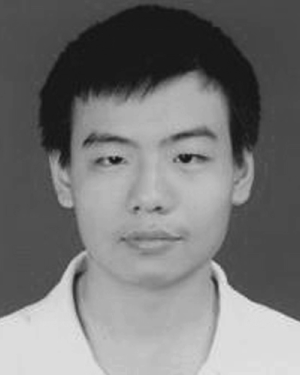 Li Tianyang合作论文数7
 Jessica Hoffmann合作论文数Google DeepMind7
 Gustavo De Veciana合作论文数Chandra Department of Electricaland Computer Engineering, Cockrell School of Engineering, The University of Texas at Austin7
 Matthew Faw合作论文数Algorithms and Randomness Center, Georgia Institute of Technology;Google Research7Mazin Al-Shalash合作论文数6
 Prateek Jain合作论文数Google DeepMind6
 Ioannis (Yannis) Mitliagkas合作论文数Department of Computer Science and Operations Research, University of Montreal;Mila – Quebec Artificial Intelligence Institute;Archimedes;Google DeepMind6Chris Milling合作论文数6
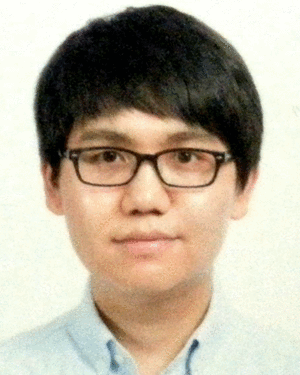 Sungho Yun合作论文数Korea Basic Science Institute Proteome Research Team6
 Aditya Gopalan合作论文数Department of Electrical Communication Engineering, Indian Institute of Science6
 Soumya Basu合作论文数Google5
 Jiacheng Zhuo合作论文数Hudson River Trading5
 Alexia Atsidakou合作论文数Department of Electrical & Computer Engineering, Cockrell School of Engineering, University of Texas at Austin5
 Christos Tzamos合作论文数Department of Informatics and Telecommunications, University of Athens;Archimedes AI4
 Wen-Sheng Chu合作论文数Google4
 Ashish Katiyar合作论文数Indian Institute of Technology Rajasthan Jodhpur4Nedialko B. Dimitrov合作论文数Naval Postgraduate School, 1 University Circle, Monterey, CA 93943, United States4Yujia Chen合作论文数3
 Ashish Kumar Singh合作论文数3
 Mohit Tiwari合作论文数Department of Electrical and Computer Engineering, Cockrell School of Engineering, University of Texas at Austin;Symmetry Systems, Inc3
 Lei Ying合作论文数Department of Electrical Engineering and Computer Science, College of Engineering, University of Michigan3
 Qi Lei (雷琦)合作论文数Courant Institute of Mathematical Sciences, New York University;Center for Data Science, New York University3
 Mario Lok合作论文数3
 Nataniel Ruiz合作论文数Google DeepMind3
 Mikhail Kazdagli合作论文数Symmetry Systems, Inc3
 Abhishek Kumar合作论文数Amazon3
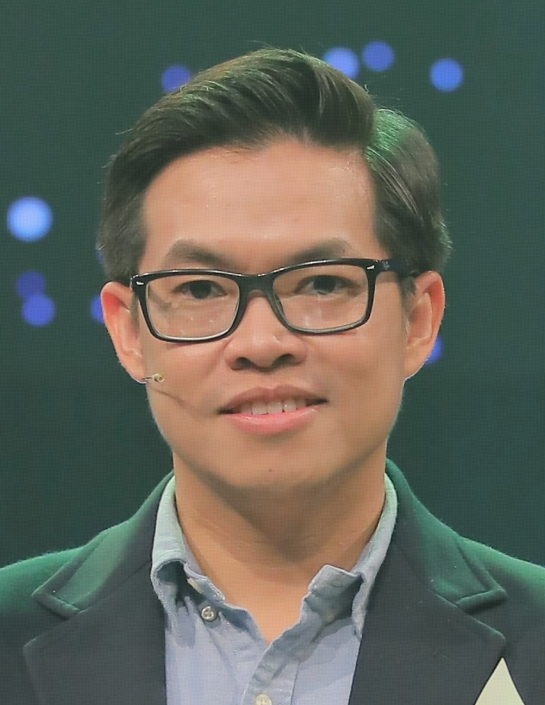 Nhat Ho合作论文数Department of Statistics and Data Sciences, College of Natural Sciences, The University of Texas at Austin3
 Vatsal Shah合作论文数Department of Pharmaceutics, The State University of New Jersey;Robert Wood Johnson Medical School, The State University of New Jersey;and Department of Pharmaceutical Sciences, Oregon State University;The State University of New Jersey, Oregon State University3